
Amp

Search documents
看完才发现,AI 早已悄悄改变顶尖程序员的工作方式!Flask 之父:传统代码协作工具已经 Out 了
程序员的那些事· 2026-01-02 06:00
Core Insights - The article discusses the transformative impact of AI on programming practices, highlighting a shift from traditional coding to AI-assisted development, particularly through tools like Claude Code [3][6][10]. Group 1: Changes in Work Practices - In 2025, the author experienced significant changes in their work style, moving from manual coding to relying heavily on AI tools for programming tasks [6][10]. - The author published 36 articles in a year, reflecting a newfound engagement with AI topics and a shift in focus towards AI-driven programming [7][9]. Group 2: AI Tools and Their Impact - The emergence of tools like Claude Code has revolutionized coding practices, allowing developers to automate routine tasks and focus on higher-level responsibilities [9][10]. - The integration of large language models (LLMs) with tool execution capabilities has proven to be highly effective, enhancing productivity and enabling new functionalities [10][12]. Group 3: Human-Machine Relationship - The article explores the evolving relationship between developers and AI, noting a tendency to anthropomorphize AI tools, which raises questions about their role and the emotional responses they elicit [12][13]. - There is a growing concern about the implications of assigning human-like qualities to machines, emphasizing the need for clarity in defining the relationship between humans and AI [12][13]. Group 4: Future Directions - The author identifies several areas for future development, including the need for new version control systems that can accommodate AI-generated code and improve collaboration [22][24]. - There is a call for innovative code review processes that align with AI workflows, as current systems are not compatible with the new programming paradigms introduced by AI [24][25]. - The potential for advancements in observability tools is highlighted, suggesting that LLMs could enhance the development of more user-friendly solutions in this area [25][26].


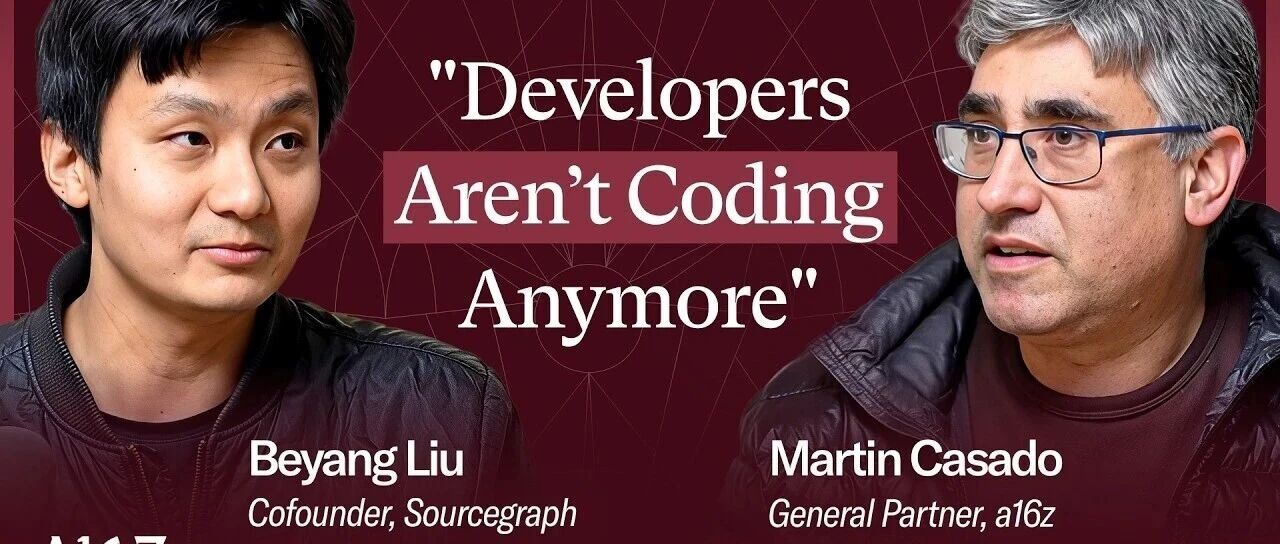
深度|AI编码黑马Sourcegraph华裔联创:我们的理念不是以模型为核心,而是以Agent为核心
Z Potentials· 2025-12-15 02:08
Core Insights - The article discusses the evolution of Sourcegraph from a code search engine to developing an AI coding agent named Amp, emphasizing the importance of understanding code in large codebases [5][6][8] - It highlights the shift towards open-source models and the significance of post-training over pre-training in enhancing model performance for specific tasks [27][30] - The conversation also touches on the regulatory landscape affecting AI development, particularly the reliance on Chinese open-source models and the potential risks for the U.S. AI ecosystem [40][41][49] Group 1: Company Background and Evolution - Sourcegraph was founded to improve coding efficiency in large organizations, focusing on code understanding as a core challenge [6][8] - The company has transitioned to developing Amp, an AI coding agent that combines large language models (LLMs) with existing capabilities to enhance coding tasks [8][11] - Amp is designed to cater to both professional developers and casual users, showcasing its versatility in generating code with minimal input [11][12] Group 2: AI and Coding Agents - The article emphasizes that the true unit of innovation is the agent itself, which interacts with users and executes tasks based on input rather than just the underlying model [17][18] - The development of Amp reflects a broader trend in AI where user interaction and agent capabilities are prioritized over merely improving model complexity [18][19] - The conversation reveals that different user workflows necessitate distinct approaches to agent design, balancing intelligence and latency for optimal performance [14][24] Group 3: Open-Source Models and Training - Open-source models are becoming increasingly important due to their ability to undergo post-training, allowing for tailored optimizations for specific tasks [27][28] - The article mentions several emerging open-source models, including Claude and GPT-5, which are gaining traction in the agentic tool use space [28][29] - The discussion highlights the trend of using smaller, task-specific models to improve efficiency and reduce latency in coding tasks [30][32] Group 4: Regulatory Landscape and Market Dynamics - The article raises concerns about the U.S. reliance on Chinese open-source models, suggesting that this could pose risks to the U.S. AI ecosystem if not addressed [40][41] - It advocates for a unified regulatory framework that encourages competition and innovation in the AI space, avoiding the pitfalls of past monopolistic practices [49][50] - The conversation underscores the need for a balanced approach to regulation that fosters a vibrant AI ecosystem while ensuring safety and ethical considerations [49][50]
X @Ethereum
Ethereum· 2025-11-10 15:04
RT The Graph (@graphprotocol)ICYMI: The Graph just announced Amp, a breakthrough product set to become the new standard for accessing blockchain data.Amp is the first blockchain-native database that lets builders create, remix, and run smart contract datasets locally with zero setup.As core dev Edge & Node once built Subgraphs, which became the industry standard for querying blockchains, Amp is a leap forward in the age of fast chains and institutional adoption.Key elements that make Amp the new standard fo ...