Parkinson's disease

Search documents
New technology offers hope for Parkinson’s patients
NBC News· 2026-04-14 01:52
At 35 years old, Jessica Crouser seemed to have it all. A successful marketing career and a beautiful family. But she was slowly noticing something wasn't right.>> I just started having like a tremor in my hand. I remember being at church one time and my kids were little and they grabbed my hand. They're like, "It's okay, Mom. You don't have to be nervous." And I was like, "No, I'm I'm not nervous." >> Over the next 2 years, her symptoms got worse.I started getting a lot of cramping like in my calf muscle a ...

Michael J. Fox responds to erroneous CNN report of his death
NBC News· 2026-04-10 11:16
Some welcome news from beloved actor Michael J. Fox. He's still alive. Normally not news, but he had to tell fans after CNN mistakenly published an obituary video about him. A CNN spokesperson apologized for the error and removed it from its platforms. The Back to the Future star and advocate for Parkinson's disease told fans to relax because, quote, "They do this once every year. ...

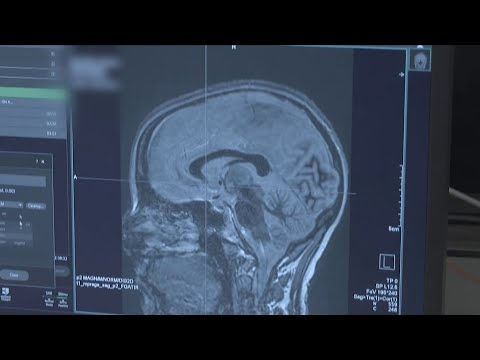
Algernon to Open the First Brain Dedicated PET Scanning Clinic in the U.S. at the HCA Florida University Medical Office Building
Globenewswire· 2026-03-23 11:00
Core Viewpoint - Algernon Health Inc. is set to open its first brain PET scanning clinic in the U.S., targeting early detection of Alzheimer's Disease and other neurological conditions, with plans for multiple locations across the country [1][2]. Company Overview - Algernon Health Inc. is a Canadian healthcare company focused on brain-specific PET scanning services for early-stage detection of Alzheimer's Disease, dementia, epilepsy, neuro-oncology, and movement disorders like Parkinson's disease [16]. - The company has a subsidiary, Algernon NeuroScience, which is advancing a psychedelic program for stroke and traumatic brain injury recovery [16]. Clinic Details - The inaugural clinic will be located at the HCA Florida University Medical Office Building in Davie, Florida, with a five-year lease and an option for renewal [1]. - The clinic will utilize the CareMiBrain™ system, a standalone diagnostic PET scanner that reduces radiation exposure by 25% compared to traditional PET/CT scanners [3][13]. Market Opportunity - The clinic will be the first in the U.S. to provide brain-dedicated PET scans, which are covered by Medicare, Medicaid, and private insurance for patients aged 65 and older [2]. - There is a significant market opportunity for brain-specific PET scans due to the recent approval of monoclonal antibody treatments for Alzheimer's Disease, which require a positive beta-amyloid brain scan for patient authorization [4]. - The current supply of PET/CT scanners is insufficient to meet the growing demand for Alzheimer's diagnostics, as 45% of existing scanners are primarily used for cancer and cardiac imaging [5]. Business Strategy - The company plans to collaborate with local neurologists, geriatricians, and primary care physicians to generate patient referrals for brain PET scans [6]. - Direct marketing efforts will target the 50+ population to raise awareness about the benefits of early detection and management of Alzheimer's Disease [6]. - Recent findings indicate that nearly 80% of Americans would prefer to know if they have Alzheimer's Disease before symptoms appear, highlighting the demand for early diagnostic services [7]. Equipment and Technology - Algernon has signed a definitive equipment order with Catalyst MedTech for four CareMiBrain™ systems, valued at over CAD $4 million, with plans for additional systems for future clinics [8]. - The CareMiBrain™ system features advanced technology for high-quality imaging and patient comfort, including ergonomic design and fast acquisition times [15]. Location and Demographics - The flagship clinic in Davie, Florida, is strategically located within a 60-mile radius of over 6.4 million people, including 2.5 million aged 50 and over, providing access to a key target market for brain PET scan services [9].

Prothena Corporation (NasdaqGS:PRTA) FY Conference Transcript
2025-12-04 16:52
Prothena Corporation FY Conference Summary Company Overview - **Company**: Prothena Corporation (NasdaqGS:PRTA) - **Focus**: Expertise in protein dysregulation with a robust pipeline in neurodegenerative diseases, including Alzheimer's, Parkinson's, and ATTR cardiomyopathy [2][22] Key Programs and Developments - **Phase 3 Programs**: - **Prasunezumab**: Targeting early Parkinson's disease in collaboration with Roche, expected to initiate in Q4 2025 [2][22] - **Coramitug**: Targeting ATTR cardiomyopathy in collaboration with Novo, which has already initiated Phase 3 [2][22] - **Phase 2 Program**: - **PRX019**: Targeting tau in Alzheimer's disease, partnered with Bristol Myers Squibb [2][22] - **Phase 1 Program**: - **PRX012**: An undisclosed target for neurodegeneration, also partnered with Bristol [2][22] Financial Outlook - Prothena anticipates earning up to **$105 million** in clinical milestones in 2026 related to coramitug and PRX019 [2][22] Shareholder Actions - Recently approved a share repurchase program for 2026 to support distributable reserves [2][22] Pipeline Insights - **Alzheimer's Program**: The company is exploring partnerships to advance its amyloid beta program, emphasizing the importance of collaboration for cost efficiency and bandwidth [4][5] - **Transferrin Technology**: Prothena is developing PRX012, which incorporates transferrin technology to enhance blood-brain barrier penetration. Preclinical data is expected in 2026 [7][17][18] Clinical Data and Efficacy - **Amyloid Reduction**: Over **80%** of patients treated with the amyloid beta molecule are reported to be amyloid negative after 18 months [5][6] - **ARIA Rates**: Reported around **40%** for the amyloid beta treatment, with ongoing efforts to mitigate these effects [6][7] - **Coramitug Data**: Recent presentations showed a **50%** difference from placebo in NT-proBNP levels, supporting the move to Phase 3 [24][25] Collaborations and Partnerships - Prothena has established strong collaborations with Roche, Novo, and Bristol Myers Squibb, focusing on scientific dialogue and clinical decision-making [22][26] - The company is actively supporting partner programs as they transition into Phase 3 [26] Regulatory Considerations - The company is preparing for potential IND submissions, with ongoing discussions with the FDA regarding preclinical toxicology requirements [8][9] Market Position and Future Directions - Prothena is positioning itself to leverage its unique constructs in the competitive landscape of Alzheimer's treatments, particularly with its transferrin-based technology [17][40] - The company is closely monitoring developments in the field, including Eli Lilly's studies, to inform its strategic direction [5][40] Conclusion - Prothena Corporation is advancing multiple promising programs in neurodegenerative diseases, with a strong focus on collaboration and innovative technologies to enhance treatment efficacy and patient outcomes [2][22][40]

Stabilizing the human | Nicola Pambakian | TEDxCrocetta
TEDx Talks· 2025-11-17 16:30
This is a self-driving car. It can bring people safely uh from one place to another. It will switch lane automatically. It will avoid obstacles.Uh it will park by itself, stop at traffic lights. All these things work thanks to uh control engineering. I am a control engineer and what we learn is to uh automate machines and uh control systems.Our fields of application are many. They go from uh robotic arms in the uh factories uh to the uh altitude and orbit control of satellites. They can reach enormous dimen ...
X @The Wall Street Journal
The Wall Street Journal· 2025-11-07 07:03
Health & Environment - Some doctors suggest that chemicals in the environment, from golf courses to dry cleaners, may be increasing the risk of Parkinson's disease [1] - Parkinson's disease is identified as the fastest-growing neurodegenerative disease globally [1]
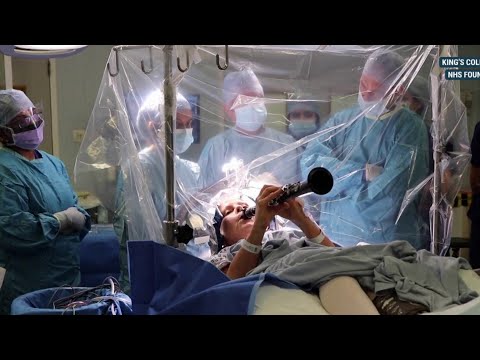
Parkinson's patient plays clarinet during brain surgery
NBC News· 2025-10-23 13:50
Medical Innovation & Treatment - Deep brain stimulation with electrical impulses is used to treat Parkinson's disease, showing immediate improvement in motor skills [1][2] - Personalized treatment plans can provide long-term benefits for patients with Parkinson's disease [3] - Music and other engaging activities can be integrated into brain surgery procedures [4][5] Patient Outcomes & Recovery - A 65-year-old Parkinson's patient regained the ability to play the clarinet after brain surgery [1][2] - Patients experienced immediate improvements in mobility and overall quality of life following the procedure [1][5] - The advancements in modern medicine are making previously unthinkable treatments a new reality for patients [5]
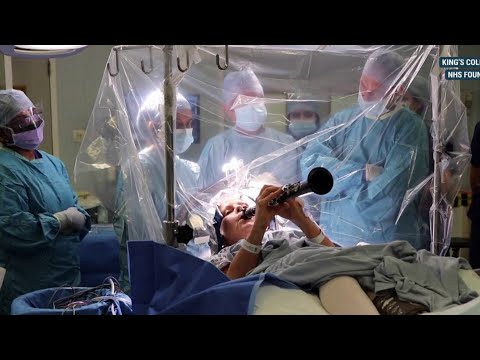
Parkinson's patient plays clarinet during brain surgery
NBC News· 2025-10-23 02:38
Medical Innovation & Surgical Advancements - The medical field is showcasing innovative surgical techniques, including stimulating the brain with electrical impulses during surgery to improve patient outcomes [1][2] - Personalized treatment plans are being developed to provide long-term relief for patients with conditions like Parkinson's disease [3] - Music and patient engagement, such as playing instruments during brain surgery, are emerging as methods to monitor and enhance surgical precision [4][5] Patient Outcomes & Quality of Life - Patients are experiencing immediate improvements in motor skills and overall quality of life following these advanced surgical procedures [1][5] - The ability to resume cherished activities, like playing musical instruments, signifies a significant return to normalcy for patients [2][5] - Modern medicine is enabling what was once considered impossible, offering renewed hope and a future for patients with debilitating conditions [5][6]
The Art of Touch | Dishita Bajaj | TEDxVandegrift HS
TEDx Talks· 2025-10-13 16:01
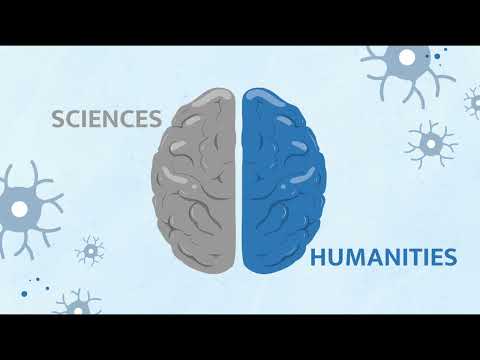
Problem Statement & Impact - Neurological conditions create emotional weight on families and patients, isolating individuals and limiting their interaction with the world [6] - In the US, over 1 million people are living with Parkinson's disease, with 90,000 new diagnoses annually [8][9] - Medications for Parkinson's can cost up to $2,500 per person, and therapeutic surgeries can exceed $100,000 [9] Proposed Solutions & Technologies - Brain Machine Interfaces (BMIs) can recreate the sense of touch and allow users to control devices with their thoughts [13][14] - Haptic feedback, the science of recreating the sense of touch, can be implemented in BMIs and prosthetics to enhance the user experience [17][18] - Engineering and science can be combined with humanities to create effective and deeply human treatments for neurological conditions [10][21] Call to Action & Vision - The industry should focus on thriving, not just surviving, by creating connections for people with neurological diseases [20] - There is a need to blend STEM fields with humanities to develop treatments that are not only effective but also deeply human [19][21] - The industry should shift focus from complex technologies like AI and robots to simpler solutions that enhance the simple joys of life [22][23]
Engineering Hope: Restoring Movement in Parkinson’s Disease | Amey Desai | TEDxDJSCE
TEDx Talks· 2025-09-12 16:38
Parkinson's Disease & Engineering Solutions - Parkinson's disease is a neurodegenerative disease impacting movement, specifically causing freezing of gait [2] - Freezing of gait leads to falls, loss of independence, and fractures [3] - Engineering solutions, such as a small stimulus, could potentially prevent freezing of gait [3] - A key challenge is overcoming the stigma associated with assistive devices [4] - Adoption of external technology and regulatory hurdles are significant considerations [5] - The development of a biocompatible device is crucial [5] Vibration Device & Patient Outcomes - A small wearable device was developed to address freezing of gait using gentle pulses of vibration [5][6] - A retired colonel with Parkinson's disease regained his mobility and independence through the use of the device [6] - Gentle vibration can reset the compass, restoring mobility and independence [7]