Planning

Search documents
X @Andrew Tate
Andrew Tate· 2026-03-15 15:33
RT TOPG (@topgbrand)Action is more effective than manifestationAction is more effective than dreamingAction is more effective than hopingAction is even more effective than planning https://t.co/KGbzG0S1g2 ...
County sheriff discusses investigation into Michigan synagogue attack
MSNBC· 2026-03-13 19:24
MICHAEL UCHARD, THANK YOU VERY MUCH FOR JOINING US, SIR. welcome do you know more about the motivation here the motivation still a bit of work in progress we all you know have our presumptions obviously it was very targeted it was on a Jewish facility in light of what's going on in the world. But, you know, that has to be connected with evidence.So we're working very closely, all of us, our state and local and federal partners, the FBI. There was a search warrant that was executed last night that you know e ...


AI's Research Frontier: Memory, World Models, & Planning — With Joelle Pineau
Alex Kantrowitz· 2026-01-30 11:18
Joelle Pineau is the chief AI officer at Cohere. Pineau joins Big Technology Podcast to discuss where the cutting edge of AI research is headed — and what it will take to move from impressive demos to reliable agents. Tune in to hear why memory, world models, and more efficient reasoning are emerging as the next big frontiers, plus what current approaches are missing. We also cover the “capability overhang” in enterprise AI, why consumer assistants still aren’t lighting the world on fire, what AI sovereignt ...

X @Forbes
Forbes· 2025-11-27 12:32
Entrepreneurs often focus on action, valuing the hustle and determination that drive success. However, without strategic pauses, there's a risk of gaining momentum in the wrong direction. It's critical to pause, reflect and plan before moving forward. https://t.co/lSZpBY3tWG ...
What are Deep Agents?
LangChain· 2025-11-24 07:14
Hey, this is Lance. I want to talk a bit about the deep agents package that we recently released. Now, the length of tasks that an agent can take every seven months.And we see numerous examples of popular longrunning agents like Claude Code, Deep Research, Manis. The average Manis task, for example, can be up to 50 different tool calls. And so, it's increasingly clear that agents are needed to do what we might consider deeper work or more challenging tasks that take longer periods of time.Hence, this term d ...

Why Most AI Agents Fail — and How a Simple Todo List Fixes It
LangChain· 2025-11-13 17:01
Hi, this is Christian from Lchain. Most AI agents today don't think ahead. They just react one step at a time.And that's why exactly they get sometimes stuck, loop, hallucinate, or just burn money. But here's a twist. With just one piece of state, a simple to-do list, an agent can suddenly plan, execute reliably, and finish task like a professional.The to-do list middleware for longchain agents will help you with exactly that. Today I will show you why planning can change everything and when it actually mak ...

The Power of Not Having a Plan | Priyanshi Sharma | TEDxIIMShillong
TEDx Talks· 2025-10-23 15:40
Career & Passion Discovery - The talk addresses the common desire to have a 5-year plan and questions whether rigidly sticking to pre-conceived plans is beneficial [1][2][3] - The speaker shares personal experiences to illustrate the power of not having a fixed plan and trusting the unknown to discover one's true passion [3] - The talk introduces three practical mantras to help individuals discover their passions, using the speaker's life as a case study [3] - The speaker emphasizes the importance of identifying what one doesn't want to do as a crucial step in finding one's true calling [4][5] - The speaker suggests evaluating current career paths by considering whether one aspires to be like their seniors [4] - The speaker shares that discovering what you are meant to do often leads to excelling in that field [6] Practical Exercises & Mantras - Mantra 1: Determine if you want to put in the effort to improve at your current job [5] - Mantra 2: Finding out what you don't want to do is crucial [5] - Mantra 3: The "Design Your Life" exercise involves creating three different "Odysseys" or possible futures, categorized year-wise, to explore different life paths and identify desired elements [6] Importance of Flexibility - The speaker clarifies that not having a plan doesn't mean being aimless but rather being open to taking risks, experimenting, and innovating [7] - The speaker advocates for making plans but not allowing them to limit potential or define one's path, emphasizing the power of rebooting when plans don't work out [7]

聊聊 AI Agent 到底有多大创新?
自动驾驶之心· 2025-10-18 04:00
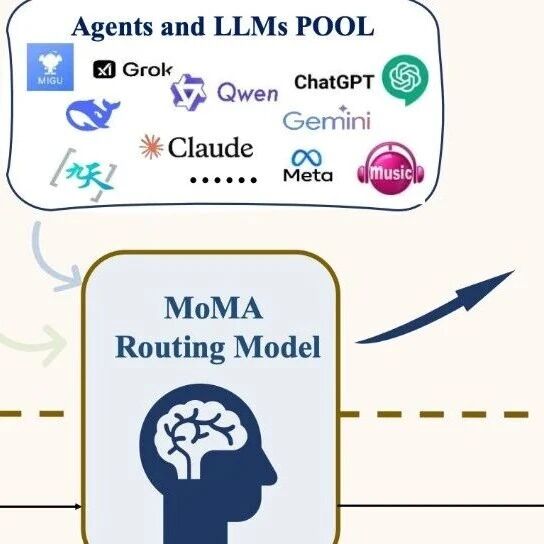
Core Insights - The article discusses the current limitations and challenges faced by AI agent technologies, particularly in comparison to traditional task bots, highlighting that the user experience has not significantly improved over the past decade [1][2]. Group 1: Planning Challenges - The planning phase is time-consuming, and as the number of tools increases, the accuracy of turbo models declines, necessitating the use of flagship models, which further increases latency [2][5]. - The quality of planning is insufficient; the workflows generated by models are less effective than those designed by humans, particularly in complex scenarios [2][8]. - The core issue with slow planning is the underestimation of the costs associated with tool discovery and parameter alignment, leading to a complex optimization problem when dynamically selecting tools [5][21]. Group 2: Reflection Issues - Reflection processes can lead to self-reinforcing cycles of inefficiency due to a lack of fine-grained computable signals and clear stopping conditions [3][15]. - Current models rely on weak feedback mechanisms, which can result in reinforcing incorrect assumptions rather than correcting errors [15][20]. - Proposed solutions include structured reflection processes that allow models to learn from mistakes and improve their performance through reinforcement learning [18][20]. Group 3: Engineering Solutions - Suggestions for improving planning quality include decomposing plans into milestones and local prompts, which can enhance stability and reusability [8][10]. - Implementing parallel execution of tasks can reduce overall processing time, with evidence showing a 20% reduction in time for non-dependent tool calls [6][21]. - The introduction of routing strategies can streamline task execution by directing simpler tasks to specialized executors, reserving complex planning for stronger reasoning models [6][21]. Group 4: Future Directions - The article emphasizes the importance of combining reinforcement learning with agent models to enhance their reasoning and execution capabilities, indicating a trend towards end-to-end learning approaches [20][21]. - The potential for AI agents to become valuable applications of large language models (LLMs) in real-world scenarios is highlighted, with ongoing improvements expected as models evolve [21].