
Power Shortage

Search documents
US Power Shortage: How Small Modular Nuclear Reactors Could Fill the Gap
Bloomberg Television· 2025-12-14 13:00
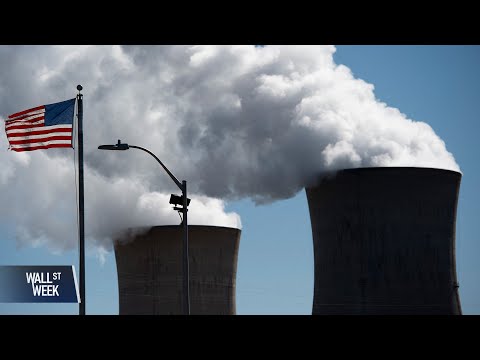
-What we know now is that the nation, the country is short of electrons and we need to build more generation. -We do have an incredible demand, increasing demand for energy. -We are seeing fundamental growth in the demand for electricity.Westin: Why do we suddenly need so much more electricity. Well, we've all heard about AI data centers hungry for energy that would satisfy medium-sized cities, but it turns out that's only part of the story. -AI data centers appear to be the sort of fastest coming and large ...

Why getting a data center built may be harder than you think
Bloomberg Television· 2025-12-13 22:00
Power Constraints on Data Centers - The industry acknowledges that power, rather than chips or financing, is a significant bottleneck for data center development [1] - Power challenges involve both overall power availability and the distribution of power to desired data center locations [1] Interconnection and Approval Processes - Data centers face challenges in drawing power from the grid and obtaining necessary approvals for power generation [2] - Securing interconnection permission for large data centers can take approximately five years [2] Project Timelines and Delays - Data center construction projects often experience timeline extensions, deviating from initial estimates of 18 to 36 months [3] - Project delays are likened to the unpredictable boarding process at an airport, where initial expectations are often unmet [3][4]
人工智能技术扩散:AI 峰会核心要点-AITech Diffusion-Powering AI Summit Key Takeaways
2025-12-05 06:35
Summary of Key Takeaways from the Powering AI Summit Industry Overview - The report focuses on the **AI and Tech Diffusion** industry in **North America**, particularly the challenges and opportunities related to power supply for data centers. Core Insights 1. **Power Shortage Risk**: There is a significant risk of a power shortage for data center developers in the US, with an anticipated **10-20% shortage** over the next several years, particularly in **2027 and 2028** [3][7][10]. 2. **Off-Grid Solutions Preference**: A growing preference for off-grid power solutions is noted, driven by the desire to mitigate political and execution risks associated with on-grid projects. This trend is expected to continue as developers seek to avoid issues related to power prices, water usage, and project footprint [4][7]. 3. **Improving Deal Terms**: There are improving terms for power and data center development transactions, although execution risks remain significant due to supply chain and labor challenges. The year **2026** is anticipated to be critical for project execution success [9][10]. 4. **Labor and Equipment Shortages**: There are increasing challenges related to securing skilled labor, particularly in data center design and construction, which could impact project timelines and costs [11]. 5. **Battery Storage Dynamics**: Battery storage is expected to become a critical component for data centers, potentially leading to a "bring your own power" dynamic in **2026**. This could help alleviate concerns about contributing to higher power prices during peak demand [11]. 6. **Natural Gas Demand**: Natural gas is projected to play a key role in meeting rising power needs, contributing to a positive market outlook for the sector [13]. 7. **Micro-Grid Competitiveness**: Micro-grids are becoming increasingly competitive compared to traditional grid solutions, offering better emissions profiles, improved price visibility, and attractive performance obligations [14]. Additional Noteworthy Points - **Long-Term Contracts**: Most new data center project agreements are for delivery in the **2028-2030** timeframe, indicating a potential shortage of power for developers in **2026** and **2027** [10]. - **Demand for Compute**: There is a strong demand for compute power, with expectations that the compute needs will exceed supply, particularly as AI capabilities improve [17][25]. - **Investment Opportunities**: Recommended investment positions include companies involved in "time to power" solutions, such as utilities, Bitcoin conversion opportunities, and natural gas players that can provide bundled solutions [17]. - **Stock Performance Drivers**: The performance of stocks related to power and data center solutions is expected to be increasingly driven by the success of project execution in the coming years [9]. Conclusion The Powering AI Summit highlighted critical challenges and opportunities in the AI and tech diffusion sector, particularly regarding power supply for data centers. The insights gathered suggest a significant shift towards off-grid solutions, a focus on improving deal terms, and the necessity for strategic investments in the evolving landscape of AI infrastructure.
为 AI 与比特币转换商业模式供能,美国电力短缺及全景展望-AITech Diffusion-Powering AI Bitcoin Conversion Business Models, a US Power Shortage, and the Big Picture
2025-11-12 02:20
Summary of Key Points from the Conference Call Industry Overview - The focus is on the AI Infrastructure sector, particularly the intersection of Bitcoin mining and data center operations in North America, highlighting the potential for significant technological shifts in the industry [3][4][7]. Core Insights - **Power Shortage Projection**: A projected power shortfall of up to 20% (approximately 13 GW) for US data centers through 2028, driven by increasing compute demand and AI advancements [4][19][22]. - **Business Models**: Two primary Bitcoin-to-data center conversion models are assessed: 1. **New Neocloud Model**: Involves Bitcoin miners purchasing GPUs/TPUs, constructing data centers, and leasing them to hyperscalers with short-term leases (e.g., IREN's 5-year lease with Microsoft) [4][7]. 2. **REIT Endgame Model**: Bitcoin miners build "powered shells" and sign long-term leases with hyperscalers or neoclouds, which can yield higher valuation multiples due to the attractiveness of long-term cash flows [4][14]. Tactical Considerations - **Time to Power Solutions**: Emphasis on innovative solutions to address the power bottleneck, including repurposing Bitcoin mining centers for high-performance computing (HPC) data centers [4][19]. - **Leverage and Valuation**: Transactions with hyperscalers are expected to have higher leverage capacity and valuation premiums compared to neocloud projects, with a noted 2.5-turn premium for hyperscaler-backed projects [9][14]. Financial Metrics - **Cash Flow and Valuation**: The analysis indicates significant differences in unlevered cash flow yields and leverage capacity between neocloud and hyperscaler transactions, with publicly traded data center REITs trading above 20x EV/EBITDA [9][14]. - **Recent Transactions**: A detailed comparison of recent Bitcoin-to-DC transactions shows varying lease terms, total IT loads, revenue per watt, and operating margins, highlighting the financial viability of both business models [12][17]. Execution Risks - **Construction Challenges**: The urgency for power access and construction of powered shells is increasing, but execution risks remain, including labor availability and supply chain issues [11][13][26]. - **Cascading Constraints**: The potential for a "constraint cascade" affecting data center growth, with power being the most significant limiting factor, could lead to a mismatch between AI compute supply and demand [26][29]. Big Picture Dynamics - **Non-linear AI Improvement**: The rapid advancement of AI capabilities is expected to have profound impacts on asset valuations, with a potential catalyst in 1H26 when LLM developers apply significantly more compute to training [30][33]. - **Market Demand**: The demand for compute resources is described as tremendous, with companies like Google indicating they are turning away opportunities due to power and supply chain limitations [34]. Conclusion - The intersection of Bitcoin mining and AI infrastructure presents both opportunities and challenges, with significant implications for power demand, business model viability, and the overall landscape of the tech industry [3][4][7][30].
Generac CEO: 'Amazing' how quickly backlog is growing for data centers
Youtube· 2025-11-10 16:34
Core Viewpoint - The company is experiencing significant growth in its data center business, driven by increasing demand for backup power solutions due to the rise of AI and power shortages [3][12][20]. Company Insights - The company has a backlog of $300 million in orders and anticipates doubling its commercial and industrial (CNI) business from $1.5 billion to $3 billion in the next 3 to 5 years [3][20]. - The company has been in the generator business for 65 years, primarily known for residential products, but is now expanding into larger industrial generators [5][6]. - The company is ramping up production at a new facility in Wisconsin to meet global demand, with shipments already occurring in Australia [8][9]. Industry Context - The demand for power is expected to increase significantly, with AI projected to add 100 gigawatts of new demand over the next five years, equivalent to the power needs of 20 New York City-sized populations [12]. - The residential generator market is growing, with 7% of U.S. households now owning a standby generator, although price increases of 20% over the last few years are impacting consumer purchasing decisions [14][15]. - The company’s products are primarily for emergency backup power, addressing the growing issue of power outages caused by insufficient supply rather than just weather-related events [10][16]. Competitive Landscape - Competitors like Caterpillar and Cummins are also performing well in the generator market, indicating strong demand and supply constraints in the industry [19].
