Price - to - book ratio

Search documents
19% High Dividend Yield At Risk Of Being Cut By Orchid Island Capital (NYSE:ORC)
Seeking Alpha· 2026-02-06 20:41
Core Viewpoint - Orchid Island Capital (ORC) is an agency mortgage REIT with a historically poor performance track record, making it a less favorable investment option in many situations [2][14]. Group 1: Company Overview - ORC primarily invests in agency mortgage-backed securities and has not historically performed well, leading to significant capital erosion for investors [2][9]. - The current trading price of ORC is around its book value, which is considered too high given its poor historical performance [14]. Group 2: Performance Metrics - The book value and share price of ORC have shown a declining trend over time, with significant losses reported in various quarters [9][12]. - ORC's performance compared to other agency mortgage REITs has been notably poor, with substantial declines in total return percentages during various quarters [11]. Group 3: Investment Strategy - The investment strategy of ORC involves buying fixed-rate agency MBS and hedging duration risk using instruments like LIBOR swaps or futures contracts [10]. - Investors have occasionally found opportunities to trade ORC shares when valuations collapse below historical levels, although this is not currently the case [3][14]. Group 4: Financial Insights - The financial statements indicate that ORC has faced challenges with net interest income and has incurred losses on mortgage-backed securities [21]. - Management fees and operating expenses have increased, raising concerns about the sustainability of dividends for common shareholders [18][31]. Group 5: Market Sentiment - Investor sentiment towards agency mortgage REITs has improved recently, attributed to a reasonable spread between agency mortgages and Treasury rates, but caution is advised regarding reliance on historical performance [23][24]. - Preferred shares in the mortgage REIT sector are recommended for investors seeking lower volatility and more reliable dividend levels compared to common shares [27][28].



19% High Dividend Yield At Risk Of Being Cut By Orchid Island Capital
Seeking Alpha· 2026-02-06 20:41
Core Viewpoint - Orchid Island Capital (ORC) is an agency mortgage REIT with a historically poor performance track record, making it a less favorable investment option in many situations [2][14]. Group 1: Company Overview - ORC primarily invests in agency mortgage-backed securities and has not historically performed well, leading to significant capital erosion for investors [2][9]. - The current trading price of ORC is around its book value, which is considered too high given its poor historical performance [14]. Group 2: Performance Metrics - The book value and share price of ORC have shown a clear declining trend over time, with investors experiencing substantial principal loss despite receiving dividends [7][9]. - A reverse split has affected the historical price per share, making it appear higher than it was, but the percentage decline remains accurate [9]. Group 3: Market Sentiment and Valuation - Valuation is typically anchored by book value, but earnings and dividend levels also significantly impact investor sentiment, which can lead to fluctuations in the price-to-book ratio [5][12]. - Investors are advised to be cautious about relying too heavily on historical performance metrics, as they may not accurately reflect current market conditions [23]. Group 4: Investment Strategy - Investors may find opportunities to trade ORC shares when valuations drop below historical levels, although this is not currently the case [3]. - Preferred shares in the mortgage REIT sector are recommended for investors seeking lower volatility and more reliable dividend levels compared to common shares [27][28]. Group 5: Financial Performance - For the nine months ended September 30, 2025, ORC reported net interest income of $69.736 million, with total expenses of $14.663 million, leading to a net income of $55.622 million [21]. - The preferred shares maintain a base value of $25, providing stability in dividend calculations despite fluctuations in common share book value [29]. Group 6: Future Outlook - The current dividend of ORC is considered unsustainable given its book value, indicating a high likelihood of future cuts [31]. - The spread between agency mortgages and Treasury rates has declined, which may affect the net interest income generated by mortgage REITs like ORC [24].

AGNC Investment Corp (NASDAQ:AGNC) Stock Update and Insider Trading Activity
Financial Modeling Prep· 2025-10-29 00:10
Core Viewpoint - AGNC Investment Corp is positioned as a strong buy due to its robust financial performance and favorable market conditions, particularly in the agency mortgage-backed securities sector [3]. Company Overview - AGNC Investment Corp is a real estate investment trust (REIT) that primarily invests in agency mortgage-backed securities (MBS) on a leveraged basis, aiming to provide attractive risk-adjusted returns through dividends and capital appreciation [1]. Recent Transactions - On October 28, 2025, Federico Peter J, the director, President, CEO, and CIO of AGNC, sold 45,798 shares at approximately $10.30 per share, while still retaining around 1.51 million shares, indicating a significant personal investment in the company [2][5]. Financial Performance - AGNC's third-quarter earnings report indicates a strong buy recommendation, with a 6% increase in net book value quarter-over-quarter, attributed to the expansion of its MBS portfolio and the benefits of declining interest rates [3][5]. - The company's stock price is currently $10.19, reflecting a slight decrease of 1.07%, with fluctuations between $10.16 and $10.31 on the day [4][5]. - Over the past year, AGNC's stock has experienced a high of $10.63 and a low of $7.85, with a market capitalization of approximately $10.7 billion [4][5].


Is HSBC's US$13.6 billion buyout offer good enough for Hang Seng Bank investors?
Yahoo Finance· 2025-10-10 09:30
Core Viewpoint - HSBC Holdings has made a US$13.6 billion bid to acquire the remaining 36.5% stake in Hang Seng Bank, offering HK$155 per share, which represents a 30% premium over the previous closing price, potentially creating long-term value for HSBC [1][2]. Valuation and Market Reaction - The proposal values Hang Seng Bank at HK$290 billion (US$37.3 billion), which is 1.8 times its book value, significantly higher than comparable Hong Kong peers [2]. - Following the announcement, Hang Seng Bank's stock experienced its largest intraday surge on record [3]. Management Perspective - HSBC group CEO Georges Elhedery stated that the acquisition aligns with the criteria set by HSBC in February [4]. - Analysts noted that the acquisition reflects the new management's priorities and aims to create long-term value for shareholders [6]. Analyst Opinions - Some analysts believe the offer could be improved, suggesting a reasonable price-to-book ratio should be between 2.3 and 2.5 times [4]. - Mike Leung Kit-man expressed optimism about Hang Seng Bank's prospects, indicating that the worst may be over for the bank and the Hong Kong market [5]. - Andrew Coombs from Citigroup noted that the valuation fits HSBC's calculations [7].

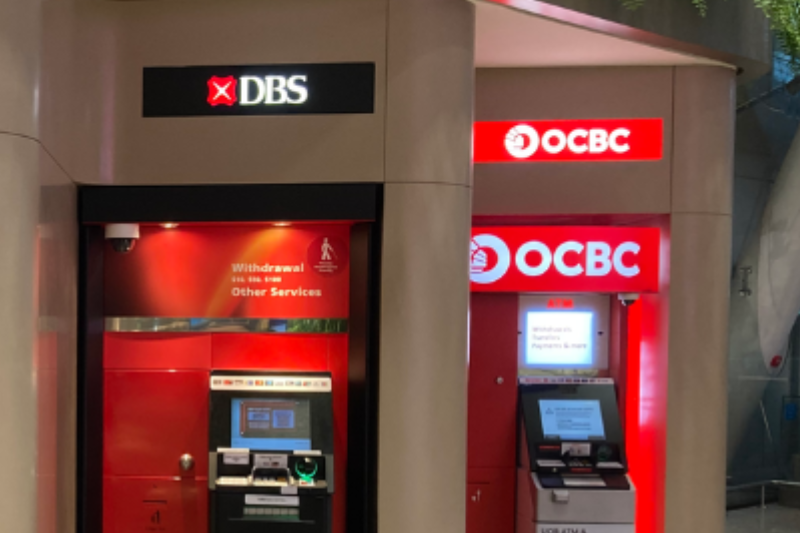
DBS vs OCBC: Which Bank Stock Looks Stronger After the Fed Rate Cuts?
The Smart Investor· 2025-10-08 23:30
Core Viewpoint - The Federal Reserve's interest rate cuts will significantly impact banks, with DBS likely to perform better than OCBC in this new environment [1][6]. DBS Group Holdings Ltd - DBS is the largest bank in Singapore, showing resilience with stable net interest income (NII) despite falling interest rates [2][3]. - For 2Q2025, DBS reported NII of S$3.6 billion, a 2% year-on-year increase, supported by a 4% growth in its deposit book [2][3]. - The net interest margin (NIM) decreased to 1.95% from 2.05%, but NII for 2025 is still expected to be higher year-on-year [3]. - Fee income increased by 10.4% year-on-year to S$1.4 billion, with wealth management contributing significantly [4]. - Dividends remain robust, with a declared S$0.75 per share for 2Q2025, consisting of S$0.60 in ordinary dividends, an 11% increase year-on-year [5]. Oversea-Chinese Banking Corporation Ltd - OCBC faces more challenges in the new interest rate environment, with NII declining 6% year-on-year to S$2.28 billion for 2Q2025 [6][8]. - The insurance arm, Great Eastern, contributed to volatility, with a 23.1% year-on-year decline in contributions due to lower interest rates [8]. - OCBC's interim dividend for 1H2025 was reduced to S$0.41 per share, a 6.8% decline year-on-year [8]. Comparison: Valuation, Yields, and Exposure - DBS has a trailing price-to-book (P/B) ratio of 2.3 times, significantly higher than its three-year average of 1.57 times, indicating a premium valuation [13]. - OCBC's trailing P/B ratio is 1.30 times, which is more attractive compared to its historical average of 1.1 times [13]. - DBS's annual dividend yield is 4.2%, while OCBC's is higher at 4.8% based on ordinary dividends [9]. - DBS has a diversified exposure with 45% in Singapore, 26.5% in Greater China, and 19.7% in the Rest of the World [10]. - OCBC has a similar exposure to Singapore (42.8%) but greater exposure to Southeast Asia (13.7%) [11]. Investment Implications - DBS offers stronger diversification and resilience due to its fee income growth, particularly in wealth management [14]. - OCBC may appeal to value-seeking investors despite its weaker fundamentals, as it is priced more attractively [15][16]. - The choice between DBS and OCBC depends on investor preference for resilience and growth versus value and insurance exposure [16].
These 3 Stocks Could Be Back in Play Before You Know It
MarketBeat· 2025-06-10 18:44
Core Viewpoint - The current economic cycle favors certain stocks outside the crowded technology sector, particularly in the industrial sector, which may offer better risk-to-reward ratios [1][2]. Group 1: Industrial Sector Insights - The industrial sector is experiencing underlying tailwinds due to trade tariff negotiations between the United States and China, which could unlock new earnings forecasts [2][3]. - Companies like CF Industries, Caterpillar, and Deere are positioned to benefit from these developments, suggesting a shift in investor focus towards these stocks [4]. Group 2: CF Industries Analysis - CF Industries has a 12-month stock price forecast of $90.21, indicating a potential downside of 2.36% from the current price of $92.40, based on 15 analyst ratings [5]. - The agricultural industry is currently facing uncertainty due to tariffs, but renewed certainty could lead to significant recovery in profits [6]. - Institutional investors have increased their position in CF Industries by 10.1%, reflecting growing confidence in the stock [6][7]. - CF Industries trades at a price-to-book (P/B) ratio of 2.1x, which is above the agricultural industry's average of 1.05x, indicating a premium valuation [8]. Group 3: Deere & Company Insights - Deere & Company has a current stock price of $514.63 with a 12-month forecast of $515.19, suggesting a slight upside of 0.11% [10]. - Analyst Jamie Cook from Truist Financial has placed a Buy rating on Deere with a price target of $619, implying a potential rally of up to 20% [11]. - Institutional capital flowing into Deere stock has reached $3.3 billion, indicating increased investor confidence [12]. - Deere trades at a P/B ratio of 6.2x, significantly higher than the industrial sector's average of 4.3x, reflecting strong market sentiment [13]. Group 4: Caterpillar Stock Outlook - Caterpillar has a current stock price of $357.85 with a 12-month forecast of $372.92, indicating a potential upside of 4.21% [14]. - The anticipated infrastructure spending bill could benefit Caterpillar as it is positioned to be a key provider of machinery and equipment [15]. - Bank of America has reiterated a Buy rating on Caterpillar with a price target of $385, suggesting a potential rally of 7.5% [18].