Radiation

Search documents
Who's Afraid of the Big Bad X-Ray? | Dania Tamimi | TEDxUniversityofMississippi
TEDx Talks· 2026-03-19 16:37
What's the first thing you think of when you hear the word radiation? Take a moment here and think about it. Did anyone think of a day at the beach or maybe the last plane ride you took? The truth is radiation is all around us and we don't even feel it. It's an unassuming objects like the banana you had for breakfast, the earth beneath your feet, or the sun that you enjoy on your face. It is a fact of life. Yet, there seems to be some apprehension when it comes to the use of radiation for dental X-rays, wit ...

X @Nick Szabo
Nick Szabo· 2026-03-18 07:21
RT Kathleen Tyson (@Kathleen_Tyson_)If Israeli strike on Bushehr nuclear power plant in Iran releases radiation into the Persian Gulf, then desalination plants must close and all Gulf populations become refugees. https://t.co/uZsaIooYyk ...
X @Bloomberg
Bloomberg· 2025-11-12 08:30
Trade Relations - The US has flagged Indonesian footwear exports for radiation [1] Export Concerns - Indonesian shrimp and cloves are already on the US list of flagged exports [1]
Radiation, Reactors, and Reality; Understand the Truth About Nuclear Power | K.N. VYAS | TEDxSurat
TEDx Talks· 2025-11-03 16:15
Nuclear Energy Safety and Public Perception - The industry addresses misconceptions about radiation harming human life, potential radioactivity leaks from nuclear power stations, and the permanent hazard of spent fuel [1][2] - Early radiation safety standards, based on limited low-dose data, led to overly cautious regulations, which the industry now believes are not entirely supported by more recent data from nuclear plant workers and medical patients [5][6] - The industry emphasizes that low-dose radiation exposure within prescribed limits is not significantly harmful to human health, supported by epidemiological studies showing no abnormal cancer increase in plant workers and surrounding communities [7][10][11] - Regulatory boards prescribe a maximum dose of 1 millisievert per year for the public, which is less than half of the natural background radiation dose and significantly less than a chest CT scan (6-7 millisievert) [8][9] Spent Fuel Management and Reprocessing - India, unlike the USA, reprocesses spent nuclear fuel to extract reusable uranium and plutonium, as well as useful radioisotopes [13] - Reprocessing of one ton of spent fuel can generate 336 million kilowatt hours of electricity, with over 99% being uranium and plutonium that can be reused or safely stored [14] - Useful isotopes extracted from spent fuel, such as strontium-90, cesium-137, and americium-241, have applications in blood irradiators, cancer treatment plaques, and deep space missions [14][15] Nuclear Energy and Climate Change - Nuclear power is presented as a clean and concentrated energy source that does not generate carbon dioxide during operation, crucial for mitigating climate change [18] - While solar and wind energy are vital, they are intermittent, unpredictable, and require significantly more land compared to nuclear power (a 1,000 megawatt electric nuclear power station requires 1 square mile, while solar requires approximately 45 times more) [19][20] - India aims to increase nuclear power generation from 8 gigawatt electric to 100 gigawatt electric by 2047, a 12-fold increase, to achieve net-zero carbon footprint by 2070 and improve the human development index [20][21][23]
That’s Rad: Nuclear Normalization | Grace Stanke | TEDxWakeForestU
TEDx Talks· 2025-10-24 15:17
Nuclear Energy Overview - Nuclear energy faced initial negative perceptions due to events like the atomic bombings and Three Mile Island incident, requiring positive interactions to overcome these impressions [1][2][6] - The industry emphasizes learning from past mistakes through the Institution of Nuclear Power Operators (INPO), a database for sharing and preventing errors [10][11][12] - Public support for nuclear energy remains a challenge, with only two new reactors coming online since 2000 [13][14] Nuclear Energy Technology and Efficiency - Modernization of nuclear power plants has increased efficiency, allowing fewer reactors (94 currently) to produce the same amount (20%) of America's electricity as 104 reactors in 1999 [29] - Nuclear fuel is highly energy-dense; one fuel pellet (about the size of a gummy bear) generates the same electricity as one ton (2000 lbs) of coal [32][33] - Nuclear power plants operate at 100% power output 93% of the time, making it the most reliable energy source compared to geothermal (74%) and natural gas (54%) [47] Nuclear Waste and Policy - The industry advocates for changing the term "waste" to "spent nuclear fuel" because 90-95% can be recycled and reused in reactors [35] - Reprocessing of spent nuclear fuel is actively practiced in France, Russia, India, and soon in Japan [36] - There is growing bipartisan support for nuclear energy at the federal level, with hundreds of bills proposed annually and some passing with near-unanimous votes [41][42] - The Biden administration aims to triple nuclear capacity in America, and the Secretary of Energy seeks to unleash the commercial nuclear energy industry for energy dominance [43] Nuclear Energy and Clean Energy - Nuclear energy is considered emissions-free and essential for mitigating climate change, providing reliable baseload power [45] - Unlike other energy industries, the nuclear industry can account for every piece of its waste, stored in dry casks on-site [44]
X @Bloomberg
Bloomberg· 2025-10-15 10:06
Healthcare Technology - Mammograms, while valuable, emit small amounts of radiation [1] - Mammograms can produce false positives [1] - Mammograms can be painful [1] - Caltech researchers are testing a safe, effective, pain-free option [1]
The 2011 Japanese Earthquake and Tsunami | 60 Minutes Full Episodes
60 Minutes· 2025-08-09 11:00
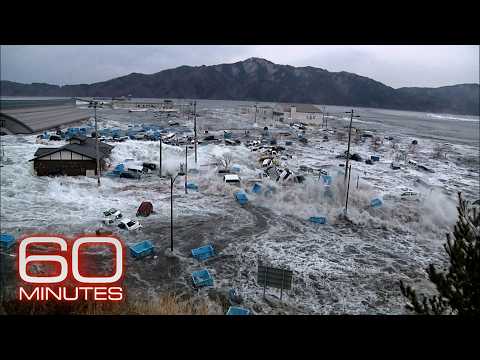
There's a reason we use a Japanese word for a catastrophic seismic ocean wave. Japan has had more tsunamis than any place else on Earth. And the massive 9.0% know earthquake 9 days ago and the subsequent tsunami has left nearly 8,500 people dead, some 13,000 missing and nearly a half a million homeless. And it leaves Japan teetering on the edge of a nuclear crisis that has already resulted in measurable amounts of radioactivity turning up in milk, drinking water, and in some crops. Scott P and a 60 Minutes ...