Sanitation

Search documents
Africa's Water Supply Faces Funding Gap, World Bank Says
Bloomberg Television· 2026-04-05 04:00
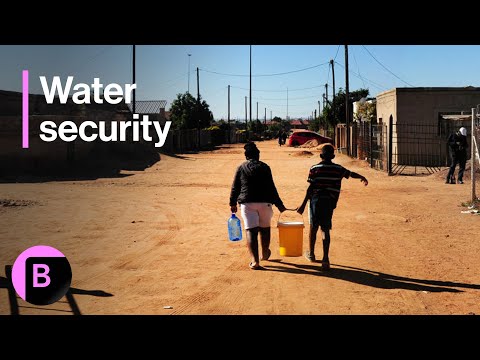
Access to water and sanitation in Sub-Saharan Africa is improving, but far too slowly. According to data from the World Health Organization and UNICEF's joint monitoring program, 840 million people in the region had access to basic drinking water services in 2024, up from 587 million a decade ago. But progress hasn't kept pace with population growth.Nearly one in three people in sub-Saharan Africa still lack basic water access. The gap reflects service delivery failures, underinvestment and weak governance ...

Sanitation and dignity rise and fall together | Jen van den Bussche | TEDxJohannesburg
TEDx Talks· 2025-12-11 17:59
Sanitation & Human Dignity - Access to proper sanitation, including toilets, is a fundamental human right, essential for maintaining dignity and health [3][4][5] - South Africa's history of inequality has resulted in unequal access to basic sanitation facilities in many communities [6] - Communities are taking charge, transforming sanitation into a space of dignity, action, and change [9] Infrastructure & Urban Planning - Toilets are a critical part of urban infrastructure, essential for healthy, livable, and functional cities [13] - High-density cities require safe and effective waste removal systems [12] - Plumbers play a vital role in maintaining the health of cities by ensuring proper sanitation [9][21] Community-Based Solutions - Community-based solutions, like those implemented by WSAP in Dipsoot, can effectively address sanitation challenges, even without consistent government support [15] - Active citizenship and community involvement are key to improving sanitation and bringing dignity to residents [21][25] - WSAP has demonstrated that cyclical maintenance reduces costs and using quality products leads to long-term savings [15] Water Conservation & Cost Savings - Regular maintenance of toilets can save significant amounts of water, with WSAP saving 4,000 liters per day per toilet [20] - In Dips extension one, WSAP saved 2 million liters of water annually through toilet maintenance [20] - Lack of access to water and sanitation costs 18 African countries $55 billion (550 亿) annually due to health costs, time loss, and productivity costs [17] Global Collaboration & Innovation - International collaborations, such as the International Community Plumbing Challenge, promote innovation and improve sanitation in communities [23] - Plumbing trade competitions, like World Skills, support trades and highlight their importance to economies and city health [22][23] - Plumbers worldwide are actively involved in projects that improve sanitation and promote healthy cities [21] Data & Quantification - In Dips extension one, there are 642 toilets for 25,000 registered residents, equating to 39 households per toilet [10] - Housing for Health, an Australian program, reduced hospital intake by 40% for environmental-related health issues by repairing household environments, including bathrooms and sanitation [17]
Where Do You Go When You Gotta Go? | Dr. Marakie Tesfaye | TEDxLogan Circle
TEDx Talks· 2025-11-05 16:27
Problem Statement & Feminist Perspective - Globally, one in three people lack access to basic sanitation [3] - Women spend over 98 billion hours annually seeking safe places to relieve themselves [3] - Lack of access to toilets is a feminist issue, impacting girls' futures, safety, and autonomy [3] - Toilets are about voice, presence, power, dignity, and access, yet rarely discussed in feminism [8] - Feminist sanitation justice addresses privacy, shame, and safety, not just infrastructure [11] Business & Social Impact Initiatives - A social impact business was launched to maintain toilet cleanliness, hiring women and selling advertising, but failed due to taboo [4] - Jeet, a movement, was launched to remove obstacles for women and girls [5] - Jeet advocated for the removal of tax on sanitary pads and remodeled school toilets [6] - Dignity kits with reusable sanitary napkins were designed to keep girls in school for up to two years [6] Education & Health Consequences - Girls miss up to 100 days of school annually due to lack of toilets and menstrual hygiene [7] - UNESCO confirms girls are more likely to drop out after puberty if schools lack toilets [7] - Lack of access leads to early marriage, domestic servitude, and exploitation [7] - Holding it in due to lack of toilet doors leads to dehydration, urinary tract infection, and kidney disease [9][10] Solutions & Recommendations - WASH (water, sanitation, and hygiene) should be reimagined as a feminist frontier, centering women's bodies and stories [12] - Address the "missing door" and listen to women's needs to achieve UN Sustainable Development Goal 6 [12] - Making sanitation a feminist issue is disruptive because toilets are about voice, presence, access, and power [13]