Skincare

Search documents
Ulta Beauty CEO Reveals The #1 Skincare Mistake You're Making (And Her Drunk Elephant Tip!)
Yahoo Finance· 2026-04-06 12:01
So psyched for my next special special super guest. It is Kecia Steelman Ulta Beauty CEO. Kecia, good to see you.Um I still remember when you were just Kecia's COO and now you like passed the one-year mark as CEO. I'm really I'm just really proud of you. >> Yeah, thank you, Brian.It's an honor to be here today and you know, I think we were just talking it's been 3 years, I think. >> 3 years. some conversations.It time goes really fast. I will say that. Time waits for no one.What am I I want to get into the ...


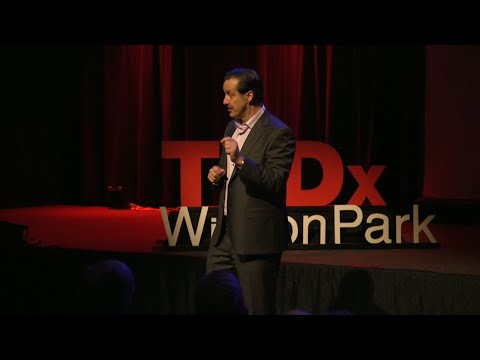
What Pigs Can Teach Us About Human Health and Sustainability | Charles Mayfield | TEDxWilsonPark
TEDx Talks· 2025-12-09 16:44
Pig Farming Industry & Historical Context - Pigs, introduced to North America in the 1400s-1500s, were once intimately familiar to everyone [1] - In the last century, pigs have faced numerous challenges, jeopardizing their contributions [2] - The perception of pigs needs to change, recognizing their contributions to medicine, farming, culinary arts, and skincare [4] - From the 1970s, the pork industry transitioned to concentrated animal feeding operations (CAFOs), turning pigs from heroes into villains [8] Medical Contributions - Galen, a famous doctor, credited much of his understanding of the human body to pigs through public dissections [5] - Up until the last decade, nearly every surgeon trained using pigs [6] - Pigs provide hormones and fluids for medical care, including heparin, insulin, and bile extracts [6] - Pig parts are used in heart valve replacements [6] - John's Hopkins was awarded over $21 million to advance pig organ viability for addressing the organ donor shortage [7] Farming & Sustainability - 986% of pork in the US is raised in factory farms, depriving pigs of sunshine, exercise, clean air, and water [7] - Pig manure, a valuable soil input, is transformed into toxic sludge in CAFOs, poisoning air and water [9] - Pigs' rooting behavior is essential and not solely tied to hunger [9] - Factory farming on concrete denies pigs this essential function [10] Culinary & Nutritional Aspects - The industry should look beyond bacon and consider nose-to-tail cooking [11] - Culinary roots are in lard, not tallow, but Crisco replaced lard in popularity [12] - World War II rationing further diminished lard's use [13] - Pastured pork lard is less prone to oxidation and has a better omega-6 to omega-3 fatty acid ratio [14] Skincare Applications - Pig skin and fat have historically been used for wound care and skin treatments [16] - The skincare industry is dominated by a vegan ethos, despite crop agriculture causing the deaths of over 18% billion wild animals annually [16] - Lard from pasture-raised pigs closely matches the lipid matrix of human skin [19] - Lard is non-comedogenic and deemed safe for cosmetic use in 2017 [20] Ethical Considerations & Future Actions - For many pigs, the only good day is the day their life ends [21] - The industry needs to increase pastured pork production from 1-2% to 5-10% in the coming decade [22] - Consumers can request pastured pork at grocery stores or find local farmers [22][23]
Yatsen Holding(YSG) - 2025 Q3 - Earnings Call Presentation
2025-11-17 12:30
Third Quarter 2025 Investor Presentation Yatsen Holding Limited Disclaimer This presentation has been prepared by Yatsen Holding Limited (the "Company") solely for information purpose. By viewing or accessing the information contained in this material, you hereby acknowledge and agree that no representations, warranties or undertakings, express or implied, are made by the Company or any of its directors, shareholders, employees, agents, affiliates, advisors or representatives as to, and no reliance should b ...

X @The Wall Street Journal
The Wall Street Journal· 2025-10-11 08:12
Market Trends - South Korea is a mecca for skincare enthusiasts [1] - Rejuran's success is partly due to interest in Korea-born beauty products and rituals [1] Expert Opinions - Some American doctors remain skeptical [1]
X @The Wall Street Journal
The Wall Street Journal· 2025-10-03 06:21
South Korea has long been a mecca for skincare enthusiasts, and part of Rejuran’s success is due to a broader interest in Korea-born beauty products and rituals. But some American doctors remain skeptical.🔗 https://t.co/vGFfwSgPu0 https://t.co/1AOiZIAJ99 ...
X @The Wall Street Journal
The Wall Street Journal· 2025-09-28 05:13
South Korea has long been a mecca for skincare enthusiasts, and part of Rejuran’s success is due to a broader interest in Korea-born beauty products and rituals. But some American doctors remain skeptical.🔗 https://t.co/ZBqRjLLw6b https://t.co/bvcAFeCMuG ...
X @The Wall Street Journal
The Wall Street Journal· 2025-09-20 21:11
South Korea has long been a mecca for skincare enthusiasts, and part of Rejuran’s success is due to a broader interest in Korea-born beauty products and rituals. But some American doctors remain skeptical.🔗 https://t.co/34kPaFvyxF https://t.co/Bkdwr6zeCh ...
Ayurveda’s Guide to Living Well -Inside and Out | Vaishali Shukla | TEDxVITPune
TEDx Talks· 2025-09-19 15:47
Skincare Industry Evolution & Trends - Skincare has evolved from ancient Ayurvedic practices to a commercialized industry influenced by British colonization, resulting in a hybrid skincare culture in India [4][5][6] - From the 1920s to 1940s, women primarily used soap, borolene, and talcum powder, while men mainly used water; currently, women follow 3-5 step routines, and men are adopting cleansing, moisturizing, and sun protection [7][8] - The skincare industry is projected to reach $47 billion by 2035 [13] - In 2024, 42% of millennials shopped for beauty products online, while Gen Z and Gen X each accounted for 36% [13][14] Ayurveda & Holistic Skincare (A-Beauty) - Ayurveda emphasizes looking beyond external applications, focusing on diet, lifestyle, and balancing internal physiology for skincare [16] - Mental health impacts skin: positive emotions improve skin, while negative emotions can inflame or dry it out [17][18][19] - The skin is semi-permeable, absorbing both beneficial and toxic elements, highlighting the importance of reading product labels [21][22][23] - The gut-skin axis connects digestion and skin health, with digestive issues potentially leading to skin problems like eczema or psoriasis [23][24][25] - A-beauty aligns with genetic makeup, cultural diversity, diet, and lifestyle, promoting health and cost savings [30] K-Beauty & Similarities with Ayurveda - K-beauty's rise exemplifies the changing skincare world, utilizing ingredients like Centella asiatica (Gotu Kola), licorice (mulleti), ginseng (similar to ashwagandha), and rice water [27][28] - There are similarities between K-beauty and A-beauty in terms of ingredients and focus on holistic well-being [29] Dark and Bright Sides of the Skincare Industry - The bright side of the skincare industry empowers consumers with knowledge of essential products (cleanser, moisturizer, sun protection), while the dark side thrives on insecurities, selling products with harmful ingredients [14][15] - The bright side promotes "less is more," while the dark side enforces "fear of missing out" and constant product consumption [15]