Small Business Optimism

Search documents
Crude Oil Rises Sharply; US Inflation Rate Holds Steady At 2.7% - Ambitions Enterprise Mgmt (NASDAQ:AHMA), Signing Day Sports (AMEX:SGN)
Benzinga· 2026-01-13 17:37
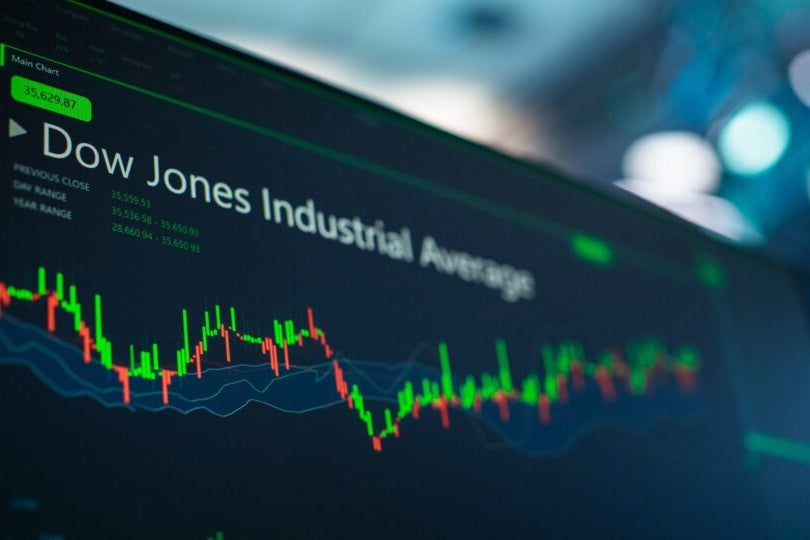
Market Performance - U.S. stocks showed mixed performance with the Dow Jones index falling over 200 points, down 0.60% to 49,293.33, while the NASDAQ gained 0.17% to 23,773.29 and the S&P 500 dropped 0.08% to 6,971.95 [1] - In the energy sector, shares increased by 1.4%, while financial stocks decreased by 1.8% [1] Inflation Data - Inflation remained steady in December, with the Consumer Price Index rising 2.7% year over year, matching economist expectations and unchanged from November [2] - Monthly consumer prices increased by 0.3%, also in line with forecasts [2] Commodity Prices - Oil prices rose by 2.6% to $61.06, while gold increased by 0.1% to $4,620.80 [4] - Silver prices surged by 4.4% to $88.860, whereas copper fell by 0.1% to $6.0295 [4] European Market Trends - European shares were mixed, with the eurozone's STOXX 600 falling 0.08% and Spain's IBEX 35 Index rising 0.08% [5] - London's FTSE 100 slipped 0.03%, Germany's DAX gained 0.06%, and France's CAC 40 fell 0.14% [5] Asian Market Performance - Asian markets closed mixed, with Japan's Nikkei surging 3.10% and Hong Kong's Hang Seng Index gaining 0.90% [8] - Conversely, China's Shanghai Composite fell 0.64% and India's BSE Sensex decreased by 0.30% [8] Company-Specific Movements - Beyond Air Inc shares surged 172% to $2.39 following an acquisition agreement, potentially receiving up to $32.5 million [7] - Ambitions Enterprise Management Co LLC shares increased by 106% to $10.90 due to a year-over-year EPS increase [7] - TryHard Holdings Ltd shares rose by 77% to $40.96 after announcing a collaboration agreement and a $10 million share repurchase program [7] - Signing Day Sports Inc shares dropped 57% to $0.25 after announcing a public offering [7] - Travere Therapeutics Inc shares fell 32% to $23.16 following preliminary fourth-quarter financial results [7] - Wealthfront Corp shares decreased by 18% to $10.34 due to weak quarterly sales [7]





Dow Falls Over 300 Points; JPMorgan Posts Upbeat Earnings - Ambitions Enterprise Mgmt (NASDAQ:AHMA), Rich Sparkle Holdings (NASDAQ:ANPA)
Benzinga· 2026-01-13 15:17
Market Overview - U.S. stocks traded lower, with the Dow Jones index falling more than 300 points, down 0.66% to 49,264.22, NASDAQ down 0.15% to 23,699.14, and S&P 500 down 0.24% to 6,960.41 [1] - Financial stocks dipped by 1.7% on Tuesday [2] - Energy shares gained by 1.4% [1] Company Earnings - JPMorgan Chase & Co reported better-than-expected earnings for Q4, with earnings of $5.23 per share, surpassing the analyst consensus estimate of $4.92 per share. Quarterly sales were $46.767 billion, exceeding the consensus estimate of $46.024 billion [3] Commodity Market - Oil traded up 2% to $60.69, while gold traded down 0.5% at $4,592.90. Silver rose 0.7% to $85.700, and copper increased by 0.4% to $6.0545 [5] International Markets - European shares were mostly lower, with the eurozone's STOXX 600 down 0.1%, Spain's IBEX 35 down 0.2%, London's FTSE 100 down 0.1%, Germany's DAX down 0.1%, and France's CAC 40 down 0.4% [6] - Asian markets closed mixed, with Japan's Nikkei up 3.10%, Hong Kong's Hang Seng Index up 0.90%, while China's Shanghai Composite fell 0.64% and India's BSE Sensex fell 0.30% [7] Stock Movements - Beyond Air Inc shares surged 153% to $2.22 after XTL Biopharmaceuticals agreed to acquire an 85% stake in its NeuroNOS subsidiary, with potential payments up to $32.5 million [9] - Ambitions Enterprise Management Co LLC shares increased by 105% to $10.80 following a year-over-year increase in H1 EPS results [9] - AlphaTON Capital Corp shares rose 81% to $1.65 [9] - Signing Day Sports Inc shares dropped 55% to $0.26 after announcing a $5.6 million public offering [9] - Rich Sparkle Holdings Ltd shares fell 27% to $68.16, and Mingteng International Corp Inc shares decreased by 29% to $0.054 [9] Economic Indicators - The NFIB Small Business Optimism Index surged to 99.5 in December, marking its highest level since August [8] - The annual inflation rate remained at 2.7% in December, unchanged from the previous month [10]
Small businesses report record monthly surge in price increases as inflation pressure mounts
Fox Business· 2025-12-10 13:51
Core Insights - The share of small businesses raising their selling prices reached an all-time high in November, driven by ongoing inflationary pressures [1][2] - The net percentage of small business owners reporting price increases rose to 34%, the highest since March 2023, significantly above the monthly average of 13% [2] - Inflation remains a critical issue for small businesses, ranking second in importance after labor quality concerns [5][8] Inflation Impact - Year-over-year price growth is approximately 3%, exceeding the Federal Reserve's target of 2% [2] - Inflation concerns among small business owners increased by 3 points, indicating a growing significance of this issue [5] - In November 2024, inflation was cited as the most important problem by 20% of small business owners, narrowly surpassing labor quality at 19% [8] Business Optimism and Sales Expectations - The NFIB Small Business Optimism Index rose by 0.8 points to 99, remaining above the 52-year average of 98, with six of the ten components increasing [11] - A net 30% of small businesses plan to increase prices in the next three months, reflecting confidence in sales growth [8] - The net percentage of owners expecting higher real sales volumes increased by 9 points from October to 15% [13] Profitability Factors - Among small business owners reporting higher profits, 51% attributed this to increased sales volume, while 18% cited seasonal changes and 12% pointed to higher selling prices [8] - For those reporting lower profits, 27% blamed weaker sales, 16% cited rising material costs, and 12% mentioned labor costs [11]

Small business optimism rises, but owners say qualified workers are still hard to find
Yahoo Finance· 2025-12-09 20:24
Core Insights - Small business optimism increased in November, with the NFIB Small Business Optimism Index rising by 0.8 points to 99, remaining above the 52-year average of 98 [1][4] - The primary driver for this increase was a rise in the net percentage of owners expecting higher real sales volumes, which increased by 9 points to a net 15% [2] - Labor quality remains the top concern for small business owners, with 21% citing it as their primary issue, although this is a decrease of 6 points from October [4][6] Sales and Employment - The net percentage of small business owners raising their average selling prices increased by 13 points to a net 34%, marking the highest level since March 2023 [7] - Despite the optimism, small businesses are still facing challenges in hiring qualified workers, with job openings remaining above historical averages [5][6] - Nearly two-thirds (64%) of small business owners reported that supply chain disruptions were affecting their operations, an increase of 4 points from October [6] Inflation and Future Expectations - Small businesses expect continued inflationary pressures, with a net 30% planning to increase prices in the next three months, unchanged from October [8] - Expectations for better business conditions have declined significantly, down 32 points since January [8]
Small Business Optimism Drops as Profits Decline
PYMNTS.com· 2025-11-11 17:40
Core Insights - Optimism among small businesses in the U.S. has slightly declined, with the NFIB Small Business Optimism Index falling by 0.6 points to 98.2 in October, still above the 52-year average of 98 [2][3] - The NFIB Uncertainty Index decreased by 12 points from September to 88, marking the lowest reading of the year [2] Labor Market Challenges - 32% of small businesses reported job openings they were unable to fill for the second consecutive month, the highest level of vacancies in nearly five years [3] - Labor quality emerged as the top issue for 27% of small businesses, a nine-point increase from the previous month, reaching the highest level since November 2021 [4] Profit Trends - Reports of positive profit trends among small businesses dropped by nine points from September to a net negative 25%, significantly contributing to the decline in the Optimism Index [4] Inflation and Financial Tools - 58% of small and medium-sized businesses identified inflation as their primary challenge, leading to increased demand for embedded credit and working capital tools [5] - The embedded B2B finance market is projected to grow from $4.1 trillion to $15.6 trillion by the end of the decade, indicating a shift towards integrating financial functionality within software [5][6]

Small Business Owners Are Increasingly Worried About Economic Conditions
Yahoo Finance· 2025-10-14 16:46
Core Insights - Small business optimism in the U.S. fell to its lowest level in three months, with the Small Business Optimism Index declining to 98.8, reflecting growing concerns about the economy [2][6] - The uncertainty index rose by seven points to 100, marking the fourth highest reading in the survey's 51-year history, indicating significant apprehension among business owners [3][6] Economic Conditions - Business owners expressed fears regarding future sales, inflation, supply chain disruptions, and inventory levels, contributing to the decline in optimism [2][4] - Only 23% of business owners expect improved conditions in the future, a drop of 11 percentage points from August [4] Supply Chain and Pricing - Supply chain disruptions affected 64% of small businesses, an increase of 10 percentage points from August, while 7% reported low inventory levels, the largest monthly drop recorded [5][6] - Nearly 25% of small businesses raised prices in September, a three percentage point increase, with 31% planning to raise prices in the next three months [7] Hiring and Profitability - Despite the challenges, hiring plans among small businesses reached their highest levels since January, and the ratio of business owners reporting profits versus losses was the highest since 2021 [7]
Markets close higher, small business optimism hits 5-month high, what's driving the consumer
Yahoo Finance· 2025-08-12 22:24
Market Trends & Investment Landscape - Stocks rallied after CPI data release, with major indexes closing higher [1] - Retail investment volumes increased by 23% in the first half of the year compared to 2024 [4] - Brick-and-mortar stores are performing well, accounting for approximately 80% of total retail sales in America [15] - Small business optimism index rose over 1.5 percentage points in July, driven by improved business conditions and expansion plans [40] Consumer Behavior & Spending - US consumers continue to spend, but are shifting towards value retailers like Walmart, TJX, Marshalls, and Dollar General to maximize their dollar [4][5][7] - Consumers are prioritizing essential spending for back-to-school and holiday shopping, rather than discretionary purchases [9] - The top 20% of household income earners in America account for approximately 50% of all consumer spending [24] - Amazon Prime's four-day sales reached $24 billion, exceeding Black Friday sales [18] Economic Factors & Challenges - Labor market softness is causing consumers to feel a pinch and seek better value for their money [6][7] - Retailers are absorbing tariff costs to avoid scaring off consumers with price increases, potentially impacting their bottom line in the short term [19][20] - Concerns exist about the potential impact of tariffs on small businesses and the need for deregulation [43] - There's a growing adoption of AI among small businesses, with adoption rates increasing from 7% to almost 26% [49]