Smart Factory

Search documents
Accevo Receives Frost & Sullivan's 2025 European Enabling Technology Leadership Recognition for Manufacturing Software in Smart Factories
Prnewswire· 2026-01-26 04:30
Core Insights - Accevo has been recognized with the 2025 European Enabling Technology Leadership Recognition for its achievements in technology innovation and customer impact in the smart factories industry [2][7] - The company is noted for its ability to drive digital transformation and operational improvements in manufacturing through its comprehensive software solutions [2][3] Company Overview - Accevo is headquartered in Poland and focuses on modular expansion and rapid deployment in the manufacturing sector [4] - The company offers a unified Smart Factory platform that integrates various manufacturing systems, enabling manufacturers to scale operations effectively [4][10] Technology and Innovation - The Accevo Smart Factory platform is designed to enhance operational efficiency, reduce downtime, and optimize energy consumption while supporting paperless operations [5] - The platform integrates seamlessly with both modern and legacy machines, utilizing advanced IIoT connectivity [5] Customer Experience and Implementation - Accevo emphasizes customer experience with a cloud-native solution that allows for fast implementation through its 3-3-3 methodology [6] - The company provides industry-specific suites tailored to sectors such as FMCG, pharmaceuticals, and automotive, addressing critical operational requirements [6] Market Position and Recognition - Frost & Sullivan commends Accevo for its comprehensive platform and execution capabilities, positioning it as a trusted partner for manufacturers transitioning to smart factories [7] - The recognition from Frost & Sullivan highlights Accevo's strategic development and implementation that leads to measurable improvements in operational performance [8]

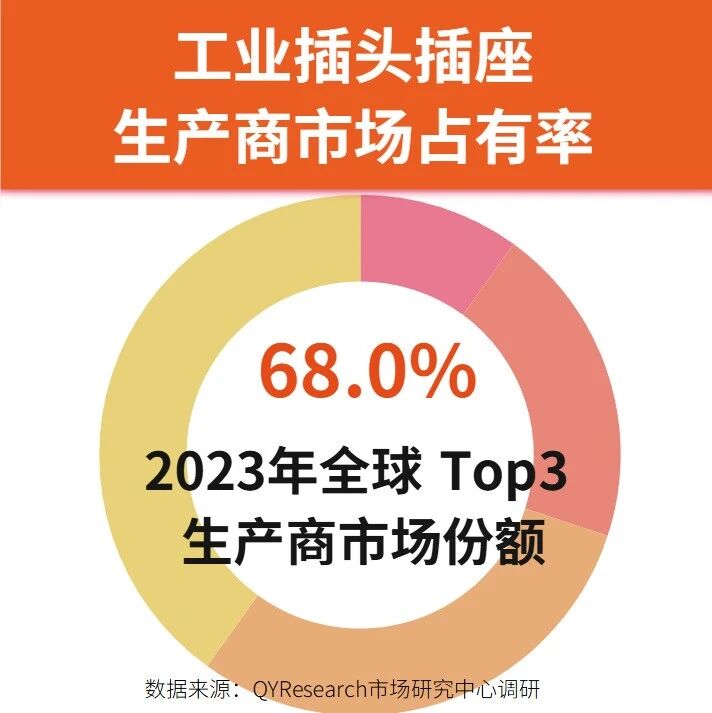
行业聚焦:全球工业插头插座行业头部生产商市场份额及排名调查
QYResearch· 2025-11-18 01:52
Core Viewpoint - The industrial plug and socket market is crucial for reliable energy connection and transmission in various industries, emphasizing safety, durability, and performance under harsh conditions [1][5]. Industry Chain Analysis - **Upstream**: Key materials include metal conductors (copper, brass, stainless steel), insulation materials (nylon, polycarbonate, rubber), and sealing components. Copper prices significantly impact production costs, accounting for approximately 30% to 40% of total costs [6]. - **Midstream**: The manufacturing process involves mold making, injection molding, metal stamping, and quality control. European brands lead in high-end products, while companies in China and Southeast Asia excel in mid-to-low voltage products [7]. - **Downstream**: Applications span manufacturing, energy, construction, and transportation, with B2B channels accounting for about 70% of sales [8][10]. Development Trends, Opportunities, and Challenges - **Trends**: The industry is moving towards smart interfaces, high protection levels, modular designs, and green manufacturing practices [12][13][14][15]. - **Opportunities**: Growth in smart manufacturing, renewable energy, infrastructure projects, and the potential for Chinese brands to replace European ones in international markets [17][18][19][20]. - **Challenges**: Fluctuating raw material costs, complex safety standards, and the need for technological innovation pose significant hurdles [21][22][23][24][25]. Downstream Industry Analysis - The demand for industrial plugs and sockets is primarily driven by six sectors: manufacturing (40% market share), construction, energy, transportation, communication, and commercial facilities [26][27][28][29][30][31]. Entry Barriers Analysis - **Technical Barriers**: High-performance products require advanced technology in various aspects, including resistance control and material compatibility [34]. - **Capital Barriers**: Initial investment in production lines is high, making it difficult for small enterprises to scale [35]. - **Certification Barriers**: Compliance with multiple international standards is costly and time-consuming [36]. - **Brand Barriers**: Established brands have a competitive edge due to customer loyalty and reputation [37]. - **Supply Chain Barriers**: Large clients demand quick delivery and customization, favoring suppliers with robust capabilities [38]. - **Environmental Barriers**: Compliance with environmental regulations increases entry costs [39].
浅谈智能工厂中的工业物联网
Sou Hu Cai Jing· 2025-10-20 07:55
Group 1: Core Concepts of Smart Factories - Smart factories are showcased through three dimensions: smart manufacturing, smart products, and smart management, with data utilization enabling interconnectivity among them [1] - Key communication facilities in smart factories include service internet and industrial IoT, facilitating integration of logistics, resources, and production plans [1] Group 2: Value of Industrial IoT - The value of industrial IoT is primarily reflected in its application at the system structure's top level, enabling real-time tracking of production equipment and monitoring of production processes [3] - Utilizing MES and ERP systems optimizes production processes, resource allocation, enhances production efficiency, and reduces costs [3] Group 3: Structure of Industrial IoT - The foundation of industrial production relies on the IoT architecture, which collects all data from the industrial environment and issues corresponding commands [4] - Industrial IoT features numerous sensors with flexible networking and high data communication efficiency, enhancing industrial control compared to traditional IoT [4] - The integration of various systems and servers in industrial IoT improves command issuance and decision-making timeliness, allowing for real-time data transmission to the application layer [4] Group 4: Requirements of Smart Manufacturing for Industrial IoT - Smart factories utilize a variety of terminal devices, such as handheld PDAs and mobile robots, which possess good mobility and can be adjusted according to processing needs [5] - A flexible network system is necessary to accommodate dynamic and frequent network state switching among various sensors with differing functionalities and performance [5] Group 5: Importance of Data Transmission in Industrial IoT - Real-time, stability, and accuracy of industrial data transmission are crucial, with a requirement for on-site equipment data health effectiveness to exceed 1 second [6] - The primary task of industrial IoT is to collect large volumes of data generated by numerous sensors and analyze valuable data for informed decision-making [6]