
Software and Services

Search documents
Inseego (INSG) - 2025 Q4 - Earnings Call Transcript
2026-02-19 23:00
Financial Data and Key Metrics Changes - In Q4 2025, the company generated revenue of $48.4 million and adjusted EBITDA of $6 million, both exceeding guidance and marking the third consecutive quarter of sequential growth in each metric [3][24] - For the full year 2025, total revenue was $166.2 million, reflecting sequential quarterly momentum throughout the year [24][25] - Non-GAAP gross margin in Q4 2025 was 43%, up 75 basis points sequentially, and for the full year 2025, it was also 43%, the highest level in over a decade [25][26] Business Line Data and Key Metrics Changes - Mobile revenue in Q4 2025 increased 27% sequentially to $20.4 million, representing approximately 40% of total company revenue [8][24] - Fixed Wireless Access (FWA) revenue in Q4 was up 50% year-over-year, driven by a diversified carrier customer base and solid channel activity, despite a sequential decline from Q3 2025 [24][25] - Software services revenue was $12 million in Q4, providing a stable, high-margin contribution [24] Market Data and Key Metrics Changes - The company expanded its tier one carrier footprint for FWA by securing awards with AT&T and Verizon, marking a significant milestone as all three U.S. tier one carriers now support Inseego's enterprise FWA offerings [6][7] - Industry forecasts project North America Enterprise FWA service revenue to grow at a 37% compound annual rate through 2030, expanding from roughly $2 billion to more than $11 billion [15] Company Strategy and Development Direction - The company is focused on building an enterprise wireless broadband platform that combines cellular-first connectivity with intelligence, manageability, and scalability [4] - Five strategic priorities include scaling carrier revenue, evolving into a solutions company, expanding customer base, maintaining financial discipline, and building a world-class management team [4][5] - The company plans to introduce four new products in the first half of 2026, including new MiFi products and an entry-tier enterprise FWA offering [17] Management's Comments on Operating Environment and Future Outlook - Management expressed optimism for 2026, highlighting a stronger market backdrop and increased enterprise prioritization of resilience and connectivity [15][16] - The company anticipates a front-loaded year with multiple carrier launches and product introductions in Q1 2026 [17] - Management noted that Q1 2026 is expected to be a transition quarter with lower sequential revenue due to engineering delays and inventory adjustments from a tier-one carrier [20][21] Other Important Information - The company retired all preferred stock at a 38% discount, enhancing long-term flexibility and stockholder value [27][28][29] - The balance sheet ended Q4 with $24.9 million in cash and a manageable debt balance of $41 million, approximately 2x LTM adjusted EBITDA [27] Q&A Session Summary Question: Memory market dynamics and impact on operations - Management indicated they are well-prepared for the memory market dynamics and have secured supply for the first half of the year [39][40] Question: 2026 guidance and revenue ramp - Management confirmed expectations for significant revenue growth in 2026, with Q2 expected to ramp up following a lighter Q1 [41][42] Question: Competitive landscape and product portfolio - Management highlighted the importance of having all three major carriers launching new mobile products and discussed the expansion of the product portfolio to include entry-level enterprise-grade routers [43][46] Question: Contributions from MSOs and distribution channels - Management expressed optimism about discussions with MSOs and the potential for significant contributions from VARs and MSPs in the long term [55][56] Question: Software business and customer expansion - Management noted the potential for expanding software services with new customers and highlighted the unique features of their subscriber lifecycle management platform [61][62] Question: Industry focus on enterprise FWA - Management discussed the favorable dynamics for enterprise FWA driven by higher ARPU and the shift in carrier focus towards enterprise solutions [64][66] Question: Variability of results with Verizon's involvement - Management stated that while visibility may vary, they have reasonable expectations for growth with Verizon back in the mix [71][73] Question: Long-term revenue growth sustainability - Management affirmed confidence in sustaining double-digit revenue growth over the next several years, driven by new product introductions and a diversified customer base [79][80]

GM Stock Up 42% in 6 Months: Worth Holding Onto for More Gains?
ZACKS· 2026-02-18 14:55
Core Viewpoint - General Motors (GM) is experiencing strong performance driven by robust vehicle offerings, a growing software and services business, and restructuring efforts in China, alongside a revised electric vehicle (EV) strategy to address slower adoption rates [1] Stock Performance - Over the past six months, GM shares have increased by approximately 42%, outperforming industry peers such as Ford, which rose by 22%, and Stellantis, which declined by 21% [2] Market Position and Strategy - In 2025, GM became the top-selling automaker in the U.S., achieving a market share of around 17%, marking its fourth consecutive year of growth [6] - GM has adjusted its strategy in response to slower EV demand, selling its stake in the Ultium Cells Lansing plant and reallocating assembly capacity from EVs to internal combustion engine vehicles, incurring $7.6 billion in charges to reduce EV capacity [7] Financial Outlook - GM anticipates North America EBIT margins to be in the range of 8-10% for 2026, an increase from 6.8% in 2025, driven by lower costs and a better product mix [8] - The company expects net income for 2026 to be between $10.3 billion and $11.7 billion, with adjusted EBIT projected at $13 billion to $15 billion [13] Software and Services Growth - GM's software and services business is becoming a significant profit driver, with OnStar reaching 12 million subscribers and Super Cruise subscribers growing by nearly 80% year-over-year [9] - Deferred revenues from software and services are expected to rise to about $7.5 billion by the end of this year, nearly 40% higher than 2025 levels [9] Capital Investment and Shareholder Returns - Over the past two years, GM has invested more than $20 billion in capital projects, with plans to spend $10-12 billion annually in 2026 and 2027 [11] - GM has returned $23 billion to shareholders since late 2023, including $6 billion in share repurchases and over $500 million in dividends in 2025 [12] Valuation and Market Sentiment - GM stock is currently trading at a forward P/E ratio of 6.48, lower than Ford's 9.06 and Stellantis's 4.32, indicating it may be undervalued [15] - The consensus price target for GM stock is $92.24, suggesting an upside of more than 13% from current levels [19]


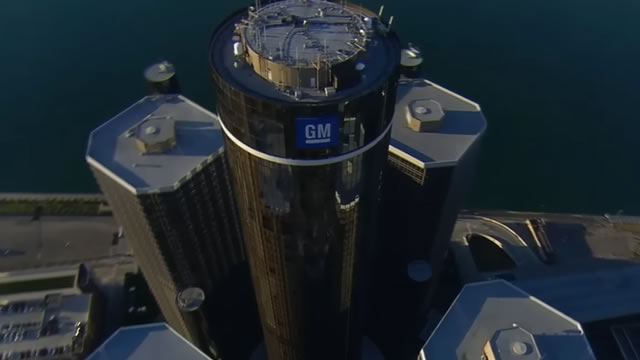
General Motors Company (NYSE:GM) Conference Transcript
2026-02-04 19:02
General Motors Company (NYSE: GM) Conference Summary Company Overview - **Company**: General Motors Company (GM) - **Date of Conference**: February 04, 2026 - **Key Speaker**: Paul Jacobson, CFO of GM Core Industry Insights - **Transformation in the Auto Industry**: The auto industry is undergoing significant transformation, particularly in the shift towards electric vehicles (EVs) and adapting to a dynamic regulatory environment [2][4][15] - **Impact of Tariffs**: GM has faced over $3 billion in tariffs last year and expects $3-$4 billion in tariffs this year, which has influenced financial guidance and operational strategies [5][6] - **Market Share Gains**: GM has achieved substantial market share gains in lower-priced vehicles, selling over 700,000 vehicles priced under $30,000, indicating a successful strategy across different market segments [9][10] Financial Performance - **Earnings and Margins**: GM restored its North American margins to 8%-10% ahead of expectations, demonstrating resilience and effective management despite external challenges [6][12] - **Free Cash Flow**: GM has increased its free cash flow from approximately $3 billion to a consistent $10 billion over the past 4-5 years, providing a financial cushion to absorb shocks [12][13] - **Balance Sheet Strength**: The company boasts a strong balance sheet with minimal pension liabilities and an investment-grade credit rating, positioning it well for future investments [13] Electric Vehicle Strategy - **Investment in EVs**: GM announced a $7 billion charge related to EV investments, indicating a commitment to infrastructure capable of producing 1 million EVs annually [16][18] - **Regulatory Environment**: Changes in the regulatory landscape are expected to align better with consumer demand, potentially leading to more stable EV adoption rates [17][15] - **Onshoring Investments**: GM plans to invest $5 billion in onshoring initiatives, aiming to produce nearly 2 million vehicles in the U.S. by 2027, which will help mitigate tariff impacts [18][24] Supply Chain Management - **Resiliency Focus**: GM has prioritized supply chain resiliency, particularly in light of past challenges such as the chip shortage and rare earth material dependencies [41][45] - **Supplier Relationships**: The company emphasizes healthy collaboration with suppliers to ensure stability and profitability across the supply chain [26][27] Future Outlook - **Software and Services Growth**: GM is focusing on expanding its software and services revenue, targeting $7.5 billion in deferred revenue, and enhancing customer interactions through technology [20][62] - **Market Positioning**: GM aims to maintain competitiveness in a changing market landscape, particularly against emerging Chinese brands and evolving consumer preferences [72][74] - **Long-term EV Commitment**: Despite current challenges, GM remains committed to the EV market, viewing it as a long-term growth opportunity, while also ensuring profitability through cost management and technological advancements [55][56] Additional Considerations - **Hybrid Vehicles**: GM is exploring opportunities in hybrid vehicles, leveraging existing expertise while ensuring a measured approach to market entry [58][59] - **AI Integration**: The use of AI in vehicle development and production processes is growing, enhancing efficiency and decision-making capabilities within the company [75][76] This summary encapsulates the key points discussed during the conference, highlighting GM's strategic direction, financial health, and industry positioning amidst ongoing transformations in the automotive sector.
Rivian Automotive(RIVN) - 2025 Q2 - Earnings Call Transcript
2025-08-05 22:02
Financial Data and Key Metrics Changes - In Q2, the company produced 5,979 vehicles and delivered 10,661 vehicles, generating $927 million in automotive revenue [14] - Consolidated revenue for the quarter was $1.3 billion, with gross profit losses of $206 million, including $185 million in depreciation and $37 million in stock-based compensation [16] - Adjusted EBITDA losses for the quarter were $667 million, with an increase in overall operating expenses compared to Q1 due to ongoing investments in key technologies and sales infrastructure [16][18] Business Line Data and Key Metrics Changes - Automotive gross profit losses were $335 million, negatively impacted by lower production volumes and approximately $137 million of fixed costs included in cost of revenues [15] - The Software and Services segment reported $376 million in revenue and $129 million in gross profit, with significant contributions from a joint venture with Volkswagen Group [15] Market Data and Key Metrics Changes - The company expects total regulatory credit sales for 2025 to be approximately $160 million, down from a prior outlook of $300 million due to changes in regulatory credit programs [18] - Increased tariffs are expected to have a net impact of a couple thousand dollars per unit for the remainder of 2025 [18] Company Strategy and Development Direction - The company is focused on developing world-class technology and efficiently scaling manufacturing capacity in the U.S. in light of evolving policy changes [7] - R2 is a core focus, with the company aiming to deliver millions of vehicles per year, supported by a new 1.1 million square foot facility in Houma, Illinois [9][10] - The company is also investing heavily in its autonomy platform, believing that advanced levels of autonomy will be essential for future vehicle success [10][11] Management's Comments on Operating Environment and Future Outlook - Management acknowledges the complex and rapidly evolving policy environment affecting the business, including changes to EV tax credits and tariffs [7] - Despite recent headwinds, management remains confident in achieving positive EBITDA by 2027, driven by R2 production and strong software and services performance [28][66] Other Important Information - The company received a $1 billion equity investment from Volkswagen Group at a 33% premium to the trading day volume weighted average stock price [16] - The company plans to shut down its normal facility for approximately three weeks starting in September to prepare for the planned launch of R2 in 2026 [17] Q&A Session Summary Question: Transition from R1 to R2 and cost reduction - Management confirmed that the bill of material cost for R2 is about half that of R1, supported by negotiated contracts with suppliers [24][27] Question: Path to EBITDA breakeven in 2027 - Management is working on cost efficiency initiatives and believes that R2's cost structure will support achieving positive EBITDA by 2027 despite recent headwinds [28][66] Question: Impact of Department of Energy loan - The company intends to draw on the $6.6 billion loan from the Department of Energy for the Georgia facility once construction begins [39] Question: COGS per vehicle increase - The increase in COGS per vehicle was primarily due to lower production volume and higher warranty costs, with expectations for improved cost structure with R2 [48][50] Question: ASP trends and pricing strategy - Management believes that R2 will maintain a healthy positive gross margin and is closely monitoring market conditions to adjust pricing strategies as needed [67]

Rivian Automotive(RIVN) - 2025 Q2 - Earnings Call Transcript
2025-08-05 22:00
Financial Data and Key Metrics Changes - In Q2 2025, the company produced 5,979 vehicles and delivered 10,661 vehicles, generating $927 million in automotive revenue [14] - Consolidated revenue for the quarter was $1.3 billion, with gross profit losses of $206 million, impacted by $185 million in depreciation and $37 million in stock-based compensation [16] - Adjusted EBITDA losses for the quarter were $667 million, with an increase in operating expenses due to ongoing investments in technology and sales infrastructure [16][19] Business Line Data and Key Metrics Changes - The Automotive segment faced a significant decrease in production volume compared to Q1, leading to automotive gross profit losses of $335 million due to fixed costs [15] - The Software and Services segment reported $376 million in revenue and $129 million in gross profit, with half of the revenue coming from a joint venture with Volkswagen Group [15] Market Data and Key Metrics Changes - The company anticipates total regulatory credit sales for 2025 to be approximately $160 million, down from a prior outlook of $300 million due to changes in regulatory credit programs [19] - The company expects the third quarter to be the peak delivery quarter of the year across both consumer and commercial vehicles [18] Company Strategy and Development Direction - The company is focused on developing the R2 vehicle and its autonomy platform, aiming to scale production and establish market leadership [5][6] - The company plans to shut down its normal facility for approximately three weeks in September to prepare for the R2 launch in 2026 [17] - The company is actively studying tariff mitigation strategies and believes that R2 and technology development will be transformative for growth and profitability [20] Management's Comments on Operating Environment and Future Outlook - Management acknowledged changes in the external operating environment, including complex policy changes affecting EV tax credits and tariffs, which are expected to impact results and cash flow [6][19] - Despite headwinds, management remains confident in achieving positive EBITDA by 2027, driven by R2 production and strong software and services performance [30][64] Other Important Information - The company received a $1 billion equity investment from Volkswagen Group at a 33% premium to the trading price [16] - The company refinanced its senior secured notes by issuing $1.25 billion of green secured notes at a 10% rate maturing in January 2031 [17] Q&A Session Summary Question: Transitioning from R1 to R2 and cost reduction - Management confirmed that the bill of material cost for R2 is about half that of R1, supported by negotiated contracts with suppliers [24][28] Question: Path to EBITDA breakeven in 2027 - Management emphasized that the R2 cost structure is designed to achieve positive gross margins, despite recent headwinds [66] Question: Impact of the Department of Energy loan - Management confirmed that the loan has not yet been drawn as construction has not started, but they intend to utilize it for expanding manufacturing in Georgia [39] Question: COGS per vehicle increase - The increase in COGS per vehicle was primarily due to lower production volumes and fixed cost absorption issues [48] Question: ASP trends and pricing strategy - Management indicated that Rivian remains a market share leader in its segments and expects strong ASPs despite potential headwinds from the loss of IRA credits [54][56]