
Solar Energy Storage

Search documents
plete Solaria(CSLR) - 2025 Q3 - Earnings Call Transcript
2025-10-21 18:02
Financial Data and Key Metrics Changes - Revenue increased to $70 million from $67.5 million, with a profit of $3.12 million, up from $2.42 million in the prior quarter [10][41] - Operating income reached $3.1 million, representing 4.5% of revenue, with a target of 10% deemed achievable [9][10] - Cash balance decreased to $4 million from $10-11 million due to large payments on convertible ventures [9][10] Business Line Data and Key Metrics Changes - The acquisition of Sunder is expected to contribute to revenue growth, although initial revenue from Sunder will be limited as their sales costs are high [13][14] - The company is integrating Sunder's sales force, which has doubled the bookings rate, indicating strong future revenue potential [15][33] Market Data and Key Metrics Changes - The company is now operating in 45 states, up from 22, following the acquisition of Sunder, which has expanded its dealer network significantly [36][37] - The bookings rate has increased significantly, with the first three weeks of Q1 showing 120% of plan, excluding Sunder's contributions [37] Company Strategy and Development Direction - The company aims for consistent profitable growth, targeting $300 million in revenue by 2025 and $1 billion by 2028, with a focus on internal growth and acquisitions [43][44] - The strategy includes enhancing technology partnerships, particularly with Enphase for battery solutions, and improving operational efficiency [42][46] Management's Comments on Operating Environment and Future Outlook - Management expressed confidence in achieving a gross margin of 38% and a 10% profit margin at a billion-dollar revenue scale [54][55] - The company is optimistic about the future, with plans to introduce advanced technology and software-controlled solar systems [46][49] Other Important Information - The company has signed a joint development agreement with REC, a major panel supplier, to enhance its product offerings [41] - The integration of Sunder is progressing well, with a focus on maintaining their successful sales practices [38][39] Q&A Session Summary Question: Clarification on the 200,000 battery opportunity with Enphase - The Enphase battery is the only compatible option for future electronic systems, and the opportunity is significant but not fully disclosed [51][52] Question: Inquiry about the 2028 goal for $1 billion revenue and gross margin expectations - The gross margin is expected to be around 38%, with a potential for 10% profit margin at that revenue level [54][55] Question: Changes to break-even revenue level post-acquisition - The break-even revenue level is expected to remain defensible in the mid-$60 million range [61][62] Question: Duration of the battery contract and revenue potential - The battery opportunity is significant, with an average battery cost of around $10,000, and the potential for substantial ROI through grid-tied battery systems [63][64]

Shoals (SHLS) Q2 Revenue Jumps 12%
The Motley Fool· 2025-08-06 04:10
Core Insights - Shoals Technologies Group reported Q2 2025 revenue growth of 11.7% to $110.8 million, exceeding the consensus estimate of $104.7 million, with adjusted earnings per share at $0.10, above the expected $0.08 [1][2] - The company upgraded its full-year revenue guidance to $450.0–$470.0 million due to strong demand, despite facing margin pressures and increased legal expenses [1][14] Financial Performance - Revenue for Q2 2025 was $110.8 million, up from $99.2 million in Q2 2024, reflecting an 11.7% year-over-year increase [2] - Adjusted EBITDA decreased to $24.5 million from $27.7 million in the prior year, a decline of 11.6% [2][7] - Gross margin fell to 37.2% from 40.3% year-over-year, a decrease of 3.1 percentage points [2][6] Business Overview - Shoals Technologies Group specializes in designing and manufacturing electrical balance of system (EBOS) solutions for solar and battery energy storage projects, aiming to simplify installation processes [3] - The company is focusing on new product families, including a plug-and-play EBOS platform and battery energy storage solutions, supported by strong R&D efforts [4] Market Trends and Developments - The company reported a record backlog of $671.3 million, up 4.4% year-over-year, indicating strong demand and growth in international markets [5] - International business accounted for over 13.2% of total backlog, highlighting the success of geographic diversification [5] Operational Challenges - Rising legal expenses and warranty remediation have negatively impacted cash flows, with cash flow from operations dropping to $1.7 million in H1 2025 from $50.7 million in the same period last year [8] - Cash reserves decreased significantly from $23.5 million at year-end 2024 to $4.7 million by June 30, 2025 [8] Future Outlook - The company anticipates Q3 2025 revenue between $125.0 million and $135.0 million, with adjusted EBITDA expected in the range of $100.0–$115.0 million for FY2025 [14] - Management expects about 78% of the current backlog to convert to revenue over the next twelve months, indicating improved visibility and reduced project delay risks [15]


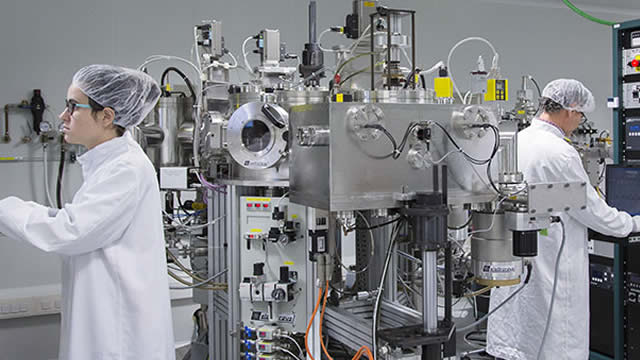
Turbo Energy Granted Patent for Innovative System Enabling Seamless Storage Integration and Expansion of Photovoltaic Installations
Globenewswire· 2025-06-12 12:30
Core Insights - Turbo Energy S.A. has been granted a new patent for an innovative system that integrates energy storage and expands photovoltaic generation in upstream installations, enhancing energy efficiency and flexibility in self-consumption solar power systems [1][2][4] Patent Details - The patent (iP202430282) allows for the addition of energy storage and/or new photovoltaic panels to existing installations without complex retrofitting, optimizing energy usage and reducing reliance on the external power grid [2][3] - The patented solution introduces a "compensation value" concept that maintains a minimum grid consumption level, maximizing surplus energy capture and storage during peak production hours [3] Company Vision and Products - The CEO of Turbo Energy stated that this patent represents a significant advancement in distributed energy innovation, enabling users to control their energy production and storage capabilities [4] - The patented technology is incorporated into Turbo Energy's next-generation energy management solutions, including SUNBOX Home, SUNBOX Industry, and SUNBOX Utility for various applications [4][5] Company Background - Founded in 2013, Turbo Energy is recognized for its proprietary solar energy storage technologies managed through AI, aiming to reduce dependence on traditional energy sources and lower electricity costs [5] - Turbo Energy's flagship product, SUNBOX, is one of the first high-performance, competitively priced all-in-one home solar energy storage systems, featuring patented EV charging capability and AI processes for optimizing solar energy management [5]


Enphase(ENPH) - 2025 Q1 - Earnings Call Transcript
2025-04-23 01:22
Financial Data and Key Metrics Changes - The company reported quarterly revenue of $356.1 million, with a gross margin of 49% and operating income of 27% on a non-GAAP basis [8][9][52] - Non-GAAP gross margin decreased to 48.9% from 53.2% in the previous quarter, primarily due to lower bookings and product mix [52] - GAAP net income for Q1 was $29.7 million, resulting in GAAP diluted earnings per share of $0.22, down from $0.45 in Q4 [55][56] Business Line Data and Key Metrics Changes - Approximately 1.53 million microinverters and 170.1 megawatt hours of batteries were shipped in Q1 [8][51] - The company expects to ship between 160 and 180 megawatt hours of IQ Batteries in Q2 [59] - The average call wait time for customer service increased slightly to 3.5 minutes due to winter storms [10] Market Data and Key Metrics Changes - US revenue decreased by 13% in Q1 compared to Q4, primarily due to seasonality and softening customer demand [17] - In Europe, revenue increased by 7% in Q1, driven by the shipment of the FlexPhase battery in Germany [19] - The US and International revenue mix for Q1 was 74% and 26%, respectively [16] Company Strategy and Development Direction - The company is focused on product innovation, quality, and customer experience, with plans to introduce new products like the fourth generation battery and IQ EV charger [18][47] - The company aims to diversify its supply chain to mitigate the impact of tariffs, with a goal to fully offset the impact by Q2 2026 [15][71] - The strategy includes expanding the served available market in Europe and introducing a full product portfolio across more countries [26][48] Management's Comments on Operating Environment and Future Outlook - Management noted that the US solar market is under pressure from high interest rates, but there are encouraging signs in California with growing confidence among installers [18] - The company expects Q2 revenue to be in the range of $340 million to $380 million, including approximately $40 million from a safe harbor sales agreement [59] - Management expressed optimism about capturing market share in the battery market with the new fourth generation battery [80] Other Important Information - The company repurchased 1,594,105 shares at an average price of $62.71 per share for a total of approximately $100 million [56] - The company has identified tangible sourcing options outside China to mitigate tariff impacts [71] Q&A Session Summary Question: Regarding Q2 guidance and tariff impacts - Management confirmed that the Q2 guidance includes a 2% gross margin headwind from tariffs, with an expected increase to 6% to 8% in Q3 due to the impact of tariffs on battery cell packs [63][64][71] Question: Demand trends and clarity around IRA - Management acknowledged that the lack of certainty is affecting demand, but noted that bookings are currently healthy at about 80% [75][76] Question: Revenue cadence and margin trajectory - Management did not provide specific guidance for Q3 or Q4 but indicated that new product introductions and seasonal trends could positively impact revenue [85][89] Question: Battery shipment volumes and margins - Management expects to continue growing battery shipments, with a focus on reducing overall system costs despite potential price increases for the battery itself [100][101] Question: Supply chain adjustments and raw materials - Management confirmed that they are maintaining LFP chemistry for batteries and are working on qualifying new cell sources outside China [110] Question: Q2 guidance and booking confidence - Management stated that the current booking level of 80% is solid and expects to be fully booked soon [112] Question: Market share gains and pricing strategy - Management highlighted the importance of value propositions like VPP functionality to improve ROI for homeowners and gain market share [117][118]

Solar(CSIQ) - 2024 Q4 - Earnings Call Transcript
2025-03-25 12:00
Financial Data and Key Metrics Changes - In Q4 2024, the company shipped 8.2 gigawatts of solar modules, totaling 31.1 gigawatts for the year, with total revenue of $6 billion [9][10] - Net income attributable to Canadian Solar shareholders was $34 million, or $0.48 per diluted share, impacted by various factors including inventory write-downs and project asset impairments [9][37] - The gross margin was significantly affected by duties, tariffs, and impairments, leading to a reduction of over 950 basis points [33][34] Business Line Data and Key Metrics Changes - CSI Solar achieved full-year revenue of $6.5 billion with a gross margin of 18.4%, maintaining profitability in both module and energy storage segments [18][19] - Energy storage shipments reached 2.2 gigawatt hours in Q4, totaling 6.6 gigawatt hours for the year, marking a 500% year-over-year increase [21][23] - Recurrent Energy had a challenging year with $188 million in revenue and a gross margin of 7.5%, impacted by project delays and impairments [30][31] Market Data and Key Metrics Changes - The U.S. market accounted for approximately 25% of global shipments, with a strategic focus on high-priced channels to maintain margins [19][76] - Polysilicon prices fell over 40% during the year, leading to a decline in module pricing, although the company managed to maintain higher blended prices [19][20] - The company anticipates continued consolidation in the solar market due to geopolitical uncertainties and structural overcapacity [10][42] Company Strategy and Development Direction - The company is focusing on expanding its U.S. manufacturing capabilities, with facilities expected to ramp up production in 2025 [14][16] - Canadian Solar aims to leverage its experience in global markets to adapt quickly to local production needs, enhancing its competitive edge [16][17] - The company is also investing in next-generation energy storage solutions to meet diverse market demands [12][13] Management Comments on Operating Environment and Future Outlook - Management highlighted the resilience of the energy storage market despite challenges in the solar industry, with growing global demand [11][12] - The company expects an extended period of consolidation in the solar market, with operational and financial headwinds due to policy and trade-related challenges [10][42] - For 2025, the company forecasts total revenue between $7.3 billion and $8.3 billion, with module shipments expected to range from 30 to 35 gigawatts [40][42] Other Important Information - The company reported a net increase in cash of $682 million for the full year of 2024, with capital expenditures totaling $1.1 billion [38][39] - The backlog for energy storage projects stands at $3.2 billion, with a record pipeline of 79 gigawatt hours reflecting diversified global demand [23][24] Q&A Session Summary Question: Can you talk about how you see margins trending for your energy storage systems? - Management indicated that while there are changes in battery chemistry, they expect to maintain reasonable margins and pass on benefits to customers [44][45] Question: Can you discuss the guidance for module shipments and the factors driving it? - Management explained that the first quarter guidance implies a significant acceleration in the second half of the year, driven by stabilized prices and increased U.S. manufacturing volume [51][54] Question: What is the impact of tariffs on margins? - Management confirmed that tariffs are already factored into the cost structure, and they do not expect significant changes in margins moving forward [68][70] Question: How are you managing the impact of ADCVD tariffs? - Management noted that the ADCVD tariffs are impacting shipments from Southeast Asia, but they are increasing domestic production to mitigate these effects [101][104] Question: What is the outlook for energy storage margins? - Management stated that while competition is increasing, they expect to maintain margins in the 17% to 20% range for energy storage products [112][114]
