Space Superiority

Search documents
Rocket Lab Stock Gets A Rare Downgrade—Here's Why
Benzinga· 2026-01-15 18:30
Core Viewpoint - Rocket Lab Corp. has been downgraded from Overweight to Sector Weight by KeyBanc Capital Markets due to the belief that the stock's recent surge has fully priced in major growth catalysts [1][2] Group 1: Stock Performance and Valuation - Rocket Lab's stock has surged 280% year over year, reaching above $92.00 in January [2] - Following the downgrade, Rocket Lab shares experienced a decline, trading 2.95% lower at $89.09 at the time of publication [3] Group 2: Key Developments and Contracts - In December, Rocket Lab secured an $816 million contract from the Space Development Agency for Tranche 3, nearly doubling its backlog [4] - The company successfully opened its LC-3 launch pad in Virginia and has ramped up production of the Archimedes engine, which is over 90% complete for qualification [4] Group 3: Market Influences and Future Outlook - Favorable policy changes, including a December 2025 executive order on American Space Superiority, have created a positive environment for commercial space companies [4] - Rumors of a $1.5 trillion SpaceX IPO have led to a sector-wide re-rating, benefiting Rocket Lab [4] - The stock currently trades at approximately 42x its estimated 2027 sales, significantly higher than the historical 20-30x price-to-sales range SpaceX maintained during its early growth stages [4] Group 4: Future Catalysts - KeyBanc's uncertainty remains around the Neutron rocket, with the debut launch pushed to Q1 or later [3] - Analysts are looking for a successful first launch of the Neutron rocket and additional large-scale contracts to regain confidence [5]



How Trump Moved Stocks in 2025: Nuclear, Space, Quantum Sectors
Benzinga· 2026-01-04 20:46
Nuclear Power - President Trump signed four executive orders on May 23, 2025, aimed at initiating a nuclear renaissance to meet the energy demands of AI data centers and domestic manufacturing [2] - The orders required the Nuclear Regulatory Commission (NRC) to expedite reactor licensing timelines and mandated the Department of Energy to have at least three advanced pilot reactors operational by July 4, 2026 [3] - Following these announcements, uranium miners like Uranium Energy Corp. and Centrus Energy Corp. experienced over 20% stock price increases, while small modular reactor companies like Oklo, Inc. and NuScale Power Corp. saw triple-digit gains throughout the year [4] Space - A series of executive orders in 2025 led to a significant rally in the space sector, increasing the total market capitalization of leading U.S. space companies from approximately $450 billion to over $1.3 trillion by year-end [6] - The momentum began with an April 15 executive order promoting commercial solutions in federal contracts and peaked with the December 18 order focused on American space superiority [6] - Following the December announcement, stocks like Intuitive Machines, Inc. and Rocket Lab Corp. experienced double-digit single-day gains, while defense contractors like L3Harris Technologies, Inc. also saw upward trends [8] Quantum Computing - On January 23, 2025, an executive order was signed to prioritize quantum research alongside AI to maintain U.S. leadership over global competitors [9] - A subsequent order on May 23 directed the Department of Energy to address 20 specific technology challenges in the quantum sector [9] - The most significant market movement occurred in October 2025 when reports emerged about the administration considering direct equity stakes in domestic quantum firms, leading to a surge in shares of companies like IonQ, Inc. and Rigetti Computing, Inc. [10][11]

Speed Superiority: U.S. Defense Spending Surges for Hypersonics and Rapid Launch
Markets.Businessinsider.Com· 2026-01-02 17:45
Core Insights - The U.S. is experiencing a 'Sputnik moment' in tactical space access, with a significant investment of over $6.9 billion allocated by the Pentagon for hypersonic weapons development in FY 2025, indicating a shift towards speed superiority in the hypersonic technology market, projected to reach $8.46 billion by 2025 [1][2] Industry Overview - The global commercial space launch services market is expanding at a compound annual growth rate (CAGR) of 14.6%, valued at $8.2 billion in 2024, driven by satellite operators' demand for rapid deployment and mission flexibility [2] - The Space Force's FY 2026 budget authorizations are approaching $40 billion, highlighting the urgency for reusable platforms, hypersonic propulsion systems, and resilient satellite networks to respond to emerging threats quickly [2] Company Highlights: Starfighters Space, Inc. - Starfighters Space, Inc. recently provided a year-end corporate update, marking a transformational year following its successful listing on the NYSE American exchange [3] - The company operates the world's largest commercial supersonic aircraft fleet, utilizing seven F-104 Starfighter aircraft capable of sustained MACH 2 flight, offering flexible scheduling and rapid turnaround times for payload launches [4][5] - Starfighters generates revenue through various channels, including hypersonic weapons testing in partnership with the U.S. Air Force Research Laboratory, addressing national security priorities amid competition from Russia and China [7] - The STARLAUNCH program targets small satellite operators, providing a cost-effective alternative to expensive dedicated launches with projected costs around $15,000 per kilogram [8][9] Company Highlights: AST SpaceMobile, Inc. - AST SpaceMobile successfully launched BlueBird 6, the largest commercial communications array in low Earth orbit, designed to provide peak data rates of up to 120 Mbps to standard mobile devices [10][11] - The company plans to launch 45-60 satellites by the end of 2026, aiming to build global coverage for its network of over 50 mobile operator partners [12] Company Highlights: Rocket Lab Corporation - Rocket Lab concluded 2025 with its 21st successful Electron launch, achieving 100% mission success while deploying a satellite for Japan-based iQPS, solidifying its position as a leading small launch provider [13][14] - The company plans to expand Electron's global reach with more multi-launch constellation deployments and dedicated missions for defense applications [14] Company Highlights: L3Harris Technologies - L3Harris received a letter of intent from Kratos Defense & Security Solutions for a commercial contract to produce 60 Zeus hypersonic motors, increasing its annual production rate by over 50% [15][16] - The Zeus motors support critical hypersonic vehicle and ballistic missile defense testing, addressing the growing demand for hypersonic test capabilities [16][19]


Why Intuitive Machines Stock Slipped on Tuesday
The Motley Fool· 2025-12-24 00:45
Core Insights - An executive order aimed at enhancing U.S. dominance in space did not have a lasting positive impact on the stock prices of companies like Intuitive Machines, which experienced a decline as investors took profits after a recent rally [1][2][6] Group 1: Executive Order and Goals - President Trump's executive order titled "Ensuring America's Space Superiority" outlines ambitious goals, including returning American astronauts to the Moon by 2028 and establishing a permanent lunar outpost by 2030 [4] - The order emphasizes the need for a space policy that extends human discovery, secures national economic and security interests, promotes commercial development, and lays the foundation for a new space age [5] Group 2: Market Reaction and Company Performance - Intuitive Machines' stock price fell by 1.08% to $16.51, with a market capitalization of $2.0 billion, following the executive order [5][6] - The stock's recent performance included a day’s range of $14.68 to $16.94 and a 52-week range of $6.13 to $24.95, indicating significant volatility [6] - The commercial space sector's growth has been a key factor in the stock price increases of companies like Intuitive Machines, although the end-of-year profit-taking by institutional investors led to a short-term decline [6][7]

美洲国防科技:对行政令的初步看法-确保美国太空优势-Americas Aerospace & Defense_ Defense Tech_ Initial thoughts on Executive Order - _Ensuring American Space Superiority_
2025-12-19 03:13
Summary of Key Points from the Conference Call Industry Overview - The conference call discusses the aerospace and defense industry, specifically focusing on the implications of the Executive Order titled "Ensuring American Space Superiority" signed by President Trump on December 18, 2025 [1][2]. Core Insights and Arguments - The Executive Order outlines several priorities for the U.S. government regarding space, including: - Expanding and defending the American presence in space [2]. - Growing the commercial space economy [7]. - Positioning the U.S. as the preferred global provider of space equipment and services [1]. - The EO indicates a significant commercial involvement in achieving these objectives, suggesting that defense contractors and space launch companies may benefit from these initiatives [1]. - Specific goals mentioned in the EO include: - Returning Americans to the Moon by 2028 through the Artemis Program [6]. - Establishing initial elements of a permanent lunar outpost by 2030 [6]. - Developing next-generation missile defense technologies by 2028 [6]. - Targeting $50 billion of additional investment in American space markets by 2028 [9]. Potential Investment Opportunities - Companies that may benefit from the EO include: - Rocket Lab Corp. (RKLB) and Firefly Aerospace (FLY) are noted as neutral investments, while L3Harris Technologies (LHX) and AeroVironment Inc. (AVAV) are rated as buys due to their positioning to win contracts related to the Golden Dome program [1]. - The EO aims to increase launch and reentry cadence through new facilities and improved efficiency, which could enhance the operational capabilities of involved companies [9]. Additional Important Information - The EO directs relevant government agencies to provide guidance on implementation within 60-180 days, focusing on programs that are significantly behind schedule or over budget [9]. - The emphasis on commercial pathways to replace the International Space Station (ISS) by 2030 indicates a shift towards privatization in space operations [9]. - The EO also highlights the need for enhanced space security spending and operational cooperation with allies, which could lead to increased collaboration opportunities within the industry [9].
China Ahead in Space Defense, Says True Anomaly CEO
Bloomberg Technology· 2025-10-10 19:10
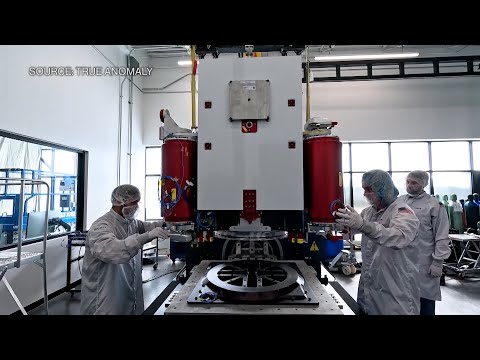
US-China Space Race & National Security - China views space as a battlefield and has been developing space weapons since 2007, gaining a first-mover advantage [1][2] - The US needs dedicated space superiority capabilities to defend its infrastructure and maintain military and economic superiority [3][4] - The US is behind China in fielding defensive and offensive space capabilities at scale [8] Defense Industry & Supply Chain - Onshoring manufacturing and investing in the US industrial base are crucial for national security, especially with increasing tariffs and China's aggression [6] - The industry anticipates impacts from tariffs, particularly when space superiority systems are produced at scale [5][6] - The Defense Department is shifting capital from legacy programs with billion-dollar satellites to proliferated, low-cost architectures [11] Company Strategy & Investment - The company is building low-cost space superiority platforms designed to defend infrastructure in space [12] - The company focuses on military applications of space rather than civil space [9] - The company plans to raise capital again, benefiting from the intersection of defense tech and space trends [13]