Sunk Cost Fallacy

Search documents
What broken things teach us about economic value | Prerna Solanki | TEDxYouth@JPGlobalSchool
TEDx Talks· 2026-02-02 16:33
Hello everyone. I'd really wanted to start this talk with a thoughtprovoking quote on the art of kinsugi, but they were all in Japanese and translates at something about soup and curtains. So here we are starting with my introduction again.Hi, I'm PRA Solanki and I'm a student of grade 12 studying humanities with the dreams of being a lawyer, a teacher or a pop star. We're figuring it out. I'm a law student.I'm a dog person through and through and I can read almost every genre of books from a Harry Potter t ...


You’ll be Thrown Off the Horse before You Ever Harvest that Good Return.
Investment Moats· 2026-01-25 23:25
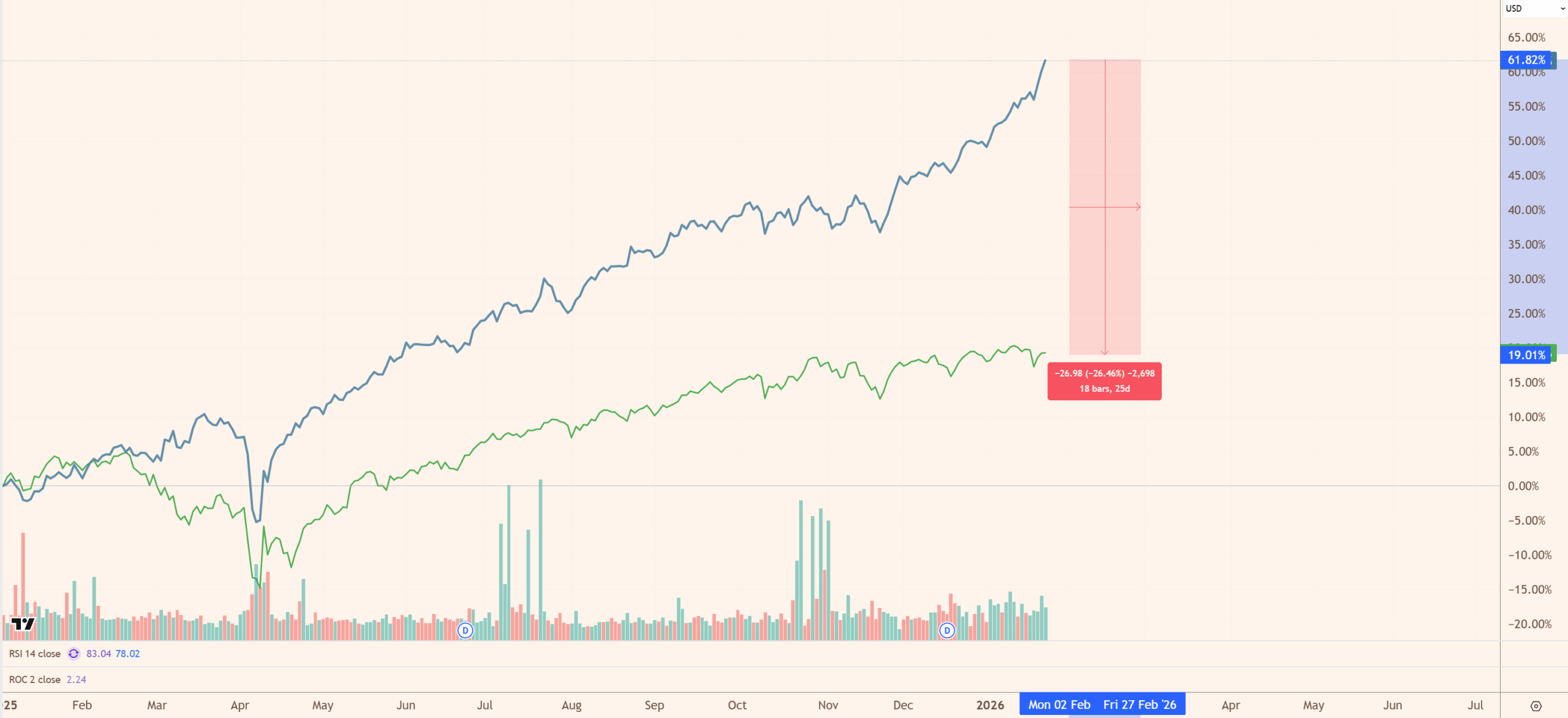
Core Insights - The article emphasizes the importance of understanding market trends over various time frames, including short-term (1 year), medium-term (5 years), and long-term (20 years) to derive valuable lessons from market behavior [1] - It highlights the challenge of staying invested in a systematic portfolio strategy, particularly when market conditions appear unfavorable [4][20] - The article warns against common cognitive biases such as recency bias and sunk cost fallacy that can mislead investors [3] Investment Strategy - Advising clients in wealth management involves imparting timeless lessons that can be applied consistently over time [2] - Investors often focus on recent performance data, which can lead to misguided investment decisions, neglecting the potential volatility and challenges of the investment journey [5][6] - The performance comparison between the S&P 500 ETF (SPY) and the Avantis International Small Cap Value ETF (AVDV) illustrates the importance of understanding different investment strategies and their long-term potential [7][10] Performance Analysis - Over a 5-year period, the cumulative performance difference between SPY and AVDV was 28%, equating to an annualized difference of 5% [10] - The article discusses the psychological challenges investors face when their investments underperform compared to benchmarks, leading to potential premature selling [11][15] - AVDV's performance since inception in 2020 shows that systematic strategies can yield significant returns despite initial underperformance [16][20] Market Behavior - The article notes that sectors and strategies can have vastly different paths to similar long-term returns, emphasizing the need for patience and a long-term perspective [25] - Investors must mentally prepare for periods of underperformance and the psychological toll it can take on their investment decisions [22][25] - The discussion on sector performance, particularly in materials and technology, highlights how market perceptions can shift over time, affecting investment strategies [19]
"Sunk Cost Fallacy:" How Amazon Capitalizes on Prime Days
Youtube· 2025-10-07 18:30
Core Insights - Amazon is a major player in the retail sector, with 38% of all US shoppers purchasing from the platform, indicating its significant influence on e-commerce [2][3] - The company has expanded its promotional events, such as Prime Day, to increase sales opportunities, with the recent event lasting four days instead of two, and additional days planned for the fall [3][4] Membership and Consumer Behavior - Amazon Prime, a membership program costing $139 annually, encourages consumer loyalty and increased spending, with Prime members averaging $110 per month compared to $38 for non-members [5][8] - The sunk cost fallacy plays a role in consumer behavior, as members feel compelled to continue shopping on Amazon after making an initial investment in the Prime membership [6][7] Pricing Strategies - Amazon employs psychological pricing strategies, such as the anchoring bias, where original prices are shown alongside discounted prices to create a perception of savings [10][11] - There are concerns about price inflation during sales events, where items may be priced higher than usual, leading to skepticism about the authenticity of discounts [15][16] Competitive Landscape - Competing with Amazon poses challenges for small businesses, but insights from successful brands can provide valuable lessons for marketing and consumer engagement [17][19] - The importance of branding and customer experience is emphasized, as these factors can provide a competitive edge in a market dominated by large companies like Amazon [20]