US-China Tech Race

Search documents
焦点议题:美中科技竞赛-Top of Mind_ The US-China tech race
2025-12-05 06:35
Summary of the US-China Tech Race Conference Call Industry Overview - The conference focuses on the ongoing technological competition between the US and China, particularly in the fields of semiconductors and rare earths, which are critical for technological advancement and national security [3][31]. Key Points and Arguments Current State of the Tech Race - The US leads in advanced technologies such as semiconductors, AI frameworks, cloud infrastructure, and quantum computing, while China is catching up in practical applications like physical AI and robotics, and has a strong presence in global installations [5][29][43]. - China is rapidly advancing in technological self-sufficiency, reducing its reliance on Western technologies through policies like the dual circulation strategy [5][45]. US and Chinese Policy Approaches - US policymakers are adopting strategies reminiscent of WWII and the Cold War, focusing on increasing domestic production in sensitive sectors like semiconductors and rare earths [30][62]. - China's approach is characterized by systematic planning and significant financial backing for technology development, with a focus on achieving breakthroughs in "chokehold technologies" [75][84]. Supply Chain Dynamics - The US has a slight edge in the global semiconductor supply chain, but China currently dominates the rare earth supply chain, which is crucial for defense and technology sectors [31][39]. - The semiconductor supply chain is complex, with significant chokepoints that hinder self-sufficiency for any country, although China has the potential to close the gap due to its resources and engineering talent [33][35]. Investment Opportunities - Analysts see compelling investment opportunities in rare earths and Asian tech companies, as both countries continue to develop their own tech stacks [4][37]. - Stocks of leading semiconductor manufacturing and equipment companies have largely priced in US-China tech developments, but ongoing policy efforts could drive price action for Western rare earth mining and refining companies [37][38]. Challenges and Risks - The US faces challenges in maintaining its lead, particularly in AI, as China's semiconductor industry works to overcome hardware chokepoints [5][35]. - China's dominance in rare earths poses a significant threat to the US's ability to develop an independent tech ecosystem, highlighting the need for the US to diversify its supply chains [48][49]. Future Outlook - The tech race may not yield a clear victor, with the US potentially leading in technology development while China excels in global installations and applications [60]. - The geopolitical implications of this tech competition are profound, affecting global systems and economic influence [42][57]. Additional Important Insights - The Gulf countries are expected to play a pivotal role in the tech race due to their energy resources, which are essential for powering technological ambitions [59]. - The technological alignment of other countries, particularly in the Global South, will significantly influence the outcome of the US-China tech race [57][58]. This summary encapsulates the critical discussions and insights from the conference call regarding the US-China tech race, highlighting the competitive landscape, policy approaches, supply chain dynamics, investment opportunities, and future outlook.
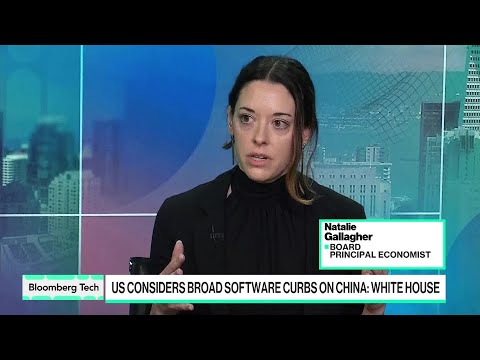
US-China Tech Race Faces New Strains
Bloomberg Technology· 2025-10-23 20:23
AI and Semiconductor Industry Leadership - The US outspends China on AI at a ratio of approximately 5 to 1, highlighting US investment in the field [1] - Semiconductors and related intellectual property remain a key strength for the US in the technology sector [3] Trade and Economic Resilience - The tech sector and global economy have demonstrated significant resilience despite tariffs and export controls [5] - Tariffs were expected to impact consumer electronics, but delayed pass-through effects have been observed [5] - Inflation is expected to moderately accelerate into 2026 [6] Investment and Talent - The tech sector is acting as a macroeconomic stabilizer, with positive trends in M&A and investment flows [7] - There is significant demand and labor market tightness for talent in AI and machine learning, potentially necessitating global talent acquisition [9] - Protecting talent within big tech companies is important from both a national security and economic perspective [8] Policy and Innovation - Protecting US innovation is crucial, especially considering the trillions of dollars in global GDP the industry is estimated to generate over the next decade [2] - Policy conversations are needed to ensure continued US leadership in the technology space [4]