Upcycling

Search documents
Hofseth BioCare ASA: FOURTH QUARTER 2025 FINANCIAL REPORT
Globenewswire· 2026-02-13 07:15
Financial Performance - HBC recorded total operating revenues of NOK 72.2 million in Q4 2025, an increase from NOK 64.9 million in Q4 2024. Full year 2025 total operating revenues amounted to NOK 256.3 million compared to NOK 265.5 million in 2024 [1] - EBITDA for Q4 2025 was negative NOK 26.5 million, slightly worse than negative NOK 26.1 million in Q4 2024. For the full year 2025, EBITDA was negative NOK 72.9 million compared to negative NOK 65.3 million in 2024 [2] - Cash and cash equivalents increased by NOK 1.6 million during Q4 2025, ending at NOK 67.1 million as of December 31, 2025, with total liquidity reaching NOK 77.5 million [3] Product and Market Development - Human Nutrition B2B revenues increased by 300% year-on-year, driven by strong demand for ProGo® and CalGo®, along with a solid sales start for NT-II™ [6] - Expanded regulatory access achieved with ingredient approvals in Australia and South Korea, facilitating entry into large VMS and functional food markets [6] - Pet Nutrition B2B volumes and revenues improved, supported by increased customer engagement and trade-show activity [6] Research and Development - Significant R&D milestones achieved during Q4, including peer-review publication of the CalGo® bone health study and IRB approval for a clinical NT-II™ joint health study [6] - HBC has identified unique health benefits through scientific evidence, leading to important academic partnerships and the granting of several patents [5] Corporate Actions - HBC raised NOK 158 million in a private placement and sold a stake in AecorBio Inc. for USD 5 million during Q4, with transactions expected to finalize in Q1 2026 to support growth and R&D [6] - HBC spun out a biotech-focused company, HBC Immunology (HBCI), which has raised external finance for its lead program in prostate cancer [7]


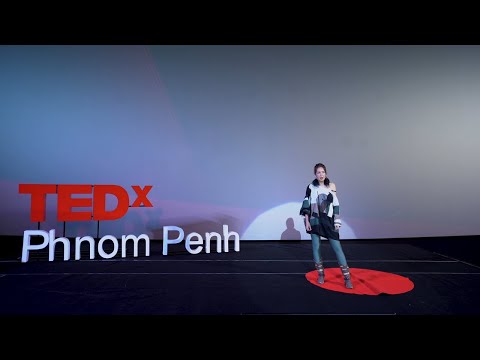
How Wearable Art Can Save the World | Anita Raymond Grey | TEDxPhnom Penh
TEDx Talks· 2026-01-23 17:04
I was banned on social media and apparently for the inappropriate use of the application. Who would have expected that out of all places that application had something inappropriate. So, what I've learned is it takes only one person to send a complaint message to the technical team out of 5,000 matches.All I wanted was to find the partner to help me clean the streets. I took my sustainable practices out of the gallery spaces and academia onto the streets. and the actual act of cleaning, doing the things ins ...
How to Flip a Planet from Peril to Power | Prashant Singh | TEDxMAIMS
TEDx Talks· 2025-10-20 16:00
Waste Management Industry Challenges & Opportunities - India generates over 62 million tons of waste annually, equivalent to 6 million garbage trucks or filling 60,000 Olympic-sized swimming pools [3] - The current linear approach to waste management ("out of sight, out of mind") is unsustainable [8] - There's a significant opportunity to transform waste into a resource, contributing to India's self-reliance (Vix Bat) [4][5][28][29] - India imports 87% of its crude oil and critical minerals, highlighting the potential of waste as a resource [4] - Middle-class population in India is expected to double to 800 million in 25 years, leading to a 65-70% increase in waste generation [7] Blue Planet's Vision & Impact - Blue Planet's vision is "zero to landfill," aiming to process, upcycle, and recycle waste to eliminate landfills [10][8] - The company has cleared 170万 (1.7 million) cubic meters of waste in Chennai, restoring a bird sanctuary and returning land to the municipality [12][13] - Blue Planet's work on the Cauvery River project has positively impacted the lives of 50万 (half a million) people by cleaning up a landfill that was polluting their drinking water source [15][16] - A facility in Greater Noida converts 90% of fresh waste into meaningful products, including biogas and upcycled plastic, creating a circular economy ecosystem [17][18] - Blue Planet focuses on four pillars: technology, testing, transparency, and traceability [19] Future Goals & Strategies - Blue Planet aims to triple its impact by 2030 in terms of greenhouse gas emission reduction [28] - The company engages with schools and colleges, reaching over 1 million kids in Delhi NCR, to promote sustainability and climate change awareness [27] - Blue Planet is exporting its waste management technologies to multiple countries, including Singapore and New Zealand [27]

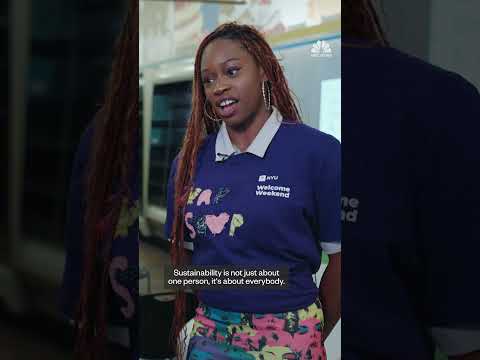
NYU tests out an upcycle thrift shop where everything is free for students
NBC News· 2025-08-27 22:23
Sustainability Initiatives - NYU's Swap Shop program aims to help students save money and reduce waste by providing free, gently used items [1] - The program collected approximately 5,000 items from students and other locations [1] - The initiative diverts items from the waste cycle, reducing landfill waste and the environmental impact of manufacturing new products [2] - The program promotes reuse and reduces waste in a city with a high rate of change and disposal [3] Environmental Impact - The initiative addresses both landfill waste and the pollution generated by manufacturing new items [2] - The program emphasizes collective responsibility for sustainability, rather than individual burden [4] - The initiative aims to change individual decisions that contribute to waste accumulation by providing an easy alternative for reuse [5]
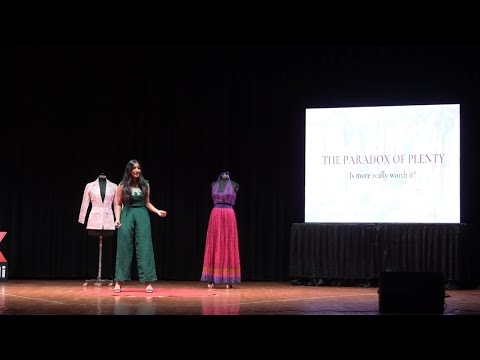
Finding stories in our closets | Ishanvi Tupili | TEDxOakridgeGachibowli
TEDx Talks· 2025-08-27 15:44
Fast Fashion's Impact - The fast fashion industry has led to overflowing closets and rapidly changing trends, diminishing the value of individual items [7] - Every second, the equivalent of a garbage truck full of textiles is burned or sent to landfills globally [7] - Producing a single cotton t-shirt requires over 2,500 liters of water, enough for one person to drink for 2.5 years [8] - Fast fashion often involves underpaid labor, with women working long hours for less than minimum wage [8] - The industry fosters emotional detachment from clothing, leading to a cycle of constant purchasing and dissatisfaction [8][9] Sustainable Alternatives - Upcycling pre-loved items can bridge the gap between traditional craftsmanship and modern fashion [5] - Funds raised from upcycled garments can support skill development workshops for girls [6][12] - Consumers can rewear and upcycle existing clothes, such as turning a sari into a cushion or a shirt into a tote bag [12][13] - Repairing clothes instead of replacing them can significantly reduce waste [13] - Shifting consumer perspectives towards valuing meaning over quantity can drive change in the fashion industry [14]
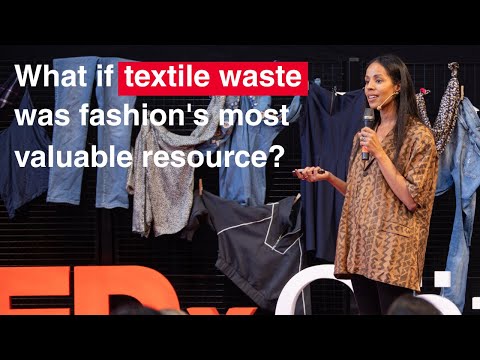
What if textile waste was fashion's most valuable resource? | Nana Sacko | TEDxGöteborg
TEDx Talks· 2025-07-16 15:35
Challenges in the Fashion Industry - The fast fashion business model, built on shorter lead times, cheaper garments, and higher volumes, poses a significant challenge to sustainability [3] - A disconnect exists between production and consumption, leading to overproduction and a throwaway culture, exemplified by textile waste landfills [10][11] - Recycling textiles back into textiles is a complex process, hindering the industry's ability to effectively manage textile waste [12] - Newly produced garments are sometimes cheap enough to be donated instead of worn, and the quality is often too poor for them to be reused [9] Sustainable Solutions and Initiatives - Reusing existing garments and keeping them at their highest quality for as long as possible before downcycling is crucial [13] - Redesign, or upcycling, can turn textile waste into valuable products, as demonstrated by Eleanor Nilson's bathrobes made from unwanted towels [14][15] - Supporting emerging fashion designers focused on circular solutions, such as upcycling wool waste, repurposing knitted tablecloths, and creating new fabrics from secondhand materials, is essential for driving systemic change [17][18][19] - Collaboration with microfactories and larger companies to implement circular ideas, such as bringing back previous collections and making new garments out of old ones, can scale sustainable practices [16] Opportunities for Sweden - Sweden has the potential to lead the transformation towards a more sustainable fashion industry due to its history of design and quality, world-class designers and fashion schools, expertise in textile sorting, and environmentally conscious population [21][22] - New EU regulations making it illegal to throw textiles in household waste or destroy them create transparency and necessitate responsible management of textile waste [21] The Importance of Connection and Investment - Garments should represent connection, understanding, and involvement, making them more than just disposable items [23][24] - Investing in unique, tailored garments and understanding their origins fosters a sense of value and encourages longevity [23]
Hofseth Biocare ASA: HBC's ProGo® has won Ingredient of the Year for Healthy Aging at the prestigious Nutraingredients USA awards ceremony in Chicago
GlobeNewswire News Room· 2025-07-16 06:00
Group 1: ProGo® Product Overview - ProGo® is distinguished by its unique ability to activate GLP-1 and GIP receptors, supported by clinical studies demonstrating weight loss [1] - ProGo® Bioactive Peptides optimize glucose and fat metabolism, enhancing energy levels and promoting a longer active lifestyle [2] Group 2: Company Background - Hofseth BioCare ASA is a Norwegian company focused on sustainability and optimal utilization of natural resources, upcycling byproducts from the salmon industry into health-improving ingredients [3] - The company offers products such as ProGo®, OmeGo® (whole salmon oil), and CalGo® / NT-II(TM) (salmon bone powder) aimed at improving human and pet health [3] Group 3: Scientific Evidence and Partnerships - Hofseth BioCare emphasizes scientific evidence, leading to academic partnerships and the identification of unique health benefits, including improved iron metabolism and fat reduction in overweight adults with ProGo® [4] - OmeGo® has demonstrated immune health benefits, while CalGo® supports bone and joint health, contributing to healthy aging [4] Group 4: Biotech Ventures - Hofseth BioCare has established a biotech-focused spin-off, HBC Immunology, which has raised external finance and is developing therapeutics for prostate and ovarian cancer, as well as a therapy for asthma [4]

Designing India’s Future – Where Creativity Meets Business | Padma Raj Keshri | TEDxVCOE
TEDx Talks· 2025-06-30 16:16
Design & Business Integration - The industry emphasizes merging creativity with business strategy for global leadership [5] - Design should be viewed as a powerful business force, not just art [15] - Marketing is as important as the design and making process [9][10] Sustainability & Upcycling - India has a rich tradition of reuse and repurposing, now known globally as upcycling [6] - Luxury brands are investing in sustainability due to resource scarcity [7][8] - Integrating sustainability into mainstream brands can set global trends [7] Digital Transformation - Digital transformation, including AI and blockchain, is crucial for supply chain management and product positioning [14] - The global stage is one click away, but reaching the right platform is key [12][13] Indian Design Potential - Indian designers can lead globally by embracing business and technology [16] - The industry needs to think beyond aesthetics and borders [16] - India produces the finest textiles, and exclusive marketing and positioning are essential [11]
ReGen III Settles Debenture Interest with Shares
Newsfile· 2025-06-18 21:00
Core Points - ReGen III Corp. has received approval from the TSX Venture Exchange for a shares-for-debt transaction to settle $164,850 in debenture interest through the issuance of 824,250 common shares at a deemed price of $0.20 per share [1] - The transaction includes the issuance of 122,500 shares to certain insiders, qualifying as a related party transaction under Multilateral Instrument 61-101, with exemptions applied due to the fair market value being below 25% of the company's market capitalization [2] - ReGen III specializes in upcycling used motor oil into high-value Group III base oils, with its patented ReGen™ technology expected to reduce CO2e emissions by 82% compared to virgin crude derived base oils [3] - The company has completed FEL2 and value engineering for its 5,600 bpd UMO recycling facility in Texas, supported by various engineering and construction teams [4] Company Overview - ReGen III is focused on creating sustainable solutions that provide better environmental outcomes and compelling economics in the base oils market [3] - The company aims to become the world's largest producer of sustainable re-refined Group III base oil, operating in an underserved segment of the market [4]


Where Food es From(WFCF) - 2025 Q1 - Earnings Call Transcript
2025-05-08 17:00
Financial Data and Key Metrics Changes - The company reported an approximate 6% year-over-year decline in total revenue for Q1 2025, primarily due to a decrease in the Verification and Certification Services segment, which saw revenue drop by $252,000 compared to Q1 2024 [4] - Net income for the quarter was $31,000 or $0.01 per diluted share, down from $178,000 or $0.03 per diluted share in the same quarter last year, with more than half of the decline attributed to a $76,000 non-cash charge on digital assets [6] Business Line Data and Key Metrics Changes - The Verification and Certification Services segment, which represents roughly 50% of total revenue, was significantly impacted by fewer cattle moving through the system due to cyclical herd size reduction and severe drought conditions [4] - Despite the challenges, gross margins remained stable at 41.6%, attributed to disciplined cost management [6] - The Upcycled Certified program, the fastest-growing service offering, saw total certifications grow 70% year-over-year in 2024 and 10% growth in Q1 2025 [10] Market Data and Key Metrics Changes - The global food market for upcycling is currently valued at $46 billion and is expected to grow to nearly $75 billion by 2029, indicating a significant market opportunity [10] - The company is experiencing increased demand for biosecurity services due to disease outbreaks affecting poultry operations [6] Company Strategy and Development Direction - The company is focusing on expanding its Upcycled Certified program and fee-based retail labeling program for protein products, targeting mass market and high-end regional retailers [10][11] - The CARES certified program aims to meet growing consumer expectations for responsibly sourced products, enhancing visibility and brand recognition among retail consumers [12] Management's Comments on Operating Environment and Future Outlook - Management views the herd size reduction as a cyclical issue that is expected to reverse in the future, despite current challenges [5] - The company remains optimistic about customer retention rates, which are in the high 90% range, despite the disruptions in verification activities [5] Other Important Information - The company continues to buy back shares, having repurchased 376,000 shares at a cost of $383,000 during the first quarter [7] - The company has faced challenges in communicating its digital asset performance due to media policies, which have affected the visibility of its financial news [8][9] Q&A Session Summary Question: What are the impacts of the current cattle market on the business? - Management noted that the decline in cattle movement is due to cyclical herd size reduction and drought conditions, but they expect this to be temporary [4][5] Question: How is the company addressing the challenges in poultry verification? - The company is seeing increased demand for biosecurity services as a response to avian influenza outbreaks affecting poultry operations [6] Question: What is the growth outlook for the Upcycled Certified program? - The Upcycled Certified program is experiencing significant growth, with a 70% increase in certifications year-over-year and continued expansion expected [10]