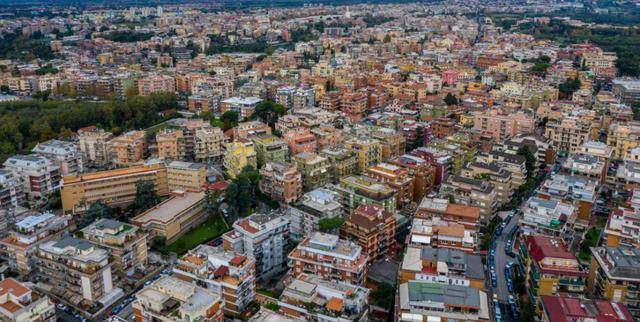
Urban renewal

Search documents
事关老破小,多省发文件,楼市这一次要变天了
Sou Hu Cai Jing· 2026-02-15 18:53
Core Viewpoint - The article discusses a significant shift in the real estate market from new construction to revitalizing old properties, indicating a potential transformation in housing policies and market dynamics [1][9][18]. Policy Direction - Recent policies emphasize "self-renovation" and "original demolition and reconstruction," moving beyond minor repairs to allow for substantial renovations or complete rebuilds of old housing [3][5]. - Starting from 2025, central and local governments have been promoting these initiatives, with several provinces like Henan, Shandong, Anhui, and Fujian beginning to implement specific guidelines and pilot projects [3][5]. Market Dynamics - The focus has shifted from merely upgrading old neighborhoods to a comprehensive approach that includes significant renovations and the introduction of social capital for redevelopment [5][6]. - The transition from an "incremental era" to a "stock game era" in the real estate market is highlighted, indicating a fundamental change in market logic [9][18]. Data Insights - As of 2020, there were approximately 220,000 old neighborhoods built before 2000 in China, a number that is expected to grow over time, emphasizing the need for effective policies to manage these properties [11]. - The recent trend shows that old properties, particularly in prime locations, are becoming more attractive due to their rental yield and potential for value appreciation [14]. Investment Considerations - Owners of old properties should evaluate their rental yield against mortgage rates and consider their debt situation before deciding to sell or hold onto their properties [15][17]. - The article suggests that properties with good rental returns and low debt pressure can be retained as cash flow assets, while those under financial strain should be sold to mitigate risks [17][18].

沈阳新开一大型超市!竞争太激烈了!1月沈城新增可办证商品房一览!|栋察楼市早报(2.11)
Sou Hu Cai Jing· 2026-02-12 02:40
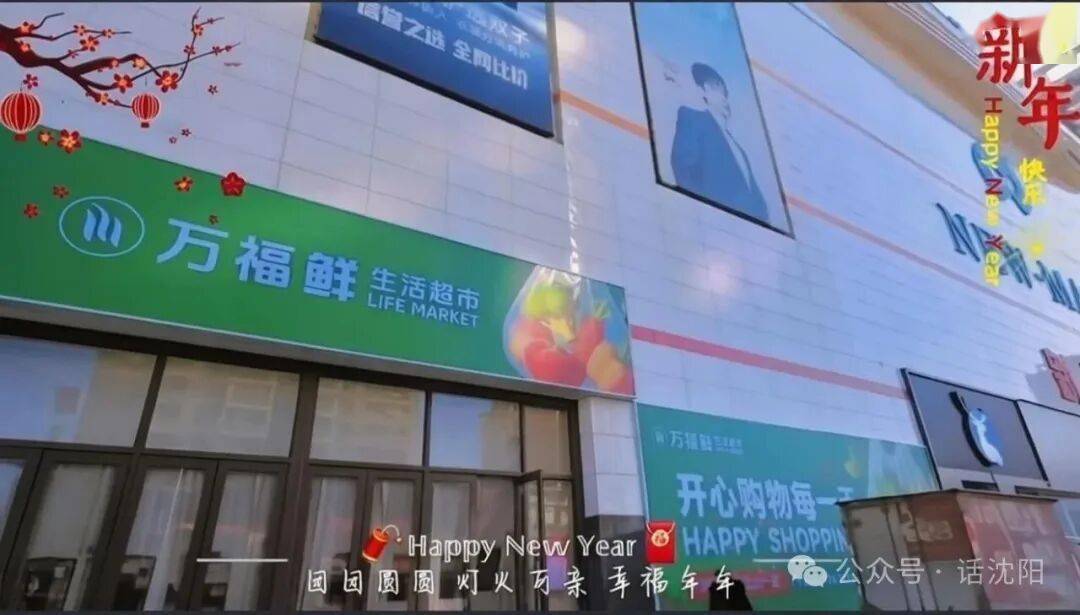
Group 1: New Supermarket Opening - A new supermarket named "Wanfuxian Life Supermarket" opened in Tiexi District, Shenyang, on February 10, covering an area of 4,000 square meters, providing a new option for residents' New Year shopping [1][3] - The supermarket is not part of a well-known chain but is the first store developed locally in Shenyang, entering the competitive market of the Xinghua Street business district [3][6] - The store offers a wide range of daily necessities, including fresh produce, snacks, household goods, beverages, and staple foods, and has introduced a membership benefit for free parking for three hours to attract customers [3][5] Group 2: Market Competition - Tiexi District is densely populated and has a rich commercial landscape, with intense competition from various supermarkets and convenience stores within a one-kilometer radius of the new supermarket [6][7] - The new supermarket faces significant challenges in establishing itself in a highly competitive retail environment, requiring a clear market positioning and potentially unique product offerings or differentiated service experiences to stand out [6][9] Group 3: Ongoing Commercial Upgrades - The opening of "Wanfuxian Life Supermarket" is part of a broader upgrade of the Tiexi New Mart, which is undergoing renovations to rejuvenate the shopping center and attract more visitors [9] - The renovation includes the introduction of well-known restaurant brands, aiming to revitalize the shopping center and enhance its appeal in a rapidly evolving commercial landscape [9]
琯尾街周边旧改地块全部落定 福州2025最后的土拍揽金43亿
Xin Lang Cai Jing· 2026-01-16 19:06
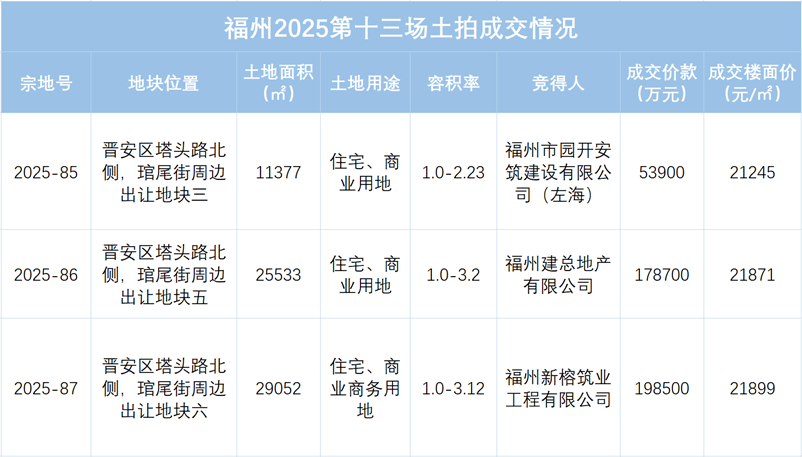
Core Viewpoint - The land auction in Fuzhou for 2025 has concluded successfully, with a total of three residential land parcels sold at the starting price, indicating a significant contraction in the scale of land sales compared to previous years [2] Group 1: Land Auction Overview - The 2025 land auction in Fuzhou included three residential land parcels located in the Jin'an District, covering a total area of 65,960 square meters (approximately 98.94 acres) with a starting total price of 4.311 billion yuan [1] - The total land sales in Fuzhou for 2025 reached 321.69 billion yuan, with 67 parcels sold, while the initial target was set at 450 billion yuan, later revised to 300 billion yuan [2][3] - The average land transaction price in Fuzhou for 2025 was approximately 1.851 million yuan per acre, an increase from 1.526 million yuan per acre in 2024, attributed to the more central locations of the parcels [3] Group 2: Key Players and Competition - State-owned enterprises dominated the land acquisition in Fuzhou, with local state-owned companies winning all three parcels in the recent auction [3] - The three winning companies, Fuzhou Yuankai Anzhu Construction Co., Fuzhou Jianzhong Real Estate Co., and Fuzhou Xinrong Construction Engineering Co., are expected to compete closely in the same area, particularly in the Jin'an District [9] - The proximity of the five parcels in the Jin'an District indicates that future projects will face direct competition, emphasizing the importance of early market entry to attract target customers [9]
African Media Delegation Visit Beijing and Tianjin: Witnessing Chinese Modernization in Action
Globenewswire· 2025-10-29 08:20
Core Insights - The 2025 African Media Tour in China showcased Chinese modernization through cultural heritage, rural revitalization, and urban renewal, involving 12 African journalists from 10 countries [1] Urban Renewal - Delegates observed the integration of heritage buildings into modern commercial developments in Beijing, serving as a model for urban renewal [3] - Impressive modular construction techniques were demonstrated at the Daxing International Aviation Community project, capable of building a wall in just 12 minutes, which could inform housing development in Africa [3] - The Tanggu Bay "Smart Micro-City" in Tianjin highlighted China's industry-city integration and sustainable urban living, with innovations in tunnel boring technology [3] Rural Revitalization - The opening of Universal Beijing Resort led to a nearly 50% year-on-year increase in local village incomes, showcasing effective rural development strategies [6] - Delegates recognized China's "infrastructure + internet + market" approach as a potential model for poverty reduction efforts in Africa [6] Cultural Heritage - The tour included hands-on experiences with traditional crafts, such as hawthorn candy making and woodblock printing, emphasizing the importance of intangible cultural heritage [8] - Interactive exhibits at the China National Geographic Exploration Center demonstrated how technology can enhance the accessibility of traditional knowledge [8] Overall Experience - The delegation's journey from urban to rural settings provided a comprehensive view of contemporary China, with participants expressing intentions to share their insights back in Africa [10]

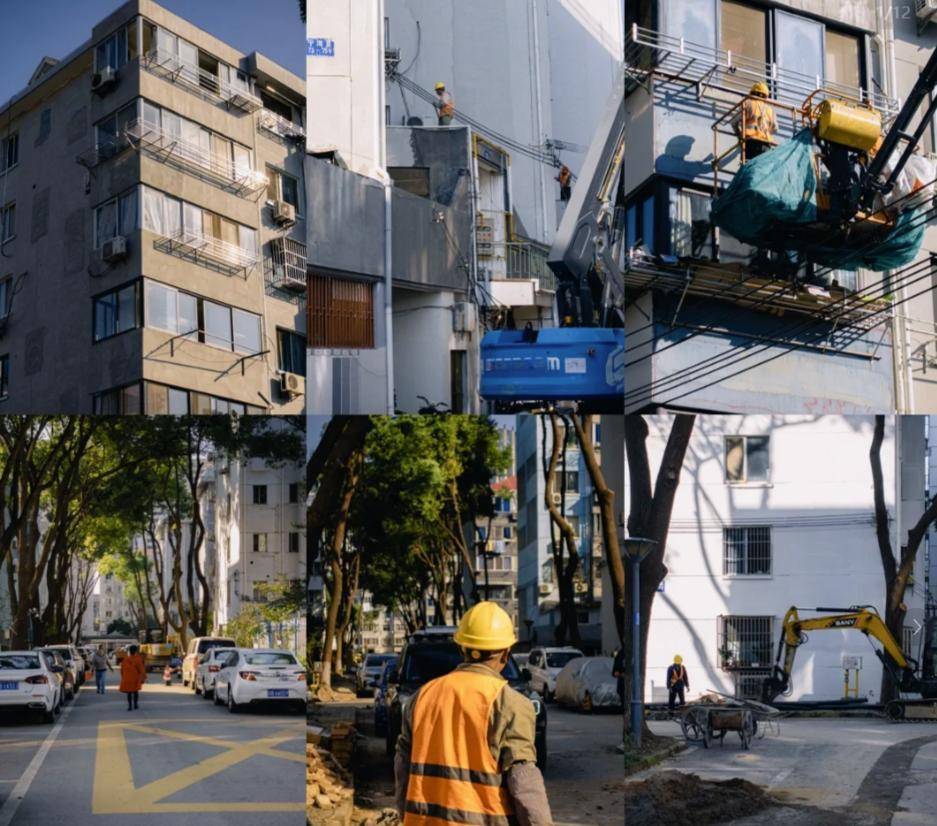
房产专家:为啥城市“老破小”不拆迁重建,反而花钱改造升级
Sou Hu Cai Jing· 2025-05-06 00:20
Core Viewpoint - The trend in major cities across the country is to renovate old and dilapidated buildings instead of demolishing and rebuilding them, which is driven by cost-effectiveness and policy direction [1][4]. Cost Analysis - The cost of demolishing an old building in first-tier cities like Beijing and Shanghai can reach 15,000 to 20,000 yuan per square meter, primarily due to demolition compensation and new construction costs [3]. - In contrast, the average renovation cost nationwide is only 1,000 to 3,000 yuan per square meter, making it one-tenth to one-fifth of the demolition cost [3]. Policy Direction - Since the launch of the old building renovation initiative in 2020, nearly 280,000 old communities have been renovated, benefiting 120 million people [3]. - By 2025, there are plans to expand the renovation scale, with 1 million new urban village renovations and 1.7 million units in 35 major cities needing renovation [3]. Effectiveness of Renovation - Renovation can effectively address fundamental issues, as evidenced by improved resident satisfaction in Shanghai's Shikumen area, which rose from below 50% to over 80% after renovation [5]. - Renovated old communities in core urban areas can see property prices increase by 10% to 15%, while non-core areas may experience a 5% increase [5]. Market Dynamics - The renovation of the Qiuyuan community in Kunming led to a 15-day reduction in the second-hand housing transaction cycle and a narrowing of the bargaining range from 6.8% to 3.2% [6]. Social Stability - Renovation helps avoid social conflicts associated with demolition, as it minimizes the need for resident relocation and disputes [8]. - The "co-creation" model in projects like the one in Chongqing has achieved a 98% resident satisfaction rate by involving residents in the process [9]. Sustainable Development - Renovation aligns with sustainable urban development trends, reducing resource consumption and construction waste compared to demolition [9]. - Environmental assessments indicate that demolishing an old building generates significant waste, while renovation avoids these issues and optimizes urban space [9]. Economic Impact - The installation of elevators in renovated buildings can stimulate a market demand for 4.38 million units, impacting various industries [9]. - The old renovation project in Kunming attracted 3 billion yuan in social capital, demonstrating a sustainable model where every 1 yuan of government funding generates 3.2 yuan in social capital [9]. Future Outlook - With the implementation of more financial tools and policy support, renovation is expected to become the mainstream approach for urban renewal, revitalizing old communities in the new era [10].