
Viksit Bharat

Search documents
印度经济:2026 财年经济调查报告- 核心要点-India Economics-Economic Survey F2026 – Key Takeaways
2026-01-30 03:14
Key Takeaways from the Economic Survey F2025-26 Industry Overview - **Country**: India - **Focus**: Economic growth, fiscal policy, inflation, external stability, and sectoral performance Core Insights 1. **Growth Expectations**: - Real GDP growth is projected at **7.4% YoY for F2026** and between **6.8% and 7.2% YoY for F2027**. Domestic demand is expected to support this growth despite global uncertainties [9][10] - The cumulative impact of recent policy reforms has lifted the economy's medium-term growth potential closer to **7%** [11] 2. **Inflation Management**: - Headline CPI has softened due to a downturn in food prices, with core inflation hovering around **4%**. The survey anticipates inflation to remain anchored within manageable ranges, supported by strong agricultural output and stable global commodity prices [9][18] 3. **External Stability**: - India maintains robust external macro stability, with strong services exports and remittances supporting the current account. The capital account has attracted substantial gross FDI, indicating resilience amid global volatility [19][20][22] 4. **Fiscal Policy**: - The fiscal deficit is expected to be **4.2% of GDP** for F2027, with a commitment to a transparent medium-term debt glide path of **50% of GDP ±1ppt by F2031**. The government emphasizes a calibrated fiscal strategy that combines consolidation with sustained public investment [2][23] Sectoral Insights 1. **Agriculture**: - Growth in agriculture is critical for food security and livelihoods. Allied activities like horticulture and dairy are key contributors. Policy measures to improve infrastructure and productivity are essential [11] 2. **Industry**: - Transition to higher-value manufacturing is gaining traction, supported by ongoing capital expenditure and reforms like the PLI scheme. However, challenges such as high logistical costs and regulatory complexity persist [12][13] 3. **Infrastructure**: - Significant investments in infrastructure are crucial for growth and productivity. Initiatives like PM GatiShakti and the National Logistics Policy aim to enhance logistical coordination and reduce transaction costs [14] 4. **Services**: - The services sector is a major driver of economic growth and employment, with a focus on high-value, technology-driven segments. Tailored reforms are necessary to maintain competitiveness [15] Additional Considerations - **Medium-term Growth Path**: - Achieving inclusive growth is linked to augmenting productive capacity and institutional transformation, aligning with the long-term vision of "Viksit Bharat" by 2047 [27][28] - **State Finances**: - State governments are encouraged to improve revenue mobilization and spending composition, with a focus on conditional cash transfers linked to verifiable actions to avoid widening deficits [24][25][26] This summary encapsulates the key points from the Economic Survey F2025-26, highlighting India's growth trajectory, fiscal strategies, and sectoral developments while addressing potential risks and challenges.
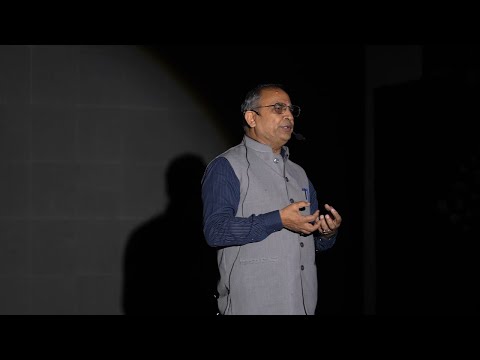
Bharat as Viksit Bharat | MUKESH GARG | TEDxShiva Shiksha Sadan Youth
TEDx Talks· 2025-12-11 16:53
I have completed the 62 year of my age and from the very beginning I learned that India is a developing country. We are a developing country. But now Narendra Modi have set a target that India would be a dwell country in 2047.The main object is goal is vikid bharat. Those are sales. Everyone says that it is the duty of the government to get the progress in the society or to get the goal of Vikid Bharat.But I think that it is also the duty of the member of the society to achieve some goal to get the goal. Ac ...

Piyush Goyal holds key meetings to strengthen ties in semiconductors, carbon capture and medtech
The Economic Times· 2025-12-07 05:27
Core Insights - The Indian Minister of Commerce and Industry, Piyush Goyal, is actively engaging with global industry leaders to enhance India's role in advanced manufacturing, semiconductors, and clean technology, aiming for self-reliance by 2047 [5]. Group 1: Meetings and Collaborations - A meeting was held between Piyush Goyal and Sanjiv Lamba, CEO of Linde plc, focusing on collaboration opportunities in advanced manufacturing, semiconductors, decarbonization, and carbon capture technologies [1][5]. - Goyal also met with David Rosa, CEO of Intuitive Surgical, discussing the company's experience in robotic-assisted surgery and plans for expanding its Global Capacity Centre (GCC) operations in India [4][5]. Group 2: Strategic Goals - The discussions emphasized the importance of building a resilient industrial ecosystem to address future global challenges and support India's Aatmanirbhar Bharat vision [5]. - Collaborations with companies like Intuitive Surgical are seen as essential for enhancing India's healthcare landscape and contributing to the broader goal of a developed India (Viksit Bharat) by 2047 [4][5].


