
wealth building

Search documents
Wall Street analyst reveals why you're not learning about money
Yahoo Finance· 2026-03-05 21:00
We're not taught how to invest. We're not taught about credit cards. We're not talked about these things at the dinner table or or learning about it in school.And so when I left Wall Street, I decided I wanted to be that crazy person who financially empowers the world where I translate Wall Street knowledge and give it to the 99% Wall Street often overlooked. How y'all. I'm Elizabeth Gore.Welcome to the big idea from Yahoo Finance, the show that navigates the world of small business and entrepreneurship. As ...

How Robert Kiyosaki Bought a $4.5M Home for $450K — and How You Can, Too
Yahoo Finance· 2025-12-30 18:39
Core Insights - Robert Kiyosaki successfully purchased a $4.5 million house for only $450,000 by leveraging his gold investments, which appreciated significantly over time [1][2] Group 1: Kiyosaki's Investment Strategy - Kiyosaki's initial investment of $450,000 in gold coins has increased in value to $4.5 million, allowing him to buy the house at a fraction of its market price [2] - The rising price of gold, now exceeding $4,000 per ounce, is attributed to economic concerns, inflation, tariffs, and government shutdowns, prompting more consumers to invest in gold as a hedge against economic instability [3] Group 2: Gold Investment Opportunities - Various methods exist for purchasing gold, including online dealers, local stores, and broker-dealers, catering to different investment preferences and needs [4][5][6][7]
Young men aren’t investing in a 401(k) for retirement — they’re banking on bitcoin
Yahoo Finance· 2025-12-09 14:38
Core Insights - Young American men are increasingly investing in cryptocurrency, with 26% owning crypto and 28% owning any crypto-based asset, surpassing the 21% who have traditional retirement accounts [2] - Bitcoin is the most popular cryptocurrency among young men, with 53% reporting ownership, while 18% own ether or Solana [3] - Higher-income and college-educated young men are more likely to own both cryptocurrency and retirement accounts, indicating a shift in investment behavior [3][5] Group 1: Cryptocurrency Ownership - 26% of young men own cryptocurrency, and 28% own crypto-based assets, which is higher than the 21% who have a 401(k) or similar retirement fund [2] - Among crypto holders, 53% own Bitcoin, while 18% own ether or Solana, with less than 20% investing in "memecoins" [3] Group 2: Demographics and Investment Behavior - Young men with family incomes of $100,000 or more show higher rates of cryptocurrency ownership (42%) and retirement fund ownership (33%) compared to those earning under $60,000 [3] - 39% of college-educated young men own cryptocurrency, compared to 23% of those without a college degree [3] Group 3: Employment Status and Retirement Access - Full-time employees have more balanced portfolios, with 37% owning cryptocurrency and the same percentage having retirement accounts [4] - Among part-time workers, 27% hold cryptocurrency while only 16% have a retirement account, highlighting a gap in financial security [4][5] - Almost half of full-time American workers lack access to employer-sponsored retirement plans, particularly affecting young workers in unstable jobs [5]
Starting With Just $50? Here's the Simple ETF Strategy That Builds Wealth Automatically
Yahoo Finance· 2025-12-05 17:43
Core Insights - Starting to invest is crucial, and any amount invested is meaningful, regardless of its size [1][2] - Exchange-traded funds (ETFs) simplify the investment process by allowing investment in multiple companies simultaneously [3] Investment Strategies - Dividend ETFs are recommended for building wealth, providing both stock price appreciation and consistent payouts [5] - Utilizing a dividend reinvestment plan (DRIP) can enhance the impact of dividend payouts by automatically reinvesting dividends to acquire more shares [6][7] Recommended Products - The Schwab U.S. Dividend Equity ETF is highlighted as a suitable option for new investors, focusing on companies with strong dividend performance [8][9]
KKR's Peter Stavros on employee ownership: An opportunity to give workers a chance to build wealth
CNBC Television· 2025-11-12 13:40
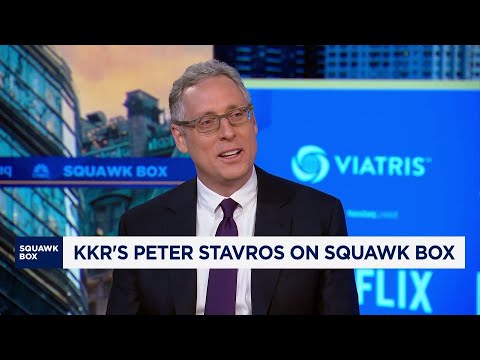
Our next guest is on a mission to take the idea of employee ownership global. Here to explain and to discuss the private equity landscape is Pete Savos. He is the co-founder co-head rather of global private equity at KKR.He could be the founder too if he'd like to be. Uh which has $723 billion in assets under management of which he oversees $222 billion to be exact. That's a lot of money.Uh Pete's also the founder and chairman of ownership works. Good morning to you. So, you've been trying to, you know what ...
Dave Ramsey says this purchase can keep Americans from moving up from middle class How you can build real wealth instead
Yahoo Finance· 2025-10-24 09:37
Core Insights - The article emphasizes the importance of financial prudence, particularly in relation to car purchases and investments, suggesting that individuals should avoid unnecessary debt from additional vehicles and instead focus on building wealth through appreciating assets [2][3][7]. Group 1: Car Purchases and Financial Advice - Americans typically borrow an average of $40,927 for new vehicles and $26,248 for used vehicles, indicating a significant financial burden associated with car ownership [2]. - Financial expert Dave Ramsey advises against purchasing a second car, highlighting that owning multiple vehicles can lead to increased financial obligations and may hinder wealth accumulation [3][4]. - Ramsey suggests that individuals should limit their spending on depreciating assets, such as cars, to no more than 50% of their income to foster wealth-building [7]. Group 2: Investment Opportunities - The article advocates for investing in appreciating assets, such as real estate, rather than spending on depreciating items like cars, to enhance financial stability and growth [8][12]. - First National Realty Partners (FNRP) offers a platform for accredited investors to engage in commercial real estate investments, providing a streamlined process and access to essential brands [9][10]. - Arrived allows individuals to invest in shares of vacation and rental properties with a low entry point of $100, enabling passive income generation without the responsibilities of traditional property management [11]. Group 3: Alternative Investment Options - The article discusses the potential of gold IRAs as a hedge against market volatility, allowing investments in physical precious metals while enjoying tax advantages [13][14]. - Masterworks provides a platform for investing in shares of high-value artwork, making art investment accessible to a broader audience and demonstrating a profitable track record with 23 successful exits [16][17].
Dave Ramsey says California dad ‘flunked’ his program after financing a tractor — but can there ever be ‘good’ debts?
Yahoo Finance· 2025-10-04 13:00
Core Insights - The discussion revolves around the financial choices made by a couple who have completed Financial Peace University (FPU) but still took on debt by financing a tractor [1][3][4] Group 1: Financial Situation - The couple has a household income of $350,000 and savings exceeding $400,000, including various investment accounts [2] - Despite their savings, there is a desire to spend on recreational items for family memories, indicating a conflict between saving and spending [2] Group 2: Debt Management Philosophy - Host Dave Ramsey criticized the decision to finance a tractor, emphasizing that it contradicts the principles taught in FPU [3][4] - Ramsey's approach under the 7 Baby Steps program prioritizes paying down all non-mortgage debt before building savings [4][5] - Alternative financial strategies suggest a blended approach, allowing for some debt management while building savings, particularly for low-interest, tax-advantaged debt [5][6][7]