workflow

Search documents
Dify 从被低估到成为明星项目,到底做对了什么|42章经
42章经· 2025-12-14 13:33
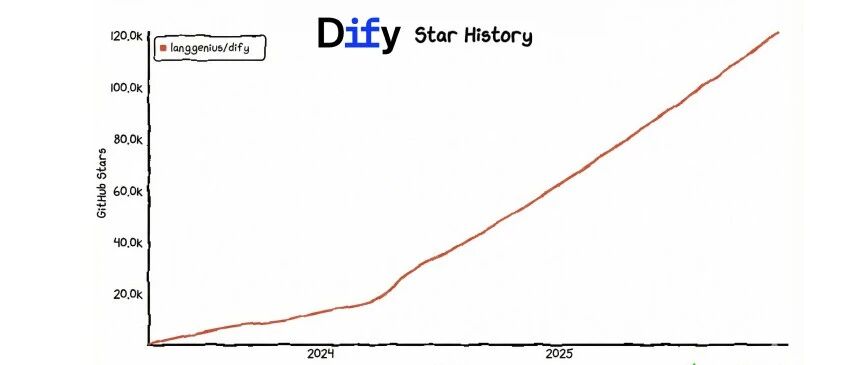
Core Insights - Dify has successfully established itself as a leading open-source project in the AI field, surpassing many expectations in its growth over the past two years [2][3][4] - The company adopted three core strategies from the beginning: open-source, B2B focus, and globalization, which have proven to be effective [3][4] Market and Technological Changes - The AI landscape has undergone three significant shifts over the past two years, with Dify evolving its offerings accordingly [5][6] - In 2023, Dify launched its first version, which was user-friendly and gained traction quickly due to the rising interest in AI [6] - By 2024, Dify introduced its core capability, workflow, and began building a plugin ecosystem, attracting paying enterprise customers [6] - By 2025, advancements in models, particularly in open-source capabilities and multi-modal functionalities, validated Dify's initial assumptions about the need for an intermediary layer [6][10] Competitive Landscape - Dify differentiates itself from competitors like LangChain by targeting a broader user base, including those with minimal technical skills [9][10] - The company has faced competition from various players, including large tech firms and startups, but has maintained its unique positioning by focusing on process integration within enterprises [12][17] - Dify's approach to product development emphasizes solving workflow issues and connecting LLMs with enterprise tools and data [17][18] Product Development and Engineering - Dify's engineering focus is seen as a key asset, with a strong emphasis on layered design and understanding user business scenarios [31][32] - The company believes that the most valuable aspect of its product is the engineering behind it, which requires significant cognitive effort and user collaboration [32][35] - Dify's workflow product is designed to ensure stability and reliability, allowing for gradual advancements in AI capabilities over time [38][39] Future Outlook - Dify envisions a future where its platform serves as an intelligent operating system for enterprises, integrating various capabilities and facilitating human-agent collaboration [56][57] - The company recognizes the importance of addressing the "last mile" issues in AI applications, focusing on building infrastructure that bridges the gap between model capabilities and human usability [72][73] - Dify's success in markets like Japan is attributed to its adaptability to local business structures and the scarcity of technical personnel [64][66] User Engagement and Market Penetration - Approximately 20% of Fortune 500 companies are currently using Dify, highlighting its significant market penetration [60] - The open-source model has been crucial for Dify's growth, enabling rapid dissemination and adoption of its technology [62][63]

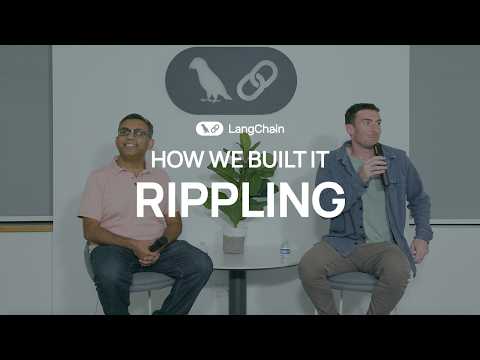
AI Agents in Production: Lessons from Rippling and LangChain
LangChain· 2025-11-26 18:05
AI Strategy and Implementation at Rippling - Rippling utilizes AI across its suite, including HR, payroll, IT, and finance, focusing on content summarization, standalone AI products, and AI agents [3][8] - The company fosters AI innovation through hack weeks, providing access to tools like OpenAI, Anthropic, and Google, and partnering with Langchain [10][11][12] - Rippling emphasizes a balance between top-down product strategy and bottom-up innovation, encouraging employees to identify and automate workflows with AI [14] - Rippling's AI team focuses on creating basic primitives and a foundation for other teams to innovate, offering a "paved path" from prototype to production [18] - Rippling is expanding its product capabilities in IT, finance, and global markets, incentivizing the use of AI in these areas [13][14] AI Agent Development and Challenges - Rippling views AI agents as system analysts assisting admins with day-to-day tasks, exploring their potential within the company's vast product footprint [9] - The company emphasizes the importance of real-world production data for validating AI functionality and value, along with early feedback loops from actual users [20][22] - Rippling uses internal dogfooding to test AI features, gathering immediate feedback from employees, including executives like the CEO [21][24] - Rippling is shifting from deterministic, workflow-centric agents to leveraging the reasoning and judgment capabilities of LLMs, providing ample context and toolsets [31][33] - Rippling prioritizes AI inside the product, ensuring data security and compliance with regulations like GDPR and CCPA, with rigorous responsible AI practices [40][39][43] Productivity and Internal AI Adoption - Rippling views AI as a superpower to enhance productivity across all departments, encouraging employees to identify and automate tasks [51][53] - The company has created an AI stance, provided access to tools, and established an enablement ecosystem to promote internal AI adoption [51][52] - Rippling emphasizes accountability for code quality, even when generated by AI, using AI code review tools and promoting spec-driven AI development [57][58][59]