
Oil and Gas

Search documents
Gold Surges Amid Geopolitical Tensions; Novartis Eyes China, US Tariff Shield
Stock Market News· 2026-01-20 09:38
Group 1: Gold Market - Gold prices have surged significantly, climbing 9% in the first three weeks of 2026 and a remarkable 75% over the past 12 months, signaling fiscal stress, currency debasement, and heightened geopolitical risk [2][11]. Group 2: Corporate Developments - Novartis (NVS) CEO Narasimhan revealed the pharmaceutical giant is pursuing more biotech deals with China than with Europe and has secured an agreement with the U.S. government that shields it from tariffs [3][11]. Group 3: Energy Sector - The International Energy Agency (IEA) forecasts years of downward pressure on oil and gas prices due to persistent supply, indicating a challenging outlook for energy markets [4][11]. Group 4: Cryptocurrency Market - Major cryptocurrency assets experienced a downturn, with Coinbase Global (COIN) falling 4.4%, Bitfarms (BITF) down 7.5%, and MicroStrategy (MSTR) declining 5.5% [5][11]. Group 5: Investor Confidence - Despite renewed Trump tariff threats, ZEW German Investor Morale is anticipated to improve for a second consecutive month, even as the EU-US trade war intensifies [6][11].




Exclusive: Trump Wants Exxon In Venezuela, But This Oil Vet Says Only 'Tokenization' Of Barrels Will Make It Safe - Exxon Mobil (NYSE:XOM)
Benzinga· 2026-01-20 07:43
Core Viewpoint - President Trump is encouraging U.S. oil companies to invest in Venezuela's energy sector, but experts warn that without a reliable digital infrastructure, the country remains too risky for major investments [1][2]. Group 1: Digital Infrastructure and Trust - Baron Lamarre suggests that a "trustless" digital infrastructure is necessary to track ownership in Venezuela's energy sector, as traditional contracts are inadequate in a region with broken institutional trust [2][3]. - Tokenization of crude oil on the blockchain is proposed to enhance transparency and allow investors to isolate specific barrels, thereby reducing exposure to opaque state entities [3][4]. Group 2: Market Dynamics and Pricing - The reported 30% price premium on U.S.-brokered Venezuelan oil sales is viewed as a temporary effect of U.S. policy rather than a sign of market recovery [5][6]. - The sustainability of this price premium is contingent on U.S. policy; any changes could lead to a return to deep discounts [6]. Group 3: Environmental and Cleanup Costs - Lamarre proposes an "E-cost" or ecological premium to be included in the price of each barrel sold, aimed at funding environmental remediation without imposing indefinite liabilities on foreign companies [7].


Total flags stronger refining margins, lower oil and gas sales in trading update
Reuters· 2026-01-20 07:39
Group 1 - TotalEnergies anticipates a decline in oil and liquefied natural gas sales for Q4 2025 [1] - The company expects stronger downstream results due to higher refining margins [1] - Weaker crude prices are expected to be offset by improved refining performance [1]


Russia’s Oil and Gas Revenues Are Set to Plunge 46% in January
Yahoo Finance· 2026-01-20 07:00
Group 1 - Russia's budget revenues from oil and gas are projected to decline by 46% year-on-year this month, amounting to approximately 420 billion rubles or $5.42 billion, influenced by lower international oil prices and a stronger ruble [1][2] - The oil and gas sector contributes about 25% to Russia's total budget revenues, making it a significant target for Western sanctions aimed at undermining Russia's military funding in Ukraine [3] - The federal budget is expected to receive around $120 billion in revenues from the oil and gas industry this year, an increase from $110 billion last year, despite a 24% decline from the previous year [4] Group 2 - The decline in revenues has been exacerbated by U.S. sanctions targeting major crude oil exporters in Russia, leading to a shift in clients for Rosneft and Lukoil to other energy trading companies [5]
PetroTal Announces 2026 Guidance: Budget Prioritizes Liquidity Preservation, Cost Discipline, and Operational Optimization
TMX Newsfile· 2026-01-20 07:00
Core Viewpoint - PetroTal Corp. is adjusting its operational strategy and capital budget for 2026 in response to challenges faced in 2025, prioritizing liquidity and production reliability over immediate growth [3][4]. 2026 Guidance Overview - The approved capital budget for 2026 is between $80 million and $90 million, with approximately $18 million carried over from 2025 [4]. - The capital investments are expected to support an annual average production of approximately 12,000 barrels of oil per day (bopd) [4][6]. - The company aims to maintain a minimum unrestricted cash liquidity of $60 million throughout the year [4][6]. Operating Strategy & Drilling Update - A tender process for a third-party drilling contractor has been initiated to mitigate scheduling risks encountered in 2025, with a contractor expected to be selected by the end of Q1 2026 [5][8]. - The first development well is targeted to be spudded by October 1, 2026, as part of a plan to restore production capacity to over 20,000 bopd [5][8]. Production & Sales Guidance - The production guidance for 2026 is set at 11,750 to 12,250 bopd, aligning with previous forecasts [11]. - Sales guidance assumes that 100% of Bretaña production will be sold through the Brazil route, fulfilling minimum volume requirements under crude oil marketing agreements [12]. Financial Discipline & Cost Structure - Adjusted EBITDA guidance for 2026 is $30 million, based on an annual average Brent oil price of $60.00 per barrel [13]. - The company is implementing a cost reduction program targeting significant reductions in operating expenses, general and administrative expenses, and capital expenditures [13]. - A total of $33 million has been allocated for erosion control in 2026, with $18 million expensed and $15 million capitalized [13].

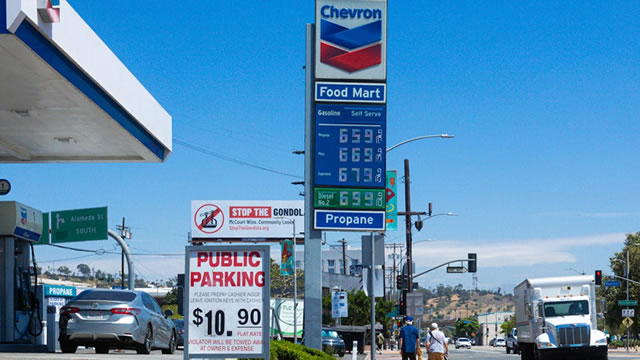
Chevron's Dilemma in Venezuela: Support Trump's Vision Without Losing Money
WSJ· 2026-01-20 04:00
Core Viewpoint - The company has actively sought to position itself near Venezuela's oil wealth but currently lacks the willingness to make significant investments in the region in the near term [1] Group 1 - The company has lobbied extensively for proximity to Venezuela's oil resources [1] - There is a noted reluctance from the company to engage in major investments in Venezuela shortly [1]

Venezuela’s Oil Reset Has Finally Begun
Yahoo Finance· 2026-01-20 01:00
Core Insights - Venezuela possesses the world's largest proven crude reserves, approximately 303 billion barrels, which is about 17% of the global total, despite the challenges posed by state control and mismanagement [2][3] Group 1: Production Potential - Macquarie Group's energy strategist identifies four main opportunities for restoring Venezuelan oil output, including excess declines of 200,000 to 500,000 barrels per day (bpd) that could be remedied with sanctions relief and investment within 6 to 24 months [1] - Revitalizing old fields could yield an additional 100,000 to 200,000 bpd within a 1 to 3-year timeframe, while existing Orinoco projects could restore 200,000 to 300,000 bpd over a 1 to 4-year horizon [1] - New investment initiatives could potentially add 500,000 to 700,000 bpd, with lead times of 3 to 6 years, suggesting a long-term upside to about 2 million bpd if 75% of these volumes are achieved [1] Group 2: Current Production and Infrastructure - Venezuela's oil production has drastically declined from around 3 million bpd in 2008 to approximately 963,000 bpd by the end of last year due to collapsed infrastructure and sanctions [2] - The main constraints include a chronic shortage of diluent, broken upgraders, and the hollowing out of PDVSA, which has been severely impacted by mismanagement and sanctions [2] Group 3: International Involvement and Investment - Chevron and Repsol are expected to lead the charge in revitalizing Venezuela's oil production, with Chevron aiming to boost production by about 50% in the next 18 to 24 months [7] - Repsol's CEO indicated plans to triple production in the next two to three years, contingent on legal clarifications regarding operations and profits [7] - The U.S. government is focusing on monetizing oil held in storage, with estimates suggesting around 34 million barrels of crude stored in Venezuela and additional amounts in Aruba and the Bahamas [5][6] Group 4: Regulatory and Political Landscape - Maria Corina Machado proposes downsizing PDVSA and transferring assets to private investors, aiming to create a regulatory agency independent of the state oil company [8] - Recent legislation presented by Delcy Rodriguez aims to encourage foreign investment in oil fields and infrastructure, incorporating production models from the Anti-Blockade Law into Venezuela's Hydrocarbons Law [8] - The future of Venezuela's oil sector will depend on rebuilding institutional frameworks and achieving a balance between private participation and state sovereignty [9]
Energy Shares Outperform Early In The Year As Shale Drilling Pulls Back
Yahoo Finance· 2026-01-20 00:00
Oil and gas stocks have kicked off the new year on a bright note, with the S&P 500 Energy Sector notching a 6.8% gain in the year-to-date, the third-best sector performance behind only Industrials (7.6%) and Materials (7.2%). The strong start comes despite the sector facing pressure from ample supply, but getting a boost from ongoing geopolitical pressures. Brent prices have increased from $59.96 per barrel two weeks ago to $64.15 on Martin Luther King Jr. Day on Monday as Iran tensions increase market ji ...
Parex Resources Announces 2026 Guidance and Board Chair Transition
Globenewswire· 2026-01-19 22:00
Core Insights - Parex Resources Inc. has published its 2026 guidance, indicating a strategic focus on reducing sustaining capital while investing in projects with growth potential for shareholders [1][3] 2026 Guidance - The company anticipates a Brent crude oil average price of $60 per barrel and average production between 45,000 to 49,000 barrels of oil equivalent per day (boe/d) [5] - Funds flow provided by operations is projected to be between $385 million and $420 million, with a netback of $23 to $24 per boe [5] - Capital expenditures are estimated to be between $280 million and $320 million, with a midpoint free funds flow of $105 million [5] Capital Expenditure Breakdown - Of the planned $300 million in capital expenditures, approximately $190 million will support base development and near-field exploration, while $65 million is allocated for acquisition capital related to farm-in agreements [6][8] - The company aims for an average production of 47,000 boe/d in FY 2026, reflecting a 5% growth compared to FY 2025 [6] Planned Activities - Significant activities include drilling multiple wells in various blocks, optimizing existing production, and investing in waterflood and polymer programs [8] - The company plans to drill three independent prospects and execute a 10-well exploration program, with a total estimated cost of around $20 million [8] Leadership Transition - Wayne Foo will retire as Board Chair and Director effective May 12, 2026, with Glenn McNamara set to assume the role [1][12] - The transition is part of a succession plan, ensuring continuity in leadership and strategic direction [12][14] Short-Term Outlook - The company has five operated rigs and one non-operated rig currently in operation, reflecting strong performance from Q4 2025 into 2026 [9] - Elevated capital expenditures are expected in the first half of 2026, with more moderate spending anticipated for the latter half [10]

OPEC+供应风险或支撑油价站上60美元关口
Jin Rong Jie· 2026-01-19 16:01
Core Viewpoint - The international oil market is experiencing downward pressure due to the easing of tensions in Iran and expectations of increased tariffs from the U.S., leading to a significant drop in oil prices, although prices are stabilizing around $60 per barrel due to supply risks faced by OPEC+ members [1] Group 1 - The easing of the situation in Iran has contributed to a decline in oil prices [1] - Anticipated additional tariffs from the U.S. are exerting pressure on the oil market [1] - Despite the recent price drop, Brent crude oil prices are expected to remain above $60 per barrel due to multiple supply risks [1]