
Data Storage

Search documents
未知机构:东北计算机20260128人工智能需求激增海力士季度利润创历史新高大-20260129
未知机构· 2026-01-29 02:20
2. 人工智能需求激增,海力士季度利润创历史新高,大幅超市场预期。 (来源:环球市场播报) 【东北计算机】20260128 【人工智能需求激增,海力士季度利润创历史新高,大幅超市场预期】 1. SK海力士将在美国设立ARM人工智能解决方案公司;SK海力士:SK海力士NAND产品解决方案部门将转型为 专注于人工智能投资的部门;SK海力士公司:将对Solidigm进行重组以成立人工智能公司。 (来源:新浪) 2. 人工智能需求激增,海力士季度利润创历史新高,大幅超市场 【东北计算机】20260128 【人工智能需求激增,海力士季度利润创历史新高,大幅超市场预期】 1. SK海力士将在美国设立ARM人工智能解决方案公司;SK海力士:SK海力士NAND产品解决方案部门将转型为 专注于人工智能投资的部门;SK海力士公司:将对Solidigm进行重组以成立人工智能公司。 (来源:新浪) 3. ASML去年营收327亿欧元:人工智能需求正转化成订单,预计今年中国营收占比两成。 (来源:澎湃新闻) 4. 人工智能初创公司Anthropic将2026年营收预测上调20%。 (来源:新浪) 5. 财联社1月28日电,Anthro ...
Why Seagate Stock Soared Today
Yahoo Finance· 2026-01-29 01:41
Shares of Seagate Technology (NASDAQ: STX) popped on Wednesday after the hard disk drive maker's fast-growing profits highlighted the shocking demand for its data storage products. By the close of trading, Seagate's stock price was up more than 19%. Where to invest $1,000 right now? Our analyst team just revealed what they believe are the 10 best stocks to buy right now, when you join Stock Advisor. See the stocks » Image source: Getty Images. The data storage industry is booming Seagate's revenue jump ...

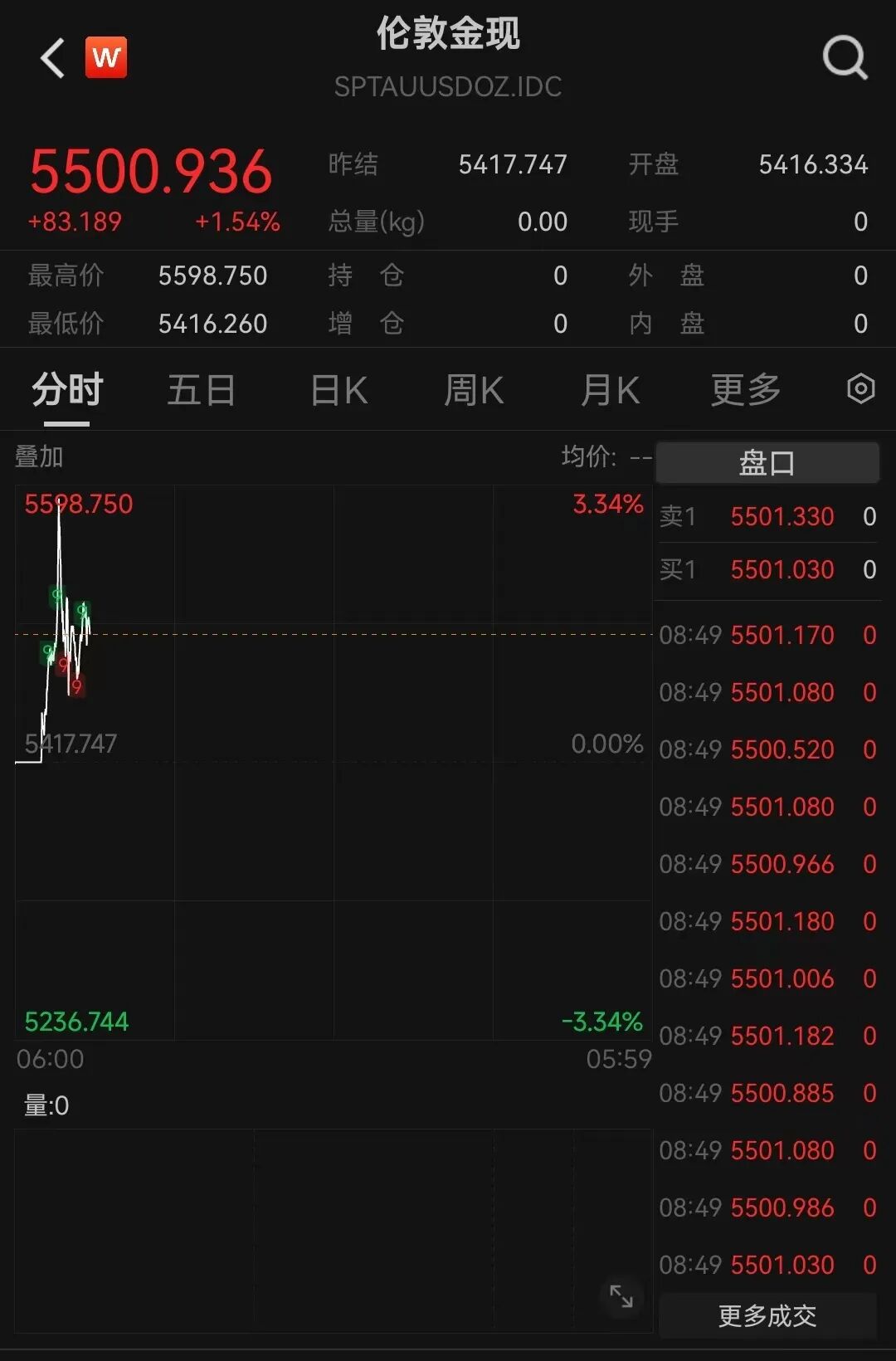
10票赞成2票反对,美联储宣布不降息!鲍威尔向继任者提议:与美国政治“划清界限”;微软、特斯拉公布“成绩单”,黄金突破5500美元关口
Mei Ri Jing Ji Xin Wen· 2026-01-29 01:26
当地时间1月28日,美联储主席鲍威尔表示,建议下一届美联储主席与美国政治"划清界限"。 当天早些时候,美联储公布最新一期货币政策会议纪要,宣布将联邦基金利率目标区间维持在3.5%至3.75%之间不变。随后,美联储主席鲍威尔就该决定 举行发布会,并就美国当前经济状况及美联储下任主席等问题接受记者提问。 会议纪要显示,现有指标表明,就业增长仍处于低位,失业率已显现出趋于稳定的迹象。通胀水平仍处于较高水平。委员会致力于实现最大就业和长期通 胀率达到2%的目标。经济前景的不确定性仍然很高。委员会密切关注其双重使命面临的风险。为支持其目标,美联储决定将联邦基金利率目标区间继续 维持在3.5%至3.75%之间。 具体表决细节显示,美联储以10票赞成、2票反对的结果,决定将基准利率维持在3.5%至3.75%区间。美联储理事沃勒以及米兰投下反对票,主张降息25 个基点。 在此次利率政策出台前,市场普遍预期美联储将在本周政策会议上维持利率不变,此前该机构已在2025下半年连续三次降息。 美联储主席鲍威尔在发布会表示,美国失业率已出现一些企稳迹象,劳动力市场在逐渐走软后可能正在趋于稳定,招聘、职位空缺和工资增长几乎没有变 化;消 ...

Western Digital Q2 2026 Earnings Preview (NASDAQ:WDC)
Seeking Alpha· 2026-01-28 22:35
To ensure this doesn’t happen in the future, please enable Javascript and cookies in your browser.If you have an ad-blocker enabled you may be blocked from proceeding. Please disable your ad-blocker and refresh. ...


S&P/TSX composite edges higher, U.S. markets mixed after key rate decisions
Investment Executive· 2026-01-28 22:08
Group 1: Interest Rates and Economic Indicators - The central bank's policy rate remains at 2.25%, which was widely expected by economists [1] - The U.S. Federal Reserve has kept its key rate unchanged at approximately 3.6% after three cuts last year, indicating a stabilization in the job market and an upgrade in growth characterization from "modest" to "solid" [1] - Lower interest rates are particularly significant for Canadian homeowners, as many are renewing their mortgages this year [2] Group 2: Commodity Market Performance - Commodity prices positively influenced Canada's main stock index, which rose by 79.67 points to 33,176.07 [2] - The March silver contract increased by US$7.58 to US$113.53 per ounce, while the April gold contract rose by US$219.60 to US$5,340.20 per ounce [2] - Commodities are highlighted as a major sector for Canada, with silver and gold prices showing upward trends [3] Group 3: Stock Market Movements - The U.S. stock and bond markets remained stable, with the U.S. dollar stabilizing after a recent decline [4] - Seagate Technology experienced a significant gain of 19.1% after reporting better-than-expected profits, driven by demand from artificial intelligence applications [4] - Nvidia, a key player in the AI sector, rose by 1.6%, contributing to the S&P 500's performance, supported by a positive report from ASML regarding chip-making machinery [5] Group 4: Currency and Oil Prices - The Canadian dollar traded at 73.69 cents US, up from 73.42 cents US the previous day [5] - The March crude oil contract increased by US$0.82 to US$63.21 per barrel [5]

Backblaze Named Finalist in Most Innovative Data Storage Solution of SiliconANGLE Media's 2026 Tech Innovation CUBEd Awards
Businesswire· 2026-01-28 21:44
Core Insights - Backblaze, Inc. has been recognized as a finalist for the Most Innovative Data Storage Solution at the 2026 Tech Innovation CUBEd Awards by SiliconANGLE Media [1] - The company's B2 Overdrive service redefines cloud object storage by eliminating the traditional trade-off between cost and performance [1] - Backblaze claims to offer the best price-to-performance value in the industry, providing up to 1Tbps of sustained throughput [1]


Seagate Is Sold Out Through 2026, CEO Says - Seagate Technology Hldgs (NASDAQ:STX)
Benzinga· 2026-01-28 18:36
Core Viewpoint - Seagate Technology Holdings PLC experienced a significant stock increase following strong quarterly results and raised guidance, leading to two firms raising their price forecasts to $500 [1] Group 1: Analyst Price Forecasts - Cantor Fitzgerald analyst C.J. Muse raised the price forecast to $500 from $400, maintaining an Overweight rating, citing gross margins of approximately 70% during the December quarter and a gross margin guide of at least 44% [2] - Rosenblatt Securities analyst Kevin Cassidy also raised the price forecast to $500 from $370, maintaining a Buy rating, and increased the valuation multiple to 25 times from 20 times non-GAAP EPS, highlighting expanding gross margins above 45% and operating margins above 35% [4] Group 2: Earnings Performance - Seagate reported quarterly earnings of $3.11 per share, surpassing the analyst consensus estimate of $2.81, with quarterly revenue reaching $2.83 billion, exceeding the Street estimate of $2.73 billion and up from $2.33 billion in the same period last year [5] - CEO Dave Mosley noted that the December quarter results set new records for gross margin, operating margin, and non-GAAP EPS, reflecting strong operational execution and robust data center demand [6] Group 3: Capacity and Demand Outlook - The company's nearline storage capacity is fully booked through calendar 2026, with orders for the first half of 2027 expected to open soon, indicating strong demand visibility through 2027 [7] - Seagate anticipates third-quarter adjusted EPS of $3.20 to $3.60, compared to the $2.96 analyst estimate, and revenue of $2.8 billion to $3 billion, exceeding the $2.77 billion analyst estimate [8]
Seagate Is Sold Out Through 2026, CEO Says
Benzinga· 2026-01-28 18:36
Core Viewpoint - Seagate Technology Holdings PLC experienced a significant stock increase following strong quarterly results and raised guidance, leading to two firms raising their price forecasts to $500 [1] Group 1: Analyst Price Forecasts - Cantor Fitzgerald analyst C.J. Muse raised the price forecast to $500 from $400, maintaining an Overweight rating, citing gross margins of approximately 70% during the December quarter and a gross margin guide of at least 44% [2] - Rosenblatt Securities analyst Kevin Cassidy also raised the price forecast to $500 from $370, maintaining a Buy rating, and increased the valuation multiple to 25 times from 20 times non-GAAP EPS, highlighting expanding gross margins above 45% and operating margins above 35% [4] Group 2: Earnings Performance - Seagate reported quarterly earnings of $3.11 per share, surpassing the analyst consensus estimate of $2.81, with quarterly revenue reaching $2.83 billion, exceeding the Street estimate of $2.73 billion and up from $2.33 billion in the same period last year [5][6] - The CEO of Seagate noted that the December quarter results set new records for gross margin, operating margin, and non-GAAP EPS, reflecting strong operational execution and robust data center demand [6] Group 3: Future Outlook - The company indicated that its nearline storage capacity is fully booked through calendar 2026, with orders for the first half of 2027 expected to open soon, and long-term agreements with major cloud customers provide strong demand visibility through 2027 [7] - Seagate expects third-quarter adjusted EPS of $3.20 to $3.60, compared to the $2.96 analyst estimate, and revenue of $2.8 billion to $3 billion, versus the $2.77 billion analyst estimate [8]

Jim Cramer Highlights Pure Storage Stock’s High Valuation
Yahoo Finance· 2026-01-28 17:52
Company Overview - Pure Storage, Inc. (NYSE:PSTG) specializes in hardware and software for data management, including storage systems for databases and tools for cloud-native applications [2]. Investment Insights - The company offers a flash array that allows data to be stored efficiently, but it is noted for having an extremely high price-to-earnings multiple, which raises concerns about its valuation [1]. - There is a belief that certain AI stocks present greater upside potential and carry less downside risk compared to PSTG, suggesting a competitive landscape for investment opportunities [3].

Seagate Stock Leaps After Earnings. Wall Street 'Amazed' By AI-Driven Data Storage Demand.
Investors· 2026-01-28 15:41
Seagate Stock Soars As Earnings Show Huge AI Demand For Hard-Drives | Investor's Business DailyANALYSIS: [AI Bubble Or Boom? Wall Street Weighs In]Investors.com will undergo scheduled maintenance from 10:00 PM ET to 2:00 AM ET and some features may be unavailable. We apologize for any inconvenience.---Seagate Technology (STX) stock rocketed higher Wednesday after the data storage company reported fiscal second-quarter results ahead of expectations. The gains add to a massive run for Seagate, which is benefi ...