进出口贸易

Search documents
专栏丨不降反升,美国新关税让瑞士“目瞪口呆”
Xin Hua Wang· 2025-08-11 01:08
新华社日内瓦8月10日电 题:不降反升,美国新关税让瑞士"目瞪口呆" 新华社记者陈俊侠 焦倩 在美国近期公布的对69个贸易伙伴输美商品适用的关税税率中,针对瑞士的税率令人意外地高达39%。 这一税率是欧洲国家中最高的,比4月初美国宣布的31%税率提高了8个百分点。随着新关税7日正式生 效,瑞士出口美国近六成商品受到影响。 瑞士自认为与美国长期保持良好的双边关系和紧密的经济联系,此前谈判中一度释放出有望就10%税率 达成协议的乐观预期,如今却不降反升,这一痛击让瑞士举国"目瞪口呆"。瑞士西区经济发展署前署 长、经济学家菲利普·莫尼耶说,瑞士舆论此前普遍持乐观态度,认为最理想状态是10%甚至更低的税 率,最起码不应超过20%。瑞士政府发表声明说,对美方关税政策"深表遗憾",并称这一税率与两国在 过去几个月里进行密集磋商后达成的联合声明草案内容存在"重大偏差"。 瑞士经济高度依赖出口,约18%的出口商品销往美国,未来势必将因美国加征高关税而面临较大压力。 同时,美国对欧盟、日本、英国等征收的关税税率都低于瑞士,也使得瑞士商品对美出口处于劣势。 为扭转不利局面,瑞士政府已明确宣布将采取两大措施:一是将继续与美国谈判以 ...
不降反升,美国新关税让瑞士“目瞪口呆”
Xin Hua She· 2025-08-11 00:29
Core Viewpoint - The recent increase in tariffs imposed by the U.S. on Swiss goods, reaching 39%, has shocked Switzerland, which had anticipated a lower rate following negotiations [1][2]. Group 1: Tariff Impact - The new tariff rate of 39% is the highest among European countries and affects nearly 60% of Swiss exports to the U.S. [1] - The previous expectation was for a 10% tariff, with Swiss officials expressing disappointment over the significant deviation from prior negotiations [1][2]. Group 2: Economic Context - The U.S. cites a trade deficit of $38.3 billion with Switzerland as a reason for the high tariffs, claiming that the U.S. is at a disadvantage in bilateral trade [2] - Switzerland has been labeled a "currency manipulator" by the U.S. due to its attempts to devalue the Swiss franc to boost exports [2]. Group 3: Government Response - The Swiss government plans to continue negotiations with the U.S. to lower tariffs and may implement support measures for Swiss companies facing pressure from the tariffs [3] - Proposed measures include more flexible policies regarding working hours and wages to prevent layoffs [3].
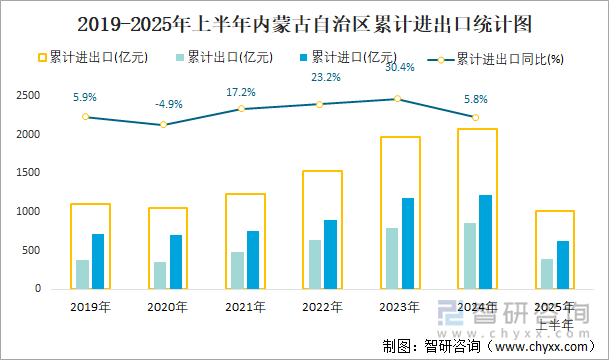
2025年上半年内蒙古自治区贸易统计分析:内蒙古自治区进出口总额为1012.5亿元,同比增长0.4%
Chan Ye Xin Xi Wang· 2025-08-10 01:21
Group 1 - The core viewpoint of the article highlights the performance of Inner Mongolia's import and export trade in the first half of 2025, showing a slight overall growth in exports while imports experienced a decline, resulting in a trade deficit [1] - The total import and export value of Inner Mongolia in the first half of 2025 reached 101.25 billion yuan, representing a year-on-year increase of 0.4% [1] - The export value amounted to 39.526 billion yuan, reflecting a year-on-year growth of 3.6%, while the import value was 61.722 billion yuan, showing a year-on-year decrease of 1.6% [1] Group 2 - The trade deficit for Inner Mongolia in the first half of 2025 was recorded at 22.196 billion yuan [1] - The article references a report by Zhiyan Consulting, which provides insights into the competitive strategies and future prospects of China's digital trade industry from 2025 to 2031 [1] - A list of publicly listed companies related to the industry is provided, including Zhongcheng Co., Yuanda Holdings, and Xiamen Xinda, among others [1]

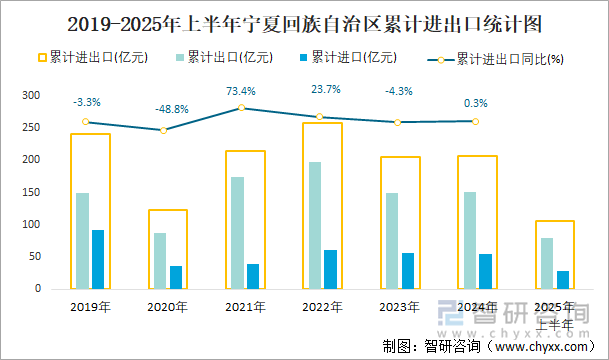
2025年上半年宁夏回族自治区贸易统计分析:宁夏回族自治区进出口总额为106.3亿元,同比增长5.4%
Chan Ye Xin Xi Wang· 2025-08-10 01:21
Group 1 - The core viewpoint of the article highlights the growth in import and export activities in Ningxia Hui Autonomous Region, with a total import and export value of 10.63 billion yuan in the first half of 2025, representing a year-on-year increase of 5.4% [1] - The export value reached 7.88 billion yuan, showing a year-on-year growth of 10.3%, while the import value was 2.752 billion yuan, reflecting a year-on-year decline of 6.6% [1] - The trade surplus for the region amounted to 5.128 billion yuan, indicating a positive balance in trade activities [1] Group 2 - Listed companies mentioned include Zhongcheng Co., Ltd. (000151), Yuanda Holdings (000626), Xiamen Xinda (000701), and others, indicating a diverse range of companies involved in the trade sector [1] - The report referenced is the "2025-2031 China Digital Trade Industry Competition Strategy Research and Future Outlook Report" published by Zhiyan Consulting, suggesting a focus on the digital trade industry [1]
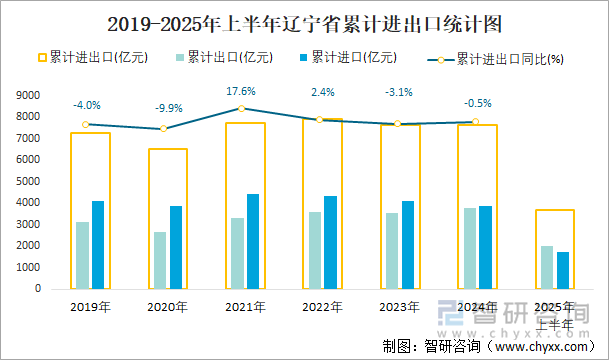
2025年上半年辽宁省贸易统计分析:辽宁省进出口总额为3702.1亿元,同比下滑0.1%
Chan Ye Xin Xi Wang· 2025-08-10 01:21
Group 1 - The core viewpoint of the article highlights the performance of Liaoning Province's import and export trade in the first half of 2025, indicating a slight decline in total trade volume while showcasing a significant increase in export value [1] - The total import and export value of Liaoning Province reached 370.21 billion yuan, a decrease of 0.1% compared to the same period last year [1] - The export value was 199.256 billion yuan, reflecting a year-on-year growth of 13.4%, while the import value was 170.955 billion yuan, showing a year-on-year decline of 12.3% [1] Group 2 - The trade surplus for Liaoning Province stood at 28.301 billion yuan during the same period [1] - The article references a report by Zhiyan Consulting titled "2025-2031 China Digital Trade Industry Competition Strategy Research and Future Outlook," indicating ongoing research and analysis in the digital trade sector [1]
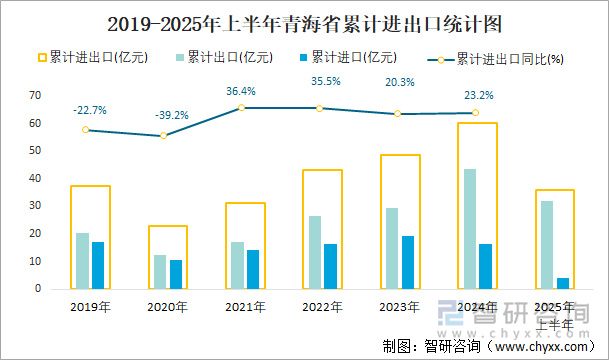
2025年上半年青海省贸易统计分析:青海省进出口总额为35.9亿元,同比增长57.7%
Chan Ye Xin Xi Wang· 2025-08-10 01:21
Group 1 - The core viewpoint of the news highlights the significant growth in Qinghai Province's import and export activities, with a total import and export value of 3.59 billion yuan in the first half of 2025, representing a year-on-year increase of 57.7% [1] - Exports reached 3.179 billion yuan, showing a remarkable year-on-year growth of 112.1%, while imports were 413 million yuan, reflecting a decline of 47% [1] - The trade surplus for Qinghai Province stood at 2.766 billion yuan, indicating a strong positive balance in trade [1] Group 2 - The listed companies mentioned include Zhongcheng Co., Ltd. (000151), Yuanda Holdings (000626), Xiamen Xinda (000701), and others, indicating a diverse range of players in the market [1] - The report referenced is the "2025-2031 China Digital Trade Industry Competition Strategy Research and Future Outlook Report" published by Zhiyan Consulting, suggesting a focus on the digital trade sector [1]
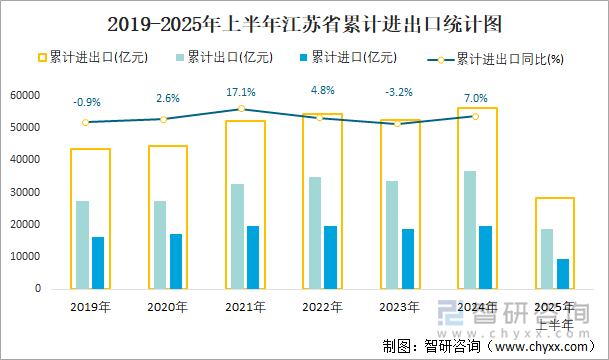
2025年上半年江苏省贸易统计分析:江苏省进出口总额为28148.5亿元,同比增长5.2%
Chan Ye Xin Xi Wang· 2025-08-10 01:14
Group 1 - The core viewpoint of the article highlights the growth in Jiangsu Province's import and export trade, with a total trade volume of 28,148.5 billion yuan in the first half of 2025, representing a year-on-year increase of 5.2% [1] - Exports amounted to 18,809.14 billion yuan, showing a year-on-year growth of 9.4%, while imports were 9,339.31 billion yuan, reflecting a decline of 2.4% [1] - The trade surplus for Jiangsu Province reached 9,469.83 billion yuan during the same period [1] Group 2 - Listed companies mentioned include Zhongcheng Co., Ltd. (000151), Yuanda Holdings (000626), Xiamen Xinda (000701), and others, indicating a diverse range of firms involved in the trade sector [1] - The report referenced is the "2025-2031 China Digital Trade Industry Competition Strategy Research and Future Outlook Report" published by Zhiyan Consulting, suggesting a focus on future industry trends [1]
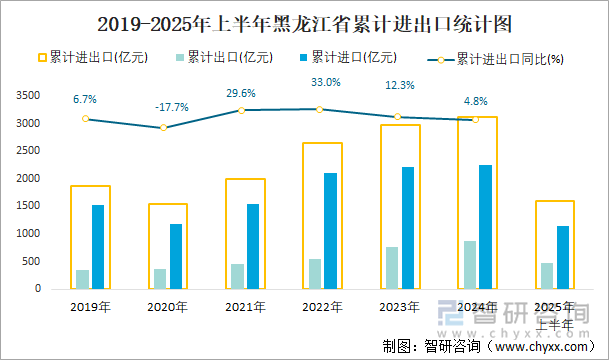
2025年上半年黑龙江省贸易统计分析:黑龙江省进出口总额为1601.2亿元,同比增长2.4%
Chan Ye Xin Xi Wang· 2025-08-10 01:14
Group 1 - The core viewpoint of the article highlights the performance of Heilongjiang Province's import and export trade in the first half of 2025, showing a total import and export value of 160.12 billion yuan, with exports increasing by 16.9% year-on-year and imports decreasing by 2.5% [1] - The export value reached 46.677 billion yuan, while the import value was 113.442 billion yuan, resulting in a trade deficit of 66.765 billion yuan [1] - The report referenced is the "2025-2031 China Digital Trade Industry Competition Strategy Research and Future Outlook Report" published by Zhiyan Consulting, indicating a focus on the digital trade sector [1] Group 2 - Listed companies mentioned include Zhongcheng Co., Ltd. (000151), Yuanda Holdings (000626), Xiamen Xinda (000701), and others, indicating a diverse range of companies involved in the trade sector [1] - Zhiyan Consulting is recognized as a leading industry consulting agency in China, providing comprehensive industry research reports and tailored services to support investment decisions [2] - Data sources for the report include the General Administration of Customs and Zhiyan Consulting's own organization of the data [3]
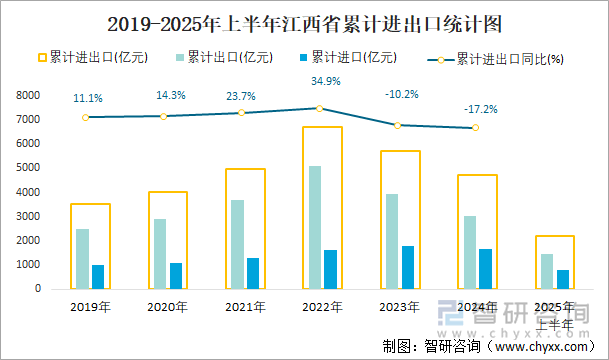
2025年上半年江西省贸易统计分析:江西省进出口总额为2210.8亿元,同比增长0.1%
Chan Ye Xin Xi Wang· 2025-08-10 01:14
Group 1 - The core viewpoint of the article highlights the performance of Jiangxi Province's import and export trade in the first half of 2025, with a total import and export value of 2210.8 billion, reflecting a slight growth of 0.1% year-on-year [1] - The export value reached 1435.49 billion, showing a year-on-year increase of 0.3%, while the import value was 775.35 billion, indicating a year-on-year decline of 0.3% [1] - The trade surplus for Jiangxi Province stood at 660.14 billion [1] Group 2 - The article mentions several listed companies related to the digital trade industry, including Zhongcheng Co., Yuanda Holdings, and Xiamen Xinda, among others [1] - A report titled "2025-2031 China Digital Trade Industry Competition Strategy Research and Future Outlook" was released by Zhiyan Consulting, indicating a focus on the digital trade sector [1][2]
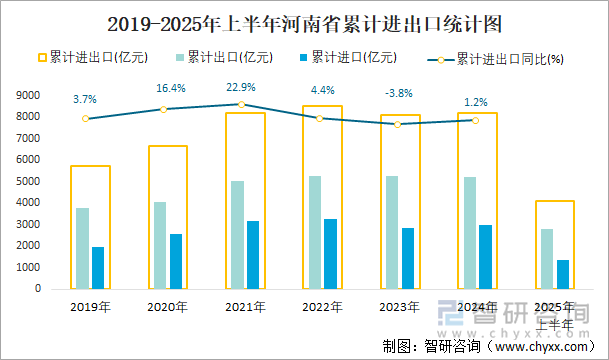
2025年上半年河南省贸易统计分析:河南省进出口总额为4125.3亿元,同比增长26.2%
Chan Ye Xin Xi Wang· 2025-08-10 01:14
Group 1 - The core viewpoint of the news highlights the significant growth in the import and export activities of Henan Province, with a total import and export value of 412.53 billion yuan in the first half of 2025, representing a year-on-year increase of 26.2% [1] - Exports reached 278.98 billion yuan, showing a remarkable year-on-year growth of 38.8%, while imports amounted to 133.55 billion yuan, with a more modest growth of 6.1% [1] - The trade surplus for Henan Province stood at 145.43 billion yuan, indicating a strong positive balance in trade activities [1] Group 2 - The listed companies mentioned include Zhongcheng Co., Ltd. (000151), Yuanda Holdings (000626), Xiamen Xinda (000701), and others, indicating a diverse range of players in the market [1] - The report referenced is the "2025-2031 China Digital Trade Industry Competition Strategy Research and Future Outlook Report" published by Zhiyan Consulting, suggesting a focus on the digital trade sector [1]