汇率操纵

Search documents
法国抛出激进方案,想与中方签广场协议,常规手段对付不了中国?
Sou Hu Cai Jing· 2026-02-11 08:51
Core Viewpoint - The report from the French government advisory body highlights a perceived "survival crisis" for European industry due to competition from Chinese manufacturing, suggesting extreme measures such as imposing a 30% tariff on Chinese goods or devaluing the euro against the yuan by 20%-30% [1][2] Group 1: Proposed Measures - The proposal to impose a 30% tariff on Chinese goods is characterized as typical trade protectionism, which could lead to increased production and living costs in Europe, ultimately harming consumers and downstream businesses [1] - The suggestion to replicate the Plaza Accord by devaluing the euro is seen as more harmful than beneficial, with historical precedents indicating potential economic instability and inflation risks [2] Group 2: Underlying Issues - The report attributes the decline in European manufacturing competitiveness to internal factors such as a long-term shift away from manufacturing, insufficient labor supply, and lagging industrial innovation and transformation [2] - The notion that conventional methods cannot address competition from China is viewed as an exaggerated narrative that overlooks the importance of cooperation [4] Group 3: Current State of China-Europe Relations - China and Europe remain important trade partners, with recent disputes in the electric vehicle sector being resolved through dialogue, indicating a trend towards cooperation rather than conflict [4] - The report reflects the anxieties of hawkish factions within Europe and does not represent the official stance of the EU, suggesting that a focus on cooperation and addressing internal issues is essential for mutual development [4]

当欧美逼人民币升值,中国上演三步绝杀,西方陷入两难
Sou Hu Cai Jing· 2026-02-02 15:45
Core Viewpoint - The article discusses the impact of currency fluctuations, particularly the appreciation of the Chinese yuan, on trade dynamics between China and Western countries, highlighting China's resilience and strategic responses to external pressures [1][5][16]. Group 1: Currency Appreciation and Trade Surplus - Despite pressures from the U.S. and EU for the yuan to appreciate, China's trade surplus reached a record high of $1.19 trillion, with exports to non-U.S. markets increasing significantly [3][16]. - The yuan appreciated by 4.4% from around 7.2 to approximately 6.98 against the dollar by year-end, yet the trade surplus did not decrease as expected [3][5]. Group 2: Strategic Responses to External Pressures - China implemented a three-step strategy to counteract Western pressures: 1. Regulating domestic pricing to stabilize industries and prevent price wars, leading to collective price increases [10][12]. 2. Utilizing currency appreciation to lower import costs for raw materials, resulting in a 30% to 40% decrease in costs for certain imports [12][14]. 3. Promoting the internationalization of the yuan to reduce reliance on the dollar, with cross-border payments exceeding 50% for the year [14][18]. Group 3: Market Dynamics and Future Outlook - The article notes that despite increased tariffs from the EU, Chinese exports to the EU still grew by 8.4%, indicating a shift in market dynamics [18]. - The forecast for 2026 suggests a 5% increase in exports and GDP growth of around 5%, with the yuan's role evolving from a target of pressure to a tool of influence for China [16][18].
不装了!美国重祭广场协议杀招,中国硬刚反制,霸权这次踢到铁板
Sou Hu Cai Jing· 2026-01-16 13:52
Group 1 - The article draws parallels between the Plaza Accord of the 1980s, which negatively impacted Japan's economy, and current U.S. strategies aimed at China, suggesting that the U.S. has miscalculated this time [1][5][26] - In 1985, the U.S. pressured Japan to sign the Plaza Accord, leading to a significant appreciation of the yen, which harmed Japan's export business and contributed to an economic downturn [3][5] - The U.S. is attempting to replicate this strategy against China by claiming the undervaluation of the yuan and threatening to label China as a "currency manipulator" while imposing high tariffs [5][7] Group 2 - Unlike Japan, China is not passively accepting U.S. pressure and has implemented a series of countermeasures to stabilize its economy and currency [9][24] - China maintains that the yuan's value should be determined by market forces, with the central bank not intervening to artificially inflate the currency [9][11] - By 2025, 30% of China's trade is expected to be settled in yuan, with companies using hedging tools to mitigate currency risk, thus reducing vulnerability to exchange rate fluctuations [13][15] Group 3 - China's manufacturing sector remains robust, contributing over 30% of global manufacturing value added, which provides a strong foundation against external pressures [17][24] - The European Union's response to U.S. tariffs on Chinese electric vehicles has been mixed, with significant opposition from member states, indicating a lack of unified support for U.S. strategies [19][20] - In 2025, China's trade surplus is projected to reach nearly $1.2 trillion, with exports to ASEAN and Africa increasing, demonstrating a diversification of trade partners [22][24] Group 4 - The article argues that trade is fundamentally about mutual benefit, and China's trade surplus reflects global market recognition of its products rather than currency manipulation [24][26] - The U.S. is encouraged to address its own economic issues, such as industrial hollowing and high debt, rather than resorting to outdated tactics against China [26]
亚洲官方储备逼近8万亿美元! 强美元或遭遇一场弹药充足的货币保卫战
智通财经网· 2025-11-20 02:46
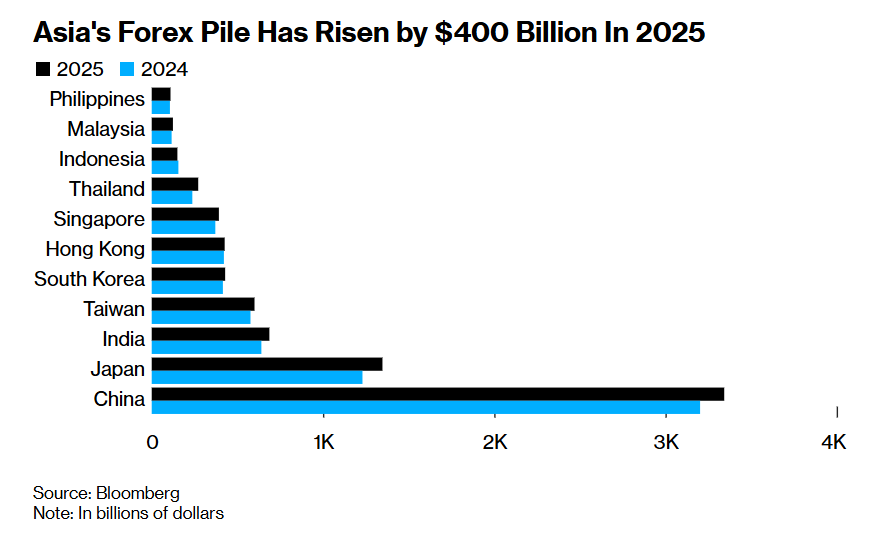
Core Viewpoint - The overall official reserves of Asian countries have surged to nearly $8 trillion, providing substantial "ammunition" for currency and fiscal authorities to defend their currencies against potential depreciation [1][4]. Group 1: Reserve Accumulation - Asian central banks have added over $400 billion to their official reserve assets this year, with the largest contributors being China and Japan, which increased their reserves by approximately $141 billion and $116 billion, respectively [4][5]. - The increase in reserves is attributed to the depreciation of the dollar and rising gold prices, which have boosted the valuation of non-dollar assets [4][5]. Group 2: Currency Interventions - The Indian rupee and Philippine peso have reached historical lows, while the South Korean won is near its weakest level in 16 years, prompting expectations of currency interventions by Asian central banks [4][6]. - The Indian central bank has actively intervened in both onshore and offshore markets to prevent the rupee from falling below its historical low of 88.80 against the dollar [5][6]. Group 3: Market Dynamics and Risks - The recent rebound of the dollar since September has led to increased volatility in global stock markets, raising concerns among Asian central banks about the weakening of their currencies [4][10]. - There are potential risks of conflict with the U.S. government regarding currency interventions, as such actions could be viewed as unfair competitive advantages [7][10]. Group 4: Regulatory Environment - The U.S. Treasury has not labeled any country as a "currency manipulator" but has criticized some Asian nations for lacking transparency in their currency practices [10]. - Asian countries, including Japan, South Korea, Singapore, and Vietnam, are under close scrutiny regarding their currency behaviors, which could impact future trade agreements with the U.S. [10].
瑞士央行三年来最大规模抛售瑞郎 应对美国关税冲击
智通财经网· 2025-09-30 08:21
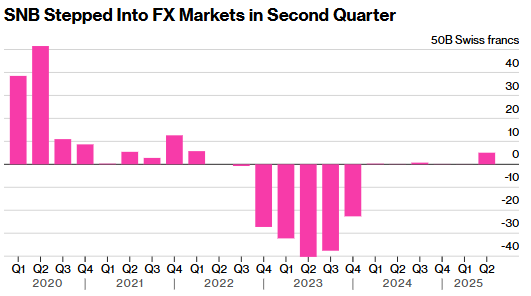
Core Viewpoint - The Swiss National Bank (SNB) has conducted its largest Swiss franc sell-off in over three years to counteract the currency's surge due to U.S. tariff policies, purchasing 5.1 billion Swiss francs (approximately 6.4 billion USD) in foreign exchange during the second quarter [1] Group 1 - The SNB's intervention marks the end of a 15-month hiatus in market interventions, reflecting increased market volatility since the announcement of "reciprocal tariffs" by Trump on April 2 [2] - Between April and June, the Swiss franc appreciated approximately 10% against the U.S. dollar and about 2% against the euro [2] - A joint statement from Switzerland and the U.S. emphasized that neither country would manipulate their currencies for economic advantage, with the SNB focusing on price stability [2] Group 2 - The SNB's President, Thomas Jordan, reiterated that the interventions aim to prevent excessive inflation, indicating a cautious approach in negotiations with traders [3] - Following the reduction of borrowing costs to zero, the SNB faces a choice between increasing currency purchases or introducing negative interest rates, but no such measures were taken in the recent policy decision [3] - The SNB publishes its trading data quarterly, with the data for July to September set to be released on December 31 [3]
韩国:已与美国就外汇问题达成一致
Hua Er Jie Jian Wen· 2025-09-28 06:19
Group 1 - The core point of the article is that the U.S. has agreed that South Korea is not manipulating its currency for trade advantages, which clears the way for South Korea to be removed from the U.S. Treasury's currency manipulation monitoring list [1] - This agreement alleviates pressure on South Korea in bilateral trade negotiations, although officials emphasize it is not directly related to ongoing currency swap discussions [2] - The U.S. had previously monitored South Korea's foreign exchange policies due to concerns over a large current account surplus and trade surplus with the U.S., leading to its inclusion on the monitoring list [2] Group 2 - South Korean officials indicated that the currency agreement is separate from discussions regarding a $350 billion investment commitment related to tariff negotiations [3] - There is a discrepancy in understanding between South Korea and the U.S. regarding the nature of the $350 billion investment, with South Korea viewing it primarily as loans rather than direct investments [3] - Analysts note that the resolution of the currency manipulation dispute creates better conditions for cooperation on other issues between the U.S. and South Korea [4]
不降反升,美国新关税让瑞士“目瞪口呆”
Xin Hua She· 2025-08-11 00:29
Core Viewpoint - The recent increase in tariffs imposed by the U.S. on Swiss goods, reaching 39%, has shocked Switzerland, which had anticipated a lower rate following negotiations [1][2]. Group 1: Tariff Impact - The new tariff rate of 39% is the highest among European countries and affects nearly 60% of Swiss exports to the U.S. [1] - The previous expectation was for a 10% tariff, with Swiss officials expressing disappointment over the significant deviation from prior negotiations [1][2]. Group 2: Economic Context - The U.S. cites a trade deficit of $38.3 billion with Switzerland as a reason for the high tariffs, claiming that the U.S. is at a disadvantage in bilateral trade [2] - Switzerland has been labeled a "currency manipulator" by the U.S. due to its attempts to devalue the Swiss franc to boost exports [2]. Group 3: Government Response - The Swiss government plans to continue negotiations with the U.S. to lower tariffs and may implement support measures for Swiss companies facing pressure from the tariffs [3] - Proposed measures include more flexible policies regarding working hours and wages to prevent layoffs [3].
39%高关税,瑞士缘何成了特朗普“痛击对象”?
Hu Xiu· 2025-08-04 09:48
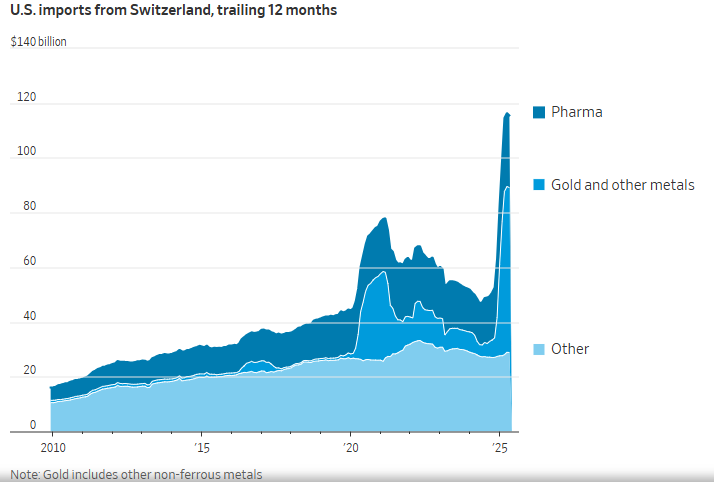
Core Viewpoint - The U.S. has imposed a 39% tariff on goods imported from Switzerland, marking a significant shift in trade relations and impacting Switzerland's economy, especially on its national holiday [1][2][4]. Group 1: Trade Relations - The U.S. trade deficit with Switzerland has surged, reaching nearly $50 billion in the first five months of the year, making Switzerland the fifth-largest trade partner for the U.S. [7] - Switzerland's exports to the U.S. account for approximately 19% of its total exports, highlighting the importance of the U.S. market for the Swiss economy [10]. - The U.S. Treasury has previously labeled Switzerland as a currency manipulator, indicating ongoing tensions regarding trade practices [12]. Group 2: Domestic Reactions in Switzerland - Following the tariff announcement, there has been significant criticism within Switzerland, particularly directed at Federal President Keller-Sutter for the perceived failure in negotiations [14][15]. - The pharmaceutical industry, which exports about 60% of its products to the U.S., has been blamed for straining U.S.-Swiss trade relations, with major companies like Novartis and Roche under scrutiny [17]. - There is a growing sentiment in Switzerland to reconsider its long-standing neutral stance and potentially strengthen ties with the EU, which has more favorable tariff rates with the U.S. [19]. Group 3: Economic Impact - If the tariffs remain unchanged, Switzerland's GDP could decline by approximately 0.6 percentage points, with more severe impacts if pharmaceuticals are excluded from tariff exemptions [21]. - The potential for tariffs on pharmaceuticals could reach as high as 200%, further exacerbating the economic challenges faced by the Swiss economy [21].
39%高关税,“中立国”瑞士缘何成特朗普贸易战痛击对象?
Feng Huang Wang· 2025-08-04 08:04
Group 1 - The U.S. will impose a 39% tariff on goods imported from Switzerland starting August 7, making Switzerland one of the few countries facing such high tariffs, second only to Brazil, Laos, Myanmar, and Syria [1][2] - The announcement coincided with Switzerland's National Day on August 1, which has been described as a significant humiliation for the country [2] - The trade deficit between the U.S. and Switzerland has surged, reaching nearly $50 billion in the first five months of the year, ranking Switzerland as the fifth largest trade deficit partner of the U.S. [5] Group 2 - Swiss officials were caught off guard by the high tariffs, as they believed negotiations with U.S. representatives were progressing well, with Switzerland expressing confidence in reaching a trade agreement [3][9] - The Swiss economy is heavily reliant on foreign trade, with approximately 19% of its exports going to the U.S., making it the largest export market for Switzerland [9] - The Swiss pharmaceutical industry, which exports about 60% of its products to the U.S., is under scrutiny, as it has been suggested that it may have hindered negotiations with the U.S. [12] Group 3 - The Swiss stock market is expected to open lower following the tariff announcement, with major companies like Novartis, Roche, and Nestlé listed on the Swiss exchange [12] - Analysts predict that if the tariffs remain unchanged, Switzerland's GDP could decline by approximately 0.6 percentage points, with more severe impacts if pharmaceuticals are excluded from tariff exemptions [13]



爱尔兰“上榜”了!被美国点名“汇率观察名单”
Sou Hu Cai Jing· 2025-06-07 17:16
Core Viewpoint - The U.S. Treasury Department has added Ireland and Switzerland to its "currency monitoring list," increasing the total number of closely monitored countries to nine, despite no major trading partners being accused of currency manipulation for unfair trade advantages in 2024 [1][3]. Group 1: Currency Monitoring List - Ireland and Switzerland were added to the currency monitoring list due to their significant trade surplus with the U.S. exceeding $15 billion and a current account surplus over 3% of their GDP [3]. - The report indicates that countries are automatically placed on the monitoring list if they meet specific criteria related to trade surplus and foreign exchange purchasing behavior [3]. Group 2: Responses and Implications - The Swiss National Bank denied any currency manipulation, asserting that it does not attempt to distort trade balances or gain unfair competitive advantages [3]. - The report marks the first currency policy report since Trump's return to the White House, with a noticeably stronger tone compared to previous reports during Biden's administration, which did not label any country as a currency manipulator [3]. - The overall strength of the U.S. dollar has increased by an average of 7% against major currencies in 2024, reducing the incentive for countries to devalue their currencies [3].