Battery Manufacturing

Search documents
Flint's Paper Batteries Are Here: Now in Production, Now Available
Prnewswire· 2026-01-02 09:00
Core Insights - Flint has commenced production of its cellulose-based, biodegradable batteries in Singapore, transitioning from lab-scale development to manufacturing ready for pilot deployments and customer programs [1][2] Production and Technology - The company is producing rechargeable, non-toxic battery cells designed for safety, including non-flammability and non-explosiveness, with two products set to be unveiled at CES 2026 [2][7] - Flint's production line utilizes proprietary cellulose-based architecture and water-based manufacturing methods, reducing reliance on traditional battery materials like lithium and cobalt, while promoting lower-carbon manufacturing [3][4] Expansion and Recognition - Flint has expanded into a new facility over 8,000 square feet to pilot new processes, scale manufacturing, and continue R&D for next-generation battery architectures [4] - The company received the Best of CES Sustainability Award at CES 2025, enhancing its global visibility and commercial traction [5][6] Partnerships and Collaborations - Flint is engaged in pilot deployments with major technology companies, including Logitech and Amazon, and has been selected for innovation programs such as the Climate Tech Accelerator by MIT [8] - The company raised US$2 million in a pre-Series A funding round to support its asset-light growth model [6] Future Plans - Flint is preparing to scale its manufacturing capacity in Europe and is in discussions with a major contract manufacturer [9] - The company is also developing a solid-state derivative of its cellulose-based chemistry aimed at higher-density rechargeable applications [10] Market Engagement - With production underway, Flint is open to collaborations and orders, prioritizing pilot deployments and initial commercial rollouts [11]
LiTime Introduces Encrypted Bluetooth Connectivity for Lithium Batteries: Exclusive Access for Authorized Smartphones to Protect Energy Data Privacy and Control Security
Globenewswire· 2025-12-31 22:00
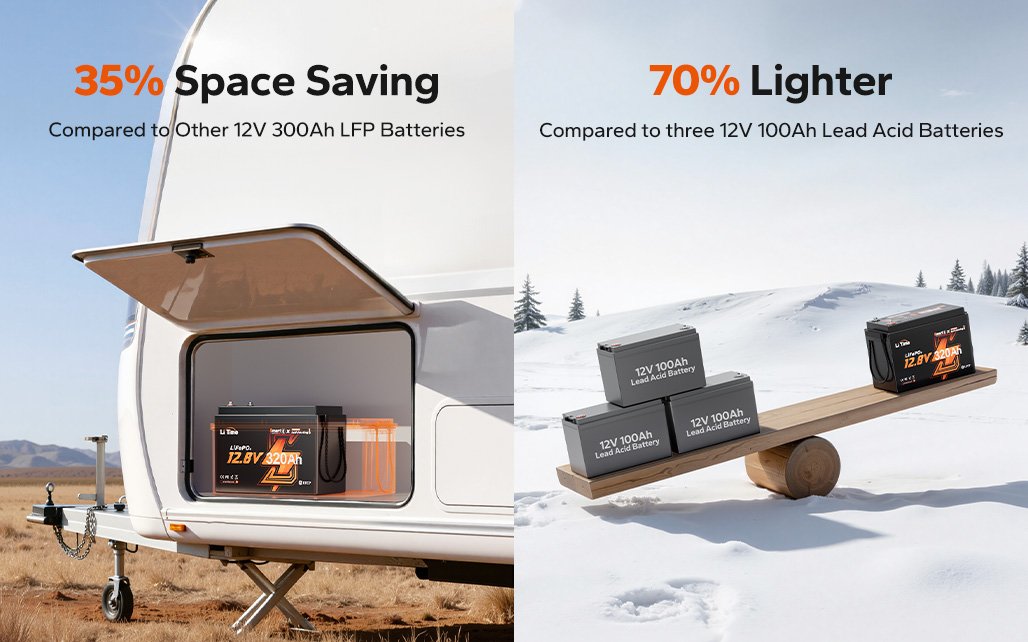
Core Insights - LiTime has launched an encrypted Bluetooth connectivity technology for lithium batteries, debuting with the 12V 320Ah Mini Smart Self-Heating Battery, enhancing security by ensuring only authorized users can connect and control the battery [1][10][11] Group 1: Product Features - The new 12V 320Ah Mini Smart Self-Heating Battery is 35% smaller than a standard 12V 300Ah LiFePO₄ battery and weighs only 57.3 lbs, making it up to 70% lighter than three 12V 100Ah lead-acid batteries [5] - It offers an energy capacity of 4096Wh and a maximum continuous output power of 2560W, with the capability to expand up to 65.5kWh and 40.96kW for home energy storage or off-grid applications [5] - The battery features smart heating modes that allow users to switch between Regular and Energy-Efficient Heating Modes via the LiTime app, improving preheating speed and reducing charging time in cold conditions [5] Group 2: Security Enhancements - The encrypted Bluetooth technology addresses vulnerabilities in traditional Bluetooth solutions, preventing unauthorized access and ensuring that only the battery owner can control the device [3][8] - Key security mechanisms include a password recovery system via SN code, automatic reconnection for authorized devices, and a device isolation mechanism to prevent unauthorized access [7][8] - The technology was developed in response to user feedback highlighting security risks associated with existing Bluetooth connections, demonstrating LiTime's commitment to user-driven innovation [10][12] Group 3: Company Philosophy and Future Direction - LiTime emphasizes that meaningful product optimization is driven by real user experiences, and the new technology is a direct result of user feedback [12] - The company aims to continue refining its products based on user input, ensuring a safer and smarter power experience for outdoor enthusiasts [12][13]

QS and 2 More Stocks to Watch in the EV Battery Space in 2026
ZACKS· 2025-12-31 13:30
Industry Overview - Electric vehicles (EVs) are increasingly integral to global transportation, driven by advancements in battery technology that enhance battery life, charging speed, and production costs, thereby narrowing the price gap with gas-powered vehicles [1] - The global EV battery market was valued at approximately $69 billion in 2024, with projections of $77 billion in 2025 and $115 billion by 2032, indicating a compound annual growth rate (CAGR) of 6% from 2025 to 2032 [2] Demand for Batteries - The rising number of electric vehicles on the road is expected to significantly increase demand for batteries, which are crucial for determining an EV's range, charging speed, performance, and overall cost [3] QuantumScape Corp. - QuantumScape is focused on developing solid-state lithium batteries for EVs, promising higher energy density, faster charging, and improved safety, with notable progress despite being pre-revenue [5] - The company announced a breakthrough in manufacturing with its Cobra process, which is 25 times faster and more compact than its previous system, facilitating scalable production [6] - QuantumScape has begun B1 sample deliveries, allowing automakers to evaluate its cells, and reported $12.8 million in customer billings for the first time, indicating early commercial traction [7] - The Zacks Consensus Estimate for QuantumScape's 2026 bottom line suggests a 15.5% improvement from projected 2025 levels [8] Toyota Motor - Toyota, one of the largest automakers, is investing heavily in battery manufacturing to catch up in the EV market, with a new battery plant in North Carolina capable of producing up to 30 GWh annually [9] - The facility will support production for hybrids and battery electric vehicles, with initial output powering models like the Camry HEV and RAV4 HEV, and plans for additional lines through 2030 [11] - Toyota is also enhancing its U.S. battery supply chain with a $1.5 billion agreement with LG Energy Solution and a $50 million investment in a battery development lab in Michigan, set to open in 2026 [12] - The Zacks Consensus Estimate for Toyota's EPS in the next fiscal year indicates a 20% year-over-year increase [13] Tesla Inc. - Tesla is a key player in battery design and production, focusing on its in-house 4680 lithium-ion battery program to reduce costs and reliance on external suppliers [14] - The company has produced 100 million 4680 cells and claims these in-house cells are now more cost-effective than those sourced externally [15] - Recent supply-chain adjustments suggest Tesla is pacing its 4680 production ramp more conservatively, balancing in-house production with sourcing from partners like CATL and Panasonic [16] - The Zacks Consensus Estimate for Tesla's 2026 EPS indicates a 42% improvement from projected 2025 levels [17]




MVST vs. PATH: Which Growth Tech Stock Belongs in Your Portfolio?
ZACKS· 2025-12-30 16:06
Core Insights - Both Microvast Holdings, Inc. (MVST) and UiPath (PATH) are speculative growth tech stocks focusing on automation trends, with MVST specializing in battery manufacturing for electrification and PATH providing an AI-driven robotic process automation platform for enterprises [1] UiPath Analysis - In Q3 of fiscal 2026, UiPath achieved a 16% year-over-year revenue growth, driven by the increasing adoption of AI and automation strategies by enterprises [2] - The company reported an 11% year-over-year growth in annual recurring revenue, indicating a scaling of agentic automation across enterprises [2] - UiPath's dollar-based net retention rate stands at 107%, with an 8.2% year-over-year increase in free cash flow, positioning the company for sustained growth [3] - As of October 31, 2025, UiPath holds $1.4 billion in cash and equivalents with no current debt, resulting in a current ratio of 2.7, significantly higher than the industry average of 0.9 [3] - The integration with Microsoft Azure AI Foundry allows customers to automate end-to-end processes, enhancing UiPath's product offering [4] - A partnership with OpenAI to develop a ChatGPT connector aims to improve time to value and ROI from agentic AI efforts [5] - The Zacks Consensus Estimate for UiPath's fiscal 2026 sales is $1.6 billion, reflecting an 11.5% year-over-year increase, with EPS expected to rise by 26.4% to 67 cents [13] Microvast Analysis - In Q3 of 2025, Microvast reported a 21.6% year-over-year revenue growth, driven by strong demand in Asia and Europe [6] - The company benefits from the rising adoption of electric vehicles (EVs), which increases the demand for its battery technology [7] - Microvast's adjusted EBITDA for the nine months ending September 30, 2025, was $76.3 million, a significant recovery from a negative $53.5 million [8] - Despite revenue growth, Microvast reported a net loss of $1.5 million due to changes in warrant/loan valuation and a 23.7% increase in operating expenses [9] - As of September 30, 2025, Microvast had $143 million in cash and equivalents against a current debt of $335 million, resulting in a current ratio of 0.8, indicating liquidity challenges [10] - The Zacks Consensus Estimate for Microvast's 2025 sales is $462.3 million, suggesting a 21.7% year-over-year growth, with EPS expected to improve from a loss of 27 cents to a profit of 17 cents [14] Valuation Comparison - Microvast is trading at a 12-month forward P/E ratio of 13.9, below its 3-month median of 20.5, while UiPath's P/E ratio is 22.5, lower than its median of 68.1 [15] Conclusion - UiPath is positioned as a leader in the AI-driven automation sector, demonstrating strong financial health and growth potential [17] - Microvast faces liquidity pressures and competitive challenges in the EV battery market, impacting its growth and profitability balance [19]



中国电池材料_1 月 26 日生产管线缩减或由供给端因素而非需求驱动-China_Battery_Materials_Lower_Production_Pipeline_in_Jan-26_Likely_Driven_by_Supply-Side_Factors_Instead_of_Demand
2025-12-30 14:41
Summary of Conference Call on China Battery Materials Industry Overview - The focus of the conference call is on the **China Battery Materials** industry, particularly the production pipeline of major battery manufacturers for January 2026. Key Points Production Pipeline Estimates - **ZE Consulting** estimates that the production pipeline of the top five battery makers may decline by **7% month-over-month (MoM)** in January 2026, with **CATL's production** expected to decrease by **10%** [1][2] - This decline is more significant than the market's expectation of a low single-digit decline for January, indicating a weaker production plan than anticipated [1] Factors Influencing Production Decline - The reduction in production is attributed to ongoing negotiations between battery manufacturers and upstream suppliers rather than a significant drop in actual demand [1] - Maintenance plans announced by cathode manufacturers are likely a response to rising lithium carbonate futures prices, as noted by **Tianqi Lithium**, which has adjusted its spot prices to align with futures [1] Cathode Production Insights - Major LFP cathode manufacturers, including **Hunan Yuneng**, **Shenzhen Dynanonic**, and **Jiangsu Lopal**, have announced offline maintenance plans for January 2026 due to surging raw material costs and low processing fees [2] - The cathode production pipeline is projected to decrease by **10% MoM**, with LFP cathodes expected to drop by **13% MoM** and NCM cathodes by **1% MoM** [2] Production Data for Top Battery Makers - A detailed forecast for the top five battery makers shows a **15% decline** in NCM production and a **5% decline** in LFP production from December 2025 to January 2026 [3] - Total production for the top five battery makers is expected to fall from **144.5 GWh** in December 2025 to **134.4 GWh** in January 2026, marking a **7% decline** [3] Investment Perspective Defensive Outlook - The overall outlook for the battery supply chain remains defensive due to uncertainties in the production pipeline, influenced by seasonal factors and subdued demand for electric vehicles (EVs) [1] - **CATL** is highlighted as a top pick within the industry, with a valuation target of **HK$621/share** based on a **17.3x 2025E EV/EBITDA** multiple, which is above its historical average [5] Risks to Investment - The investment in CATL carries high risks due to its short trading history, with potential downside risks including: 1. Lower-than-expected demand for EVs 2. Increased competition in the EV battery market, potentially reducing CATL's market share 3. Higher-than-expected raw material costs [6][7] Conclusion - The conference call highlights significant challenges facing the China Battery Materials industry, particularly in production capacity and cost pressures. The defensive stance on investments reflects the current uncertainties in the market, while CATL remains a focal point for potential investment opportunities.
Tesla Cybertruck Flop Proves Costly for South Korean Supplier
MINT· 2025-12-30 03:10
Core Insights - A significant reduction in the supply contract between L&F Co. and Tesla has occurred, with the contract value dropping from 3.83 trillion won to just 9.73 million won, marking a 99% decrease due to changes in supply quantity [1][3] Group 1: Contract Details - The high-nickel cathode material was intended for use in Cybertruck batteries, with the supply period set from January 2024 through the current month [2] - The reduction in supply was attributed to delays in the Cybertruck's development and a shift in consumer preference towards other Tesla models, such as the Model 3 and Model Y [2] Group 2: Broader Implications - The contract's revision was influenced by broader economic and policy issues, including the removal of Inflation Reduction Act subsidies [3] - Despite the contract changes, L&F stated that shipments of its flagship high-nickel product to major Korean cell manufacturers are continuing without issues [4] Group 3: Market Reaction - Following the announcement, L&F's shares fell by 11% in Seoul, although the stock has increased by approximately 16% this year, underperforming compared to the 76% rise in the benchmark Kospi Index [4]

3 Manufacturing Stocks to Benefit From Reshoring in 2026
ZACKS· 2025-12-29 15:45
Core Insights - The reshoring trend and the push for supply-chain independence are significantly transforming U.S. manufacturing, driven by factors such as post-pandemic vulnerabilities, trade disputes, and recent tariff policies [1][2]. Industry Overview - The imposition of import tariffs on various products has made offshore production costly, prompting companies to relocate manufacturing back to the U.S. to stabilize supply chains and avoid tariffs [2]. - Favorable U.S. government policies, including the CHIPS & Science Act and the Inflation Reduction Act (IRA), are encouraging investments in sectors like semiconductors and clean energy, which in turn is boosting demand for related industries [3]. Company Focus: Caterpillar Inc. (CAT) - Caterpillar has shifted its construction equipment production from Japan to Georgia and Texas, enhancing its supply chain efficiency and reducing transit times [6]. - The company plans to invest $725 million in its engine manufacturing facility in Lafayette, IN, to improve workforce skills and meet rising demand for power generation engines [6]. - CAT's shares have increased by 60.6% over the past year, with earnings growth expected to be 19% in 2026 [8]. Company Focus: EnerSys (ENS) - EnerSys is relocating battery production to Kentucky to avoid tariffs and leverage IRA tax credits, ceasing operations in its Mexican facility [10]. - The company anticipates benefiting from the IRA, expecting its products to qualify for tax credits, which will support its high-density battery portfolio expansion [11]. - ENS shares have risen 62.6% in the past year, with projected earnings growth of 20.7% for fiscal 2027 [12]. Company Focus: GE Aerospace - GE Aerospace is investing $1 billion in U.S. manufacturing to enhance production capabilities and meet growing demand for engines and services [13][16]. - This investment is expected to create approximately 5,000 jobs in the U.S. and focuses on improving engine quality and delivery [16]. - GE's shares have surged 87.5% over the past year, with earnings growth projected at 13.1% for 2026 [17].



5 Sales Growth Plays Well-Positioned to Deliver Steady Returns in 2026
ZACKS· 2025-12-29 13:16
Core Insights - The investment landscape in 2025 has been shaped by various factors including China's AI initiatives, pressures on U.S. Big Tech, tariffs from the Trump era, persistent inflation, and high interest rates, leading to a volatile market environment [1] - Retail investors are advised to focus on sales growth as a more reliable metric for stock evaluation compared to earnings, with specific companies highlighted as potential investment opportunities [2][3] Market Conditions - The year began with optimism but faced volatility due to external pressures, particularly in April, before stabilizing in May and improving mid-year as trade tensions eased [1] - The Federal Reserve implemented three rate cuts starting in September, but market momentum weakened in the fourth quarter due to a prolonged U.S. government shutdown and concerns over AI sector overvaluation [1] Investment Strategy - Sales growth is emphasized as a key indicator of a company's momentum, reflecting real demand and potential for future earnings upside [3] - Sustained sales growth supports cash flow stability, allowing companies to reinvest and maintain financial strength without excessive debt [4] Stock Selection Criteria - Stocks were screened based on criteria including 5-Year Historical Sales Growth greater than industry average and Cash Flow exceeding $500 million [5] - Additional metrics for stock selection include a Price-to-Sales (P/S) ratio lower than the industry average, positive sales estimate revisions, operating margins above 5%, and Return on Equity (ROE) greater than 5% [6][7][8] Highlighted Stocks - Agnico Eagle Mines Limited (AEM) is a gold producer with expected sales growth of 38.6% for 2025 and holds a Zacks Rank 1 [10] - EnerSys (ENS) is projected to have a sales growth rate of 4% for fiscal 2026 and carries a Zacks Rank 2 [11] - CACI International Inc (CACI) anticipates an 8.5% sales increase for fiscal 2026, also with a Zacks Rank 2 [12] - Rockwell Automation, Inc. (ROK) expects a sales growth of 5.8% for fiscal 2026 and holds a Zacks Rank 2 [13] - Xylem Inc. (XYL) is projected to grow sales by 5.2% in 2025 and carries a Zacks Rank 2 [14]


Solidion Technology Awarded A Second Grant From The U.S. Department of Energy For Nuclear Reactors
Prnewswire· 2025-12-29 11:00
Core Insights - Solidion Technology Inc. has been awarded a grant by the U.S. Department of Energy to scale up the synthesis of a carbon-nanosphere material for use as an anti-corrosive additive in molten-salts-based heat transfer fluids for advanced molten salt nuclear reactors [1] - The company has also received the 2025 R&D 100 Award in partnership with Oak Ridge National Laboratory for innovation in Electrochemical Graphitization in Molten Salts (E-GRIMS) [2] - Solidion's CEO highlighted that consecutive awards from the Department of Energy validate the company's innovation in energy storage and related processes [4] Company Overview - Solidion Technology, Inc. is headquartered in Dallas, Texas, with pilot production facilities in Dayton, Ohio, focusing on manufacturing battery materials and components, as well as developing next-generation batteries for various applications [4] - The company holds a portfolio of over 525 patents, covering innovations such as high-capacity silicon anodes, biomass-based graphite, and advanced lithium-sulfur technologies [4] Research Collaboration - The research will be conducted in collaboration with Oak Ridge National Laboratory, focusing on developing a nanofluids-based energy material to enhance heat transfer and reduce corrosion in nuclear reactors [8] - This technology aims to reduce costs, increase safety, and accelerate the commercialization of small modular nuclear reactors, particularly advanced molten salt reactors [8]


Graphene Manufacturing Group CEO talks US launch and fast-charging battery - ICYMI
Proactiveinvestors NA· 2025-12-26 14:04
Core Viewpoint - Graphene Manufacturing Group Ltd has received key environmental approval from the US Environmental Protection Agency (EPA) for its graphene coating technology, enabling commercialization across the United States [1][5]. Company Overview - Graphene Manufacturing Group (GMG) is a clean technology manufacturing company that produces graphene from natural gas and develops energy-saving and energy-storage products, including coatings, lubricant additives, and next-generation batteries [4]. Environmental Approval - The EPA approval for GMG's graphene products is rare, with only one or two other products having similar approval. This approval allows GMG to sell its graphene coating for air conditioning units, data centers, and heat exchangers in the US without limitations [5][6]. Product Benefits - The graphene coating can reduce air conditioning bills by 10 to 20 percent and can be applied directly on-site. It addresses efficiency and corrosion, which are major concerns in the industry [7][8]. Commercialization Update - GMG expects its first shipment of the graphene coating to occur early in the new year, with existing orders from partner Nu-Calgon, which has over 4,000 shipment points across North America and the Caribbean [9]. Battery Technology - GMG is developing an aluminum-ion battery technology that offers fast charging, safety, long life, and low cost, targeting commercial production by 2027. This battery can charge in six minutes, significantly faster than current options [11][12]. Future Opportunities - The company anticipates significant developments in 2026, including full commercialization of several products, a launch in Australia for air conditioning distributors, and the US launch, which represents the largest air conditioning coating market globally [13][14].