AI Infrastructure

Search documents
FRMI LAWSUIT NEWS: Fermi Inc. Securities Class Action Deadline March 6 – Investors with Losses Notified to Contact BFA Law
Globenewswire· 2026-01-08 12:01
Core Viewpoint - A class action lawsuit has been filed against Fermi Inc. and its executives due to significant stock price drops linked to potential violations of federal securities laws [1][3]. Group 1: Company Overview - Fermi Inc. is an energy and AI infrastructure company focused on building large-scale nuclear reactors to support grid-independent data centers for AI companies [4]. - The company's flagship project, Project Matador, aims to provide dedicated power for AI workloads [4]. Group 2: IPO and Allegations - Fermi completed its IPO in October 2025, claiming strong demand for Project Matador and securing a 20-year lease with an investment-grade-rated tenant [5]. - Allegations suggest that Fermi overstated tenant demand and misrepresented the agreement with the First Tenant [6]. Group 3: Stock Price Impact - Following the announcement that the First Tenant terminated the Advance in Aid of Construction Agreement, Fermi's stock dropped by $5.16 per share, over 33%, from $15.25 to $10.09 on December 12, 2025 [7].


FRMI Stockholder Alert: Robbins LLP Reminds Investors of the Securities Class Action Lawsuit Against Fermi Inc.
Prnewswire· 2026-01-08 01:12
Core Viewpoint - A class action has been filed against Fermi Inc. for allegedly misleading investors regarding its business prospects, particularly related to its Project Matador campus [1][2]. Allegations - Fermi Inc. is accused of failing to disclose that it overstated tenant demand for its Project Matador campus [2] - The company did not adequately inform investors about its reliance on a single tenant's funding commitment for the construction of Project Matador [2] - There was a significant risk that the tenant could terminate its funding commitment, which was not disclosed to investors [2] Stock Price Impact - On December 12, 2025, Fermi announced that the first tenant for Project Matador had terminated a $150 million funding agreement, leading to a stock price drop of $5.16 per share, or 33.8%, closing at $10.09 [3] - By the time of the class action announcement, Fermi's stock had traded as low as $8.59 per share, representing a 59% decline from the IPO price of $21.00 per share [3] Class Action Participation - Shareholders interested in serving as lead plaintiffs must submit their papers by March 6, 2026, but participation is not required for recovery [4] - Shareholders can remain absent class members if they choose not to take action [4] Legal Representation - Robbins LLP operates on a contingency fee basis, meaning shareholders incur no fees or expenses [5]

Bitcoin Miners Shift From Crypto to AI Data Centers
Etftrends· 2026-01-07 20:43
Core Insights - Bitcoin miners are transitioning from cryptocurrency mining to high-performance computing infrastructure, with mining revenue expected to drop from approximately 85% of total revenue in early 2025 to less than 20% by the end of 2026 for companies with AI contracts [1] - This shift indicates a move from low-margin mining operations to high-margin data center contracts, with companies generating 80% to 90% operating margins from AI deals compared to the thin margins of Bitcoin mining [2] Financial Projections - By October 2025, Bitcoin miners had secured $65 billion in contracts with major technology companies and cloud service providers, with AI contracts generating three times the revenue per megawatt compared to traditional mining [3] Company Developments - Six publicly traded mining companies have announced high-performance computing contracts: Core Scientific, Cipher Mining, TeraWulf, Applied Digital, Galaxy Digital, Iris Energy, and Bit Digital [4] - Despite the pivot to AI, publicly traded mining companies increased their Bitcoin mining operations in 2025, adding more computing power in the first nine months than in the same period of 2024, driven by equipment orders placed in 2024 [5] Investment Opportunities - The CoinShares Bitcoin Mining ETF (WGMI) offers exposure to this evolving sector, investing at least 80% of its net assets in companies deriving at least 50% of their revenue from Bitcoin mining or related services, with an expense ratio of 0.75% and a return of 72.05% over the past year [6]

1 Stock I'd Buy Before ChargePoint in 2026
Yahoo Finance· 2026-01-07 17:13
Core Insights - ChargePoint has experienced a significant decline in stock price, dropping approximately 70% in 2025 and 99% over the past five years, indicating a failure to meet investor expectations in the electric vehicle (EV) charging sector [1] - In contrast, Cipher Mining has pivoted from Bitcoin mining to providing AI and data center infrastructure, positioning itself as a strong alternative for speculative growth investors [2][4] Company Performance - ChargePoint's stock has suffered due to a burst in the EV market bubble, leading to ongoing value loss [1] - Cipher Mining has signed multiple long-term contracts, including a notable 15-year deal with Amazon Web Services worth $5.5 billion, which is expected to enhance its revenue and profitability [6] Industry Trends - The EV infrastructure market faces challenges such as declining electric vehicle sales and the expiration of EV tax credits, while demand for AI infrastructure is increasing [5] - Cipher Mining's AI infrastructure pipeline includes 3.4 gigawatts, with only 300 megawatts allocated to the Amazon deal, highlighting strong demand compared to ChargePoint's stagnant EV infrastructure [6] Profitability Outlook - Neither ChargePoint nor Cipher Mining has reported full-year profits, but Cipher Mining is closer to achieving profitability, potentially in 2026, as new deals are expected to boost revenue and margins [7][8] - ChargePoint continues to face cash burn and multiple headwinds, making its path to profitability less clear compared to Cipher Mining's growth trajectory [8]


Applied Digital (NASDAQ:APLD) Targets AI Infrastructure Growth
Financial Modeling Prep· 2026-01-07 17:02
Core Viewpoint - Applied Digital (APLD) is transitioning from development to revenue generation, focusing on AI infrastructure and capitalizing on the growing demand in this sector [1][5] Company Summary - APLD has commenced operations at Polaris Forge 1 and is constructing new AI campuses, which are essential for its revenue generation strategy [1] - The company's projected revenue for 2026 is $281 million, reflecting a year-over-year growth of nearly 27% [3][5] - APLD's market capitalization is approximately $8.47 billion, with a trading volume of 30.07 million shares [4] Industry Summary - The broader industry environment is favorable, with hyperscalers investing $350 billion annually in AI infrastructure [3] - Despite the positive outlook, there is a limited supply of GPU-ready data centers, which may challenge APLD's execution capabilities in the hyperscale data center market [4]


FRMI INVESTOR ALERT: Robbins Geller Rudman & Dowd LLP Announces That Fermi Inc. Investors With Substantial Losses Have Opportunity to Lead Class Action Lawsuit
Businesswire· 2026-01-07 11:05
Core Viewpoint - The Fermi Inc. class action lawsuit alleges violations of securities laws related to its October 2025 IPO, with claims of misleading statements regarding tenant demand and funding commitments for its Project Matador campus [2][4]. Group 1: Class Action Details - The class action lawsuit is titled Lupia v. Fermi Inc., No. 26-cv-00050 (S.D.N.Y.) and involves Fermi, its executives, and IPO underwriters [2]. - Investors who purchased Fermi common stock during the IPO or between October 1, 2025, and December 11, 2025, can seek to be appointed as lead plaintiff by March 6, 2026 [1][7]. Group 2: Allegations Against Fermi - The lawsuit claims that Fermi overstated tenant demand for its Project Matador campus and failed to disclose reliance on a single tenant's funding commitment [4]. - It is alleged that there was a significant risk of the tenant terminating its funding commitment, which was not disclosed [4]. - On December 12, 2025, Fermi announced that the first tenant for Project Matador had terminated a $150 million funding agreement, leading to a nearly 34% drop in stock price [5]. Group 3: Stock Performance - Following the IPO, Fermi's stock price fell from $21.00 per share to as low as $8.59 per share, representing a 59% decline [6]. Group 4: Law Firm Background - Robbins Geller Rudman & Dowd LLP is a leading law firm in securities fraud and shareholder litigation, having recovered over $2.5 billion for investors in 2024 alone [8].

36氪首发 | 开源异构算力调度平台「密瓜智能」获复星创富数千万元投资,为企业提供高效灵活算力解决方案
3 6 Ke· 2026-01-06 04:33
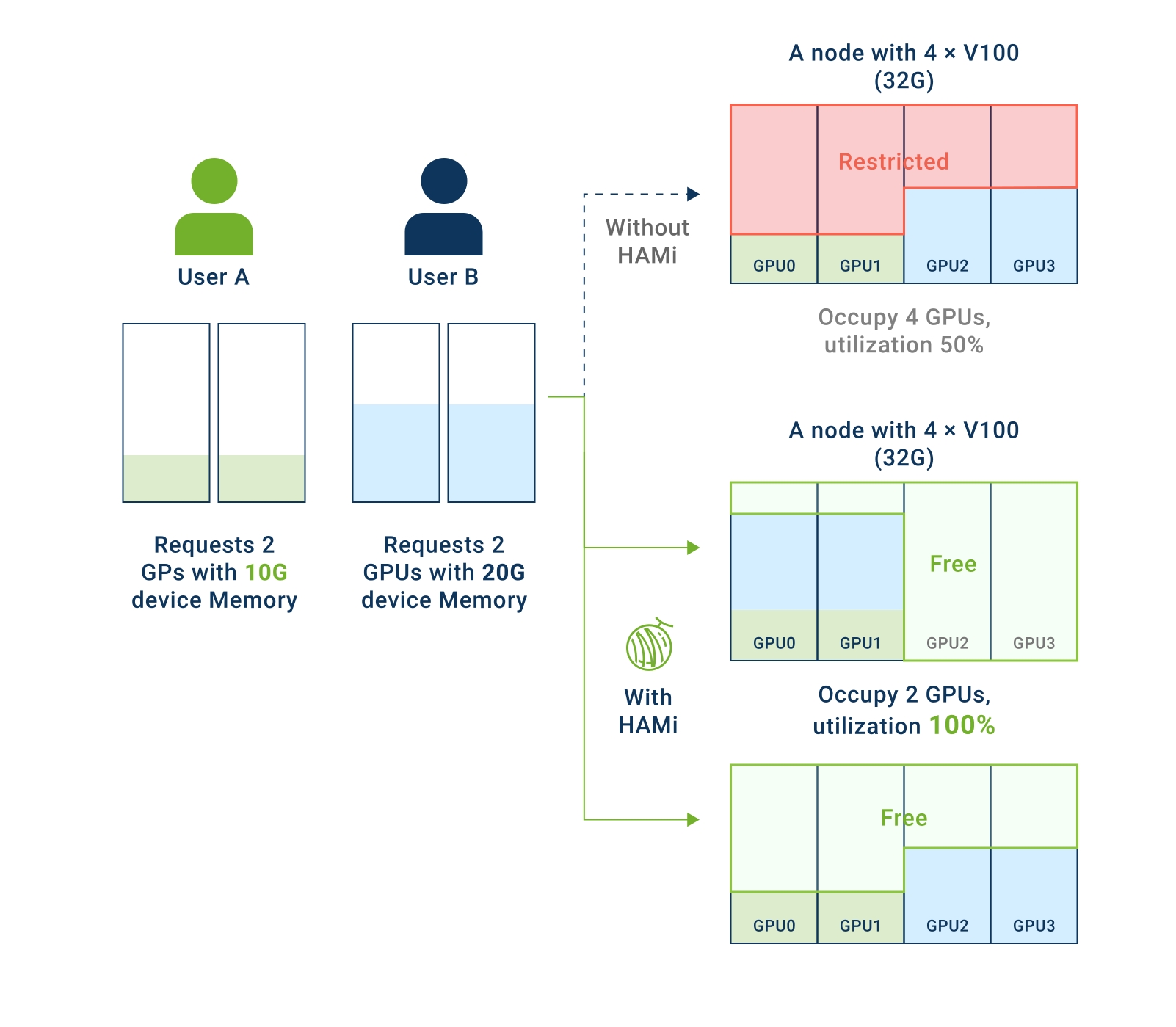
Core Insights - The emergence of large models has made GPU computing power more valuable than gold, yet there is significant wastage due to low utilization rates of 10%-20% globally [1] - The company Dynamia.ai has completed an angel round of financing to develop a heterogeneous computing virtualization and scheduling management platform, with funds primarily allocated for the HAMi open-source ecosystem and industrialization [1] Heterogeneous Computing Fragmentation - The development of domestic computing power and diverse AI chips has led to a more complex internal computing environment for enterprises, creating challenges in management and scheduling [2] - The key issues include the inability to unify scheduling of heterogeneous computing resources, insufficient resource sharing efficiency, and low utilization rates, which are critical problems in AI infrastructure [2] Computing Resource Allocation - Dynamia.ai's HAMi platform enables deep virtualization and pooling management, decoupling computing resources from physical hardware [4] - The technology allows for fine-grained slicing and memory over-provisioning, significantly increasing the density of tasks on a single GPU [4] Application Cases - In a case with SF Technology, the platform enabled the deployment of 19 testing services on just 6 GPUs, saving 13 GPUs and doubling resource efficiency [5][6] - In the PREP EDU case in Vietnam, the platform optimized GPU infrastructure by 90% and reduced cluster pain points by 50% through effective scheduling [5][6] Cross-Vendor Adaptation - The platform has adapted to over 9 types of chips, including NVIDIA and Huawei Ascend, and supports dynamic Multi-Instance GPU (MIG) configurations for standardized management [8] - It features automatic elastic scaling and priority mechanisms to ensure core business tasks receive resource priority during high demand [8] Commercialization and Services - Dynamia.ai is developing commercial products and technical services based on HAMi to provide robust engineering capabilities and operational support for enterprises [10] - The company has already secured 2 million yuan in product orders within its first quarter of operation [5] Founding Team and Vision - The founding team has extensive experience in cloud computing and AI infrastructure, with key members being contributors to Kubernetes and other CNCF projects [11] - The vision is to make heterogeneous computing as accessible as utilities, establishing a global leading computing scheduling ecosystem to empower AI industry efficiency [12] Investor Perspectives - Investors see heterogeneous computing as a long-term trend in the computing market, emphasizing the importance of efficient resource utilization and cost savings [12] - The open-source HAMi project is viewed as a scalable solution that aligns with the collaborative trends in the AI industry, aiming to enhance return on investment for global clients [12][13]
VCI Global Secures Fully Funded 250MW “Green AI” Solar and 800MWH BESS Roadmap with Global Energy Titan Tianneng
Globenewswire· 2026-01-05 13:19
Core Insights - VCI Global Limited has entered a strategic partnership with Tianneng, a leader in battery storage and new energy systems, to enhance Malaysia's AI ecosystem through renewable energy projects [1][4] Group 1: Partnership Details - The collaboration designates Tianneng as the primary Engineering, Procurement, Construction, and Financing (EPC+F) partner for a renewable infrastructure project that includes up to 250MW of solar generation and 800MWh of battery energy storage systems [2] - The initial project will be a utility-scale solar-plus-storage deployment located in Malacca, Malaysia [2] Group 2: Project Specifications - The integrated solar and battery energy storage system aims to provide reliable, round-the-clock clean power, catering to the needs of AI data centers and advanced digital infrastructure operators [3] - The project is expected to have an indicative gross value between US$200 million and US$300 million, with potential cumulative contracted revenue projected to reach between US$360 million and US$480 million over 20 years [6] Group 3: Financial and Operational Highlights - The annual revenue from the project is projected to be between US$18 million and US$24 million, based on an expected annual energy output of 350 to 450GWh [6] - The EPC+F structure allows for project-level financing, enabling VCI Global to scale infrastructure without diluting shareholder equity [5] Group 4: Company Background - Tianneng Holding Group reported US$10.7 billion in annual revenue for 2024 and is ranked No. 239 on the Fortune China 500 list, showcasing its significant industrial scale and credibility [4] - Tianneng has a total production capacity exceeding 80GWh and has been a leader in China's battery industry for nearly two decades, recognized for its advanced energy storage solutions [8]



Stock Market Today: S&P 500, Nasdaq Futures Rise, WTI Fluctuates Following US Strike On Venezuela— GH Research, Vertiv Holdings, Nukkleus In Focus - SPDR S&P 500 (ARCA:SPY)
Benzinga· 2026-01-05 10:21
Market Overview - U.S. stock futures rose in the first full trading week of the year, with major benchmark indices showing positive movement [1] - Crude oil prices fluctuated, with WTI's February Futures trading 0.05% lower at $57.29 per barrel following geopolitical developments in Venezuela [2] - The 10-year Treasury bond yielded 4.17%, while the two-year bond was at 3.46%, with an 82.3% likelihood of the Federal Reserve maintaining current interest rates in January [3] Company Highlights - Ironwood Pharmaceuticals Inc. (NASDAQ:IRWD) advanced 2.81% after issuing FY26 guidance, expecting U.S. net sales of Linzess to be between $1.125 billion and $1.175 billion, with total revenue expectations of $450 million to $475 million and adjusted EBITDA over $300 million [6] - Vertiv Holdings Co. (NYSE:VRT) shares increased by 1.62% after being upgraded to "overweight" by Barclays, with a 75% chance of joining the S&P 500 index [7] - Nukkleus Inc. (NASDAQ:NUKK) rose 3.79% following the completion of a $14 million acquisition of Tiltan Software Engineering, an Israeli defense software company [7] - Brand Engagement Network Inc. (NASDAQ:BNAI) shares climbed 8.22% after announcing a Vendor Services Project Agreement with a global advertising agency [16] - GH Research PLC (NASDAQ:GHRS) soared 19.05% after announcing an update on its FDA IND status and Phase 3 program for GH001 in treatment-resistant depression [16] Sector Performance - The U.S. market saw broad gains across various sectors, including Energy, Industrials, Materials, Utilities, Health Care, Financials, Real Estate, and Information Technology, while Consumer Staples, Communication Services, and Consumer Discretionary were the only sectors to decline [10] - The performance of major indices included a 0.66% increase in the Dow Jones, a 0.19% increase in the S&P 500, and a 1.06% increase in the Russell 2000 [11] Economic Outlook - JPMorgan's "Eye on the Market 2026 Outlook" anticipates continued strength in U.S. equity markets, driven by the technology sector and AI-related spending, despite potential corrections of 10%-15% due to profit-taking [12][13] - The report highlights that tech sector capital spending contributed 40%-45% of U.S. GDP growth over the last three quarters of 2025, with consumer spending expected to remain stable in 2026 [14]


Bitfarms to sell Paso Pe bitcoin mine for $30M as firm quits Paraguay
Yahoo Finance· 2026-01-02 19:15
Core Viewpoint - Bitfarms is strategically exiting its bitcoin mining operations in Paraguay by selling its 70 MW bitcoin mine in Paso Pe to Sympatheia Power Funds for up to $30 million, focusing on North American AI infrastructure instead [1][3]. Group 1: Transaction Details - The purchase agreement includes a $9 million payment upon the deal's projected close in Q1 2026, which consists of a $1 million non-refundable deposit and up to $21 million in additional payments over the following 10 months [2]. - This sale follows Bitfarms' previous $85 million sale of its Yguazú bitcoin mine to Hive Digital, marking a complete exit from Paraguay [3]. Group 2: Strategic Focus - The CEO of Bitfarms emphasized the importance of this transaction in rebalancing the company's energy portfolio to 100% North American, allowing for reinvestment into high-performance computing (HPC) and AI energy infrastructure [3][4]. - The company plans to concentrate on expanding its AI infrastructure at its Panther Creek and Scrubgrass sites in Pennsylvania, which were acquired along with Stronghold Digital in March 2024 [5]. Group 3: Market Reaction - Following the announcement of the sale, Bitfarms' stock (BITF) experienced a 10% increase on the day [5].