
Oil and Gas

Search documents
Pampa Energía: How Cheaper Oil And Venezuelan Supply Could Affect Its Operations
Seeking Alpha· 2026-01-12 19:35
Core Insights - Pampa Energía S.A. is a significant player in the Argentine energy sector, particularly in utilities and oil and gas, with a notable advantage in its diversification strategy [1] Group 1: Company Overview - Pampa Energía S.A. operates in the utilities and oil and gas sector in Argentina, highlighting its importance in the national energy landscape [1] - The company’s diversification is seen as a positive aspect, providing a buffer against sector-specific risks [1] Group 2: Investment Perspective - The company has exposure to oil, which is a critical factor for investors focusing on energy equities [1] - Emerging markets, including Argentina, present significant potential for investment, albeit with associated risks [1]



Equinor Awards $10B in Maintenance Contracts to Supplier Companies
ZACKS· 2026-01-12 19:20
Group 1 - Equinor ASA (EQNR) has awarded a contract valued at approximately NOK 100 billion ($9.9 billion) for maintenance and modification of its offshore installations and onshore plants, effective in the first half of 2026 [2][9] - The Norwegian Continental Shelf (NCS) will continue to be EQNR's primary energy production source, requiring maintenance and upgrades to reduce costs due to its aging infrastructure, with a goal of maintaining daily production of 1.2 million barrels of oil and gas until at least 2035 [3][9] - EQNR plans to invest around NOK 60-70 billion annually, drill 250 exploration wells, and enhance production from 600 active wells to support its production goals [4] Group 2 - The contract is expected to generate 4,000 man-years of work, with a focus on long-term partnerships with Norwegian suppliers to improve efficiency [4][5] - EQNR will conduct annual repairs and maintenance on 300 wells, modify 2,500 projects, and develop over 75 subsea projects connected to existing platforms and pipelines [5] - The maintenance and upgrade work will enhance cash flow predictability for EQNR, although the upstream business faces pressure due to low crude prices, with predictions of further declines [6]

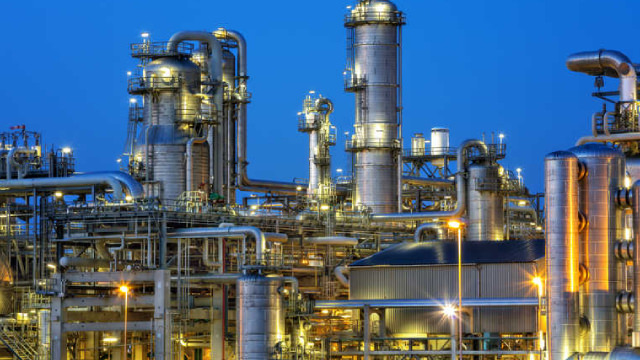
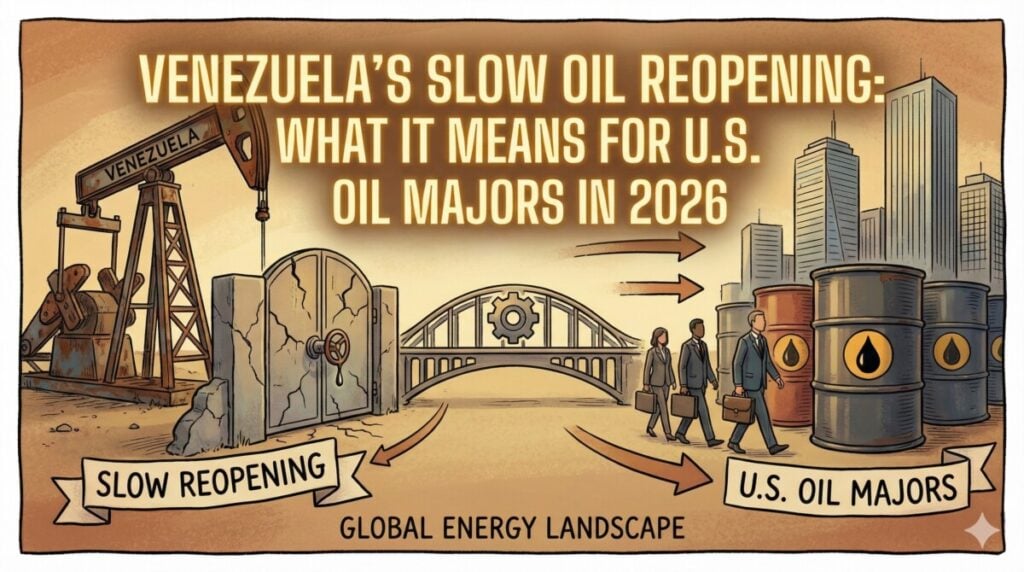
Venezuela's Slow Oil Reopening And What It Means For U.S. Oil Majors In 2026 - ConocoPhillips (NYSE:COP), Chevron (NYSE:CVX)
Benzinga· 2026-01-12 17:55
Core Insights - Venezuela's oil sector is experiencing a cautious regulatory thaw rather than a significant increase in production or supply [3][19] - The U.S. Treasury has granted limited licenses for companies like Chevron to resume restricted operations, focusing on maintenance and incremental exports rather than full commercial activity [5][10] - Venezuela's oil production remains well below historical levels due to years of underinvestment and infrastructure decay, making a rapid recovery unlikely [4][6] Regulatory Changes - The White House's limited licenses signal a controlled engagement with Venezuela, which is crucial for U.S. oil producers facing geopolitical risks [3][5] - Current licenses allow Chevron to operate limited activities and export some crude, but do not represent a full return to pre-sanction operations [9][10] Production Capacity - Venezuela holds significant proven oil reserves, but its production capacity is constrained by structural issues rather than political factors [4][6] - The International Energy Agency indicates that substantial investment is needed to restore Venezuela's oil infrastructure, which could take years [16] Investment Implications - For U.S. oil majors, Venezuela's situation provides long-term optionality without immediate earnings impact, with Chevron being the most exposed [8][19] - Other majors like Exxon and ConocoPhillips benefit indirectly from supply tightness and market structure [14][19] Monitoring Indicators - Investors should focus on U.S. Treasury license renewals, capital spending commitments from companies, and actual export data to gauge the situation accurately [18]


Iran's oil stored on water hits a record high, Kpler says
Reuters· 2026-01-12 17:31
Core Viewpoint - Iran is currently holding a record amount of oil on the water, which is approximately equivalent to 50 days of its oil output, due to reduced purchases from China amid sanctions and efforts to safeguard supplies from potential U.S. strikes [1] Group 1 - Iran's oil on the water is at a record level, indicating a significant accumulation of unsold oil [1] - The volume of oil held is equivalent to around 50 days of Iran's oil production [1] - China's reduced oil purchases from Iran are attributed to ongoing sanctions [1] Group 2 - Tehran is taking measures to protect its oil supplies from the risk of U.S. military actions [1] - Shipping data from intelligence firm Kpler highlights the current situation regarding Iran's oil reserves [1]

Tesla's Already Off To A Bad Year
Seeking Alpha· 2026-01-12 17:31
Group 1 - The article emphasizes the focus on cash flow and the potential for value and growth in the oil and natural gas sector [1] - Crude Value Insights provides a service that includes a 50+ stock model account and in-depth cash flow analyses of exploration and production (E&P) firms [1] - Subscribers benefit from live chat discussions about the oil and gas sector, enhancing community engagement and information sharing [1] Group 2 - A two-week free trial is offered to new subscribers, encouraging them to explore the services related to oil and gas investments [2]


Chevron Bets on Venezuela Oil to Unlock Up to $700M in Cash Flow
ZACKS· 2026-01-12 17:15
Core Insights - Chevron Corporation (CVX) could potentially unlock up to $700 million in annual cash flow from increased crude exports in Venezuela due to easing logistical constraints and a more permissive U.S. sanctions environment [1][10] - The company has a competitive advantage among U.S. oil majors, with estimates suggesting an additional $400 million to $700 million per year, representing approximately 1%-2% of its operating cash flow [2] Strategic Positioning - Chevron is the only major U.S. oil company actively operating in Venezuela, with joint ventures producing around 240,000 barrels per day, shared equally with state-owned PDVSA [3] - The company is expected to focus on optimizing existing assets rather than making large new capital investments until there is greater political stability in Venezuela [4] Export Dynamics - The surge in Chevron's exports is driven by logistical factors, as Venezuelan crude storage facilities are nearing capacity, necessitating quick movement of barrels [5] - This logistical challenge has transformed Venezuela into one of Chevron's busiest export hubs, showcasing how physical constraints can alter trade flows [6] Operational Strategy - Chevron has rebuilt a high-throughput export operation, leveraging its global trading and logistics network to ship larger and more frequent cargoes to refiners capable of processing Venezuela's heavy, sour crude [7] - Key destinations for these exports include the U.S. Gulf Coast, where refiners like Phillips 66 and Valero Energy are well-equipped to handle Venezuelan crude [8][9] Financial Implications - Sustained Venezuelan exports are expected to materially enhance Chevron's cash generation, supporting dividends, share buybacks, or reinvestment [10][11] - The operational push is underpinned by clear financial incentives, with every additional cargo moved strengthening the company's near-term cash flow outlook [11] Geopolitical Considerations - Venezuelan oil exports remain closely tied to U.S. sanctions policy, with the potential for quick shifts in export approvals and waivers [12] - Chevron's strategy of rapid loading aims to capitalize on current regulatory conditions while mitigating political risks [12] Competitive Landscape - Chevron's position is facing increased competition from trading giants like Vitol and Trafigura, which are seeking access to Venezuelan exports [13] - This growing competition could tighten margins and complicate scheduling, although it reflects a broader belief in the ongoing relevance of Venezuelan crude in global oil flows [14] Strategic Outlook - Chevron's approach in Venezuela combines caution with opportunism, aiming to maximize near-term cash flow without overcommitting capital in a politically unstable environment [15] - As long as exports continue and storage pressures remain, Venezuela could serve as a significant, albeit risky, contributor to Chevron's global portfolio [15]
Is Iraq About to Make Its Biggest Geopolitical Pivot in Years?
Yahoo Finance· 2026-01-12 16:00
Core Insights - The recent sanctions targeting Russia's top oil firms, Lukoil and Rosneft, indicate a significant escalation in U.S. and E.U. efforts to curb Russian influence in Iraq and the broader Middle East [1][2][3] - The exit of Lukoil from Iraq's West Qurna 2 field and Rosneft's reduction of its stake in the Kurdistan Pipeline Company mark a pivotal shift in the geopolitical landscape, allowing Western firms like Chevron to re-enter the market [2][3] - The U.S. and its allies aim to weaken the ties between Iraq and Iran, while also countering the influence of Russia and China in the region [5][6] Sanctions and Their Impact - The U.S. sanctions introduced on October 22 specifically target Lukoil and Rosneft, which together export approximately 3.1 million barrels of oil per day, crucial for funding Russia's military actions [2] - The E.U. has mirrored these sanctions, including measures against Russia's liquefied natural gas sector, with a commitment to halt all Russian gas imports by January 1, 2027 [1][2] Opportunities for Western Firms - Following Lukoil's exit, Chevron is positioned as a leading contender to develop the West Qurna 2 oilfield, alongside plans for the Nasiriyah project and Balad oil field [3][6] - TotalEnergies and BP are also making significant investments in Iraq, with TotalEnergies leading a $27 billion deal and BP agreeing to a $25 billion deal, indicating a renewed Western interest in Iraq's oil sector [6] Geopolitical Shifts - The sanctions and subsequent withdrawal of Russian firms are seen as a strategic move to re-establish U.S. influence in Iraq, countering the previous boldness of Moscow and Beijing in the region [3][4] - The ongoing military presence of the U.S. and its allies in Iraq is under pressure from Iran-backed militias, which are supported by Russia and China, highlighting the complex geopolitical dynamics at play [3][5] Production Potential - The West Qurna 2 field has an estimated recoverable oil reserve of around 13 billion barrels, with the potential to produce up to 1.2 million barrels per day under revised development plans [6] - The Nasiriyah project aims for an initial capacity of 600,000 barrels per day, further emphasizing the potential for increased oil production in Iraq as Western firms re-engage [6]
Shell Awards Vallourec for Major OCTG Contract at the Orca Project
ZACKS· 2026-01-12 15:11
Core Insights - Shell plc has awarded a significant contract to Vallourec S.A. for the supply of OCTG products and services for the Orca project offshore Brazil, following a competitive bidding process [1] Group 1: Contract Details - Vallourec will deliver OCTG products, including seamless pipes and VAM® premium connections, for Shell's offshore operations at the Orca project [1][9] - The contract encompasses the entire OCTG requirements for the project, which involves drilling 10 wells and is estimated to require 12,000 to 15,000 tons of pipe [2][9] - The pipes will range from 4.5 inches to 18 inches in diameter and will be made from both carbon and stainless-steel materials [2] Group 2: Additional Services - Vallourec will provide a range of value-added services, including desk engineering, material logistics, and supervision of offshore operations, to enhance Shell's operational efficiency [3] - These services aim to reduce risks associated with drilling activities and support the overall project execution [3] Group 3: Project Timeline - Drilling operations for the Orca project are scheduled to commence in April 2027, with production expected to start in 2029 [2][4]


Petrobras Extends AHTS Vessel Agreement With Solstad Offshore
ZACKS· 2026-01-12 14:16
Core Insights - Petrobras has extended its contract with Solstad Offshore for the AHTS vessel Normand Turquesa until January 2031, reinforcing its offshore operations strategy [2][3][6] - The gross value of the contract extension is approximately $15.4 million, bringing the total estimated value of the agreement to around $100 million [3][7][13] Contract Details - The original four-year contract for the Normand Turquesa has been extended, ensuring uninterrupted support for Petrobras' deepwater oil and gas exploration [2][5] - The commencement of a previously planned multi-year contract has been shifted from Q1 2026 to Q1 2027, highlighting the strong relationship between Petrobras and Solstad Offshore [3][6] Vessel Significance - Normand Turquesa is a crucial asset for deepwater drilling operations, designed for various offshore duties including anchor handling and towing drilling rigs [4][11] - The reliability of the Normand Turquesa is essential for maintaining operational efficiency in the challenging offshore environment of Brazil [5][6] Strategic Importance - The contract extension reflects Petrobras' commitment to enhancing the security of its production facilities and ensuring operational efficiency in offshore exploration [6][12] - As Brazil remains a key oil-producing nation, the reliability of maritime support is critical for sustaining Petrobras' competitive position in the global energy market [6][12] Future Outlook - The partnership between Petrobras and Solstad Offshore is positioned for growth, with both companies set to maximize operational capabilities over the next decade [11][12] - This strategic collaboration underscores the importance of dependable offshore services in a rapidly evolving energy landscape [12][13]

Why Venezuela's Oil Comeback Won't Move Natural Gas Prices in 2026
Yahoo Finance· 2026-01-12 14:00
Core Insights - The political changes in Venezuela may lead to increased heavy crude output, but the impact on natural gas prices in the U.S. is expected to be minimal [4][16][17] Group 1: Refining Competition - Venezuelan heavy crude competes directly with similar grades from Mexico and Canada, and a shift back to processing this cheaper crude by U.S. refineries could alter energy cost structures for industrial users, though residential natural gas rates are unlikely to be affected [1] Group 2: LNG Demand and Exports - Increased oil and gas production in Venezuela could enable the country to resume natural gas exports to Colombia, reducing reliance on Liquified Natural Gas (LNG) imports and potentially easing global LNG demand [2] Group 3: Production Outlook - Venezuela's heavy crude output is currently around 1 million barrels per day, which is less than 1% of global supply. Optimistic forecasts suggest production may gradually increase to 1.3-1.4 million bpd in the coming years, but this remains a small fraction of global supply [3][9] Group 4: Disconnect Between Oil and Natural Gas Prices - There is a low correlation between crude oil and natural gas prices, with natural gas prices being more influenced by domestic production, seasonal weather patterns, and local storage levels [9] - The global market is projected to face a surplus of both oil and LNG by 2026, exerting downward pressure on prices more significantly than any changes from Venezuela [9] Group 5: Infrastructure and Market Share Challenges - Venezuela's energy infrastructure is severely damaged, requiring years and significant investment to increase production levels that could impact global markets [9] - Even if Venezuela's production doubled, it would still represent a limited market share, restricting its ability to influence broader energy prices [9] Group 6: Market Stability and Seasonal Patterns - The natural gas market has shown relative stability, allowing traders to build positions and hedge risks without significant volatility from Venezuelan developments [7][10] - Seasonal patterns indicate that January typically sees a decline in natural gas prices, supported by high storage levels from the previous fall [11][13]