Autonomous Driving

Search documents
Pony AI (PONY) Soars 11% as Firm Kicks Off Hong Kong Listing
Yahoo Finance· 2025-10-29 14:05
Group 1 - Pony AI Inc. (NASDAQ:PONY) has seen a significant stock increase of 11.13% to $21.87 following the announcement of its initial public offering (IPO) in Hong Kong, which could raise up to $1 billion [1][3] - The company plans to issue over 41.95 million shares, with 4.19 million shares allocated for Hong Kong investors and 37.76 million shares for international investors, with a potential overallotment of up to 7.2 million additional shares [2] - The offer price is expected to be set at no more than HK$180 ($23.17), with the final price to be determined on November 3, 2025, and shares will be traded under the stock code "2026" [3] Group 2 - Proceeds from the IPO will be utilized for advancing Level 4 autonomous driving technology in key markets, with remaining funds allocated for research and development and general corporate purposes [4] - Pony AI has already secured $120 million in cornerstone investments from institutional investors, including $100 million from Uber Technologies Inc. [4]
Uber Partners With Nvidia To Scale Autonomous Driving Globally, CEO Dara Khosrowshahi Calls Chipmaker 'Backbone Of The AI Era' - Uber Technologies (NYSE:UBER)
Benzinga· 2025-10-29 06:07
Core Insights - Nvidia is recognized as a crucial player in the global AI infrastructure, particularly in the development of autonomous driving technology [1] - Uber plans to utilize Nvidia's new compute and sensor architecture to scale its Level 4 autonomous fleet to 100,000 vehicles starting in 2027 [2] - Nvidia has formed partnerships with several automakers, including Stellantis, Lucid, and Mercedes-Benz, to develop autonomous vehicles and Robotaxis [3][4] Nvidia's Partnerships and Developments - Nvidia's CEO emphasized the creation of a framework for the industry to deploy autonomous fleets at scale, marking a shift from science fiction to reality in autonomous driving [4] - Lucid plans to offer Level 4 autonomous driving capabilities in its upcoming vehicles using Nvidia technology, aiming to deliver one of the first consumer-owned Level 4 passenger vehicles [5] - Nvidia is in discussions for a potential $500 million investment in the UK-based startup Wayve, which is also backed by SoftBank [5] Uber's Investments - Uber intends to invest over $100 million in Pony AI, a self-driving company, as part of its strategy to enhance its autonomous capabilities [6] - Pony AI is reportedly seeking to raise over $972 million in its Hong Kong listing, with Uber also considering investment in WeRide [6] Industry Perspectives - Jensen Huang cautioned against isolating the Chinese developer ecosystem in the AI race, suggesting that such policies could be detrimental to the long-term interests of the U.S. [7]



International And PlusAI Adopt NVIDIA’s DRIVE Hyperion For AV Launch
Forbes· 2025-10-28 18:30
Core Insights - International Motors and PlusAI are advancing the commercialization of Level 4 autonomous trucks using NVIDIA's DRIVE AGX Hyperion platform [1][2] - The collaboration aims to produce factory-built autonomous trucks for large-scale freight operations, combining manufacturing expertise, AI technology, and advanced computing [2][4] Company Collaboration - International Motors has nearly 200 years of manufacturing experience and a deep understanding of fleet operations, which will support the deployment of autonomous solutions [2] - PlusAI contributes its SuperDriveTM AI-based autonomous driving software, which has been refined over six million miles of real-world driving [2][5] - NVIDIA provides the DRIVE AGX Thor platform, designed for the complex AI workloads necessary for safe autonomous driving [4][5] Technology Integration - The autonomous trucks will feature lidar, radar, and cameras for 360-degree awareness, integrated with PlusAI's SuperDriveTM and NVIDIA's computing platform [5] - This combination ensures redundancy, sensor fusion, and high-speed AI inference for safe driverless operation in complex long-haul trucking environments [5] Future Plans - International and PlusAI are targeting a commercial launch of driverless trucks in 2027 [7] - PlusAI is planning to go public through a merger with Churchill Capital Corp IX, expected to close early next year [8]
WeRide Announces CEO's Voluntary Lock-Up to Reinforce Long-Term Commitment as Company Launches Hong Kong IPO
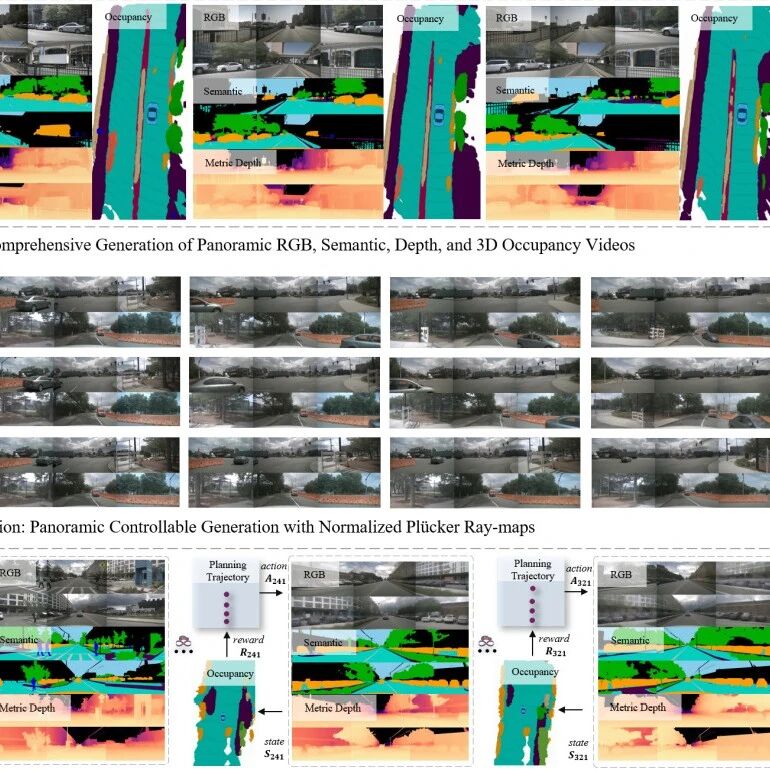
Globenewswire· 2025-10-28 11:55
Core Viewpoint - WeRide Inc. has announced a three-year lock-up commitment by its CEO, Dr. Tony Han, which reflects confidence in the company's long-term growth and aims to bolster shareholder trust [1][2]. Company Developments - Dr. Han's lock-up period will prevent him from selling or transferring shares, reinforcing his commitment to WeRide's vision and expansion [2]. - WeRide has launched its Hong Kong Initial Public Offering (HKIPO) with plans to issue 88,250,000 Offer Shares, anticipating a listing on the Hong Kong Stock Exchange on November 6, 2025 [2]. - The company will operate under a dual primary listing structure on NASDAQ and HKEX [2]. Strategic Partnerships - Notable strategic players such as Uber, Grab, and Bosch have shown interest in participating as anchor investors in WeRide's HKIPO, indicating strong capital backing and potential collaboration [3]. - WeRide has previously secured investments from top-tier industry partners, including Uber, NVIDIA, Bosch, and Renault-Nissan [3]. Market Position and Growth - WeRide is the only tech company with autonomous driving permits in seven countries and operates in over 30 cities across 11 countries [4]. - The company has a global fleet of over 1,500 autonomous vehicles (AVs) and more than 700 Robotaxis [4]. - In Q2 2025, WeRide reported a total revenue growth of 60.8% year-over-year to RMB127.2 million (US$17.8 million) [5]. - Robotaxi revenue surged 836.7% year-over-year to RMB45.9 million (US$6.4 million), marking the highest quarterly revenue since the company's inception [5]. - The Robotaxi business accounted for 36.1% of total revenue in Q2 2025, reflecting significant market traction [5]. - Gross profit increased by 40.6% year-over-year to RMB35.7 million (US$5.0 million), achieving an industry-leading margin of 28.1% [5].

PONY AI Inc. Launches Hong Kong Initial Public Offering
Globenewswire· 2025-10-28 00:00
Core Viewpoint - Pony AI Inc. is launching its initial public offering (IPO) in Hong Kong, offering 41,955,700 Class A ordinary shares, with a dual-primary listing on the Hong Kong Stock Exchange under the stock code "2026" [1] Offering Details - The Hong Kong IPO consists of a public offering of 4,195,600 Class A ordinary shares and an international offering of 37,760,100 Class A ordinary shares, starting on October 28, 2025 [1] - The initial allocation for the Hong Kong Public Offering and the International Offering represents 10% and 90% of the total shares available, respectively, with potential adjustments based on oversubscription [2] - The maximum offering price for the Hong Kong Public Offering is set at HK$180.0 (approximately US$23.17) per Class A ordinary share [3] Investment Agreements - The Company has secured cornerstone investment agreements with certain investors, committing to subscribe for shares at the International Offering Price for a total of US$120.0 million [4][5] Use of Proceeds - The net proceeds from the IPO will be utilized for market strategies, research and development of Level 4 autonomous driving technology, and general working capital [6] Underwriters and Coordinators - The IPO is being managed by several financial institutions, including Goldman Sachs, Merrill Lynch, Deutsche Bank, and Huatai, serving various roles such as joint sponsors and global coordinators [7] Company Overview - Pony AI Inc. is recognized as a leader in the commercialization of autonomous mobility, focusing on developing a sustainable business model for mass production and deployment of autonomous vehicles [11]

WeRide Inc.(WRD) - Prospectus
2025-10-27 20:42
Table of Contents As filed with the Securities and Exchange Commission on October 27, 2025 | SECURITIES AND EXCHANGE COMMISSION | | | | | --- | --- | --- | --- | | WASHINGTON, D.C. 20549 | | | | | FORM F-1 | | | | | REGISTRATION STATEMENT | | | | | UNDER | | | | | THE SECURITIES ACT OF 1933 | | | | | WeRide Inc. | | | | | (Exact name of Registrant as specified in its charter) | | | | | Not Applicable | | | | | (Translation of Registrant's name into English) | | | | | Cayman Islands 7373 | | | Not Applicable ...
EnjoyGo Technology Limited(H0096) - Application Proof (1st submission)
2025-10-27 16:00
The Stock Exchange of Hong Kong Limited and the Securities and Futures Commission take no responsibility for the contents of this Application Proof, make no representation as to its accuracy or completeness and expressly disclaim any liability whatsoever for any loss howsoever arising from or in reliance upon the whole or any part of the contents of this Application Proof. Application Proof of EnjoyGo Technology Limited 享道出行(上海)科技股份有限公司 (the "Company") (A joint stock limited company incorporated in the Peop ...
摇人!寻找散落在各地的自动驾驶热爱者(产品/4D标注/世界模型等)
自动驾驶之心· 2025-10-25 16:03
Core Viewpoint - The article emphasizes the need for collaboration in the autonomous driving industry, inviting professionals to participate in training, course development, and research support to drive industry progress [2]. Group 1: Collaboration and Opportunities - The company is seeking partnerships with professionals in the autonomous driving field to enhance training and job guidance services [2]. - High compensation and abundant industry resources will be provided to collaborators [3]. - The main focus areas for collaboration include roles such as autonomous driving product managers, 4D annotation/data loop, world models, VLA, autonomous driving large models, reinforcement learning, and end-to-end systems [4]. Group 2: Training and Development - The positions are primarily aimed at B2B training for enterprises, universities, and research institutions, as well as C2C training for students and job seekers [5]. - The company encourages interested individuals to reach out for further consultation via WeChat [6].
Jim Cramer on Aurora Innovation: “Just Go Buy the Stock of Tesla in the Weakness”
Yahoo Finance· 2025-10-25 04:45
Core Insights - Aurora Innovation, Inc. is highlighted as a self-driving technology company that has not made a profit in the last five years, losing hundreds of millions of dollars [1] - The stock trades at under $5, and the company is not recommended for investment due to its inability to generate profits [1] - There are other AI stocks considered to have greater upside potential and less downside risk compared to Aurora Innovation [1] Company Overview - Aurora Innovation develops autonomous driving technology through its Aurora Driver platform [1] - The company has been criticized for its financial performance, with a focus on its consistent losses over the years [1] Investment Perspective - The commentary suggests that investors should consider more promising AI stocks instead of Aurora Innovation, especially those benefiting from current economic trends [1]

上交OmniNWM:突破三维驾驶仿真极限的「全知」世界模型
自动驾驶之心· 2025-10-24 16:03
Core Insights - The article discusses the OmniNWM research, which proposes a panoramic, multi-modal driving navigation world model that significantly surpasses existing state-of-the-art (SOTA) models in terms of generation quality, control precision, and long-term stability, setting a new benchmark for simulation training and closed-loop evaluation in autonomous driving [2][58]. Group 1: OmniNWM Features - OmniNWM integrates state generation, action control, and reward evaluation into a unified framework, addressing the limitations of existing models that rely on single-modal RGB video and sparse action encoding [10][11]. - The model utilizes a Panoramic Diffusion Transformer (PDiT) to jointly generate pixel-aligned outputs across four modalities: RGB, semantic, depth, and 3D occupancy [12][11]. - OmniNWM introduces a normalized Plücker Ray-map for action control, allowing for pixel-level guidance and improved generalization across out-of-distribution (OOD) trajectories [18][22]. Group 2: Challenges and Solutions - The article identifies three core challenges in current autonomous driving world models: limitations in state representation, ambiguity in action control, and lack of integrated reward mechanisms [8][10]. - OmniNWM's approach to state generation overcomes the limitations of existing models by capturing the full geometric and semantic complexity of real-world driving scenarios [10][11]. - The model's reward system is based on the generated 3D occupancy, providing a dense and integrated reward function that enhances the evaluation of driving behavior [35][36]. Group 3: Performance Metrics - OmniNWM supports the generation of long video sequences, exceeding the ground truth length with stable outputs, demonstrating its capability to generate over 321 frames [31][29]. - The model achieves significant improvements in video generation quality, outperforming existing models in metrics such as FID and FVD [51][52]. - The integration of a Vision-Language-Action (VLA) planner enhances the model's ability to understand multi-modal environments and output high-precision trajectories [43][50].