传统制造

Search documents
工厂转型愁订单?代运营公司教你“逆向思维”找转机
Sou Hu Cai Jing· 2025-12-05 15:22
Core Insights - Traditional factories transitioning online are facing order shortages despite efforts in product listing and promotion, leading to idle machinery and worker anxiety. The issue stems from a reliance on outdated "offline waiting for customers" strategies, which can be overcome through the "reverse thinking" approach offered by operation companies [1] Group 1: Reverse Thinking Strategies - The first step in reverse thinking is to stop waiting for customers to find the factory and instead have operation companies actively seek customer demands. This involves accurately targeting B2B traffic pools such as industry procurement forums and supply chain communities, using professional tools to analyze buyer inquiries and pain points, thus enhancing promotional efficiency significantly [3] - The second step is to avoid chasing large orders and instead focus on securing small orders. Factories often overlook the trust barriers online, and operation companies recommend offering small-batch customization and sample orders while optimizing online service processes to build trust through details. Satisfied small order customers are likely to repurchase and share resources, allowing operation companies to nurture small orders into stable large orders [3][4] - The third step emphasizes not relying solely on new customers but instead revitalizing existing customer resources. Old customers, accumulated offline, are a core asset often neglected online. Operation companies assist factories in building private customer communities, categorizing old customers, and enhancing engagement through regular updates and exclusive online offers, leveraging the high conversion rates of referrals from satisfied old customers [4] Group 2: Operational Transformation - The essence of a factory's online transformation lies in breaking free from traditional offline thinking patterns. The value of operation companies is in helping factories reconstruct their operational logic through reverse thinking: shifting from passive customer waiting to proactive demand seeking, from pursuing large orders to nurturing small ones, and from depending on new customers to stabilizing old ones. This approach enables factories to convert offline production advantages into online order advantages, fostering steady growth in online orders and alleviating transformation anxieties [4]


美国科技撑半壁江山,中国房市仍在调整,伍戈点透均衡关键
Sou Hu Cai Jing· 2025-12-02 18:56
Group 1 - The core viewpoint is that economic growth is not a single-choice question, and both new and traditional sectors must be balanced for sustainable development [1][26] - The AI sector is experiencing significant investment and growth, which is driving demand in related industries, particularly in the U.S. where tech-related investments contributed over 90% to GDP growth in the first half of the year [5][12] - The wealth effect from stock market gains is less pronounced in certain markets, where real estate remains the primary asset class influencing consumer behavior [9][11] Group 2 - The article emphasizes the importance of not discarding traditional industries but rather enhancing them with new technologies, as seen in Germany's Industry 4.0 approach [21] - The balance between new and old industries is crucial, with emerging sectors needing to thrive while traditional sectors stabilize to ensure economic resilience [24][26] - The upcoming 14th Five-Year Plan aims to foster both emerging industries and the upgrading of traditional sectors, indicating a dual approach to economic growth [19][26]

决胜“十四五” 擘画“十五五”·地方资本市场高质量发展之山东篇: 多元资本育新赋能 共促山东经济量质双升
Zheng Quan Shi Bao· 2025-11-24 22:07
Core Viewpoint - The capital market in Shandong province plays a crucial role in the financial ecosystem, contributing to the local economic development during the "14th Five-Year Plan" period through steady expansion, structural optimization, and enhanced vitality [1] Group 1: Growth of Listed Companies - The number of listed companies in Shandong has increased, with 65 new A-share listings in the past five years, totaling 246 companies, which ranks high nationally [2] - The total market capitalization of listed companies reached 3.79 trillion yuan, a 44.42% increase compared to the end of the "13th Five-Year Plan" [2] - Cash dividends from listed companies amounted to 229.74 billion yuan, a 59% increase from the previous period [2] Group 2: Capital Market Support for Key Sectors - The capital market has effectively supported green transformation, technological innovation, and rural revitalization, with bond issuance reaching approximately 1.45 trillion yuan [4] - The issuance of specialized bonds, including green and rural revitalization bonds, totaled 137.28 billion yuan [4] - The futures market has seen significant growth, with 186 delivery warehouses and a customer margin balance of 48.84 billion yuan, reflecting an increase of 158% from the previous period [4] Group 3: Private Equity and Investment - The number of private equity fund managers in the region reached 358, with assets under management totaling 191.84 billion yuan [5] - Private equity funds have invested in 3,455 projects, amounting to 277.66 billion yuan [5] - Securities firms have actively supported 55 technology enterprises in raising 31.07 billion yuan through various stock exchanges [5] Group 4: Resource Allocation and Mergers - The capital market has facilitated resource allocation through mergers and acquisitions, with over 500 transactions totaling 289.43 billion yuan during the "14th Five-Year Plan" [7] - Shandong's listed companies have played a significant role in key industries, achieving breakthroughs in core technologies and domestic replacements [7] Group 5: Collaborative Mechanisms - The Shandong provincial government has issued guidelines to promote high-quality development in the capital market, ensuring a stable foundation for growth [8] - The regulatory body has focused on risk management, successfully stabilizing the market by addressing issues related to listed companies and private equity [8] - Continuous efforts are being made to enhance the capital market's role in supporting the real economy and ensuring sustainable development [8]
创新实业正式登陆港交所;大悦城地产申请撤销股份上市地位丨港交所早参
Mei Ri Jing Ji Xin Wen· 2025-11-24 17:41
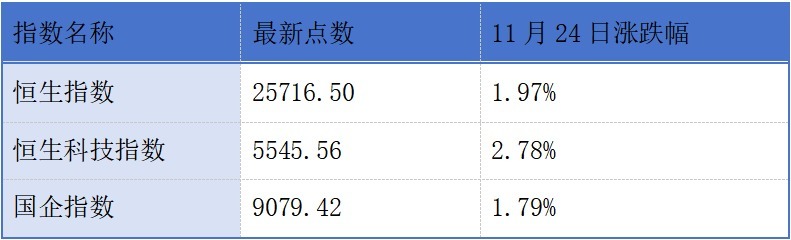
Group 1: Company Listings and Developments - Innovation Industries officially listed on the Hong Kong Stock Exchange on November 24, closing at HKD 14.59 per share, a rise of 32.76%, focusing on upstream aluminum industry with plans to use funds for overseas capacity expansion and green energy projects [1] - Sany Heavy Industry and Cambridge Technology have been added to the Hong Kong Stock Connect, enhancing cross-border investment opportunities for mainland investors [2] - Joy City Property announced plans to withdraw its listing status on the Hong Kong Stock Exchange, aiming to streamline operations and improve decision-making efficiency in response to industry challenges [3] - JD Industrial has passed the listing hearing on the Hong Kong Stock Exchange, potentially becoming the sixth company under JD Group to go public, which could enhance its financing channels and support the digitalization of the industrial supply chain [4] Group 2: Market Performance - The Hang Seng Index closed at 25,716.50, with a gain of 1.97% on November 24 [5] - The Hang Seng Tech Index reached 5,545.56, increasing by 2.78% [5] - The National Enterprises Index stood at 9,079.42, up by 1.79% [5]

十大券商一周策略:本次冲击或将小于“4·7行情”!把握黄金坑机会
Zheng Quan Shi Bao· 2025-10-12 14:53
Group 1 - The traditional manufacturing sector in China is poised to benefit from geopolitical shifts and a move away from low-margin competition, allowing companies to gain pricing power [1] - Recent export controls are seen as a means to protect national interests and may help leading companies stabilize their overseas market share and profitability [1] - The current focus should be on upstream resource sectors and traditional manufacturing, as these areas show signs of recovery and improved profitability [1] Group 2 - External shocks leading to asset declines present a buying opportunity in the Chinese market, with a clear boundary on trade risks and improved domestic financial stability [2] - The demand for quality assets in China is surging, making current asset price declines attractive for investment [2] - The focus remains on industrial development, "anti-involution," and stable value, with emerging technologies as a key investment theme [2] Group 3 - The market is expected to experience a short-term adjustment, but the overall resilience remains strong, with key sectors like AI and semiconductors providing long-term value [4] - The current market conditions are more favorable compared to previous shocks, with investor sentiment and institutional support enhancing market stability [4] - The focus should be on sectors that can benefit from self-sufficiency and internal circulation, such as military, semiconductors, and new consumption [4] Group 4 - The core drivers of the current market rally remain unchanged, with liquidity expected to continue improving [6] - Attention should be given to sectors with strong performance certainty, including "anti-involution," new productivity, and large consumption themes [6] - Investment opportunities are identified in non-ferrous metals, agriculture, and energy sectors [6] Group 5 - The recent volatility in the technology sector is not expected to lead to significant long-term declines, as market conditions differ from previous downturns [7] - The focus should be on sectors that can leverage domestic policies and internal demand, such as non-bank financials and manufacturing [9] - The recovery of manufacturing activities and physical consumption remains a critical investment theme [9] Group 6 - The current market environment is characterized by a shift towards traditional value sectors, with real estate, brokerage, and consumer sectors showing potential [8] - The market is expected to experience a style rebalancing, favoring value-oriented investments in the fourth quarter [8] - The outlook for gold remains positive, with no immediate signs of a peak in the market [8]
跨界并购难在哪?西南证券杨雨松解密破局之道!
Zheng Quan Shi Bao Wang· 2025-10-06 14:38
Core Insights - The implementation of the "Six Merger Rules" by the China Securities Regulatory Commission (CSRC) has significantly boosted the capital market, particularly in cross-industry mergers and acquisitions (M&A) [1][4] - The number of disclosed M&A plans has surged, with 77 cases reported in the first eight months of the year, marking a nearly fivefold increase year-on-year [4] - The first cross-industry M&A project post-implementation of the "Six Merger Rules" by Southwest Securities involved a transaction scale exceeding 8 billion yuan, setting a new record for private enterprise restructuring [5] Group 1: Market Activity and Trends - The M&A market has seen heightened activity, especially in technology sectors such as semiconductors, AI computing, and robotics [4] - Diverse payment tools, including targeted convertible bonds and M&A loans, are increasingly utilized to alleviate cash pressure on enterprises and enhance transaction flexibility [4] Group 2: Challenges in Cross-Industry M&A - The primary challenge in cross-industry M&A is the difficulty in asset control due to significant differences in industry rules, technical systems, and business models [6][7] - Integration capability is a major concern, as regulatory bodies closely scrutinize whether companies possess the necessary skills to integrate acquired assets effectively [7] - There is often a mismatch in valuation expectations between the acquiring and target companies, complicating negotiations [7] Group 3: Strategies for Identifying Quality Targets - Southwest Securities identifies quality targets based on three dimensions: industry potential, core competitiveness, and integration feasibility [8] - Risk control measures include phased payment structures, encouraging target teams to extend share lock-up periods, and retaining original management teams to ensure smooth transitions [8] Group 4: Competitive Strategy in M&A - The company emphasizes a full-service capability in M&A, covering all aspects from target selection to post-merger integration [9] - A strong focus on industry integration M&A, particularly in strategic emerging sectors, is central to the company's approach [11] Group 5: Future Outlook and Recommendations - The current market environment is favorable for M&A transactions, with stable investor sentiment and rational valuation expectations [12] - Recommendations for regulatory improvements include expedited review processes for small and medium-sized projects and increased flexibility in non-related party transactions [13]


中国“政府-国企-民企”债务循环机制的内在特征、影响效应与解决思路
Sou Hu Cai Jing· 2025-10-05 03:58
Core Insights - The article discusses the critical issue of debt accumulation and risk in China, emphasizing the "government-enterprise-private enterprise" debt cycle mechanism as a significant factor in this context [4][5][21]. Group 1: Debt Cycle Mechanism - The "government-enterprise-private enterprise" debt cycle mechanism is characterized by a close relationship between local governments, state-owned enterprises (SOEs), and private enterprises, which has evolved into a core framework for understanding China's debt issues [4][6][11]. - Local governments play a decisive role in the debt cycle, often relying on SOEs to fund major projects and maintain operations, leading to significant debt accumulation [9][19]. - Government financing platforms and SOEs have become key intermediaries in the debt cycle, facilitating the accumulation of both explicit and implicit debts [10][19]. Group 2: Impact on Private Enterprises - Private enterprises, especially small and medium-sized enterprises (SMEs), are often the final bearers of the debt burden, facing challenges such as delayed payments from local governments and SOEs [11][12][25]. - The tight integration of private enterprises into the supply chains of SOEs and local governments results in a situation where they are adversely affected by the debt risks of these larger entities [12][25]. - The financing difficulties faced by private enterprises are exacerbated by the risk-averse lending practices of banks, which prioritize loans to government and SOE projects over private sector needs [24][25]. Group 3: Economic Implications - The debt cycle mechanism significantly hinders the efficiency of China's economic circulation, impacting growth and the overall economic environment [21][22]. - The mechanism creates barriers to the effective implementation of monetary and fiscal policies, as local governments struggle with fiscal deficits and debt management [24][25]. - The interaction between local government debt and the operational challenges faced by private enterprises contributes to a broader economic slowdown, affecting the overall market dynamics [22][24]. Group 4: Recommendations - Addressing the fundamental fiscal challenges faced by local governments is crucial for breaking the cycle of debt accumulation and risk [28][29]. - Tailored policy measures should be implemented to address the specific issues within different sectors, ensuring a more sustainable economic environment [29].

【锋行链盟】港交所IPO中定价策略核心要点
Sou Hu Cai Jing· 2025-09-26 16:12
Core Mechanism - The primary pricing strategy for IPOs on the Hong Kong Stock Exchange (HKEX) is based on bookbuilding, which involves collecting demand from institutional and retail investors to form a demand curve and ultimately determine the issuance price [2][3]. Key Driving Factors - Market environment and investor sentiment, company fundamentals and valuation logic, and the balance between international placement and public offering are crucial in determining the pricing [3]. - The typical issuance structure consists of 70%-90% international placement and 10%-30% public offering, with both demand types influencing pricing [3]. - Initial pricing ranges are set based on comparable company analysis and adjusted dynamically based on demand collected during roadshows [4][5]. Pricing Range Setting and Adjustment - Investment banks establish an initial pricing range based on comparable company analysis, adjusting it according to real-time demand during the roadshow [4][5]. - The demand curve is updated continuously to reflect subscription volumes at different price levels [5]. Key Constraints Mechanism - The stabilization mechanism allows underwriters to buy shares within 30 days post-listing to maintain price stability, which can influence initial pricing [6]. - The allocation switch mechanism mandates a reallocation of shares from international placement to public offering in cases of oversubscription, increasing retail investor allocation [6]. Other Important Considerations - Balancing liquidity is essential; overly high pricing may lead to insufficient trading volume post-listing, affecting stock performance [7]. - Clarity in the valuation story is critical for investor confidence; companies must effectively communicate their growth logic to attract subscriptions [7]. - Regulatory requirements necessitate comprehensive disclosure of financial and business information to enable rational investor decision-making [8]. Summary of Pricing Strategy Logic - The pricing strategy follows a logical chain from market environment to company fundamentals, comparable valuations, initial range setting, demand collection, adjustments, and final pricing [8][9]. Case References - A recent AI company IPO saw strong institutional demand, leading to an initial range of 50-60 HKD, with final pricing at the upper limit of 60 HKD and a 120 times oversubscription [10][11]. - Conversely, a traditional manufacturing company faced cautious institutional bids, resulting in a final pricing at the lower limit of 8 HKD with a 5 times oversubscription [10][11].

翻了4倍,地方国资买28家上市公司,连县城都出手了丨投中嘉川
投中网· 2025-08-26 02:51
Core Viewpoint - Local state-owned enterprises (SOEs) have significantly increased their participation in A-share mergers and acquisitions (M&A) in 2023, with a notable shift towards lower-tier cities and strategic industries like semiconductors [6][28]. Group 1: M&A Activity Overview - As of August 2023, local SOEs participated in 28 control acquisitions of listed companies, representing a more than fourfold increase in both quantity and value compared to the same period in 2024 [6][8]. - The total transaction value of these 28 deals reached 311.95 billion RMB, a year-on-year increase of 410.38% from 61.12 billion RMB in 2024 [9][10]. - Among these transactions, three exceeded 2 billion RMB, and eight were over 1 billion RMB, with the largest being Zhejiang Economic Construction Investment Co. acquiring Jianghai Co. for 3.23 billion RMB [10][11]. Group 2: Industry Focus - The M&A activities are heavily concentrated in strategic emerging industries, particularly in the electronic information sector, which accounted for 25% of the total transactions [12]. - The semiconductor industry alone represented 28.4% of the total M&A value, with six transactions totaling 88.66 billion RMB [12]. Group 3: Regional Dynamics - The most active regions in M&A activities include Anhui, Jiangsu, Zhejiang, Guangdong, and Hubei, with Anhui and Jiangsu each participating in six transactions [15][16]. - In terms of transaction value, Jiangsu led with 60.44 billion RMB, followed closely by Anhui at 54.68 billion RMB [16]. Group 4: Emerging Trends - There is a noticeable trend of lower-tier cities entering the M&A market, with cities like Qujing, Huangshan, and Quzhou making significant acquisitions despite their lower GDPs [24][25]. - County-level SOEs are also beginning to acquire listed companies, exemplified by Cangnan County's acquisition of a controlling stake in Sichuan Medical Technology [26][27]. Group 5: Future Outlook - The ongoing support from local governments and the central financial authorities is expected to sustain the momentum of local SOEs in M&A activities, with policies encouraging further participation and expansion into new regions [28].




高盛最新研判:美国股市外机遇凸显!港股创 4 年新高!建议超配保险 / 材料,下调地产 / 银行
Zhi Tong Cai Jing· 2025-07-29 15:20
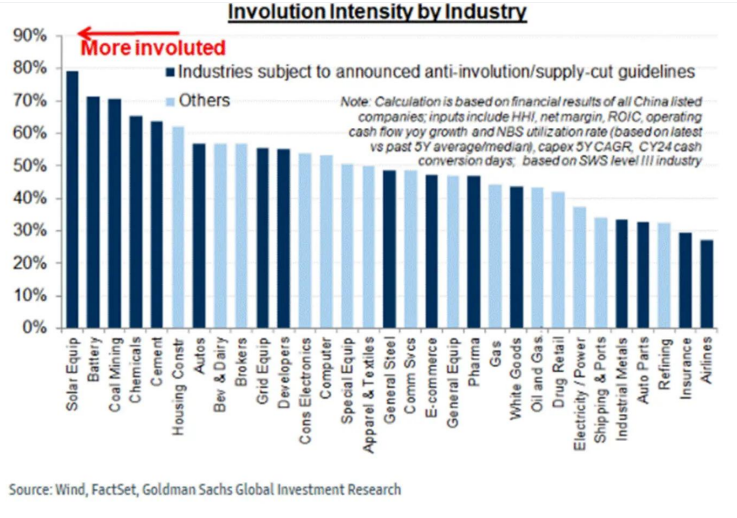
Group 1 - The core viewpoint emphasizes the effectiveness of focusing on areas outside the US stock market, particularly as the Chinese offshore market breaks through a year-long consolidation and reaches a four-year high, driven by easing geopolitical concerns and the deepening of "anti-involution" policies [1][2] - The MSCI China Index has risen 25% since the beginning of 2025, marking the second-best performance for the first seven months since 2010, alongside the Shanghai and Shenzhen 300 Index reaching new highs for the year [1][2] Group 2 - Key driving factors include improved US-China trade relations, a significant increase in market risk appetite, and a strong influx of capital into the Hong Kong market, with record inflows from southbound funds [2][3] - The "anti-involution" policy, which is a supply-side reform, is reshaping industry dynamics and has led to an upward adjustment of the MSCI China Index's 12-month target from 85 to 90 [2][3] Group 3 - There is a notable shift in investor interest towards China, with US investors showing increased attention and a significant reduction in geopolitical concerns compared to the previous two years [3][4] - Despite the increased interest, global actively managed funds' allocation to China remains near a cyclical low, indicating substantial future allocation potential [3][4] Group 4 - Sector adjustments have been made, with an overweight position in insurance and materials, while reducing exposure to real estate and banks [4][5] - The insurance sector is deemed attractive with a 2025 price-to-earnings ratio of 7.6 and a price-to-book ratio of 1.0, benefiting from a recovering stock market [4][5] - The materials sector is also upgraded to overweight due to its sensitivity to the "anti-involution" policy, which is closely linked to industry profitability and supply reform [4][5] Group 5 - Real estate has been downgraded from overweight to market weight, reflecting a shift in industry cycles and policy focus from demand stimulation to supply-side reform [5][6] - The banking sector has been adjusted to market weight, with a 2025 price-to-earnings ratio of 6.2 and a price-to-book ratio of 0.6, indicating limited short-term elasticity [5][6] Group 6 - The analysis highlights a core contradiction in global asset allocation, where the strong performance of the US stock market poses a challenge for investors considering China, despite the independent logic of China's market driven by "anti-involution" policies and capital inflows [10][11] - Goldman Sachs suggests focusing on policy-sensitive sectors like insurance and materials, as well as undervalued consumer sectors, while avoiding high-involution and high-valuation pressure industries [12][13] Group 7 - The overall strategy for global asset allocation in the second half of 2025 should focus on differentiated logic, emphasizing the resilience of US corporate earnings and structural opportunities driven by AI, while anchoring on policy reforms and capital inflows in the Chinese offshore market [13]