
城市规划与建设

Search documents
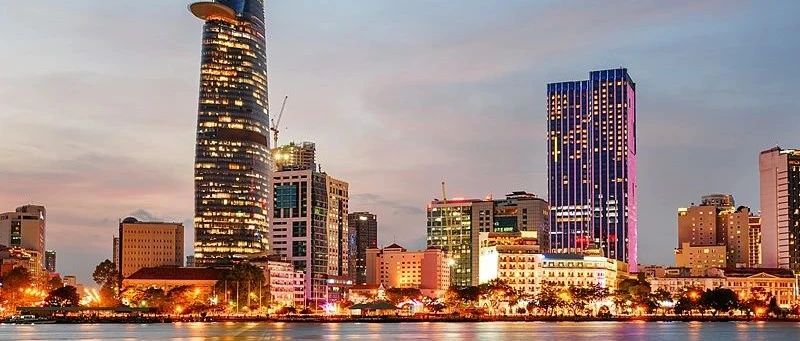
越南打造“特大城市”
财联社· 2025-07-22 10:33
Core Viewpoint - The merger of Ho Chi Minh City with neighboring Binh Duong and Ba Ria-Vung Tau provinces marks a historic turning point in urban development in Vietnam, paving the way for a "multi-center" mega city that alleviates pressure on the inner city and reshapes the socio-economic landscape [1][2]. Group 1 - The new administrative structure, effective from July 1, integrates Ho Chi Minh City, Binh Duong, and Ba Ria-Vung Tau into a unified urban governance system, opening historic opportunities for long-term spatial planning [1]. - Urban development experts advocate for a "multi-center" city model, which can relieve congestion in core areas and promote sustainable environmental development, contrasting with the traditional "single center" model [2]. - The need for strategic growth drivers that transcend provincial administrative boundaries is emphasized, requiring a rethinking of planning concepts to avoid local interests hindering coordinated regional strategies [1][2]. Group 2 - The integration of smart technology and digital governance is deemed crucial for the operation of the newly merged city, as current technological solutions lag behind global advanced cities [3]. - Public-private partnerships are highlighted as essential, particularly in transportation-oriented development, where urban planning departments can manage zoning and infrastructure while private investors handle construction and operations [3]. - Citizens play a vital role in reducing the burden on state subsidies by opting for public transportation, which can alleviate pressure on these services [3].

南京再增两处儿童友好街区入选国家级可复制经验清单
Nan Jing Ri Bao· 2025-07-18 02:34
Core Viewpoint - The Ministry of Housing and Urban-Rural Development, the National Development and Reform Commission, and the State Council's Women and Children Working Committee have jointly issued a list of replicable experiences for building child-friendly urban spaces, highlighting successful examples in Nanjing, specifically in the Xuanwu District and Jiangbei New District [1] Group 1: Child-Friendly Urban Spaces - The Yao Hua Street Child-Friendly District features colorful ground designs and play areas, promoting a joyful environment for children [2] - The Hongyang Happy Street incorporates over 280 suggestions from children, emphasizing a child-led approach in urban planning [2][3] - The surrounding area of Hongyang Street includes facilities such as nursing rooms, kindergartens, and child-friendly parks, enhancing the overall service offerings for families [3] Group 2: Child Participation in Urban Development - The "New Seedling Civil Observation Group" in Yao Hua Street engages children in community discussions, allowing them to contribute ideas for local improvements [4] - The initiative promotes children's voices in urban governance, ensuring their needs are prioritized in community projects [4] Group 3: Expansion of Child-Friendly Initiatives - Nanjing has established 110 child-friendly communities and 50 child-friendly schools, with plans for 10 additional child-friendly districts [5][6] - The city is actively enhancing public spaces to include facilities suitable for children, fostering a more inclusive environment [6] - The Women's Federation of Nanjing aims to integrate child-friendly concepts into urban planning and public services, ensuring that every aspect of the city is welcoming to children [6]
郑州又“长大”了
Zheng Zhou Ri Bao· 2025-05-08 00:39
Group 1 - The core viewpoint of the articles highlights the continuous expansion of Zhengzhou's urban built-up area, indicating significant urban development and growth in population and infrastructure [1][2][3] Group 2 - In 2024, the urban built-up area of Zhengzhou's central urban area is projected to be 822.30 square kilometers, with a total built-up area of 1431.65 square kilometers across the city, marking increases of 25.6 square kilometers and 19.43 square kilometers respectively compared to 2023 [1] - The built-up area has shown consistent growth over the years, with the central urban area expanding from 774.32 square kilometers in 2022 to 796.70 square kilometers in 2023, and further growth expected in 2024 [2] - Zhengzhou's population surpassed 13 million in 2023, with projections indicating it could reach 18 million by 2035, suggesting ongoing urban expansion and increased demand for infrastructure and services [3]
到2035年,长沙公园绿地、广场步行5分钟覆盖率将在90%以上
Chang Sha Wan Bao· 2025-04-22 02:46
Core Viewpoint - The "Changsha Urban Land Spatial Master Plan (2021-2035)" emphasizes ecological civilization construction, focusing on optimizing green space layout, increasing per capita park green space, and enhancing the quality of green supply, aiming to create a more beautiful ecological environment for residents [1][2]. Group 1: Ecological Safety Framework - The plan aims to establish an ecological safety framework based on the region's natural resources, enhancing ecological functions and environmental quality through a network of rivers and mountains [2][4]. - It incorporates the concept of "natural mountain and water framework" to create a city-wide ecological environment, focusing on the ecological value of local resources [2]. Group 2: Urban Park Development - Recent years have seen accelerated urban park development in Changsha, transforming parks into essential recreational spaces for citizens [3]. - The plan proposes a comprehensive urban park system, integrating "natural protected areas, suburban parks, and urban parks," with a goal of achieving "300 meters to green, 500 meters to parks" [3]. - By 2035, the target is to ensure that the per capita park green space in urban areas is no less than 12.10 square meters, with a 90% coverage rate for parks and squares within a 5-minute walk [3]. Group 3: Green Infrastructure - The plan outlines the construction of identifiable urban green spaces and open areas, emphasizing the integration of modern urban features with local characteristics [5]. - It aims to maintain the integrity, connectivity, and balance of green spaces, gradually increasing green coverage through new constructions and renovations [5]. Group 4: Future Vision - The vision for the future includes a city where greenery is a visible and integral part of daily life, enhancing the quality of life for residents [6].