
Central Banking

Search documents
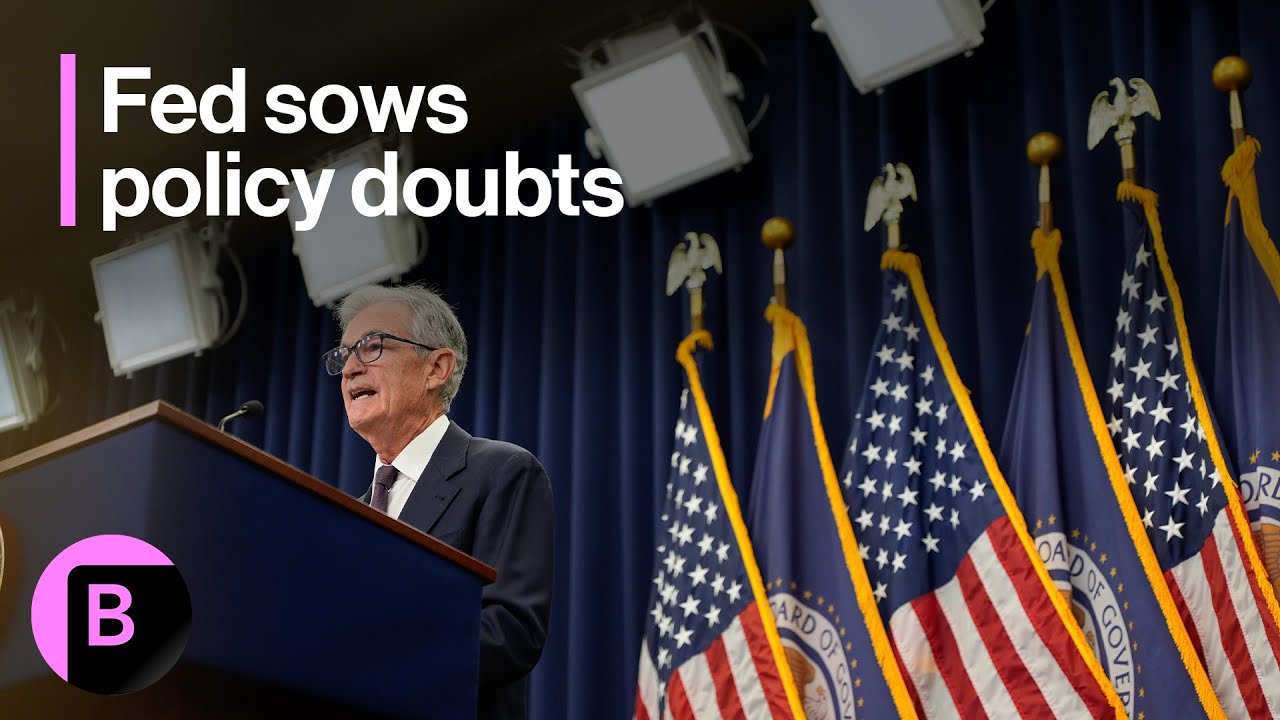
Mohamed El-Erian on why the Fed's messaging is 'a mess'
Youtube· 2025-09-18 15:34
分组1 - The latest FOMC meeting revealed significant divisions among members regarding interest rate forecasts, with one member predicting a rate hike this year and another anticipating cuts of 1.25% over the next two meetings [1] - The economic projections from the Fed indicate higher inflation and growth, which contradicts the decision to cut rates, suggesting a potential failure to meet inflation targets for seven consecutive years [1][3] - The Fed's lack of clear guidance and reliance on historical data has increased uncertainty, which may hinder business investment and consumer spending [1][2] 分组2 - There is a growing call for fundamental reforms within the Fed, emphasizing the need for greater accountability and transparency to avoid groupthink [2][4] - The dispersion in members' views during the FOMC meeting indicates a lack of consensus, yet it also highlights the need for cognitive diversity to improve decision-making [4][7] - The Fed's current approach may lead to economic volatility, necessitating a clear policy anchor to guide the economy amidst significant changes in both domestic and global contexts [1][2][6]
The Fed's dual mandate is under new pressure in D.C.
Yahoo Finance· 2025-09-18 15:33
Core Viewpoint - The Federal Reserve's dual mandate of maintaining stable prices and maximizing employment is facing increasing scrutiny, with a new bill introduced to shift focus solely to controlling inflation [1][2]. Group 1: Legislative Changes - House Financial Services Committee Chairman French Hill introduced a bill to amend the 1913 Federal Reserve Act, replacing the dual mandate with a single focus on price stability, similar to the European Central Bank [2]. - The proposed legislation aims to enhance the Fed's effectiveness by eliminating competing objectives and returning to its core responsibility of price stability [2]. Group 2: Economic Context - The introduction of the bill coincided with the Fed's decision to cut rates for the first time in 2025, primarily due to weaknesses in the job market, despite persistent inflation [4]. - Fed Chairman Jerome Powell indicated that the balance of risks is shifting away from inflation as the labor market continues to slow [4]. Group 3: Perspectives on Mandate - Former Kansas City Fed president Esther George noted that economic literature does not show significant differences in outcomes between central banks with single versus dual mandates, suggesting that dual mandates may allow for more discretion in responding to economic conditions [3]. - Stephen Miran, a new addition to the Fed board, raised questions about the Fed's mandate, highlighting a third function to promote moderate long-term interest rates alongside maximum employment and stable prices [6].
Hassett says Fed made 'prudent call,' signaling White House OK with quarter-point cut
CNBC· 2025-09-18 12:35
Core Viewpoint - The Federal Reserve's decision to cut its key borrowing rate by a quarter percentage point is viewed positively by the White House, indicating a cautious approach to monetary policy [1][2]. Group 1: Federal Reserve's Rate Decision - National Economic Council Director Kevin Hassett mentioned that the administration and new Fed Governor Stephen Miran advocated for a larger reduction, specifically a half-point cut, but the Federal Open Market Committee voted 11 to 1 against it [2]. - Hassett expressed that a 25 basis point cut was a broad consensus and a good initial step towards lower rates, despite Miran's preference for a more aggressive approach [3]. - President Trump has previously criticized the Fed and suggested that the benchmark federal funds rate should be 3 percentage points lower than current levels, which is not aligned with the FOMC's future policy projections [4]. Group 2: Economic Context - Despite strong economic growth above 3% in the third quarter, which typically would not support lower interest rates, Trump argues that cuts are necessary to aid the struggling U.S. housing market and manage financing costs for the nation's $37 trillion debt [5]. - Hassett emphasized the importance of assessing economic variables and making incremental reductions, suggesting that the Fed's cautious approach is appropriate given the current economic conditions [6]. - The Fed's decision reflects a balance between various economic models and opinions, with Hassett describing it as a prudent call in light of decelerating inflation that remains above the target [7].
Bank of England slows pace of bond rundown, keeps rates steady
Yahoo Finance· 2025-09-18 11:01
Core Viewpoint - The Bank of England (BoE) has decided to slow down its quantitative tightening (QT) program, reducing the pace of government bond sales to minimize market volatility while maintaining its monetary policy objectives [1][4]. Group 1: Bond Sales and Market Impact - The BoE will reduce its bond sales to 70 billion pounds from 100 billion pounds over the past year, with a target to lower its bond holdings to 488 billion pounds by October 2026 [2][3]. - The decision reflects a split among policymakers, with a 7-2 vote indicating differing opinions on the pace of QT [4]. - The sales will be allocated 40% to short-dated, 40% to medium-dated, and 20% to long-dated gilts, based on their initial purchase price [5]. Group 2: Economic Context and Future Implications - The BoE's bond purchases totaled 875 billion pounds ($1.19 trillion) from 2009 to 2021 to stimulate the economy, with QT beginning in 2022 [2]. - Long-dated gilt yields have reached a 27-year high, complicating fiscal planning for the government [6]. - The QT slowdown is aimed at restoring room for future monetary stimulus and reducing market distortions [4].
Crypto Market Unmoved by Fed Rate Cut; Powell Keeps Door Open to More
Yahoo Finance· 2025-09-18 08:52
Core Viewpoint - The U.S. Federal Reserve cut the federal funds rate by 25 basis points, marking its first interest rate cut of 2025, but this move did not significantly impact the cryptocurrency market, which had anticipated a deeper reduction [1][2][7]. Market Reaction - The Federal Open Market Committee's decision to lower rates to the lowest level this year had minimal effect on digital assets, as the market had already priced in these expectations [2][8]. - Bitcoin experienced a brief increase from $114,794 to $117,198 but ultimately closed lower within 24 hours [2]. - Ethereum followed a similar trend, rising from $4,429 to $4,586 before retreating, remaining approximately 8% below its all-time high of $4,923 [3]. Liquidation Events - The lack of sustained upward movement in the cryptocurrency market led to significant liquidations, with around $400 million in long and short positions being wiped out within 24 hours post-announcement, affecting over 110,000 traders [3][8]. Future Rate Cut Expectations - Fed Chair Jerome Powell indicated the possibility of at least two more rate cuts later in the year, contingent on economic conditions [4][8]. - Futures markets adjusted to reflect expectations of two to three additional cuts before the end of 2025 [4]. Political Pressure - President Donald Trump reiterated calls for more aggressive rate cuts, despite dissent from one of his appointees to the Fed, Stephen Miran, who favored a deeper cut [5]. Market Sentiment - Analysts noted that the muted response in digital assets suggests a "sell the news" environment, but long-term sentiment remains optimistic, with expectations of increased liquidity benefiting Bitcoin and altcoins [8].
Fed Policy Will Only Get Harder From Here: 3-Minute MLIV
Youtube· 2025-09-18 08:25
Group 1 - The Federal Reserve (Fed) successfully managed to achieve consensus on a rate cut, which is generally positive for bonds, stocks, and the economy [2][3] - There is uncertainty regarding future rate cuts, with some members of the Fed indicating no further cuts this year, which may create volatility in the markets [4][5] - The upcoming changes in the Fed's personnel and structure may complicate the outlook for monetary policy in the next year [5] Group 2 - The Bank of England's focus is shifting towards managing bond supply and inflation concerns, which are affecting long-term yields in global bond markets [7] - Jobless claims data has been unreliable, raising questions about the true state of the labor market and its implications for the Fed's decisions [9][10] - The market's attention may pivot back to inflation unless there are significantly negative job data, indicating a cautious approach to economic outlook [10]

BOJ may raise rates in October even if Takaichi wins leadership race, says ex-central bank official
Yahoo Finance· 2025-09-18 04:51
Monetary Policy Outlook - The Bank of Japan (BOJ) may raise interest rates in October, regardless of the outcome of the ruling party's leadership race, particularly if Sanae Takaichi becomes the next premier [1][2] - Former BOJ executive Tomoyuki Shimoda believes that Takaichi's potential victory will have a limited impact on monetary policy, despite her advocacy for increased fiscal spending [2][3] Currency and Economic Impact - A weak yen, which boosts exports, raises concerns for policymakers due to increased import costs and persistent inflation above the BOJ's 2% target [3][4] - The yen falling below 150 to the dollar could provoke complaints from the U.S. administration, which favors a weak-dollar policy to enhance U.S. exports [4] Economic Indicators - The BOJ is expected to raise rates at its meeting on October 29-30 if stock prices remain stable and the "tankan" business sentiment survey does not show significant deterioration [4][5] - Corporate profits are stable, and structural labor shortages are likely to drive wage increases, contributing to sustained inflation [5] Market Expectations - A Reuters poll indicates that a majority of economists anticipate a 25-basis-point rate hike by year-end, with opinions divided on the timing, focusing on October and January [6] - Takaichi is associated with an "Abenomics"-style approach, which combines fiscal and monetary stimulus, while her main rival, Shinjiro Koizumi, has unclear views on BOJ policy [6][7] Historical Context - The BOJ ended its extensive stimulus program last year and raised short-term rates to 0.5% in January, believing Japan was close to achieving its 2% inflation target [7]
Fed's Powell explains how central bank moderate rates mandate works
Reuters· 2025-09-17 21:45
Federal Reserve Chair Jerome Powell on Wednesday explained why the three missions Congress imposed on the central bank add up to two in real-world conditions. ...
Fed cuts US interest rates after Trump pressure as economy weakens
Yahoo Finance· 2025-09-17 20:01
However, Mr Powell said his colleagues’ forecasts were “subject to uncertainty” and insisted monetary policy was “not on a pre-set path”.Markets are anticipating another couple of cuts from the Fed by the year’s end, with more to follow in 2026. In its statement announcing the September rate cut, the Fed said only that it would “carefully assess incoming data, the evolving outlook, and the balance of risks”. About half the Fed’s rate-setters expect another two or more quarter-point cuts this year, taking th ...
Federal Reserve System (:) Update / Briefing Transcript
2025-09-17 19:32
Summary of Federal Reserve System Update / Briefing September 17, 2025 Key Points Related to the Federal Reserve and Economic Conditions Economic Growth and Employment - The Federal Reserve noted a moderation in economic activity, with GDP growth at approximately 1.5% in the first half of the year, down from 2.5% the previous year [1][2] - Job gains have slowed significantly, averaging only 29,000 per month over the last three months, with the unemployment rate edging up to 4.3% in August [2][3] - The labor market is experiencing a decline in both supply and demand for workers, leading to increased downside risks to employment [3][6] Inflation Trends - Total Personal Consumption Expenditures (PCE) prices rose by 2.7% over the 12 months ending in August, with core PCE prices increasing by 2.9% [4] - Inflation expectations have increased due to tariffs, but longer-term expectations remain aligned with the Fed's 2% inflation goal [4][20] - The median projection for total PCE inflation is 3.0% for this year, decreasing to 2.6% in 2026 and 2.1% in 2027 [4] Monetary Policy Adjustments - The Federal Open Market Committee (FOMC) decided to lower the policy interest rate by 0.25%, bringing the target range to 4% to 4.25% [5][6] - The FOMC aims to balance its dual mandate of maximum employment and stable prices, adjusting policy in response to evolving economic conditions [5][6] - The median participant in the FOMC projects the federal funds rate to be 3.6% at the end of this year, down from previous projections [8] Risks and Future Outlook - The balance of risks has shifted, with increased downside risks to employment and a more neutral policy stance being adopted [6][16] - The Fed acknowledges the potential for persistent inflation but believes that the current labor market conditions warrant a cautious approach [20][25] - The Fed is committed to monitoring economic data closely and adjusting its policy as necessary to achieve its goals [29][70] Labor Market Dynamics - The Fed highlighted that the slowdown in job creation is largely due to a decline in labor force growth, influenced by lower immigration and participation rates [3][12] - Concerns were raised about the impact of a softening labor market on younger and minority job seekers, who are particularly vulnerable [26][40] Housing Market Considerations - The Fed recognizes that high interest rates have exacerbated housing affordability issues, impacting household formation and wealth accumulation [58][61] - The ongoing housing shortage is identified as a deeper, structural issue that the Fed cannot directly address through monetary policy [61] Conclusion - The Federal Reserve remains focused on its dual mandate while navigating a complex economic landscape characterized by low unemployment, moderated growth, and evolving inflation dynamics [9][70] - The Fed's actions are guided by data and the need to balance risks to both employment and inflation, with a commitment to achieving long-term economic stability [5][70]