Asset Management

Search documents
KKR Announces Intra-Quarter Monetization Activity Update for the First Quarter
Businesswire· 2026-03-23 20:15
Core Viewpoint - KKR has reported over $700 million in monetization activity for the period from January 1, 2026, to March 23, 2026, primarily driven by realized performance income and strategic transactions [1][2]. Group 1: Monetization Activity - The monetization activity consists of approximately 90% realized performance income and about 10% realized investment income [1]. - The activity is attributed to public secondary sales, strategic transactions, dividends, and interest income [2]. Group 2: Financial Estimates - The disclosed estimate is not indicative of total realized performance income or total revenues for the full quarter ending March 31, 2026, as it excludes other income sources and expenses [3]. - The estimate is based on information available as of March 23, 2026, and does not predict future results for any other period [3]. Group 3: Company Overview - KKR is a leading global investment firm that focuses on alternative asset management, capital markets, and insurance solutions [4]. - The firm aims to generate attractive investment returns through a disciplined investment approach and supports growth in its portfolio companies [4].



Blackstone considers foraying into sports with its first-ever investment in IPL teams like RCB, Rajasthan Royals
MINT· 2026-03-23 18:34
Group 1: Investment Opportunity - Blackstone Inc is considering a potential investment of $200 to $300 million in the Indian Premier League (IPL) teams, specifically the Rajasthan Royals and Royal Challengers Bengaluru (RCB) [1][2] - The investment would be made through the Blackstone Private Equity Strategies Fund, allowing for a longer retention of stake compared to typical drawdown funds [3] Group 2: Market Context - The IPL is recognized as the most popular and lucrative cricket league, combining marketing strategies similar to those in the US with Bollywood's appeal, and involves significant financial stakes [6] - The valuation for the two IPL teams is estimated between $1.3 billion and $2 billion, with new buyers expected to make full payments upfront, unlike previous sales where payments could be spread over a decade [5] Group 3: Competitive Landscape - Other private equity firms are also looking to invest in sports franchises, attracted by high-value media rights and the limited availability of premium franchises [3] - Recent transactions include KKR & Co. acquiring Arctos Partners and Carlyle Group Inc. striking a deal with Oracle Red Bull Racing [3] Group 4: Wealth Market Insights - Owning a stake in an IPL franchise offers significant visibility in a rapidly growing wealth market, which includes approximately 917,000 millionaires and 188 billionaires in India [7]



BlackRock CEO sends blunt message on markets
Yahoo Finance· 2026-03-23 18:21
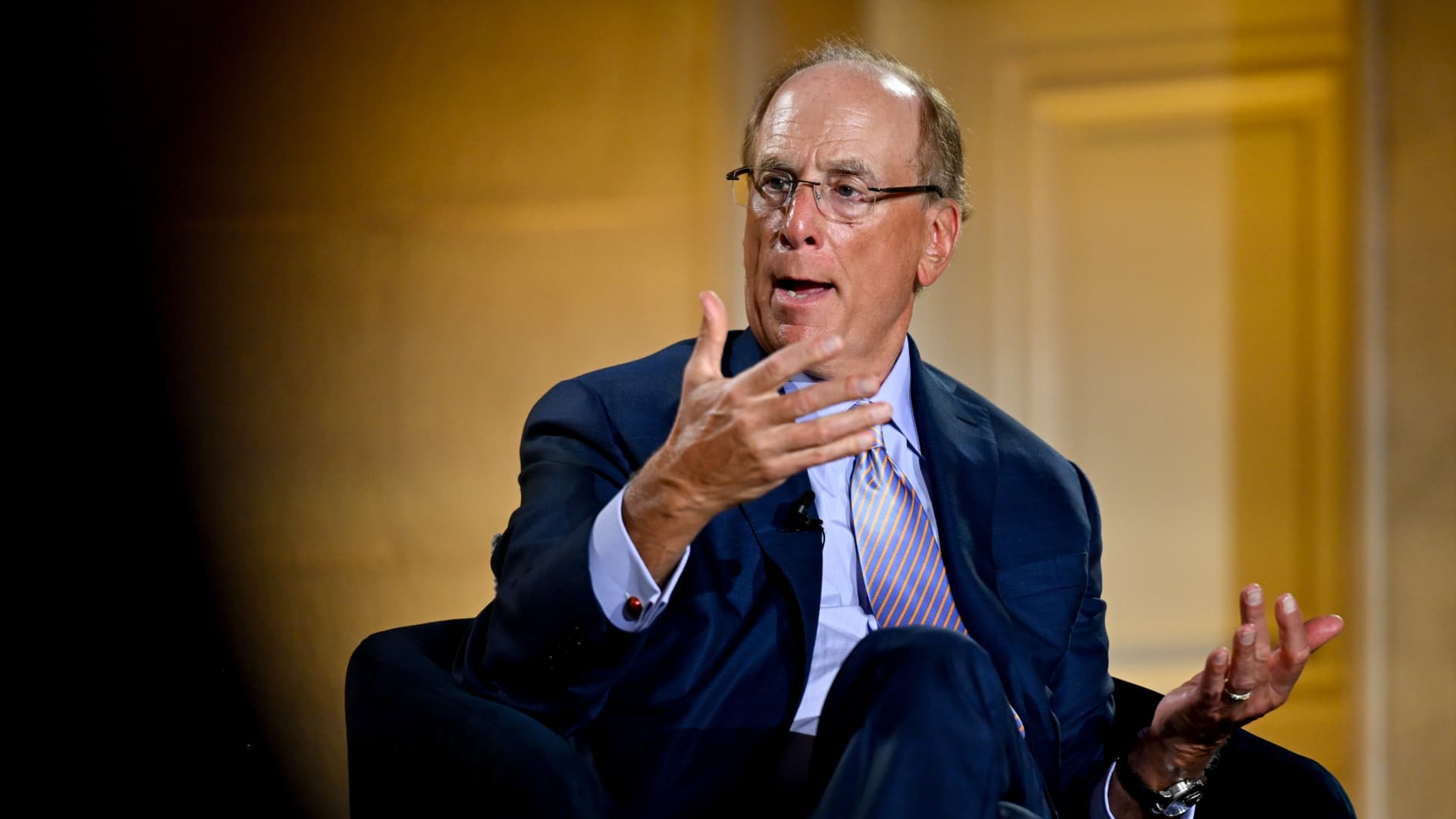
Group 1 - The core focus of BlackRock CEO Larry Fink's letter is on the economic impact of artificial intelligence (AI) and its potential to exacerbate wealth inequality [1][2] - Fink highlights that AI could disproportionately benefit companies with the necessary data, infrastructure, and capital, raising concerns about who will participate in the economic gains [3] - The letter emphasizes the need for broader access to financial assets to ensure that the economic value generated by AI is shared more equitably [5][7] Group 2 - Fink critiques traditional financial systems, such as Social Security, for not effectively helping individuals build wealth and suggests a reevaluation of diversification strategies [4] - He advocates for updating existing regulations for digital markets rather than creating new ones, promoting integration between traditional and tokenized markets [6] - The potential for tokenization and crypto technologies to broaden market participation is noted, along with the idea that automated investing could benefit everyday users [7]

SEC’s Uyeda Backs Private Investing in 401(k)s Amid Risks
Yahoo Finance· 2026-03-23 17:51
Core Viewpoint - The Trump administration is advocating for the inclusion of private equity, real estate, and cryptocurrency in 401(k) plans, arguing that current restrictions prevent everyday savers from benefiting from investment gains that institutional investors have enjoyed for years [1][5]. Group 1: Regulatory Environment - The SEC is aligning with the Trump administration's efforts to facilitate the inclusion of private market investments in 401(k) plans, emphasizing that excluding these alternatives denies everyday savers potential investment benefits [5][6]. - SEC Commissioner Mark Uyeda argues that the benefits of democratizing private-market investing outweigh the risks when managed properly, suggesting that long-term retirement savers could benefit from illiquid investments [4][7]. Group 2: Market Dynamics - Recent disruptions in the private credit market, including increased investor redemptions from major firms like BlackRock and Blackstone, have led to heightened caution among plan sponsors regarding the inclusion of private investments in 401(k) plans [3][10]. - The SEC is working to lift a 15% cap on investments in private funds for closed-end funds, which would allow for intra-day trading, thereby making alternatives more accessible to savers [7]. Group 3: Legal and Fiduciary Considerations - Legal risks associated with private market investments are a significant concern for plan sponsors, as highlighted by attorney Ary Rosenbaum, who notes that litigation risks may deter sponsors from being early adopters of these investment options [2][13]. - Tim McGlinn, an investment analyst, emphasizes the importance of fiduciaries considering pricing differences between private and public investments, as this could influence their decisions on including private credit products in retirement plans [10][11]. Group 4: Investment Performance and Strategy - McGlinn's analysis indicates that private-market investment returns after fees have been "middling" compared to public-market returns, raising concerns about the overall value of including such investments in 401(k) plans [11]. - There is a strong incentive for alternative asset managers to penetrate the $14 trillion defined-contribution market, particularly through target-date funds, which may not receive much scrutiny from investors [12].
West Coast Powerhouse: Inside Capital Group's Rapid Growth at Exchange 2026
Etftrends· 2026-03-23 17:46
Core Insights - Capital Group has rapidly grown its ETF assets to over $120 billion in just four years, establishing itself as a significant player in the ETF market with 25 active ETFs [1][2] - The firm's growth is attributed to its long-standing investment culture and a focus on providing core building blocks for advisors, emphasizing transparency, active management, and long-term research [2][12] Growth and Market Position - 20 out of the 25 ETFs in Capital Group's suite have surpassed $1 billion in assets, showcasing remarkable growth in a competitive ETF landscape [3] - The introduction of active ETFs in 2022 allowed advisors to access Capital Group's investment process without being limited to mutual funds, catering to tax-sensitive investors [4][5] Investment Strategy - Capital Group employs a team-based approach to portfolio management, dividing portfolios into sleeves managed by different portfolio managers, supported by a dedicated research team [6] - The firm conducted over 21,000 meetings with companies globally last year, ensuring comprehensive fundamental research and diverse perspectives in investment opportunities [7][8] Notable Funds - Capital Group Dividend Value ETF (CGDV) has over $29 billion in assets and targets high-quality large-cap companies with a dividend yield above the S&P 500 [9] - U.S. Small-Mid Cap ETF (CGUS) focuses on smaller domestic companies, appealing to investors seeking growth opportunities beyond large-cap stocks [10] - Capital Group New Geography ETF (CGNG) evaluates companies based on where they do business rather than their domicile, providing exposure to emerging markets [10] Future Outlook - The firm is exploring the growth of multi-asset ETFs, with the Capital Group Balanced ETF (CGBL) designed to mimic the successful equity and fixed income strategy of their American Balanced Fund [11] - Capital Group aims to differentiate itself in the competitive ETF market by combining low-cost structures with a global research footprint in its active ETFs [12][13]

BlackRock's Larry Fink: Trump accounts, paired with other assets, may be 'very significant' for young adults
CNBC· 2026-03-23 17:39
Core Viewpoint - BlackRock CEO Larry Fink advocates for the potential of Trump accounts as an effective early wealth-building tool for children in the U.S., especially when combined with existing investment vehicles [1][2]. Group 1: Trump Accounts Overview - Trump accounts, also known as 530A accounts, include a one-time $1,000 deposit from the U.S. Department of the Treasury for children born between 2025 and 2028 [6]. - BlackRock and other large employers have committed to matching the Treasury's $1,000 seed money for eligible children [6]. - Parents or guardians must file IRS Form 4547 with their 2025 tax returns to set up an account and receive the $1,000 [7]. Group 2: Contribution Limits and Participation - Parents, guardians, and friends can contribute up to $5,000 annually in after-tax dollars to Trump accounts, while companies can deposit up to $2,500 pre-tax as part of the $5,000 limit [8]. - As of March 8, nearly 3.5 million Trump accounts have been opened, with over 800,000 qualifying for the $1,000 pilot contribution [8]. Group 3: Investment Potential and Economic Impact - Fink emphasizes that early wealth-building accounts can lead to better educational and economic outcomes, such as increased likelihood of earning advanced degrees and home ownership [2][3]. - Financial advisors express optimism about the potential of Trump accounts to enhance access to investment opportunities and help address the wealth gap [5].
Blue Owl Capital: 10% Investment-Grade Dividend Yield On AI Panic (NYSE:OWL)
Seeking Alpha· 2026-03-23 16:35
Group 1 - Blue Owl Capital (OWL) has experienced a significant 58% decline from its 52-week high, leading to a discounted multiple on its fee-related earnings (FRE) despite growth in assets under management (AUM) [1] - The alternative asset manager reported that AUM has continued to grow, indicating potential for future revenue generation [1] - The equity market serves as a mechanism for wealth creation or destruction over the long term, highlighting the importance of market fluctuations [1] Group 2 - Pacifica Yield is focused on long-term wealth creation by targeting undervalued high-growth companies, high-dividend stocks, REITs, and green energy firms [1]


'AI threatens to repeat that pattern': BlackRock CEO warns of wider wealth inequality without broader access
Yahoo Finance· 2026-03-23 16:32
Core Insights - BlackRock CEO Larry Fink emphasizes that AI could exacerbate wealth inequality unless more individuals participate in market growth, indicating a fracture in the traditional model of global capitalism [1][2] Group 1: Wealth Distribution and Economic Anxiety - Fink highlights that the majority of wealth has accrued to asset owners rather than wage earners, raising concerns about economic anxiety stemming from a perception that capitalism is not benefiting enough people [2] - He warns that AI may replicate and intensify this trend, concentrating wealth among companies and investors who can leverage these technologies [2][3] Group 2: K-shaped Economic Outcomes - The emergence of "K-shaped" outcomes is noted, where leading firms advance while others lag behind, exemplified by Walmart's high valuation juxtaposed with Saks' bankruptcy [3] - Fink points out that rising market capitalization with narrow ownership can create a sense of distance from prosperity for those outside the ownership circle [3] Group 3: Market Participation - Despite the US having one of the highest market participation rates globally, approximately 40% of the population lacks exposure to capital markets, with even lower rates observed internationally [4] - Fink describes a scenario where billions observe economic growth without participating, often saving in low-yield bank accounts instead of investing [4] Group 4: Investment Strategy - Fink advises long-term market investment, asserting that staying invested has historically proven more beneficial than attempting to time the market [5] - He notes that over the past two decades, investments in the S&P 500 have increased more than eightfold, with significant market gains occurring during turbulent times [5]
Why Blue Owl Capital stock is gaining today?
Invezz· 2026-03-23 16:26
Core Viewpoint - Blue Owl Capital's stock is experiencing gains due to a reaffirmed bullish stance from TD Cowen, highlighting strong institutional demand for alternative assets despite short-term challenges [1][2]. Group 1: Analyst Ratings and Price Target - TD Cowen reiterated a "buy" rating on Blue Owl Capital, lowering its 12-month price target to $14 from $16, indicating a potential upside of approximately 54% from the previous close [2]. - The positive sentiment from analysts is crucial as the company has faced pressure from concerns regarding redemptions and risks in the private credit market [2]. Group 2: Institutional Demand and Long-term Outlook - Continued demand for alternative investments from institutional clients is a key driver for Blue Owl's long-term growth, as noted by TD Cowen [3]. - Blue Owl's co-CEO Doug Ostrover emphasized positive trends in the firm's real assets platform, including data centers, which reinforces confidence in the business model [3]. - The company's attractive dividend yield of 9.9% continues to appeal to income-focused investors, providing additional support for the stock [4]. Group 3: Near-term Pressures and Redemption Activity - Analysts caution that the stock may face choppy performance in the near term due to elevated redemption activity, particularly through Labor Day [5]. - Blue Owl's recent actions, including the sale of $1.4 billion in loan assets and restrictions on withdrawals from a retail-focused vehicle, have raised concerns about liquidity and investor behavior in the private credit market [7]. Group 4: Liquidity and Market Sentiment - Despite redemption pressures, TD Cowen noted that Blue Owl's funds maintain sufficient liquidity, reducing the risk of forced asset sales [9]. - The firm's outlook aligns with broader market sentiment, with around three-quarters of analysts covering Blue Owl having a buy or strong buy rating [9]. - Blue Owl shares have declined nearly 13% over the past month, primarily due to the restriction on withdrawals, but recent analyst support has helped stabilize sentiment [10].

Blackrock CEO Larry Fink warns of ‘costly' global push toward self-reliance, downsides to AI boom
New York Post· 2026-03-23 15:12
Core Insights - The push for economic self-reliance by countries globally is costly and requires significant long-term investment [3][4][6] - The current AI boom poses a risk of increasing wealth inequality as valuable AI companies remain private longer, limiting access for everyday investors [7][8] Economic Self-Reliance - Countries are moving towards tighter immigration policies and boosting domestic industries, which necessitates massive localized capital deployment [2] - The shift from a borderless economy is seen as a response to national security concerns, but it carries hidden costs that will impact ordinary people and retirement savers [6][10] AI and Wealth Inequality - The AI sector is experiencing unprecedented wealth creation, with companies like Anthropic reaching valuations comparable to established giants much earlier in their lifecycle [8] - Fink warns that if ownership of AI advancements does not broaden, the technology could exacerbate existing wealth disparities [7] Tariff Policies and Inflation - Fink has criticized the Trump administration's tariff policies, suggesting they could lead to inflation and have far-reaching economic implications [3][5][10] - Recent data indicates a 0.2% rise in import prices and an 8% increase in manufacturers' costs for goods and materials in 2025, highlighting the economic impact of these policies [11][12]