Chemicals

Search documents
Merck and ChemLex Sign Memorandum of Understanding to Advance Automated Chemistry and Technological Innovation
Prnewswire· 2026-01-20 08:13
Core Insights - The strategic collaboration between Merck and ChemLex aims to integrate automated experimentation and advanced chemistry workflows to enhance research and discovery in life sciences and electronics [1][2] Group 1: Collaboration Details - The Memorandum of Understanding (MOU) signifies a commitment to combine Merck's scientific expertise with ChemLex's automated chemistry platform to improve the speed, efficiency, and reproducibility of chemical research [2][4] - Areas of cooperation under the MOU will include automated synthesis, reaction optimization, high-throughput experimentation, and chemistry platform integration [3] Group 2: Leadership Perspectives - Marc Horn, President of Merck China, emphasized the importance of integrating AI and automation into R&D operations to accelerate innovation and create value for customers [4] - Dr. Sean Lin, Founder and CEO of ChemLex, highlighted the potential of their AI-driven chemical synthesis platform to redefine efficiency in chemical synthesis and the opportunity for validation and optimization through collaboration with Merck [4] Group 3: Future Directions - The signing of the MOU reflects both organizations' interest in scalable, data-rich experimental science and their focus on building long-term partnerships to advance innovation at the intersection of chemistry and automation [4]


H.B. Fuller Has Become Attractive After Its Post-Earnings Plunge (NYSE:FUL)
Seeking Alpha· 2026-01-19 15:59
Core Insights - H.B. Fuller Company (FUL) has significantly underperformed the broader market over the past 12 months, with its stock declining by 3% compared to a 17% rally in the S&P 500 [1] Company Performance - The stock of H.B. Fuller has shown a negative performance trend, contrasting sharply with the positive performance of the S&P 500 index [1]


iShares U.S. Basic Materials ETF (IYM US) - Investment Proposition
ETF Strategy· 2026-01-19 08:55
Core Viewpoint - iShares U.S. Basic Materials ETF (IYM) offers targeted exposure to U.S. companies in chemicals, metals and mining, packaging, and forest products, allowing investors to express views on upstream industrial inputs [1] Investment Strategy - The strategy tracks a market-cap-weighted basket of basic-materials equities, focusing on liquidity and sector breadth while acknowledging concentration and cyclicality [1] - Returns are linked to commodity price trends, capital-expenditure cycles, inventory restocking, and global manufacturing activity, with profitability sensitive to energy costs and currency fluctuations [1] Market Conditions - The fund is positioned to benefit during early-to-mid economic expansions when demand for raw inputs increases, serving as a satellite for inflation beta and a thematic tilt towards infrastructure and industrial upcycles [1] - It may be suitable for allocators using sector-rotation strategies or multi-asset managers seeking real-asset sensitivity within equities [1] Challenges - The fund may face challenges during late-cycle slowdowns and disinflationary phases, with a significant risk stemming from concentrated sector exposure that can exacerbate drawdowns when commodity prices decline [1]

东吴证券:如何理解近期市场的波动
Xin Lang Cai Jing· 2026-01-18 09:14
Group 1 - The core viewpoint of the article is that the market has shown a "spring rally" since December 17, 2025, with the Shanghai Composite Index achieving a record of seventeen consecutive gains and surpassing 4100 points, indicating a significant recovery from a previous low [1][9] - The stock-foreign exchange hedging index is used to assess market turning points, highlighting the divergence between A-shares and the RMB exchange rate, which serves as a valuation anchor for Chinese assets [1][9] - Historical trends validate the effectiveness of the stock-foreign exchange hedging index in predicting market movements, with notable instances in September 2024 and August 2025 where divergences led to subsequent corrections in the market [2][10] Group 2 - The current market rally is characterized by increased liquidity, driven by external factors such as the easing of uncertainties from overseas economic data and the consensus on the 2026 "14th Five-Year Plan" focusing on strategic industries like satellite and aerospace [3][11] - The structure of new capital inflows shows a combination of long-term investments, active short-term trading, and foreign capital returning to the market, indicating a robust investment environment [4][12] - Significant inflows into the A500 ETF and a surge in short-term trading activities have been observed, with net inflows of nearly 400 billion RMB in financing funds during late December 2025 [5][13] Group 3 - Recent signals suggest a "slow bull" market strategy, with regulatory measures aimed at controlling excessive leverage and stabilizing market fluctuations, which is crucial for maintaining a steady market environment [6][14] - The Shanghai Composite Index's unprecedented seventeen consecutive gains indicate a potential overheating of market sentiment, necessitating measures to moderate this trend and prevent systemic risks [7][15] - Looking ahead, the market is expected to enter a second phase of the spring rally, supported by regulatory guidance and a focus on performance metrics as annual earnings reports approach [8][16] Group 4 - Investment focus should be on sectors with strong performance indicators, including AI hardware, renewable energy, and cyclical price increases in industrial metals, as well as emerging industries highlighted in the "14th Five-Year Plan" [8][17] - Specific areas of interest include domestic AI capabilities, energy storage, and advancements in new technologies such as quantum communication and brain-computer interfaces, which are expected to benefit from policy support and industry progress [8][17]

CC to Sell Former Titanium Dioxide Taiwan Site Land for $360M
ZACKS· 2026-01-16 15:10
Core Viewpoint - The Chemours Company has signed an agreement to sell its remaining land at the former titanium dioxide manufacturing site in Kuan Yin, Taiwan, as part of its strategy to optimize its portfolio and balance sheet [1][8] Group 1: Transaction Details - The transaction is expected to generate approximately $360 million in gross cash proceeds before taxes and fees [2][8] - The sale is anticipated to close by mid-2026, pending local regulatory approvals, including environmental conditions [3][8] Group 2: Strategic Implications - The proceeds from the sale will primarily be used to reduce Chemours' debt, thereby strengthening its balance sheet [2] - This land sale aligns with Chemours' strategic priorities aimed at delivering greater shareholder value and streamlining its asset base to improve earnings power [3] Group 3: Market Performance - Chemours' stock has declined by 19.7% over the past year, compared to a 21.1% decline in the industry [5]


ETF日报:半导体产业链收入与订单有望保持高速增长 关注半导体设备ETF
Xin Lang Cai Jing· 2026-01-15 14:38
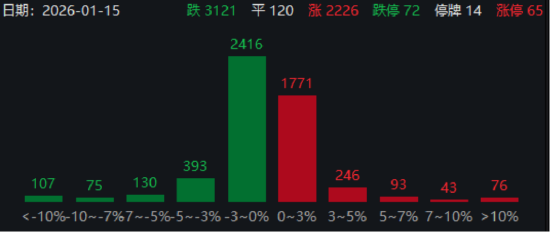
Market Overview - Major stock indices showed mixed performance, with the Shanghai Composite Index dropping 0.33% to 4112.6 points, while the Shenzhen Component Index rose 0.41% and the ChiNext Index increased by 0.56% [1][11] - The total trading volume in the Shanghai and Shenzhen markets was 2.91 trillion, a decrease of 1.04 trillion from the previous trading day, with over 3100 stocks declining [1][11] Semiconductor Industry - The semiconductor equipment ETF (159516) surged by 5.32% in the afternoon session [3][13] - TSMC reported a record net profit of $16 billion for Q4, a 35% year-on-year increase, and raised its capital expenditure guidance for 2026 to $52-56 billion, significantly above market expectations [4][14] - The semiconductor industry is expected to benefit from a strong demand for AI, with capital expenditure cycles in advanced processes and storage wafers beginning to rise [5][15] - Domestic wafer fabs are rapidly expanding, leading to increased price expectations across upstream segments, with a supply-demand imbalance in storage and high-end PCB sectors [5][15] New Energy Vehicles - The new energy vehicle (NEV) sector saw significant gains, with the NEV ETF (159806) rising by 1.80% [5][16] - According to the China Association of Automobile Manufacturers, NEV production and sales reached 16.63 million and 16.49 million units respectively, marking year-on-year growth of 29% and 28.2% [6][16] - The 2026 vehicle trade-in subsidy policy is expected to boost market consumption, particularly for mid-to-high-end models [6][16] - The global NEV market continues to grow, with strong demand for lithium batteries driven by data center storage needs [7][17] Chemical Industry - The chemical sector is anticipated to recover, as the industry is currently at a cyclical low with prices at historical lows [8][18] - Policies aimed at reducing overcapacity in specific segments like PTA and organic silicon are expected to optimize supply dynamics [8][18] - The recovery in downstream industries such as automotive and textiles is likely to drive demand for chemical products [8][18] - The semiconductor and energy storage sectors are pushing demand for new chemical materials, with ongoing domestic substitution processes [8][18]

中国股票策略・“慢牛” 指南:背景、动因、挑战与展望-China Equity Strategy _Guide to the ‘slow bull‘ (part 1)_ Background, reasons, challenges and outlook
2026-01-15 06:33
Summary of Key Points from the Conference Call Industry Overview - The focus is on the **A-share market in China**, which has been underperforming compared to global indices since 2010, with a widening gap since 2020. The A-share market's long-term trend does not align with China's economic growth, indicating structural challenges within the capital markets [2][10][11]. Core Insights and Arguments 1. **Structural Challenges**: - The A-share market has historically been financing-oriented, neglecting investor returns. State-Owned Enterprises (SOEs) dominate the market but trade at a significant valuation discount compared to non-SOEs. Additionally, equities represent a small portion of household wealth, leading to an elevated equity risk premium [2][13][20]. 2. **Need for a 'Slow Bull' Market**: - A 'slow bull' market is deemed essential for transitioning the stock market into a primary wealth reservoir, potentially replacing the property market. This shift could support the 'common prosperity' initiative and enhance confidence in non-SOE sectors [3][62][70]. 3. **Reforms Underway**: - Current reforms aim to improve investor returns through increased dividend payments, share buybacks, and better information disclosures. These reforms are expected to attract long-term capital and enhance market liquidity [4][46]. 4. **Earnings Growth Projections**: - The A-share market is projected to see earnings growth accelerate from 6% YoY in 2025 to 8% in 2026, driven by supportive policies and a recovering economy. This growth is expected to be supported by a decline in the risk-free rate and increased household savings allocation into equities [5][61]. Additional Important Insights 1. **Valuation Discrepancies**: - SOEs, which make up about 45% of the A-share market cap, trade at half the price-to-earnings (PE) and price-to-book (PB) multiples of non-SOEs. This valuation gap is attributed to sector distribution, operating efficiency, and negative investor perceptions [21][22][37]. 2. **Household Asset Allocation**: - Households in China allocate only about 15% of their assets to equities, reflecting low expectations for stable returns. This is compounded by a preference for fixed income assets, which has been reinforced by high real interest rates [48][53][56]. 3. **Impact of Property Market Downturn**: - The ongoing downturn in the property market has negatively affected household wealth and confidence, leading to a higher equity risk premium in the A-share market compared to historical averages [52][64]. 4. **Government Fiscal Pressure**: - Local governments are facing fiscal pressure due to declining land sales revenue, prompting discussions on an equity-based fiscal model to generate additional revenue through state-owned capital operations [85][86]. 5. **Investor Composition**: - The state holds a significant portion of the A-share market, with estimates suggesting that state-related entities account for at least Rmb33 trillion, nearly a third of the total market cap [71][75]. Conclusion - The A-share market is at a critical juncture, with ongoing reforms and a potential shift towards a 'slow bull' market that could enhance investor confidence and align market performance with economic growth. The structural challenges, particularly regarding SOE valuations and household asset allocation, remain significant hurdles to overcome for sustainable market development [2][3][4][5][21][22].
BLCR: Imperfect Risk-Adjusted Returns And Liquidity Weigh On The Rating, A Hold
Seeking Alpha· 2026-01-15 01:20
Group 1 - Vasily Zyryanov focuses on identifying underpriced equities with strong upside potential and overappreciated companies with inflated valuations [1] - The research emphasizes the energy sector, including oil & gas supermajors, mid-cap, and small-cap exploration & production companies, as well as oilfield services firms [1] - A meticulous analysis of Free Cash Flow and Return on Capital is essential for deeper insights beyond simple profit and sales analysis [1] Group 2 - Zyryanov acknowledges that some growth stocks may deserve their premium valuations, highlighting the importance of assessing market opinions [1]

This Chemicals Company Pays a Nearly 11% Dividend Yield. Investors Are Doubtful.
Barrons· 2026-01-14 19:52
Core Viewpoint - LyondellBasell, a chemicals producer, has the highest dividend yield in the S&P 500 at 10.5%, raising concerns among investors about its sustainability [1] Company Summary - LyondellBasell is currently offering a dividend yield of 10.5%, which is the highest among all companies listed in the S&P 500 [1]

BASFY's Polyamide Materials Meet New eMobility Requirements
ZACKS· 2026-01-14 16:26
Core Insights - BASF SE is adapting its testing methods for eMobility applications to meet the increasing demands for ageing resistance in plastics, shifting from air-heat tests to hydrolysis storage to evaluate ageing in water-glycol mixtures [1][7] - The service life requirements for eMobility applications have significantly increased, with operating temperatures needing to be maintained for 45,000-55,000 hours compared to the 5,000 hours typical for conventional combustion engine components [2] - BASF's Ultramid polyamide material has shown promising results, with properties extrapolated to over 100,000 hours after five years of testing, meeting automotive performance and safety requirements [4][7] Company Performance - BASFY stock has increased by 13.9% over the past year, contrasting with a 21.2% decline in the industry [4] - BASFY currently holds a Zacks Rank of 3 (Hold), indicating a neutral outlook [6] - In comparison, other companies in the Basic Materials sector, such as Agnico Eagle Mines Limited and Kinross Gold Corporation, have higher Zacks Ranks of 1 (Strong Buy) [6][8]