Residential Real Estate

Search documents
The 10 Best Cities for First-Time Real Estate Investors
Yahoo Finance· 2025-11-20 14:55
Core Insights - Residential real estate investors have experienced strong returns this decade due to rising home values and rental rates, with average U.S. home prices increasing by 54.9% from Q1 2020 to Q1 2025 and annual rent per square foot rising over 47% since 2020 [1][2] Investment Performance - Investors in residential real estate have enjoyed annual returns of 9% or higher on top-performing properties [2] Market Analysis - Florida has emerged as a leading market for first-time real estate investors, with five of the top ten cities for investment located in the state, based on factors like affordability, rental income potential, landlord-friendly laws, and returns on investment [4][5] Top Investment Cities - The analysis identified the following cities as the best for first-time investors: - Port St. Lucie, Florida - Cape Coral, Florida - Cleveland, Ohio - Garland, Texas - Miami, Florida - Jacksonville, Florida - St. Petersburg, Florida - Columbus, Ohio [5][6][7][8][10][11][12][13][14] Financial Metrics - Key financial metrics for selected cities include: - Port St. Lucie: Average monthly rent $2,600, Median sale price $376,567, Gross rental yield 8.3% - Cape Coral: Average monthly rent $2,290, Median sale price $322,633, Gross rental yield 8.5% - Cleveland: Average monthly rent $1,200, Median sale price $100,333, Gross rental yield 14.4% - Garland: Average monthly rent $2,000, Median sale price $297,367, Gross rental yield 8.1% - Miami: Average monthly rent $3,000, Median sale price $508,167, Gross rental yield 6.1% - Jacksonville: Average monthly rent $1,600, Median sale price $270,167, Gross rental yield 7.1% - St. Petersburg: Average monthly rent $2,200, Median sale price $377,167, Gross rental yield 7.0% - Columbus: Average monthly rent $1,500, Median sale price $238,167, Gross rental yield 7.6% [9][14]
4楼、10楼不能买?真正不能买的是这5个楼层,白送都不能要!
Sou Hu Cai Jing· 2025-11-20 13:36
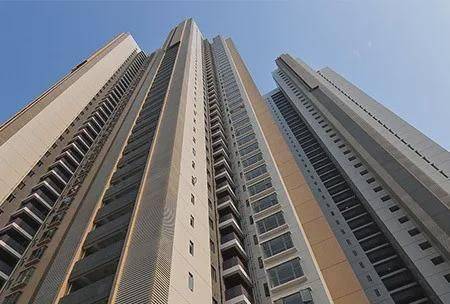
Core Viewpoint - The article emphasizes that the choice of floor in a residential building significantly impacts living experience, and it highlights specific "hard-to-avoid" floors that should be avoided when purchasing a property [1][22]. Group 1: Floors to Avoid - Floors adjacent to electrical rooms can be noisy due to constant electrical hum and vibrations, leading to discomfort and difficulty in reselling the property [3][4][6]. - Floors facing high-level platforms may seem attractive but can suffer from noise disturbances from public use and safety concerns due to low railings [8][10]. - Floors near garbage collection points can experience unpleasant odors and noise, especially during peak garbage collection times, which can degrade the living environment [12][14]. - Floors above or below equipment rooms may face vibrations and noise from elevators and HVAC systems, making it challenging to maintain a peaceful living space [16][18]. - Ground floors in low-lying areas are prone to flooding during heavy rains and can have issues with humidity and pests, making them less desirable [20][22].


A $1 Million Home Is No Longer The Pinnacle of Housing — Luxury Properties Are Now 60% More Expensive Than A Decade Ago
Yahoo Finance· 2025-11-19 14:46
Core Insights - The definition of luxury homes has shifted significantly, with the threshold for entry-level luxury now just under $1.3 million, compared to around $1 million in 2016 [2][3][4] - The increase in luxury home prices is attributed to pandemic-era savings, low mortgage rates, and changing location preferences, resulting in a 60% rise in the entry-level luxury threshold from approximately $796,922 in 2016 to $1.3 million [4][5] - A $1 million home now only qualifies for the top 13% of listings nationally, whereas it was previously just outside the top 5% [3][4] Market Dynamics - The luxury home market is increasingly out of reach for upper-middle-income buyers, with many areas now requiring multi-million dollar investments for entry-level luxury homes [5] - In high-demand areas like Los Angeles and Santa Rosa, the entry-level luxury threshold starts at nearly $4 million and around $3.5 million, respectively [5] - The current entry luxury tier starts at about 2.9 times the median home listing price, while high-end luxury begins at 4.6 times, and ultra-luxury at 12.6 times the median [6]
Home for the Holidays: Half of Americans Factor Thanksgiving Hosting into Their Home Search
Prnewswire· 2025-11-19 11:00
Core Insights - A recent Realtor.com survey indicates that over half (52%) of U.S. adults consider hosting Thanksgiving dinner as a factor in their home search [1] - Younger generations, particularly Gen Z and Millennials, are more focused on hosting space, with 60% of each group stating that Thanksgiving entertaining influenced their housing decisions [2] Home Features Preferences - Ample space is the top motivator for Americans when considering hosting guests, with 92% prioritizing a large family room and 92% also valuing a big kitchen [3][4] - Specialty features like double ovens are less important, with only 12% labeling them as a "must-have" [3] Bedroom vs. Bathroom Preferences - Americans are divided on whether they prefer an extra bedroom or an extra bathroom, with 44% favoring a spare bedroom and 45% preferring an additional bathroom [5] - Gen Z shows a preference for bathrooms (48%) over bedrooms (39%) [5] Bathroom Needs Based on Household Size - The ideal number of bathrooms increases with household size, with one- and two-person households preferring two bathrooms, while households with three or more people agree that three bathrooms are ideal [6] Survey Methodology - The survey was conducted with a sample of 1,000 American adults aged 18 to 65 from October 17-19, 2025, without post-stratification applied to the results [7]


50 Cities With the Highest Mortgage Balances in 2025 — 23 Are in California
Yahoo Finance· 2025-11-16 22:42
Core Insights - The average mortgage is significantly increasing, with 67 cities now having an average mortgage of $1 million or more, up from 47 in 2024 and 23 in 2023 [1] - California is the dominant state in this trend, accounting for almost half of the top 50 cities with the highest mortgage balances, while Florida also features prominently [1][2] Summary by Category Mortgage Trends - The average mortgage balance in the top cities is notably high, with specific examples including Golden Oak, Florida, with an average mortgage balance of $3,627,594 [4] - The increase in high mortgage balances reflects broader economic trends affecting housing affordability across the U.S. [1] Geographic Distribution - The top cities with the highest mortgage balances are concentrated in California and Florida, with California cities like Montecito and Atherton appearing frequently in the rankings [3][5] - Florida also has several high-ranking locations, including Gulf Stream and Golden Beach, indicating a regional trend in high mortgage balances [3][5] Specific Data Points - Average mortgage balances in various cities include: - Golden Oak, Florida: $3,627,594 - Gulf Stream, Florida: $3,206,007 - Montecito, California: $2,969,951 - Hidden Hills, California: $2,620,156 [4][6] - The average home values in these areas are also substantial, with some exceeding $7 million [4][6]
中国经济活动与政策追踪_11 月 14 日-China Economic Activity and Policy Tracker_ November 14
2025-11-16 15:36
Summary of Key Points from the Conference Call Industry Overview - The report focuses on the **China Economic Activity** and provides insights into various sectors including **real estate**, **automotive**, and **energy** markets, as well as **macroeconomic policies**. Key Insights and Arguments 1. Consumption and Mobility - **Property Transactions**: The daily property transaction volume in the primary market across 30 cities is significantly below last year's levels [3][8] - **Traffic Congestion**: Traffic congestion remains slightly below last year's levels, indicating a potential slowdown in mobility [9] - **Consumer Confidence**: Consumer confidence showed a slight increase in September, suggesting a potential rebound in consumer sentiment [13] 2. Production and Investment - **Steel Demand**: Demand for flat steel has declined and is roughly in line with levels from a year ago, while long steel demand has decreased and is below last year's levels [21][26] - **Auto Sales**: Total auto sales volume edged up in October, remaining slightly above the 2024 level, indicating resilience in the automotive sector [24] - **Local Government Bonds**: RMB 4.1 trillion of local government special bonds have been issued out of a total quota of RMB 4.4 trillion for 2025, representing 94.3% of the annual quota [31][33] - **Coal Consumption**: Daily coal consumption in coastal provinces is below last year's levels, reflecting a potential decrease in energy demand [35] 3. Other Macro Activity - **Port Activity**: Official port container throughput increased over the past two weeks and remains above year-ago levels, indicating a positive trend in trade activity [37] 4. Markets and Policy - **Interbank Repo Rates**: Interbank repo rates have edged lower in recent weeks, suggesting easing liquidity conditions [43] - **Freight Volume**: Freight volume of departing ships at 20 major ports has declined and is below last year's levels, indicating potential challenges in logistics [45] - **Currency Movements**: The Chinese Yuan (CNY) has appreciated against both the CFETS basket and the USD, reflecting strengthening currency dynamics [48] - **Policy Announcements**: Several macro policy announcements have been made since August, including measures to promote private investment and the suspension of retaliatory tariffs on US agricultural products [50] Additional Important Information - **New Energy Vehicles (NEVs)**: Sales volume for NEVs decreased in October but remained above the 2024 level, indicating ongoing interest in electric vehicles despite short-term fluctuations [17] - **Rental Yield**: Rental yield in large cities has gradually improved, while the yield on 30-year Chinese government bonds has also ticked up, suggesting a potential shift in investment preferences [20] This summary encapsulates the critical insights from the conference call, highlighting trends in consumption, production, and macroeconomic policies that could impact investment decisions in the Chinese market.
买房时请牢记7字真言:买中、买边、不买三,很难买到差房子
Sou Hu Cai Jing· 2025-11-14 05:38
Core Insights - The real estate market is undergoing a significant adjustment in 2023, yet the demand from first-time homebuyers remains strong due to fundamental needs such as settling down, marriage, and children's education [1] Group 1: Home Buying Strategies - The article emphasizes the importance of location, community environment, floor level, and layout design in selecting a home [1] - A seasoned industry expert provides a "seven-character mantra" for first-time homebuyers: "Buy middle, buy edge, do not buy three" [1] - "Buy middle" refers to choosing mid-level floors in a building, which balances comfort and convenience, avoiding the noise and dust of lower floors and the inconvenience of high floors [1] - "Buy edge" suggests opting for corner units over middle units, as corner units typically offer better privacy and larger living space [3] - "Do not buy three" advises against purchasing three types of properties: old downtown apartments, remote suburban homes, and high-risk pre-sale properties [3] Group 2: Risks of Certain Property Types - Old downtown apartments, often sought after for potential redevelopment, are becoming less attractive due to diminishing demolition opportunities and poor living conditions [5] - Suburban homes, while cheaper, face issues such as inadequate amenities and transportation, making them vulnerable to market fluctuations [7] - The risks associated with purchasing pre-sale properties are increasing, as developers face financial pressures that could lead to project failures and significant losses for buyers [8]

上海新房房价环比上涨!
Zheng Quan Ri Bao Wang· 2025-11-14 02:03
Core Insights - In October 2025, the sales prices of commercial residential properties in 70 large and medium-sized cities in China experienced both month-on-month and year-on-year declines [1] Price Changes Month-on-Month - In October, the sales prices of new commercial residential properties in first-tier cities decreased by 0.3%, with Shanghai increasing by 0.3% while Beijing, Guangzhou, and Shenzhen saw declines of 0.1%, 0.8%, and 0.7% respectively [2] - Second-tier cities experienced a month-on-month decline of 0.4%, consistent with the previous month, while third-tier cities saw a decline of 0.5%, which is an increase in the rate of decline by 0.1 percentage points [2] - The month-on-month sales prices of second-hand residential properties in first-tier cities fell by 0.9%, a slight narrowing of the decline by 0.1 percentage points compared to the previous month [2] Price Changes Year-on-Year - Year-on-year, the sales prices of new commercial residential properties in first-tier cities dropped by 0.8%, with the decline rate increasing by 0.1 percentage points compared to the previous month [3] - Shanghai saw a year-on-year increase of 5.7%, while Beijing, Guangzhou, and Shenzhen experienced declines of 2.0%, 4.2%, and 2.6% respectively [3] - Second-tier cities recorded a year-on-year decline of 2.0%, with the decline rate narrowing by 0.1 percentage points, while third-tier cities saw a decline of 3.4%, consistent with the previous month [3] - The year-on-year sales prices of second-hand residential properties in first-tier cities decreased by 4.4%, with the decline rate increasing by 1.2 percentage points compared to the previous month [3]
When Rent Costs Soar, Is Buying Your Next Best Option?
Yahoo Finance· 2025-11-13 02:10
Core Insights - The decision to buy or rent a home is influenced by various factors, including the length of time one plans to stay in the home, interest rates, and overall costs associated with homeownership versus renting [1][5][19] Price-to-Rent Ratio - The median price-to-rent ratio in the U.S. was approximately 14.3 in 2024, indicating a threshold for evaluating the financial sense of buying versus renting [1] - A price-to-rent ratio of about 14 suggests that renting at $2,000 per month is more financially viable unless a comparable home is priced around $335,000 [2][4] Financial Calculations - For a home priced over $480,000, renting at $2,000 per month may be more advantageous, especially considering additional costs of homeownership [3] - The breakeven point for buying a $325,000 home with a 6.50% mortgage is about 14 years, assuming a 20% down payment and a rental price of $2,000 monthly [7] Rent and Home Prices - Average rent across all home types in the U.S. was $2,000 per month as of November 2025, while the median home price was $440,387 in October 2025 [8] - Renting allows for savings that can be invested, potentially leading to significant returns over time, with projections showing over $193,000 after 10 years of investment [11] Lifestyle Considerations - The decision to rent or buy is not solely based on financial calculations; lifestyle factors such as job stability, maintenance responsibilities, and personal preferences play a crucial role [13][14] - Renting offers flexibility for those who may need to relocate, while buying is better suited for individuals seeking stability and the ability to customize their living space [14] Strategies for Affordability - For individuals feeling priced out of both renting and buying, options include shared housing, relocating to less expensive areas, and negotiating salaries [16][18] - Sharing a two-bedroom apartment can save nearly 43% compared to renting a one-bedroom alone, translating to significant annual savings [17] Conclusion - The choice between renting and buying is complex and influenced by various financial and lifestyle factors, with creative strategies available to manage housing costs and enhance savings [19]
买房避开这层,开发商要不是怕亏都想送出去,买才知有多坑!
Sou Hu Cai Jing· 2025-11-12 13:35
Group 1 - The article emphasizes the importance of careful consideration when purchasing a home, particularly regarding the choice of floor level, as lower-priced options may hide significant drawbacks [1][4][7] - Residents on the ground floor often face noise disturbances from street traffic, which can severely affect their quality of sleep [3] - Ground floor units may also incur unexpected costs, such as shared elevator maintenance fees, which can accumulate over time [4] Group 2 - Living on the ground floor can lead to issues with pests, particularly mosquitoes, especially during the summer months, which can detract from the living experience [5] - In humid regions, ground floor apartments may suffer from dampness and poor lighting, leading to health concerns and discomfort for residents [5] - The article advises potential buyers to avoid blindly pursuing lower prices and to conduct thorough research before making a purchase decision [7]