Refining

Search documents
Pemex’s Dos Bocas Turns Into Mexico’s Refinery Nightmare
Yahoo Finance· 2025-10-04 23:00
Core Insights - The Dos Bocas refinery, intended to enhance Mexico's energy independence, has faced significant operational challenges, including power supply instability and logistical issues, undermining its production capacity and increasing reliance on fuel imports [4][12]. Group 1: Operational Challenges - The refinery has never achieved its intended gasoline output capacity of 170,000 barrels per day (b/d), with peak production reaching just under 79,000 b/d in June 2025, and dropping to 41,000 b/d in August 2025 [2][4]. - Repeated interruptions have plagued operations, including a three-month shutdown in late 2024 due to crude quality issues and a malfunction in April 2025 that caused a cascade of equipment failures [2][4]. - Heavy rains in August 2025 led to power outages that disabled a key gasoline unit for several weeks, forcing Pemex to divert crude to its Deer Park refinery in Texas [2][4]. Group 2: Infrastructure and Logistics - The refinery is not connected to the national pipeline network, relying on trucking and coastal shipping, which complicates logistics and increases operational costs [8]. - Plans for a rail link to enhance connectivity have not progressed, with initial completion set for 2026 but construction yet to begin [8]. - The refinery has only recently entered international markets, sending a 300,000-barrel cargo of diesel to the US and Puerto Rico in March 2025 [8]. Group 3: Economic and Market Context - Mexico's fuel import data indicates an increase in reliance on foreign gasoline, with imports surging to 388,000 b/d in September 2025, contrary to the refinery's intended purpose [7]. - Pemex's crude production has declined from 2.25 million b/d in August 2015 to 1.37 million b/d by August 2025, limiting the availability of feedstock for domestic refining [10]. - Pemex remains the world's most indebted oil company, with obligations nearing $101 billion, and the refinery's operational setbacks risk exacerbating its financial fragility [11][12].
Chevron to make adjustments to Los Angeles refinery following large fire
Reuters· 2025-10-04 19:23
Core Viewpoint - Chevron is making operational adjustments to its El Segundo refinery to address fuel demands in Southern California following a significant fire incident [1] Company Summary - Chevron's El Segundo refinery has a capacity of 285,000 barrels per day [1] - The adjustments are a direct response to the fire that occurred on Thursday, indicating a proactive approach to maintain fuel supply [1] Industry Summary - The incident highlights the vulnerability of refinery operations to unforeseen events, which can impact fuel supply in regional markets [1] - Operational changes in response to such incidents are critical for ensuring that fuel demands are met in affected areas [1]


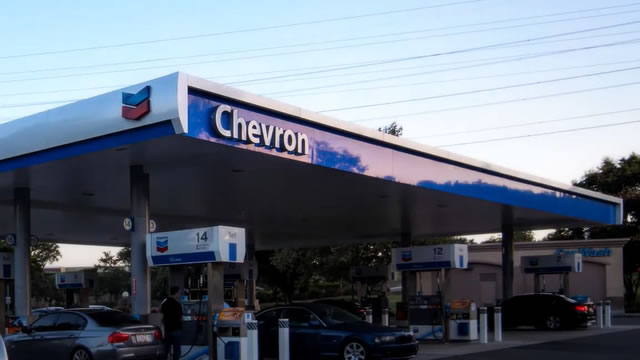
US Government Shutdown Deepens Amid Senate Impasse; Chevron Refinery Fire Contained, 3M Eyes Industrials Carve-Out
Stock Market News· 2025-10-03 19:08
Government and Economic Impact - The U.S. government shutdown is set to extend into next week after the Senate failed to advance both Democratic and Republican funding bills, leaving approximately 750,000 federal workers furloughed [2][9] - The ongoing shutdown marks the third under President Trump's administration, stemming from a deadlock over healthcare provisions and spending cuts [2] Energy Sector - A significant fire at Chevron's El Segundo Refinery (CVX) in California has been contained, but analysts predict a potential 35 to 95 cent per gallon increase in California gasoline prices due to concerns over regional fuel supply [3][9] - The El Segundo refinery processes around 300,000 barrels of crude oil per day and is critical for supplying Southern California's motor vehicle and jet fuels [3] Corporate Developments - 3M (MMM) is reportedly exploring a multibillion-dollar carve-out of its industrials arm, indicating a strategic review within the company [5][9] - Meta (META) and Pembina Pipeline Corp. are nearing an agreement to develop a massive AI data center in Alberta, Canada, supporting Alberta's goal to attract $100 billion in AI data center infrastructure over the next five years [5][9] International Affairs - The International Atomic Energy Agency (IAEA) is engaged in discussions with Russia and Ukraine to restore off-site power to the Zaporizhzhia Nuclear Power Plant (ZNPP), which has been relying on emergency generators for over a week [4][9]




Fire Shuts Chevron Refinery Units Near LA as Fuel Crunch Looms
MINT· 2025-10-03 18:20
Core Insights - Chevron Corp.'s El Segundo refinery in Los Angeles County has shut multiple units due to a fire, raising concerns about fuel supply shortages in California [1][6] - The fire originated from a process unit and has been contained, with no reported injuries [2][4] - The refinery is a significant supplier, providing 20% of motor vehicle fuels and 40% of jet fuel in Southern California [7] Summary by Sections Fire Incident - A fire broke out at the El Segundo refinery, leading to the shutdown of several units, including a 60,000 barrel-a-day catalytic reformer and a 45,000 barrel-a-day hydrocracker [3] - The fire started in the convection section of a furnace within the Hydrocracker/ISOMAX complex, which produces distillates like diesel and jet fuel [3] Impact on Operations - The entire hydrocracker section will likely be shut down for assessment and repair, affecting crude processing rates [4] - Chevron confirmed that there were no evacuations for nearby residents and emissions remained within permitted levels [4] Broader Industry Context - The incident occurs amid a wave of refinery closures in California, tightening the fuel market and prompting state officials to seek solutions to supply issues [6] - Phillips 66 announced its Los Angeles plant will cease operations by the end of the year, further straining local fuel availability [5]


The Top-Performing Energy Stocks Of Q3 2025
Forbes· 2025-10-02 17:35
Core Insights - The S&P 500 advanced 7.8% in Q3 2025, driven by moderating inflation and rising expectations for Federal Reserve rate cuts [4] - The energy sector outperformed with a 6.2% gain, supported by resilient demand for oil and gas, record U.S. LNG exports, and strong downstream margins [6][16] - Upstream oil and gas producers saw an average gain of 5.8%, with APA Corporation leading at 34.6% due to strong production volumes [8] - Midstream companies gained 8.2%, with tankers like Scorpio Tankers and KNOT Offshore Partners achieving gains over 40% [10] - The refining sector excelled with an average return of 19.8%, led by Valero Energy's 27.7% gain [11] - Integrated supermajors averaged a 6.6% gain, with BP performing best at 16.8% [13] Sector Performance - The rotation towards cyclical and commodity-linked stocks intensified as investors sought real asset exposure amid geopolitical risks [5] - Energy sector returns were broad-based, with refiners standing out as clear leaders despite fluctuating oil prices [6][9] - Midstream operators benefited from steady transport volumes and record U.S. LNG exports, enhancing cash flows [10] - The refining sector capitalized on resilient fuel demand and international product flows, marking one of its best quarters in recent years [12] Future Outlook - Global oil demand is projected to reach a record 103.7 million barrels per day in 2025, with natural gas gaining market share [15] - The energy sector is expected to remain a defensive anchor in income and growth portfolios, despite capex discipline and regulatory uncertainties [16] - Investors should anticipate continued volatility but recognize energy's compelling combination of yield, cash generation, and structural demand resilience heading into 2026 [17]


Phillips 66 provides update on Los Angeles Refinery operations
Businesswire· 2025-10-01 16:30
Core Viewpoint - Phillips 66 is progressing towards idling operations at its Los Angeles refinery [1] Company Summary - The company has provided an update regarding its Los Angeles refinery operations [1]

Best Income Stocks to Buy for September 29th
ZACKS· 2025-09-29 14:01
Group 1: CION Investment Corporation - CION Investment Corporation is a business development company that primarily provides senior secured loans to U.S. middle-market companies [1] - The Zacks Consensus Estimate for its current year earnings has increased by 2.2% over the last 60 days [1] - The company has a Zacks Rank of 1 (Strong Buy) and offers a dividend yield of 14.9%, which is higher than the industry average of 11.2% [1] Group 2: GRUPO CIBEST SA - GRUPO CIBEST SA is Colombia's largest bank in terms of assets and has the largest market participation in deposit products and loans [2] - The Zacks Consensus Estimate for its current year earnings has increased by 7% over the last 60 days [2] - The company has a Zacks Rank of 1 (Strong Buy) and offers a dividend yield of 11%, significantly above the industry average of 3.1% [2] Group 3: Phillips 66 - Phillips 66 is a diversified and integrated energy company operating 13 refineries in the United States, with a total refining capacity of 2.2 million barrels per day [3] - The Zacks Consensus Estimate for its current year earnings has increased by 12.9% over the last 60 days [3] - The company has a Zacks Rank of 1 (Strong Buy) and offers a dividend yield of 3.4%, which is higher than the industry average of 2.8% [3]

X @Bloomberg
Bloomberg· 2025-09-28 08:02
Operational Risk - Dangote Industries seeks Nigerian authorities' intervention to prevent petroleum workers union dispute from disrupting refinery operations [1] - Potential disruption could impact supplies to residents [1]
Trade Tracker: Josh Brown buys Phillips 66
Youtube· 2025-09-25 18:40
Core Viewpoint - Philip 66 (PSX) is seen as a potential investment opportunity despite its current underperformance compared to peers like Marathon and Valero, with expectations of a breakout in stock price driven by insider buying and activist involvement [1][4][10]. Company Insights - Philip 66 is one of the three largest companies in the refining sector but has not yet experienced a breakout like its competitors [2]. - Recent insider buying, including a $1 million purchase by a board director, indicates confidence in the company's future [4]. - Activist investor Elliott Management has taken two board seats and believes Philip 66 should be valued at $200 per share, suggesting a significant upside potential [4][10]. Market Position and Strategy - The company has been diversifying into chemicals and LNG, moving away from its traditional refining focus, which has created ideological tension with Elliott Management [9][10]. - A recent acquisition of the remaining 50% stake in WRB refining suggests a potential shift back towards a focus on downstream operations, aligning with Elliott's vision [10]. Performance Metrics - The stock is currently trading below its 200-day moving average, with a suggested risk management level at $120, which is also where the stock bottomed in August [5]. - The company offers a 3.5% dividend yield, providing some income while investors wait for potential price appreciation [10].