Aerospace Manufacturing

Search documents
Boeing Defense Workers Just Went on Strike. Should Investors Be Concerned?
The Motley Fool· 2025-08-07 01:00
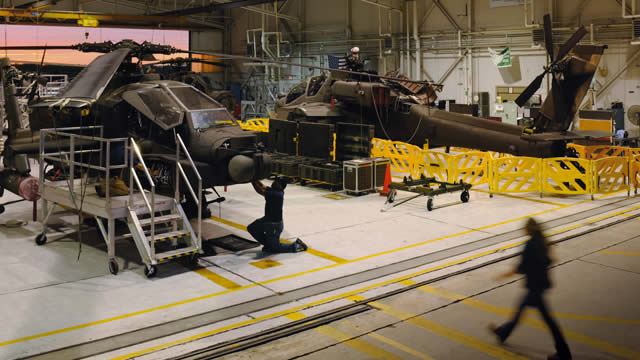
Core Viewpoint - Boeing's defense business is becoming increasingly vital as the company faces challenges in commercial airplane production, highlighted by a recent strike involving over 3,200 workers at its St. Louis defense factories [1][3]. Group 1: Importance of Defense Business - The IAM Union members are crucial in building and maintaining military aircraft and defense systems, such as the F-15EX and MQ-25 Stingray [2]. - Historically, commercial airplane sales have been the primary revenue source for Boeing, but recent quality control issues and production setbacks have shifted the revenue mix, making the defense, space, and security (BDS) division the largest contributor in 2024 [5][6]. - The BDS division's revenue has increased significantly since 2017, with total revenue in 2024 projected at $66.5 billion, of which BDS is expected to contribute $20 billion [7][8]. Group 2: Recent Developments and Financial Performance - Boeing's stock has risen 25% this year, indicating investor confidence in the company's turnaround plan, although a prolonged strike could hinder recovery efforts [3]. - In Q2 2025, the BDS division generated $6.6 billion, accounting for nearly 30% of Boeing's overall quarterly revenue, while commercial airplane sales made up 48% [8]. - Boeing has secured significant contracts, including a $2.8 billion deal with the U.S. Space Force for satellite development and a contract to build the next-generation F-47 fighter jet [10][11]. Group 3: Historical Context and Current Position - A previous strike in September 2022 cost Boeing an estimated $5.5 billion in lost earnings, but the company is now in a stronger position with a healthier balance sheet and expectations of positive free cash flow by Q4 2023 [12][14]. - The company has ramped up commercial airplane production, with deliveries increasing by 63% in Q2 compared to the previous year, and commercial revenue comprising 45% of total first-half revenue [14][15]. - The CEO expressed confidence in managing the current strike's impact, suggesting that the scale of this disruption is significantly less than previous strikes [15].


Spirit AeroSystems Reports Second Quarter 2025 Results
Prnewswire· 2025-08-05 20:15
Financial Performance - Spirit AeroSystems reported second quarter 2025 revenue of $1.635 billion, a 10% increase from $1.492 billion in the same period of 2024 [23] - The operating loss for the second quarter of 2025 was $481 million, compared to a loss of $331 million in the same period of 2024, representing a 45% increase in losses [23] - The net loss for the second quarter of 2025 was $631 million, a 52% increase from $415 million in the second quarter of 2024 [23] Earnings and Cash Flow - The second quarter 2025 EPS was $(5.36), compared to $(3.56) in the same period of 2024, indicating a 51% decline [6][23] - Cash used in operations improved to $144 million in the second quarter of 2025 from $566 million in the same period of 2024, a 75% improvement [23] - Free cash flow usage decreased to $190 million in the second quarter of 2025 from $597 million in the same period of 2024, a 68% improvement [23] Backlog and Deliveries - Spirit's backlog at the end of the second quarter of 2025 was approximately $51 billion, encompassing work packages on all commercial platforms in the Airbus and Boeing backlog [3] - Total deliveries in the second quarter of 2025 increased significantly, with Boeing 737 deliveries rising to 113 from 27 year-over-year [24] Segment Performance - The Commercial segment revenue increased to $1.266 billion in the second quarter of 2025, up 8.6% from $1.166 billion in the same period of 2024 [23] - The Defense & Space segment revenue rose to $266 million, an 18.5% increase from $224 million in the second quarter of 2024 [23] - The Aftermarket segment revenue increased slightly to $102.8 million, up 1.7% from $101.1 million in the same period of 2024 [23] Strategic Developments - The company entered into a merger agreement with Boeing, expected to close in the fourth quarter of 2025, subject to regulatory approvals and other conditions [10] - Spirit has received a request for additional information from the Federal Trade Commission as part of the regulatory review process for the merger [10] Recent Legislation Impact - The One Big Beautiful Bill Act (OBBBA) signed into law on July 4, 2025, includes business tax reform provisions, but is not expected to have a material impact on Spirit's financial statements or cash taxes in 2025 [12]



TransDigm(TDG) - 2025 Q3 - Earnings Call Transcript
2025-08-05 16:00
Financial Data and Key Metrics Changes - The company reported an EBITDA margin of 54.4% for Q3, supported by growth in the commercial aftermarket and effective operating strategies [11] - Operating cash flow for Q3 exceeded $630 million, with a cash balance of nearly $2.8 billion at the end of the quarter [11] - Full fiscal year 2025 sales guidance was decreased by $60 million to a midpoint of $8.79 billion, while EBITDA guidance was increased by $40 million to a midpoint of $4.725 billion, reflecting a 13% increase year-over-year [12][14] Business Line Data and Key Metrics Changes - Commercial OEM revenues decreased by 7% year-over-year in Q3, attributed to lower production rates at Boeing and Airbus [22][23] - Commercial aftermarket revenue increased by approximately 6% compared to the prior year, with growth across all submarkets [25] - Defense market revenue grew by approximately 13% year-over-year, with healthy bookings supporting continued growth expectations [27][28] Market Data and Key Metrics Changes - The commercial OEM market is expected to see revenue growth in the flat to low single-digit percentage range, a decrease from previous expectations [14] - The commercial aftermarket and defense markets are projected to grow in the high single-digit to low double-digit percentage range, with no changes to previous guidance [14] Company Strategy and Development Direction - The company aims to provide private equity-like returns with public market liquidity, focusing on proprietary aerospace businesses with significant aftermarket content [6][7] - Recent acquisitions, including Servotronics and Simmons Precision, align with the company's strategy to enhance its portfolio and drive growth [18][19] - The company maintains a disciplined approach to capital allocation, prioritizing reinvestment in businesses, accretive M&A, and returning capital to shareholders [20] Management's Comments on Operating Environment and Future Outlook - Management expressed confidence in the recovery of the commercial OEM market, despite current challenges, and expects a return to positive growth in Q4 [58] - The company remains vigilant regarding supply chain improvements, noting that while challenges persist, conditions are better than in previous years [71] - Management anticipates continued growth in the commercial aftermarket, supported by stable airline demand and operational excellence [15][25] Other Important Information - The company announced key leadership changes, with Mike Lisman set to become CEO following Kevin Stein's retirement [4][5][34] - The company is actively monitoring credit markets and assessing opportunities for leverage to support future acquisitions and shareholder returns [20][36] Q&A Session Summary Question: About the aftermarket performance and future growth - Management indicated that the commercial aftermarket growth aligns with expectations, and they feel confident about achieving the guidance for the year [42][44] Question: Visibility into fourth quarter growth rates - Management noted that they expect a significant acceleration in aftermarket growth in Q4, driven by improved production rates and easier comparisons [56][58] Question: Supply chain improvements and potential headwinds - Management reported ongoing improvements in the supply chain, though some bottlenecks remain, and they are hopeful for a quick resolution to any disruptions [71][72] Question: Defense business bookings and growth - Defense bookings were strong, with growth evenly distributed across operating units, supporting positive outlooks for the upcoming fiscal year [88][90] Question: Competitive landscape and second sourcing - Management stated that there have been no significant changes in the competitive landscape regarding second sourcing or PMA competition [96][97]

Boeing Defense Workers Begin Striking For First Time Since 1996 After Rejecting Contract Offer
Forbes· 2025-08-04 07:40
Core Points - Boeing's St. Louis defense factories faced a strike initiated by approximately 3,200 workers after rejecting a contract offer that included a 20% wage increase [1][2] - The strike marks the first walkout at Boeing's St. Louis defense hub since 1996, highlighting significant labor unrest within the company [1][4] - The union representing the workers, the International Association of Machinists and Aerospace Workers, indicated that the previous contract proposal did not adequately address the workforce's priorities and sacrifices [2][3] Company Background - The last strike at Boeing's St. Louis facilities occurred in 1996, involving over 6,000 workers and lasting 99 days [4] - Boeing experienced a larger machinist strike in 2022, with around 33,000 workers in Washington factories walking off the job for 53 days, resulting in a contract that secured a 38% raise over four years [4] Current Challenges - Boeing is currently under regulatory pressure due to safety concerns, particularly following an incident involving a 737 MAX 9 aircraft [5] - The company reported $22.7 billion in earnings for the second quarter of 2025, marking its highest earnings since 2019, and delivered 150 commercial airplanes, a significant increase from 92 in the same period of 2024 [6] - Boeing's losses for the quarter were halved to $612 million compared to $1.2 billion in the same quarter the previous year, indicating a notable improvement in financial performance [6]
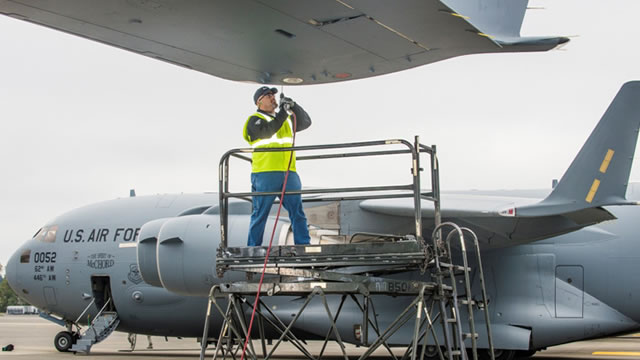
Thousands of Boeing workers who make the F-15 and F/A-18 fighter jets are about to go on strike
Business Insider· 2025-08-04 03:35
Core Points - Approximately 3,200 workers at Boeing facilities in Missouri and Illinois are set to strike due to a contract dispute, involving plants that manufacture military aircraft and missile technologies [1][2] - The International Association of Machinists and Aerospace Workers union has stated that the strike follows the failure to reach a four-year contract agreement before the previous terms expired [2] - Boeing has expressed disappointment over the union's rejection of an offer that included an average wage growth of 40% and addressed alternative work schedules [3] Company Operations - Boeing's St. Louis facility is a key site for military aircraft manufacturing and is expected to play a significant role in the production of the new sixth-generation F-47 fighter [2] - The company has prepared contingency plans to maintain operations with non-union staff during the strike [3] Industry Context - The current strike is smaller in scale compared to a previous strike involving 30,000 machinists in the northwestern US, which lasted seven weeks [7] - Boeing's CEO has downplayed the potential impact of the strike, indicating that it is "much, much less" significant than last year's strike [7][8] - The strike adds to Boeing's challenges as the company works to improve its reputation following past incidents involving the 737 Max and other aircraft [8][9]

Boeing St. Louis defense workers set to strike after rejecting latest offer
New York Post· 2025-08-03 22:56
Core Points - Union members at Boeing's St. Louis facility rejected the latest contract offer and will strike starting midnight on Monday [1] - Boeing is prepared for the strike and has implemented a contingency plan [2] - The original contract proposal from Boeing included a 20% wage increase over four years and a $5,000 ratification bonus, which the union deemed insufficient [4] - A new contract offer was sent to the union with minor compensation changes benefiting senior members, while maintaining current overtime policies [5] - Boeing's defense division is expanding manufacturing facilities in St. Louis for the new F-47A fighter jet, following a recent contract win [6][7] - The upcoming strike involves 3,200 employees, significantly smaller than the previous strike involving 33,000 machinists last fall [6]
Boeing Defense Workers Set To Strike For First Time Since 1996 After Rejecting Contract Offer
Forbes· 2025-08-03 18:45
Core Points - Boeing's defense factories in St. Louis are facing a strike as approximately 3,200 workers rejected a contract offer, marking the first strike at this location since 1996 [1][2] - The rejected contract included a proposed wage increase of 20%, which was deemed insufficient by the International Association of Machinists and Aerospace Workers (IAM) [2][3] - The workers involved are responsible for assembling critical missile systems and aircraft, including the F-15 and F/A-18 [3] Summary by Sections Contract Rejection - The union representing the workers voted against Boeing's contract offer, which would have raised wages by 20% [2] - This rejection follows a previous overwhelming rejection of a contract offer on July 27, indicating ongoing dissatisfaction with Boeing's proposals [3] Strike Details - The strike is set to commence at midnight, just seven days after the expiration of the previous contract [2] - This event highlights significant labor unrest at Boeing's St. Louis defense hub, a critical site for the company's defense operations [1] Workforce Impact - The impacted workforce is crucial for the assembly of key military aircraft and missile systems, emphasizing the strategic importance of the workers' roles [3]

Howmet (HWM) Q2 Revenue Jumps 9%
The Motley Fool· 2025-08-02 00:11
Core Viewpoint - Howmet Aerospace reported strong second-quarter 2025 earnings, exceeding consensus estimates for both non-GAAP EPS and GAAP revenue, driven by aerospace growth and operational efficiency [1][5][12] Financial Performance - Non-GAAP EPS for Q2 2025 was $0.91, beating the estimate of $0.87, and up 35.8% from $0.67 in Q2 2024 [2] - GAAP revenue reached $2.05 billion, surpassing the estimate of $2.007 billion and reflecting a 9.0% increase from $1.88 billion in Q2 2024 [2] - Adjusted EBITDA was $589 million, a 21.9% increase from $483 million in Q2 2024 [2] - Free cash flow for the quarter was $344 million [2] - Adjusted operating income margin improved to 25.3%, up 3.3 percentage points from 22.0% in Q2 2024 [2] Business Model and Strategic Focus - Howmet Aerospace specializes in manufacturing engineered parts for aerospace and transportation, including turbine airfoils and fasteners [3] - The company focuses on advanced, fuel-efficient components to meet rising demand in air travel and defense modernization, supported by technology investments and strong OEM relationships [4] Segment Performance - Aerospace segments were the primary growth drivers, with commercial aerospace revenue increasing by 8% and defense aerospace revenue rising by 21% [5][6] - Industrial markets, particularly demand for industrial gas turbines, grew by 17% [6] - Engine Products segment revenue increased by 13%, while Fastening Systems grew by 9% [7] - Forged Wheels revenue declined by 1%, reflecting ongoing softness in commercial transportation [7] Operational Efficiency and Capital Investment - The company emphasized operational productivity through tighter process control and waste reduction [8] - Capital expenditures rose by approximately 60% year over year in the first half of 2025, indicating confidence in multi-year demand [9] Shareholder Returns and Financial Guidance - Howmet Aerospace returned $175 million to shareholders through share repurchases and increased the quarterly dividend by 20% to $0.12 per share for Q3 2025 [10][14] - Management raised FY2025 guidance, projecting revenue of $8.13 billion and adjusted EBITDA of $2.32 billion [12] - Adjusted EPS outlook for FY2025 increased to $3.60, and free cash flow is expected to reach $1.225 billion [12] Market Outlook and Risks - Management expressed confidence in the aerospace and defense market, citing strong aircraft order backlogs and trends in data center builds [13] - Key areas to monitor include execution of new hires, aerospace production ramps, tariff impacts, and commercial transportation weakness [13]

RBC Bearings(RBC) - 2026 Q1 - Earnings Call Transcript
2025-08-01 16:02
Financial Data and Key Metrics Changes - First quarter sales were $436 million, a 7.3% increase year over year, driven by strong performance in Aerospace and Defense (A&D) and solid industrial business performance [5][15] - Consolidated gross margin for the quarter was 44.8%, down from 45.3% in the same period last year, while adjusted diluted EPS was $2.84, up from $2.54, representing an 11.8% year-over-year growth [5][17] - Free cash flow reached a record $104.3 million, with a conversion rate of 152%, compared to $88.4 million and 144% last year [5][18] Business Line Data and Key Metrics Changes - A&D sales increased by 10.4% year over year, with commercial aerospace growing by 9.6% and defense by 11.9% [6] - The industrial segment grew by 5.5% year over year, with distribution and aftermarket up by 10% [6][7] - Industrial gross margins were 46%, while A&D margins were 42.3%, with adjusted industrial gross margins at 47.1% [15][16] Market Data and Key Metrics Changes - The backlog exceeded $1 billion for the first time, with $100 million attributed to industrial products [8] - The U.S. GDP expansion of 3% confirmed a strong industrial economy during the period [7] - Demand for products in the defense sector is expected to expand in the high single to low double digits for many quarters [10] Company Strategy and Development Direction - The company is focused on organic growth through product innovation and market development, identifying new opportunities monthly [9] - The recent acquisition of VAACO is expected to enhance capacity and meet expanding customer requirements, particularly in the marine business [11][12] - The company has a well-defined five-year outlook and is positioned to achieve growth objectives through operational excellence and innovative product development [13][19] Management's Comments on Operating Environment and Future Outlook - Management expressed optimism about the future, citing unprecedented demand in several market areas and a strong balance sheet [13] - The company anticipates revenue growth of $445 million to $455 million for the next quarter, representing year-over-year growth of 11.8% to 14.4% [18] - Management noted that the recent tax treatment for capacity investment is expected to positively influence demand for products in the industrial sector [8][26] Other Important Information - Interest expense decreased by 29.1% year over year to $12.2 million due to debt payments and reduced interest rates [17] - The company plans to use generated cash to pay off a $200 million drawdown by the end of the fiscal year [18] Q&A Session Summary Question: What parts of the five-year outlook can you share? - The company aligns historical sales by account with customer outlooks, focusing on major aerospace customers and planning capacity to meet demand [22][23] Question: Will you need to spend more on CapEx? - The company is currently airfreighting manufacturing equipment to expand capacity and expects to maintain CapEx in the 3% to 4% range [26] Question: How will the infrastructure bill impact your business? - The bill is expected to positively affect demand from smaller industrial customers, while its impact on larger aerospace customers may be limited [28] Question: Can you provide details on VACCO's revenue contribution? - VACCO is expected to contribute approximately $10 million to $11 million monthly, with all revenue going into the A&D segment [31][35] Question: What are the trends in commercial aerospace? - The company expects to expand content per build rate and is negotiating contracts with OEMs for the next five years [36][37] Question: What is the duration of the $1 billion backlog? - The backlog is expected to last multiple years, with a chance of doubling in the next twelve months, primarily driven by defense programs [46][47] Question: How do you see the integration of VACCO progressing? - The integration is expected to improve margins over 18 to 24 months, similar to past acquisitions [50][52] Question: Are there any supply chain constraints anticipated? - The company has secured extensive inventories of exotic materials and does not foresee significant issues in production capacity [62]

Howmet's Q2 Earnings & Revenues Top Estimates, Increase Y/Y
ZACKS· 2025-07-31 16:16
Core Insights - Howmet Aerospace Inc. reported adjusted earnings of 91 cents per share for Q2 2025, exceeding the Zacks Consensus Estimate of 87 cents, with a year-over-year increase of 36% [1] - Total revenues reached $2.05 billion, surpassing the consensus estimate of $1.99 billion, marking a 9% increase from the previous year, driven by strong performance in the commercial aerospace market [1] Segment Performance - The Engine Products segment generated revenues of $1.06 billion, accounting for 51.6% of total revenues, with a 13% year-over-year increase, supported by growth in commercial aerospace, defense aerospace, industrial gas turbine, and oil and gas markets [2] - The Fastening Systems segment reported revenues of $431 million, representing 21% of total revenues, with a 9% year-over-year increase, primarily due to growth in commercial and defense aerospace markets, despite a decline in commercial transportation [3] - The Engineered Structures segment's revenues increased by 5% year-over-year to $290 million, contributing 14% to total revenues, benefiting from growth in the defense aerospace market [4] - The Forged Wheels segment's revenues totaled $276 million, accounting for 13.4% of total revenues, with a 1% year-over-year decline due to lower volumes in the commercial transportation market, partially offset by higher aluminum cost pass-through [5] Financial Metrics - Cost of goods sold rose by 6.1% year-over-year to $1.37 billion, while selling, general, and administrative expenses decreased by 8.2% to $89 million [6] - Adjusted EBITDA increased by 22% year-over-year to $589 million, with an adjusted EBITDA margin of 28.7%, up 300 basis points [6][7] - Adjusted operating income rose by 25.6% year-over-year to $520 million, with an adjusted operating income margin of 25.3%, up 330 basis points [7] Balance Sheet and Cash Flow - As of the end of Q2 2025, Howmet had cash and cash equivalents of $545 million, down from $564 million at the end of December 2024, while long-term debt decreased to $3.25 billion from $3.31 billion [8] - In the first half of 2025, Howmet generated net cash of $699 million from operating activities, compared to $574 million in the same period last year, with capital expenditures totaling $221 million [8][10] - Free cash flow for the same period was $478 million, with dividends paid amounting to $83 million, up from $42 million a year ago, and share repurchases totaling $400 million [10] Future Guidance - For Q3 2025, Howmet expects revenues between $2.02 billion and $2.04 billion, with adjusted EBITDA projected between $575 million and $585 million, and adjusted EPS estimated in the range of 89 to 91 cents [11] - For the full year 2025, Howmet forecasts revenues between $8.08 billion and $8.18 billion, an increase from previous guidance, with adjusted EBITDA expected between $2.30 billion and $2.34 billion [12]