Energy

Search documents
Origin Energy Limited's Financial Performance and Market Position
Financial Modeling Prep· 2026-02-12 11:05
Core Insights - Origin Energy Limited is a significant player in the energy sector, focusing on sustainable energy solutions and competing with major energy companies in Australia [1] Financial Performance - On February 11, 2026, Origin Energy reported earnings per share (EPS) of $0.22, exceeding the estimated $0.21, indicating strong financial performance despite revenue of approximately $5.33 billion, which was below the estimated $5.69 billion [2] - The company's recent earnings call highlighted robust performance in its Energy Markets division, with increased electricity gross profit and reduced costs contributing to surpassing first-half profit estimates [3] Market Valuation - Origin Energy has a price-to-earnings (P/E) ratio of approximately 11.66, indicating favorable market valuation of its earnings [4] - The price-to-sales ratio is about 1.00, suggesting the company's market value is roughly equal to its sales, while the enterprise value to sales ratio is approximately 1.28 [4] Financial Health - The debt-to-equity ratio stands at 0.49, indicating a moderate level of debt relative to equity, and the current ratio is about 1.15, showing the company's ability to cover short-term liabilities with short-term assets [5] - The enterprise value to operating cash flow ratio is notably high at around 44.08, suggesting a premium valuation relative to cash flow generation, while the earnings yield is approximately 8.57%, providing insight into the return on investment for shareholders [5]

Icahn Enterprises L.P. Announces Q4 2025 Earnings Conference Call
Prnewswire· 2026-02-12 02:38
Core Viewpoint - Icahn Enterprises L.P. will hold a webcast to discuss its fourth quarter 2025 earnings results on February 25, 2026, at 10:00 a.m. Eastern Time [1] Group 1: Company Overview - Icahn Enterprises L.P. is a diversified holding company structured as a master limited partnership, operating in seven primary business segments: Investment, Energy, Automotive, Food Packaging, Real Estate, Home Fashion, and Pharma [1] Group 2: Financial Information - The indicative net asset value of Icahn Enterprises was approximately $3.8 billion as of September 30, 2025, reflecting an increase of $567 million compared to June 30, 2025 [1]


Exclusive: Texas unveils official bullion program and gold bills
KITCO· 2026-02-11 21:44
Core Insights - Jeremy Szafron has joined Kitco News as an anchor and producer, bringing extensive experience in journalism with a focus on finance and commodities [1][5] Group 1: Career Background - Jeremy began his journalism career in 2006 at CTV, initially covering entertainment before transitioning to business reporting, particularly in mining and small-cap sectors [2] - He gained recognition for his macro-financial and market trends analysis, becoming a sought-after commentator on CTV Morning Live and CTV News Network [2] Group 2: Notable Achievements - A significant milestone in Jeremy's career was his coverage of the 2010 Vancouver Olympic Games, where he highlighted the Olympic community and hosted segments from various Country Houses [3] - He developed an online video news program for PressReader, which is a digital newsstand featuring 8,000 newspaper and magazine editions in 60 languages from over 120 countries [3] Group 3: Entrepreneurial Ventures - In 2012, Jeremy launched The Green Scene Podcast, quickly amassing over 400,000 subscribers and establishing himself as a prominent voice in the cannabis industry [4] - Following this success, he created Investor Scene and Initiate Research, platforms that provide exclusive market insights and deal-flow opportunities in mining and Canadian small-caps [4] Group 4: Professional Expertise - Jeremy has served as a market strategist and investor relations consultant for various publicly traded companies across mining, energy, consumer packaged goods (CPG), and technology sectors [5] - He holds a BA in Journalism from Concordia University, which has supported his diverse career trajectory [5]
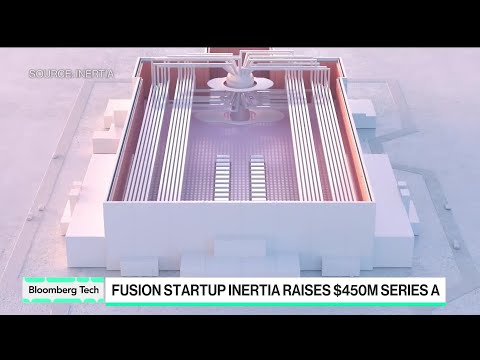
Nuclear Startup Inertia Raises $450M Series A
Bloomberg Technology· 2026-02-11 19:20
Startup Inertia raised a $450 million Series A funding round to commercialize fusion energy. CEO and co-founder Jeff Lawson discusses the company’s plans, including building the world’s most powerful laser. Lawson, former CEO and chairman of Twilio, joins Caroline Hyde and Ed Ludlow on “Bloomberg Tech.” -------- Like this video? Subscribe to Bloomberg Technology on YouTube: https://www.youtube.com/channel/UCrM7B7SL_g1edFOnmj-SDKg Watch the latest full episodes of "Bloomberg Technology" with Caroline Hyde an ...
ARDC: A Distribution Cut May Be Imminent, So Wait Before Buying
Seeking Alpha· 2026-02-11 16:31
Core Viewpoint - The company aims to generate a 7%+ income yield by investing in a portfolio of energy stocks while minimizing the risk of principal loss [1] Group 1 - The service offers subscribers access to exclusive investment ideas earlier than they are released to the general public, with many ideas not being released at all [1] - Subscribers receive more in-depth research compared to what is available to the general public [1] - A two-week free trial is currently being offered for the service [1]

MEOH & Partners Launch U.K.'s First Biomethanol Bunkering Service
ZACKS· 2026-02-11 15:55
Core Insights - Methanex Corporation (MEOH), Exolum, and Orsted have launched the UK's first commercially ready biomethanol storage and supply service at the Port of Immingham, aiming to decarbonize the maritime sector despite delays in the International Maritime Organization's Net Zero Framework [1][3] Group 1: Collaboration Details - Exolum will provide storage and fueling infrastructure at its Immingham facility, while Methanex will supply the biomethanol, and Orsted will be the first to utilize the fuel for its North Sea offshore wind farm maintenance vessels [2] - This initiative exemplifies how existing energy infrastructure can be adapted to support sustainable fuels, showcasing the partners' commitment to low-carbon operations [2] Group 2: Environmental Impact - The launch is significant as it targets emissions in maritime operations, with domestic shipping contributing 4.7% of the UK's transport-related CO2 emissions, surpassing emissions from buses, trains, and domestic aviation combined [3][6] Group 3: Stock Performance - MEOH's stock has increased by 4.7% over the past year, contrasting with a 13.3% decline in the industry [3]

Rocket Lab: Bullish Catalysts Brewing
Seeking Alpha· 2026-02-11 14:38
Core Insights - The individual has a decade of experience in a Big 4 audit firm, focusing on banking, mining, and energy sectors, which provides a strong foundation in finance and strategy [1] - Currently serves as the Head of Finance for a leading retail real estate owner and operator, overseeing complex financial operations and strategy [1] - Active investor in the U.S. stock market for 13 years, with a portfolio that reflects a balanced approach, emphasizing value stocks while maintaining exposure to growth opportunities [1] - Investment philosophy is based on thorough research and a long-term perspective, aiding in navigating various market cycles successfully [1] - Aims to uncover promising under-the-radar stocks that may not be widely recognized in the market [1] - Background in auditing and finance, combined with hands-on investing experience, allows for unique insights and actionable ideas for investors [1]


European stocks headed for mixed open as earnings hold spotlight
CNBC· 2026-02-11 07:36
Group 1: Heineken - Heineken announced it will cut between 5,000 and 6,000 jobs over the next two years due to "challenging market conditions" as part of a turnaround strategy aimed at accelerating growth by 2030 [3] - The company reported a 1.2% decline in total production volumes for 2025, while operating profit increased by 4.4% compared to the previous year [3] - Heineken expects operating profit growth in the range of 2% to 6% for the current year [3] Group 2: Siemens Energy - Siemens Energy reported a nearly tripled net profit of 746 million euros ($889 million) for its fiscal first quarter, driven by robust demand from data center expansion [4] - The company's stock rose by 5.3% following the earnings update [4] Group 3: Commerzbank - Commerzbank achieved a record operating profit of 4.5 billion euros, supported by net commission income and strong performance from its Polish subsidiary mBank [5] - The bank's net profit reached 2.6 billion euros, surpassing its target of 2.5 billion euros [5] - Commerzbank anticipates that net profit in 2026 will likely exceed its original target of 3.2 billion euros [5] Group 4: Lufthansa - Lufthansa's shares fell by 3.5% amid news of impending staff strikes, with pilots' union VC calling for a 24-hour strike over a pensions dispute [6] Group 5: Market Overview - European equities opened mixed as investors assessed a wave of corporate earnings, with the pan-European Stoxx 600 marginally lower [1] - Global investors are closely monitoring U.S. nonfarm payrolls data for January, scheduled for release at 8:30 a.m. ET [6]

Glancy Prongay Wolke & Rotter LLP, a Leading Securities Fraud Law Firm Encourages Richtech Robotics Inc. (RR) Shareholders to Inquire About Securities Fraud Class Action
Businesswire· 2026-02-10 19:01
Core Viewpoint - A securities fraud class action lawsuit has been filed against Richtech Robotics Inc. (RR) on behalf of investors who acquired its securities between January 27, 2026, and January 29, 2026, following misleading statements regarding a collaboration with Microsoft [1] Group 1: Company Overview - Richtech Robotics Inc. announced a collaboration with Microsoft's AI Co-Innovation Labs on January 27, 2026, which led to a 44.6% increase in its stock price [1] - On January 29, 2026, Hunterbrook Media reported that the collaboration was merely a "standard" customer program with "no commercial element," resulting in a stock price drop of $1.06, or 20.9%, closing at $4.02 per share [1] Group 2: Lawsuit Details - The lawsuit alleges that Richtech made materially false and misleading statements and failed to disclose adverse facts about its business and prospects [1] - Specifically, it is claimed that Richtech misrepresented its relationship with Microsoft, leading to misleading positive statements about the company's operations [1]

Treasury calls gold a 'bubble' while banks target $6,000: Feneck warns of 'commodity war'
KITCO· 2026-02-10 16:45
Core Insights - Jeremy Szafron has joined Kitco News as an anchor and producer, bringing a wealth of experience in journalism, particularly in finance and current affairs [1][5] Background and Experience - Jeremy began his journalism career in 2006 at CTV, where he initially reported on entertainment before transitioning to business reporting, focusing on mining and small-cap companies [2] - He gained recognition for his macro-financial and market trends analysis, becoming a sought-after commentator on CTV Morning Live and a regular on CTV News Network [2] - A significant highlight of his career was covering the 2010 Vancouver Olympic Games, which led to the development of an online video news program for PressReader, a digital newsstand with 8,000 editions in 60 languages [3] Digital Media Ventures - In 2012, Jeremy launched The Green Scene Podcast, which quickly attracted over 400,000 subscribers and positioned him as a prominent voice in the cannabis industry [4] - Following this success, he established Investor Scene and Initiate Research, platforms that provide exclusive market insights and deal-flow opportunities in mining and Canadian small-cap sectors [4] Professional Roles - Jeremy has served as a market strategist and investor relations consultant for various publicly traded companies across mining, energy, consumer packaged goods (CPG), and technology industries [5] - He holds a BA in Journalism from Concordia University, which has supported his diverse career trajectory [5]