空调设备

Search documents
英特科技(301399.SZ):分配器目前暂无应用于数据中心液冷系统
Ge Long Hui· 2025-08-18 08:44
Group 1 - The core viewpoint of the article is that 英特科技 (Intech Technology) primarily focuses on the application of its distributors in commercial air conditioning, residential air conditioning, and heat pumps, with no current application in data center liquid cooling systems [1]
哈空调:2024年报净利润0.07亿 同比下降66.67%
Tong Hua Shun Cai Bao· 2025-04-28 07:43
Financial Performance - The basic earnings per share decreased by 65.53% from 0.0557 yuan in 2023 to 0.0192 yuan in 2024 [1] - The net profit dropped by 66.67%, from 0.21 billion yuan in 2023 to 0.07 billion yuan in 2024 [1] - The return on equity fell by 66.15%, from 2.60% in 2023 to 0.88% in 2024 [1] - Total revenue slightly decreased by 1.12%, from 14.23 billion yuan in 2023 to 14.07 billion yuan in 2024 [1] Shareholder Structure - The top ten unrestricted shareholders hold a total of 16,928.11 million shares, accounting for 44.15% of the circulating shares, with a change of 74,100 shares from the previous period [1] - Harbin Industrial Investment Group Co., Ltd. remains the largest shareholder with 13,044.94 million shares, representing 34.03% of total share capital [2] - Significant changes include a 76.70% decrease in shares held by Zhou Shuang, while new entrants include Morgan Stanley & Co. International PLC and Yin Shijie [2] Dividend Distribution - The company announced a dividend distribution of 0.10 yuan per share (including tax) [2]

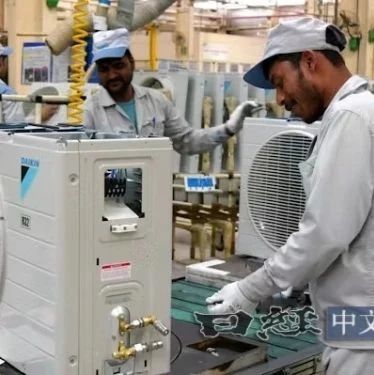
大金将在印度新建工厂,产能扩大70%
日经中文网· 2025-04-21 04:42
Core Viewpoint - The air conditioning market in India is poised for significant growth due to rising temperatures and increasing household income, with major Japanese manufacturers like Daikin planning to expand production capacity to meet this demand [1][2]. Group 1: Market Potential - India has recorded temperatures exceeding 50 degrees Celsius, making it one of the hottest regions globally, yet the air conditioning penetration rate is only about 7% [1][2]. - The air conditioning market in India is expected to grow from 7 million units in 2019 to 24 million units by 2029, indicating a substantial increase in demand [2]. - The International Monetary Fund (IMF) projects that India's nominal GDP will surpass Japan's by 2025, positioning India as the fourth-largest economy in the world [1]. Group 2: Competitive Landscape - Daikin currently holds the leading position in the Indian air conditioning market, with a 60% market share in commercial applications and 18% in the residential sector, closely competing with Tata Group's Voltas [2]. - Local manufacturers such as Voltas and Blue Star, along with South Korean LG Electronics, are intensifying competition in the Indian market [1]. Group 3: Technological Advantage - Daikin's competitive edge lies in its energy-saving technology, particularly its proprietary compressor systems that allow for precise control of energy consumption [3]. - The company has formed a joint venture with Taiwanese manufacturer Rechi to supply compressors to Indian air conditioning manufacturers, aiming to reduce costs through economies of scale [3]. Group 4: Service Expansion - Daikin anticipates growth in after-sales service demand, with the number of service outlets expected to increase from approximately 17,000 to over 20,000 by 2030 [3].