
金融中介

Search documents
央行拟规范经纪业务!这些业务不得参与……
券商中国· 2025-07-18 11:02
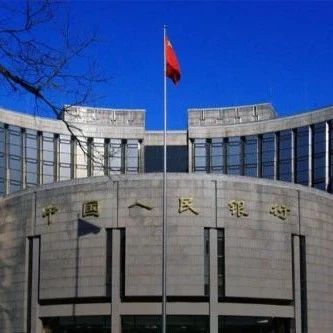
Core Viewpoint - The People's Bank of China has drafted and released the "Interbank Market Brokerage Business Management Measures (Draft for Comments)" to regulate brokerage activities in the interbank market, consisting of 26 detailed provisions that prohibit brokerage institutions from participating in primary bond issuance and over-the-counter bond business [1][3]. Group 1: Overview of Brokerage Companies - Brokerage companies serve as intermediaries in financial market transactions, with their influence on interbank market trading increasing in recent years. In 2024, the trading volume through brokerage institutions in the interbank market is expected to reach 433 trillion yuan, accounting for 20% of the total market trading volume [2]. - The central bank's draft highlights that brokerage companies have become a hub connecting various market participants, significantly impacting secondary market information aggregation, pricing, trading efficiency, and market liquidity [2]. Group 2: Regulations and Requirements - The Measures comprehensively regulate brokerage business, including defining the types and scope of brokerage institutions, entry requirements, and risk isolation mandates. It also strengthens client qualification management, information disclosure, and communication tool usage [3][4]. - Brokerage institutions are required to provide services for transactions in interbank market bonds, repos, and derivatives but are prohibited from participating in primary bond issuance and over-the-counter bond business [5]. - Brokerage institutions must report to the central bank when entering the interbank market. Non-brokerage firms like securities companies must establish independent brokerage departments, ensuring strict separation from proprietary trading [6]. - The Measures mandate real-time, complete, and accurate public disclosure of optimal brokerage quotes and transaction information, enhancing transparency in the transaction process. Communication tools used by brokers must be strictly isolated from personal tools, with all communications recorded and retained for at least five years [6]. Group 3: Prohibited Activities and Oversight - The Measures outline 13 prohibited activities for brokerage personnel, including the strict prohibition of holding positions in trades, providing services to unqualified clients, exploiting information advantages for improper gains, and assisting clients in evading regulations [6]. - The central bank and its branches are authorized to conduct enforcement inspections on brokerage institutions, while relevant market infrastructure will monitor brokerage activities through specific systems. Self-regulatory organizations in the interbank market will manage brokerage institutions [7].

金融机构承销业务竞争应跳出“费率”围城
Zheng Quan Ri Bao· 2025-07-14 16:16
Core Viewpoint - The recent issuance of a 35 billion yuan secondary capital bond has highlighted the issue of extremely low underwriting fees in the bond underwriting market, prompting the China Interbank Market Dealers Association to initiate a self-regulatory investigation into the matter [1] Group 1: Underwriting Fee Issues - The total underwriting service fee for the six selected underwriters was only 63,448 yuan, averaging around 10,000 yuan per institution, indicating a "floor price" for bond underwriting [1] - The association's announcement on July 11 emphasized that if any parties violate self-regulatory rules during business operations, they will face self-regulatory actions [1] Group 2: Causes of Low Price Competition - Three main reasons for the low-price competition in bond underwriting are identified: 1. Institutions are focusing on "price for volume," where larger institutions dominate the market and engage in low-fee bidding to increase their underwriting scale and market ranking [2] 2. The evaluation criteria for bidding often prioritize price over service quality and risk management, encouraging underwriters to sacrifice reasonable profit margins [2] 3. Many institutions have a singular business structure, making bond underwriting a critical cash flow business, leading them to participate in low-margin bidding to maintain market share [2] Group 3: Long-term Consequences - While low-price competition may provide short-term market share, it risks long-term damage to the underwriting process, including: 1. Insufficient resource allocation for due diligence and risk assessment, potentially leading to increased bond defaults and harming investor interests [3] 2. The survival of compliant institutions is threatened, while aggressive bidders may resort to gray market practices, undermining healthy competition [3] 3. The core value of underwriters in facilitating effective capital allocation diminishes, as the process becomes a mere "channel" service [3] 4. A focus on price wars hampers innovation in product development, affecting the industry's ability to lead in areas like green bonds and ESG derivatives [3] Group 4: Recommendations for Improvement - To break the low-price competition cycle, a collaborative approach involving regulators and issuers is necessary, shifting the market focus from "who bids lower" to "who creates more value" [4] - This shift would help financial intermediaries escape the fee-centric mindset and rebuild a competitive landscape centered on quality and compliance, promoting the long-term health of the bond market [4]
关乎你的钱包!多地金融监管局密集提示
Jin Rong Shi Bao· 2025-06-15 23:08
Core Viewpoint - The rise of illegal financial intermediaries posing as legitimate service providers has become a significant threat to financial consumers, necessitating urgent action to protect consumer rights and maintain financial order [1][2]. Group 1: Illegal Financial Activities - Illegal financial intermediaries are engaging in fraudulent activities under the guise of services like "unsecured loans," "debt relief," and "credit repair," often charging high fees and collecting personal information for profit [1][2]. - Common scams include loan intermediary fraud, where consumers are lured with promises of low rates and quick funding, only to be asked for upfront fees and then face delays or disappearances [2][3]. - Other scams involve false claims of insurance claim assistance, credit repair, and debt evasion, where intermediaries exploit consumer trust and personal information [2][3]. Group 2: Consumer Protection Measures - Financial regulatory bodies are actively warning consumers about the dangers of illegal intermediaries and promoting awareness campaigns to safeguard financial interests [1][5]. - Consumers are advised to verify the legitimacy of financial service providers through official channels and to be cautious of unsolicited offers, especially those requiring upfront payments [4][5]. - It is crucial for consumers to read contracts carefully and understand the terms before signing, as many intermediaries use deceptive practices to entrap them [3][4].
以案明纪释法丨指使单位虚增交易环节让第三人获利行为性质辨析
Zhong Yang Ji Wei Guo Jia Jian Wei Wang Zhan· 2025-06-04 01:19
Core Viewpoint - The article discusses cases of state employees using their positions to inflate transaction processes, resulting in profits for third parties, and analyzes the legal implications of such actions [1][6]. Case Summaries Case One - A state-owned company manager, knowing that a procurement was already established, directed the company to sign a procurement agreement with a specific individual to inflate transaction costs, resulting in a commission payment that was misappropriated [2][8]. - The legal opinions diverge on whether the manager's actions constitute embezzlement or illegal profit-making for relatives, with a consensus leaning towards embezzlement due to the nature of the transaction [4][9]. Case Two - A financing platform manager, in collusion with a government official, inflated transaction processes to facilitate a payment to the official's son for minimal services rendered, despite the company having direct financing options [3][12]. - Similar to Case One, legal opinions vary, but the prevailing view is that the manager's actions constitute bribery and embezzlement due to the intent to benefit a third party while misusing public funds [11][14]. Legal Analysis - The article emphasizes that actions taken by state employees to inflate transactions for personal gain or to benefit specific individuals can lead to serious legal consequences, including charges of embezzlement and bribery [7][11]. - The distinction between embezzlement and illegal profit-making for relatives is crucial, as the former involves direct misappropriation of public funds, while the latter pertains to the improper allocation of business opportunities [10][14].