Air Freight and Cargo

Search documents
UPS Stock Plunges 23.5% YTD: Should You Consider Buying the Dip?
ZACKS· 2025-04-21 17:00
Core Viewpoint - United Parcel Service (UPS) has experienced significant stock declines, raising questions about potential buying opportunities amidst ongoing challenges in demand and economic uncertainty [1][4]. Group 1: Stock Performance - UPS shares have declined 23.5% year-to-date, which is in line with the Zacks Transportation—Air Freight and Cargo industry's 21.1% fall and a 22.2% dip in shares of GXO Logistics [1]. - Over the past year, UPS shares have fallen 33.7%, worse than the industry's 27% decline, with GXO Logistics and FedEx down 32% and 23.2%, respectively [4]. Group 2: Factors Hurting UPS Stock - Demand Slowdown: UPS anticipates average daily volumes to decrease by 8.5% in 2025 compared to 2024, driven by a decline in shipping demand and a slowdown in online sales in the U.S. [5]. - Revenue Projections: For full-year 2025, UPS expects revenues of $89 billion, significantly below the Zacks Consensus Estimate of $94.6 billion and lower than 2024's actuals of $91.1 billion [6]. - Economic Uncertainty: Rising inflation and tariff concerns have created market volatility, with fears of economic slowdown impacting UPS's outlook [7][8]. Group 3: Dividend Sustainability - UPS announced a 0.6% increase in its quarterly dividend to $1.64 per share, raising concerns about the sustainability of this payout given an elevated dividend payout ratio of 84% [9]. - Free cash flow has been declining, with projections of $5.7 billion in 2025, barely covering expected dividend payments of approximately $5.5 billion [11]. Group 4: Valuation and Earnings Estimates - UPS stock is trading at a forward sales multiple of 0.93, which is considered expensive compared to industry peers [12]. - Recent earnings estimates for UPS have been revised downward, indicating a negative trend in earnings expectations for 2025 [16]. Group 5: Expansion Efforts - UPS is pursuing expansion by acquiring Estafeta, a Mexican express delivery company, and enhancing export services from Kyushu, which are seen as positive steps for long-term growth [18].


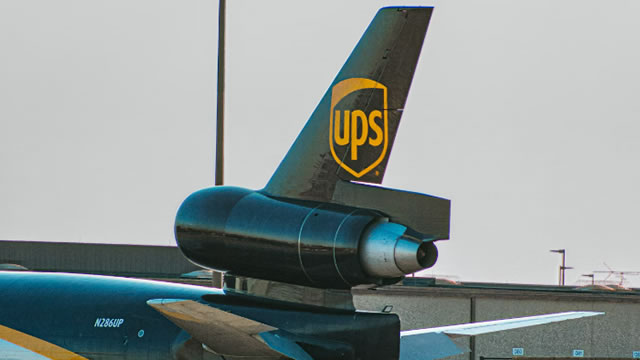
Will GXO Logistics (GXO) Beat Estimates Again in Its Next Earnings Report?
ZACKS· 2025-04-15 17:15
Have you been searching for a stock that might be well-positioned to maintain its earnings-beat streak in its upcoming report? It is worth considering GXO Logistics (GXO) , which belongs to the Zacks Transportation - Air Freight and Cargo industry.This contract logistics provider has an established record of topping earnings estimates, especially when looking at the previous two reports. The company boasts an average surprise for the past two quarters of 3.83%.For the most recent quarter, GXO Logistics was ...

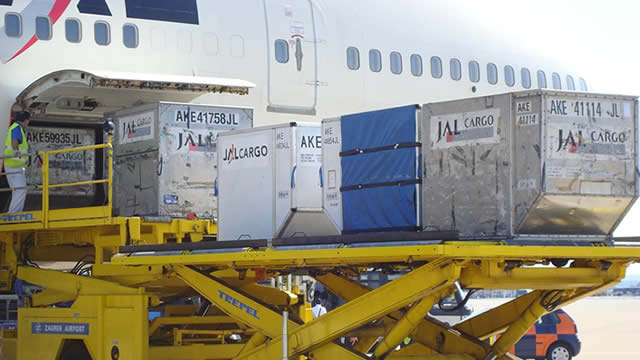
Does FDX Stock's Lower Valuation Present a Smart Buying Opportunity?
ZACKS· 2025-04-15 17:00
Core Viewpoint - FedEx Corporation (FDX) appears attractive from a valuation perspective, trading at a forward price-to-sales (P/S) ratio of 0.56, which is lower than the Zacks Transportation—Air Freight and Cargo industry, the S&P 500, and its competitor United Parcel Service (UPS) [1] Financial Performance - FedEx reported lower-than-expected earnings per share (EPS) of $4.51 for Q3 fiscal 2025, missing the Zacks Consensus Estimate of $4.65, primarily due to weak demand and challenging conditions [5][6] - Revenues for the quarter were $22.2 billion, exceeding the Zacks Consensus Estimate of $21.8 billion and showing a 2.1% year-over-year improvement [6] - Average daily shipments fell by 5% year-over-year, influenced by a shortened holiday season, adverse weather, and rising recession fears [5] Earnings Outlook - FedEx has revised its fiscal 2025 EPS outlook down to a range of $18-18.6 from the previous $19-20, marking the third downward adjustment [7] - Revenue expectations have also been adjusted to flat or slightly down year-over-year, compared to prior forecasts of being approximately flat [7] - Earnings estimates for upcoming quarters have decreased over the past 30 days, reflecting the company's ongoing challenges [8][9] Stock Performance - FDX shares have declined over 20.6% in the past year, underperforming compared to UPS and GXO Logistics, which saw declines of 31% and 32%, respectively [11][14] - The stock's performance has been negatively impacted by weak package volumes [11] Strategic Initiatives - FedEx is implementing cost-reduction measures through its DRIVE program, expected to yield savings of $2.2 billion in fiscal 2025, which includes reducing flight frequencies and cutting staff [16] - The company has increased its quarterly dividend by 10% to $1.38 per share, indicating a commitment to shareholder returns [17] Investment Considerations - Despite attractive valuation and shareholder-friendly initiatives, current headwinds such as weak package volumes and economic uncertainty suggest that it may not be an opportune time to buy FDX stock [18][19]

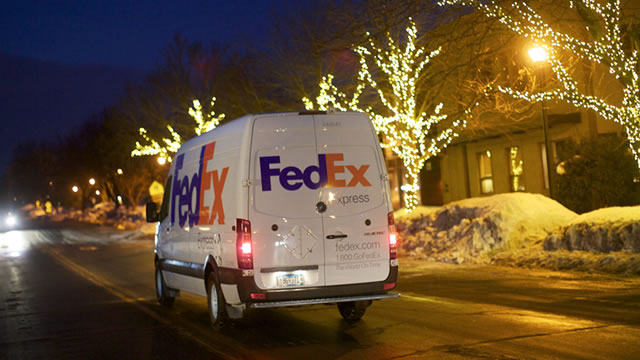
UPS vs. FDX: Which Parcel Delivery Company is a Stronger Play Now?
ZACKS· 2025-04-03 18:45
Core Viewpoint - United Parcel Service (UPS) and FedEx (FDX) dominate the air freight and cargo industry, with market capitalizations of $93.3 billion and $58 billion respectively, but both companies are facing significant challenges in terms of revenue growth and operational efficiency [1]. UPS Summary - UPS has been experiencing revenue weakness due to geopolitical uncertainty and high inflation, impacting consumer sentiment and growth expectations [2]. - The company expects average daily volumes to decrease by 8.5% in 2025 compared to 2024, with projected revenues of $89 billion, significantly below the Zacks Consensus Estimate of $94.6 billion [3]. - UPS anticipates reducing volumes with its largest customer, Amazon.com, by over 50% by June 2026, and further cuts in guidance may occur due to tariff-related tensions [3]. - In February 2024, UPS announced a 0.6% increase in its quarterly dividend to $1.64 per share, raising concerns about the sustainability of its elevated dividend payout ratio of 84% [4]. - Free cash flow has declined from a high of $9 billion in 2022, with expectations of generating $5.7 billion in 2025, barely covering projected dividend payments of $5.5 billion [5][6]. - UPS is expanding its network through acquisitions, including Estafeta in Mexico and a deal with Ninja Van Malaysia, to capitalize on cross-border opportunities [7]. - At the end of 2024, UPS had cash and cash equivalents of $6.3 billion against long-term debt of $19.4 billion, resulting in a debt-to-capital ratio of 0.54, slightly above the industry average [8]. FedEx Summary - FedEx is implementing a companywide cost realignment initiative called DRIVE, expected to yield savings of $2.2 billion in fiscal 2025 after $1.8 billion in fiscal 2024 [9]. - The company raised its quarterly dividend by 10% to $1.38 per share in June 2024 and is also active in share buybacks [10]. - FedEx has lowered its adjusted earnings guidance for fiscal 2025 to a range of $18-18.6 per share, with revenues expected to be flat or slightly down year over year [11]. - Despite challenges, FedEx has a strong brand and network, which are expected to generate steady cash flows in the long run [12]. - At the end of the third quarter of fiscal 2025, FedEx had cash and cash equivalents of $5.1 billion against long-term debt of $19.5 billion, resulting in a debt-to-capital ratio of 0.43, indicating a stronger equity position compared to UPS [13]. Price Performance and Valuation - Over the past year, UPS shares have declined by 26.6%, underperforming the industry, while FedEx shares have decreased by 11.1%, outperforming its industry [14]. - UPS is trading at a forward sales multiple of 1.06X, above the industry average of 1X, while FedEx's forward sales multiple is at 0.65X [16]. - The Zacks Consensus Estimate for UPS indicates a 3% year-over-year decline in 2025 sales, while FedEx's estimate suggests flat sales with a 3.3% growth in earnings [19][21]. - FedEx appears more attractive than UPS from a valuation standpoint, with projected earnings growth of 11.5% over the next five years compared to UPS's 9.3% [23].
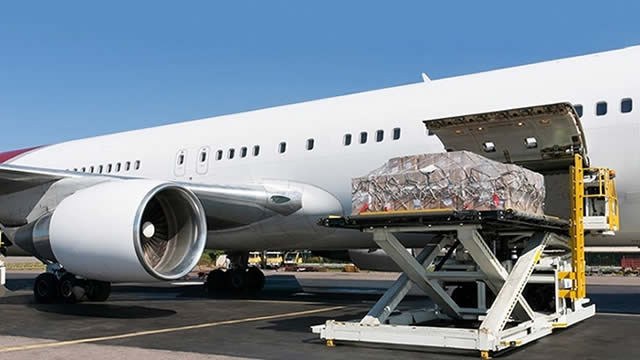
How Should Investors Approach FDX Stock Post Q3 Earnings Miss?
ZACKS· 2025-03-26 16:30
Core Viewpoint - FedEx Corporation reported mixed results for Q3 fiscal 2025, with earnings per share missing estimates while revenues exceeded expectations, leading to a lowered earnings outlook due to weak economic conditions [1][4][6]. Financial Performance - Q3 earnings per share were $4.51, missing the Zacks Consensus Estimate of $4.65, but improved 16.8% year over year due to cost-reduction benefits from the DRIVE program [4]. - Revenues reached $22.2 billion, surpassing the Zacks Consensus Estimate of $21.8 billion, and increased by 2.1% compared to the same quarter last year [4]. Economic Challenges - The quarterly performance was impacted by a shortened holiday season, adverse weather, an early Chinese New Year, and rising recession fears due to tariff-related tensions [5]. - FedEx now anticipates revenues to be flat to slightly down year over year, revising its adjusted earnings outlook to a range of $18-18.6 per share from the previous $19-20 per share [6]. Market Reaction - Following the earnings miss and lowered guidance, earnings per share estimates have declined for upcoming quarters [7]. - FedEx shares have experienced a double-digit decline over the past year, although the Zacks Transportation—Air Freight and Cargo industry and rival UPS have performed worse [9]. Strategic Initiatives - FedEx is focusing on cost reduction through its DRIVE program, which is expected to yield savings of $2.2 billion in fiscal 2025 by reducing flight frequencies, parking aircraft, and cutting staff [13]. - The company raised its quarterly dividend by 10% to $1.38 per share in June 2024, indicating a commitment to rewarding shareholders despite current challenges [14]. Valuation - FedEx shares are currently trading at lower levels compared to its industry and five-year median based on the forward 12-month price/earnings ratio, with a Value Score of B [15].
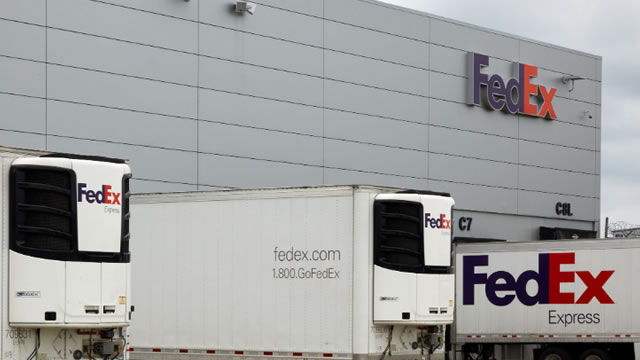
How Should Investors Play UPS Stock Amid Tariff Risks?
ZACKS· 2025-03-18 16:41
Core Viewpoint - United Parcel Service (UPS) is facing significant challenges including tariff-induced economic uncertainty, inflation, supply-chain disruptions, weak freight demand, and geopolitical changes [1][2][3] Economic and Trade Environment - The current U.S. administration is adopting protectionist measures that restrict international trade, impacting major trading partners like Canada, Mexico, and China [2] - Trade tensions are escalating due to retaliatory tariffs, contributing to market volatility and fears of an economic slowdown [3] Company Performance and Outlook - Analysts have turned bearish on UPS, with earnings per share estimates declining for the first and second quarters of 2025 and for the full years 2025 and 2026 [4] - UPS shares have declined by 23% over the past year, underperforming compared to the Zacks Transportation—Air Freight and Cargo industry and rival FedEx [5] Dividend Policy - UPS announced a 0.6% increase in its quarterly dividend, raising it to $1.64 per share, but concerns about the sustainability of this dividend arise due to a high payout ratio of 84% [8][9] - Free cash flow has decreased from a peak of $9 billion in 2022, with projections of $5.7 billion for 2025, which is only slightly above expected dividend payments of $5.5 billion [10][11] Revenue Projections - UPS anticipates an 8.5% decrease in average daily volumes for 2025 compared to 2024, driven by a slowdown in online sales and global manufacturing activity [12] - The company expects consolidated revenues of $89 billion for 2025, significantly below the Zacks Consensus Estimate of $94.6 billion [13] Valuation Concerns - UPS stock is considered expensive, trading at a forward sales multiple of 1.14, which is higher than its peer group [16] - The company's current valuation and near-term risks, including tariff-related uncertainties and dividend sustainability, suggest that buying the stock may be premature [17]