Quantum Computing

Search documents
Is IonQ, Inc. (IONQ) The Best Meme Stock To Buy Now?
Yahoo Finance· 2026-02-15 04:52
Core Viewpoint - IonQ, Inc. is recognized as one of the top meme stocks to consider for investment, with a significant upside potential based on analyst ratings and recent acquisitions [1][2]. Group 1: Analyst Ratings and Price Targets - Cantor Fitzgerald has reiterated an Overweight rating on IonQ with a price target of $70 [1]. - The consensus among 11 analysts indicates a Moderate Buy rating, with a one-year average share price target of $78.33, suggesting a potential upside of 150.26% as of February 12 [2]. Group 2: Recent Acquisitions - IonQ announced the acquisition of Seed Innovations, a firm specializing in software and technology solutions for government and commercial clients [3]. - The company also plans to acquire SkyWater Technology for $35 per share in cash, valuing the deal at approximately $1.8 billion, which will enhance IonQ's semiconductor production capabilities [3]. Group 3: Stock Performance and Concerns - Despite positive developments, IonQ's stock has experienced volatility, declining by 27% over the past two weeks due to concerns regarding revenue legitimacy [4]. - A short-seller report from Wolfpack Research has raised allegations of misleading practices, prompting discussions about the company's financial strategy [4]. Group 4: Market Position and Comparisons - IonQ operates as a quantum platform company, providing solutions in quantum computing, networking, sensing, and security [4]. - While IonQ shows potential as an investment, some analysts suggest that certain AI stocks may offer greater upside potential with less downside risk [5].

Rigetti Computing Shares Drop 9% This Week: Valuation Concerns Trigger Selling
247Wallst· 2026-02-14 20:56
Core Viewpoint - Rigetti Computing's shares have dropped 9.15% this week, reflecting valuation concerns and skepticism about its future performance in the quantum computing sector [1]. Group 1: Performance Overview - Rigetti's stock is down 27.36% year-to-date and 37.44% over the past month, with a peak of $58.15 in mid-October [1]. - The company has a market cap of $4.95 billion and trades at a 660x price-to-sales ratio, with trailing twelve-month revenue of $7.49 million [1]. - Despite a one-year return of 31.35%, recent momentum has reversed significantly [1]. Group 2: Analyst Downgrade - TD Cowen analyst Krish Sankar downgraded Rigetti to Hold, citing unrealistic revenue targets for 2027 and increased costs in the quantum computing field [1]. - The consensus price target for Rigetti is $38.85, indicating potential upside, but the downgrade has shifted market sentiment negatively [1]. - Current estimates for 2027 sales are projected at $45.39 million, with potential downward revisions expected following the downgrade [1]. Group 3: Execution Risks - Rigetti postponed the launch of its Cepheus-1-108Q quantum computer, raising concerns about its technical execution capabilities [1]. - The company reported Q3 revenue of $1.90 million, missing estimates of $2.21 million, and posted a net loss of $200.97 million [1]. - Year-over-year revenue declined by 18.1%, indicating challenges in achieving commercial success [1]. Group 4: Competitive Landscape - IonQ has widened the competitive gap by announcing a significant acquisition to bring quantum hardware manufacturing in-house, reporting Q3 revenue of $39.87 million, which is 20 times that of Rigetti [1]. - IonQ holds $3.5 billion in pro-forma cash after a $2 billion equity offering and has achieved a technical milestone of 99.99% two-qubit gate performance [1]. - The probability of the US government taking an equity stake in Rigetti by the end of 2026 is only 8.05%, compared to 50% for IonQ [1].


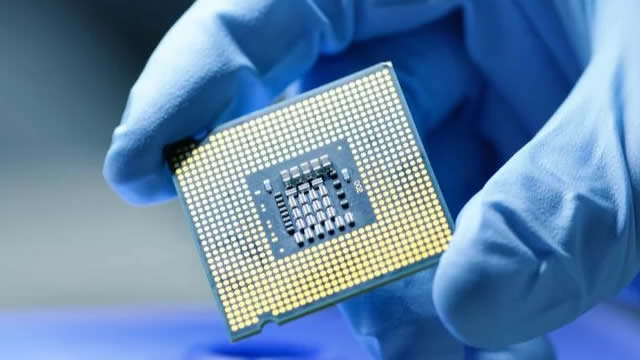
Why Wedbush Thinks Norway Could Be Key for This Quantum Computing Stock -- and the Entire Industry
Yahoo Finance· 2026-02-14 16:30
Core Insights - Norges Bank, managing approximately $2 trillion, has invested $200 million in IonQ, $39 million in Rigetti Computing, and $4 million in D-Wave Quantum, indicating a strategic focus on quantum computing [1][2]. Investment Strategy - The investments, while small relative to Norges Bank's total assets, reflect a sophisticated approach to capital allocation, suggesting a long-term belief in the potential of quantum computing [2]. - Norges Bank's multi-company investment strategy indicates a belief that various quantum technologies will succeed in different applications, rather than focusing on a single winner [5]. Market Implications - The move by Norges Bank is significant as it may signal a shift in institutional interest towards quantum stocks, which have primarily attracted retail investors and passive ETF providers [4]. - The increased investment in multiple quantum companies suggests a broader acceptance and potential growth in the quantum computing sector [3][4]. Company Developments - IonQ is actively expanding its capabilities, having announced the acquisition of Skyloom Global to enhance its quantum networking capabilities [7]. - IonQ also plans to acquire Seed Innovations, which will aid in developing AI-driven software for managing complex quantum workloads [8].
Does Rigetti's $600M Cash Runway De-Risk Its 2026 Roadmap Execution?
ZACKS· 2026-02-13 16:20
Core Insights - Rigetti Computing (RGTI) enters 2026 with a robust balance sheet, differentiating itself from peers reliant on frequent capital raises [1][2] - The company's liquidity exceeds $600 million, providing multi-year financial visibility and reducing near-term dilution risk [1][2] - Rigetti's resources are sufficient to fund planned system launches, including next-generation 100+ qubit platforms with approximately 99.5% fidelity and a 150+ qubit architecture [1][7] Financial Flexibility - Rigetti's revenue profile is uneven, primarily tied to government agencies and research institutions, making financial flexibility crucial [2] - Recent contract momentum and international engagement reinforce long-term relevance but do not mitigate quarterly volatility [2] - The strong balance sheet allows Rigetti to absorb delays and customization without external financing, enhancing its competitive position [2][3] Peer Updates - D-Wave Quantum (QBTS) achieved a technical milestone with scalable on-chip cryogenic control for gate-model quantum processors, reducing wiring complexity [4] - IonQ (IONQ) is deepening its relationship with the Korea Institute of Science and Technology Information by installing a next-generation 100-qubit system, highlighting its success with government-backed institutions [5] Price Performance and Valuation - Rigetti's shares have declined 16.6% over the last six months, compared to the industry's decline of 20.3% [6] - The company trades at a price-to-book ratio of 13.31, above the industry average, and carries a Value Score of F [9] - The Zacks Consensus Estimate for Rigetti's 2026 earnings indicates a significant 75.9% improvement from the previous year [10]

Why Did Rigetti Computing Stock Plunge This Week?
Yahoo Finance· 2026-02-13 14:31
Core Viewpoint - The value of quantum computing stocks, particularly Rigetti Computing, has significantly declined from their previous highs, reflecting a correction from overexuberance in the market [1][4]. Group 1: Stock Performance - Rigetti Computing's shares have dropped approximately 75% from their peak last fall, with a recent decline of 15.4% as of Friday morning [1][2]. - The company's market capitalization is currently nearly $5 billion, down from over $18 billion last fall, despite reporting only $1.9 million in third-quarter revenue [3]. Group 2: Analyst Insights - TD Cowen analyst Krish Sinkar downgraded Rigetti stock, suggesting that investors may have overestimated the company's potential and that forward estimates for 2027 are overly optimistic [2][4]. - Rigetti management anticipates that significant demand and value for quantum computing will not materialize until after 2030, indicating a longer timeline for potential returns [4]. Group 3: Market Sentiment - The current decline in Rigetti's stock price is seen as a correction from the previous market enthusiasm, with investors likely needing more time to identify successful companies in the quantum computing sector [4].
Photonic Inc. Partners with TELUS, Demonstrates World-First Quantum Communications Running Over Today's Network Infrastructure
Globenewswire· 2026-02-13 14:24
Core Insights - Photonic Inc. and TELUS have formed a partnership to advance quantum-secure networking capabilities and deliver quantum solutions that can transform industries globally [1][3] - The collaboration has achieved a significant milestone with the world's first quantum teleportation using TELUS' existing fibre optic infrastructure, demonstrating the ability to reliably carry quantum information [1][2] Company Overview - Photonic Inc. specializes in distributed quantum computing and communications technologies, focusing on commercial-scale quantum computers and networks to tackle challenges in materials science, drug discovery, climate change, and security [5] - TELUS is a leading communications technology company with over $20 billion in annual revenue and more than 21 million customer connections, committed to leveraging technology for positive human outcomes [7] Technical Achievements - The quantum teleportation was successfully conducted over 30 km of TELUS' PureFibre network, utilizing Photonic's Entanglement First™ architecture, which integrates silicon-based qubits with telecom band photonic connectivity [2] - This achievement allows for the transfer of quantum information to a remote processing node, a crucial step for establishing long-distance quantum networks and commercial-scale quantum computers [2] Future Prospects - The partnership aims to expand projects at the intersection of Photonic's quantum computing expertise and TELUS' telecommunications capabilities, paving the way for products and infrastructure that support commercial quantum solutions [3][4] - The collaboration is expected to contribute to building a secure, resilient, and connected future for Canada, enhancing the country's leadership in quantum computing and networking [3][4]


Xanadu Develops Quantum Algorithm Closing in on Chemistry's Toughest Challenge
Globenewswire· 2026-02-13 14:00
TORONTO, Feb. 13, 2026 (GLOBE NEWSWIRE) -- Xanadu (Xanadu Quantum Technologies Inc.), a world leader in photonic quantum computing, today announced the publication of a quantum algorithm that significantly reduces the resource requirements to simulate photochemical reactions on a fault-tolerant quantum computer. Published as a pre-print research paper, "Efficient Simulation of Pre-Born-Oppenheimer Dynamics on a Quantum Computer," this work provides a scalable path for investigating phenomena that are import ...


The Quantum Computing Stock Risk Everyone (Even Wall Street Analysts) Is Missing
The Motley Fool· 2026-02-13 09:06
Core Insights - The first-mover advantage for pure-play quantum computing stocks may be short-lived as competition increases from larger tech companies [1][16] - Quantum computing represents a significant global economic opportunity, estimated to create between $450 billion and $850 billion by 2040 [5][6] - Despite impressive stock rallies, the commercialization of quantum computing is still in its early stages, with risks of overestimation of adoption and optimization [12][11] Company Performance - As of mid-October, stocks of IonQ, Rigetti Computing, D-Wave Quantum, and Quantum Computing Inc. have seen increases of up to 6,200% over the past year [2] - These companies have been buoyed by practical applications of quantum technology and partnerships with major clients [6][8] - JPMorgan Chase's $1.5 trillion Security and Resiliency Initiative includes quantum computing as a key investment area, signaling potential growth [9] Market Dynamics - Quantum computing is projected to be a $850 billion market, though it cannot match the multitrillion-dollar market of AI [5] - Major tech companies, referred to as the "Magnificent Seven," are investing heavily in AI and are likely to extend their reach into quantum computing [17][19] - The entry barrier for quantum computing is relatively low, allowing larger companies to potentially overshadow pure-play stocks [16][19] Risks and Challenges - The commercialization of quantum computing is still nascent, with widespread adoption not yet realized [12] - Share-based dilution is a significant risk, as these companies have collectively issued over $4.1 billion in stock to raise capital [13] - The competitive landscape is shifting, with larger companies already making strides in quantum technology, posing a threat to the longevity of pure-play stocks [18][19]



Could Buying IonQ Today Set You Up for Life?
Yahoo Finance· 2026-02-12 22:05
Core Insights - Quantum computing is viewed as a potential game-changing technology, following artificial intelligence, with significant future implications for various industries [1] - The current challenge for quantum computing is its high error rate due to the nature of qubits, which can exist in multiple states simultaneously, making them susceptible to external disturbances [2][3] Company Overview: IonQ - IonQ is recognized as a leader in the quantum computing sector, focusing on developing fault-tolerant quantum computers using a trapped-ion approach [4] - This method utilizes identical atoms for qubits, enhancing stability compared to traditional lab-made qubits [5] - IonQ has achieved a remarkable 99.99% two-gate fidelity, positioning it as one of the most accurate companies in the quantum computing field [6] Technological Advancements - IonQ's acquisition of Oxford Ionics has improved its qubit accuracy and contributed to the miniaturization of its machines, which is crucial for commercialization [7] - The company is also pursuing vertical integration to control the entire quantum ecosystem, enhancing its competitive edge [6][7]
IonQ's Quantum M&A Push and $3.5B Cash: Buy, Sell or Hold in 2026?
ZACKS· 2026-02-12 20:00
Core Insights - IonQ's shares have decreased by 25.1% in early 2026, underperforming the industry average gain of approximately 11% [1] - Despite the stock decline, IonQ's strategic initiatives indicate a strong focus on expansion and technological advancement [1] Technological Advancements - IonQ achieved an AQ 64 on its fifth-generation Tempo system and a world-record 99.99% two-qubit gate fidelity [2] - The integration of Oxford Ionics' electronic qubit control architecture is underway, enhancing IonQ's technological capabilities [2] Strategic Acquisitions - IonQ completed acquisitions of Oxford Ionics and Vector Atomic in Q3 2025, expanding its operations into electronic qubit control, sensing, and security [4] - The proposed $1.8 billion acquisition of SkyWater aims to vertically integrate semiconductor manufacturing, reducing design-to-fabrication cycles from nine months to two months [5] Financial Position - IonQ ended October with a pro-forma cash balance of $3.5 billion and no debt, positioning it as one of the best-capitalized pure-play quantum companies [6] - The company anticipates a 65.8% earnings growth in 2026, supported by an 83.3% revenue growth from the estimated 2025 figures [8] Earnings Estimates - For 2026, IonQ's earnings estimates show a significant improvement, with a projected growth of 65.76% compared to the previous year [9] - The current year estimate for earnings is -5.08, with a high estimate of -4.87 and a low estimate of -5.30 [9] Valuation Comparison - IonQ's forward 12-month price/sales (P/S) ratio stands at 54.76, significantly higher than the industry average of 4.8X but lower than peers like D-Wave Quantum and Rigetti Computing [10] Long-term Outlook - IonQ's strong technological progress, aggressive vertical integration strategy, and solid liquidity position contribute to a compelling long-term narrative [11] - The stock's premium valuation compared to the broader industry suggests potential near-term volatility, indicating a cautious approach for investors [11]