
Railroads

Search documents
CSX appoints new CEO as US railroad operator battles activist pressure
Yahoo Finance· 2025-09-29 12:30
Core Viewpoint - CSX Corp has appointed Steve Angel as its new CEO, replacing Joe Hinrichs, amid pressure from activist investors and industry consolidation [1][2][3] Group 1: Leadership Changes - Steve Angel, previously CEO of Praxair and chair of Linde, has taken over as CEO of CSX [1][2] - Angel has a background in the railroad industry, having worked at General Electric for over 22 years [2] Group 2: Market Reactions - Following the announcement of Angel's appointment, CSX shares rose approximately 3% in morning trading [1] Group 3: Industry Context - CSX is under pressure from Ancora Holdings to consider merger options or leadership changes [2][3] - The recent $85 billion merger between Union Pacific and Norfolk Southern has sparked speculation about further mergers in the railroad industry [3] - Easing antitrust concerns during the Trump administration have contributed to optimism regarding potential mergers [3] Group 4: Company Strategy - CSX has expressed openness to exploring various strategies to enhance stock value and expects full-year volume growth [4] - Analyst Jason Seidl suggests that while the new CEO may position the company strategically, immediate deal activity is not anticipated [4]

Investor: CSX can now search out ‘willing partner’ for rail merger
Yahoo Finance· 2025-09-29 12:21
Core Viewpoint - The activist investor Ancora Holdings successfully urged CSX to terminate CEO Joe Hinrichs, positioning the company to seek a merger partner in the rail industry [2][4]. Group 1: Leadership Changes - CSX appointed Steve Angel, former Chairman of Linde, as the new CEO, following the termination of Joe Hinrichs [3]. - Angel has a strong background in mergers and acquisitions, having led the merger between Praxair and Linde, which created the world's largest industrial gas company [3]. Group 2: Industry Context - Ancora Holdings highlighted the need for CSX to adapt to the evolving rail industry, particularly in light of Union Pacific and Norfolk Southern's $85 billion merger announcement, which aims to create the first U.S. transcontinental railroad [2][4]. - The political landscape is supportive of transcontinental rail initiatives, with notable figures like President Donald Trump expressing enthusiasm for such developments [4]. Group 3: Future Strategy - Ancora expects the new leadership under Angel to actively pursue opportunities to enhance shareholder value and identify potential merger partners [5]. - While specific merger candidates were not disclosed, BNSF has previously indicated disinterest in merging with CSX, although they have engaged in new interline intermodal agreements [5].
CSX Corp. Announces Leadership Transition
Globenewswire· 2025-09-29 12:00
Core Viewpoint - CSX Corp. has appointed Steve Angel as the new President and Chief Executive Officer effective September 28, succeeding Joe Hinrichs, with expectations of continued strong operating performance and full-year volume growth [1][3]. Group 1: Leadership Transition - Steve Angel brings over 45 years of experience in leading large public companies and has a proven track record of generating strong shareholder returns [2]. - The Board of Directors expressed confidence in Angel's ability to advance CSX's strategic priorities and maximize shareholder value [3]. - Joe Hinrichs, the former CEO, was acknowledged for his leadership and contributions over the past three years [5]. Group 2: Steve Angel's Background - Angel previously served as CEO of Linde plc and Praxair, where he achieved total shareholder returns of 219% and 257% respectively [3]. - He oversaw the merger of Linde AG and Praxair, resulting in a market capitalization increase of 141%, equating to a $131 billion increase in value [3]. - Angel's career began at General Electric, where he spent over 22 years in various management roles, including those related to locomotive and rail operations [4][8]. Group 3: Company Overview - CSX is a premier transportation company based in Jacksonville, Florida, providing rail and intermodal services across various markets [12]. - The company has played a critical role in the economic expansion and industrial development of the United States for nearly 200 years [12].


全球物流-供应链动态观察 -峰值过后海运大幅放缓-Supply Chain Pulse Check_ Ocean slows sharply post-peak
2025-09-29 03:06
Summary of Key Points from the Conference Call Industry Overview - **Global Logistics**: The logistics industry is experiencing significant changes, particularly in ocean and air freight sectors, with varying demand and pricing pressures. Ocean Freight - **Demand and Rates**: As of mid-September, the Shanghai Containerized Freight Index (SCFI) reached its lowest level since 2023, indicating a sharp decline in ocean freight rates post-peak season. Rates have dropped approximately 35% from their early June peak, with key indicators like SCFI and World Container Index (WCI) down over 50% year-to-date [1][3][21]. - **Volume Growth**: Ocean volumes increased by 5% year-over-year in July, contributing to a 5% year-to-date increase. However, there are concerns about sequential declines in volumes for Q3, particularly in trade lanes heavily exposed to forwarders [3][20]. - **Orderbook Expansion**: The orderbook for new vessels grew by 6% in Q2, with new orders equivalent to 3.6% of the in-service fleet. The projected fleet growth is 47% from 2019 to 2026, raising concerns about oversupply [4][22]. - **Suez Canal Transits**: Transits through the Suez Canal remain consistent with last year's levels, with no significant changes anticipated for 2025 [23]. Air Freight - **Stability in Volumes**: Airfreight volumes have shown mid-single-digit growth year-over-year in Q2 and summer, although yields are slightly down due to lower fuel surcharges. The overall industry revenue is up in the low single digits [5][24]. - **Risks Ahead**: The expiration of the de minimis exemption and rising tariffs pose risks to airfreight demand, particularly in the second half of the year [5][24]. Surface Freight - **Market Conditions**: U.S. surface rates contracted in June and are expected to remain flat or decline in the second half of the year due to a softer freight outlook. Carriers are cutting trans-Pacific sailings significantly ahead of tariff deadlines, leading to a challenging environment for import traffic [6][25]. Company Ratings and Insights - **DSV**: Rated as Outperform, with expectations of significant synergies from the acquisition of DB Schenker, potentially making it the largest freight forwarder by air and sea volumes by 2025 [9]. - **DHL**: Also rated Outperform, benefiting from its diversified logistics operations and strong exposure to e-commerce and global trade [10]. - **Kuehne+Nagel**: Rated Market-Perform, facing challenges in execution and volume growth compared to peers [11]. - **Maersk**: Rated Underperform, with concerns over its core container shipping business and a challenging rate environment due to high orderbook levels [13]. - **UPS**: Rated Outperform, with confidence in margin improvement due to visibility in cost moderation [16]. - **FedEx**: Rated Market-Perform, facing risks related to complex network integration in the U.S. market [16]. Economic Indicators - **Global Trade Volumes**: Increased by 3.4% year-over-year in June, driven by emerging markets and Japan, while U.S. imports declined by 2.4% [2][19]. - **PMI Trends**: August PMIs showed improvements in China (50.5), the U.S. (48.7), and Europe (50.7), indicating a potential stabilization in manufacturing activity [2][19]. Conclusion - The logistics industry is navigating a complex landscape with varying demand across ocean, air, and surface freight sectors. Companies are adapting to changing market conditions, with some poised for growth while others face significant challenges. The outlook for the second half of the year appears cautious, particularly in light of tariff uncertainties and potential oversupply in the ocean freight market.


CSX Reopens Expanded Howard Street Tunnel Ahead of Schedule, Strengthening East Coast Freight Growth
Globenewswire· 2025-09-26 15:00
Core Insights - The reopening of the Howard Street Tunnel represents a transformative $450+ million infrastructure project aimed at modernizing freight rail transportation along the East Coast, significantly benefiting Maryland's economy and the national supply chain [1][2]. Project Overview - The Howard Street Tunnel, originally built between 1890-95, has been a crucial part of America's transportation network for over 125 years. The completion of this project will alleviate a key bottleneck along the I-95 corridor, allowing double-stacked intermodal trains to operate through Baltimore [2][3]. - The project was a collaborative effort involving CSX, the State of Maryland, the Federal Railroad Administration, and the U.S. Department of Transportation, focusing on modernizing a historic tunnel to meet current freight demands [3]. Economic Impact - The project is expected to enhance the Port of Baltimore's business by approximately 160,000 containers annually and create over 13,000 new jobs, contributing to economic growth in Maryland and the East Coast [4][5]. - The upgrade will facilitate a more cost-effective method of transporting freight by rail, reducing congestion on the I-95 corridor and providing environmental benefits through lower emissions [4]. Key Project Statistics - Over 450,000 man hours have been worked on the project, with significant contributions from various contractors and staff [5]. - The project involved extensive construction efforts, including the installation of 1,128 dewatering wellpoints and over 4,000 cubic yards of concrete [5]. Leadership and Statements - CSX's leadership emphasized the project's role in driving commerce and growth, reinforcing the company's commitment to investing in profitable growth and maintaining strong performance despite ongoing infrastructure projects [2][4]. - Maryland's Governor and other state leaders highlighted the project's potential to transform the local economy and improve the competitiveness of the Port of Baltimore [4][8].
Canadian National Railway: Buy The Dip Opportunity
Seeking Alpha· 2025-09-26 14:23
Group 1 - The article emphasizes the importance of defensive investing in the current market environment, where growth stocks are facing pressure due to high valuations and geopolitical uncertainty [2] - The preference is for established businesses over newer, riskier ventures, indicating a shift towards more stable investment options [2] Group 2 - iREIT+HOYA Capital is highlighted as a premier service focused on income-producing asset classes, aiming to provide sustainable portfolio income, diversification, and inflation hedging [1]
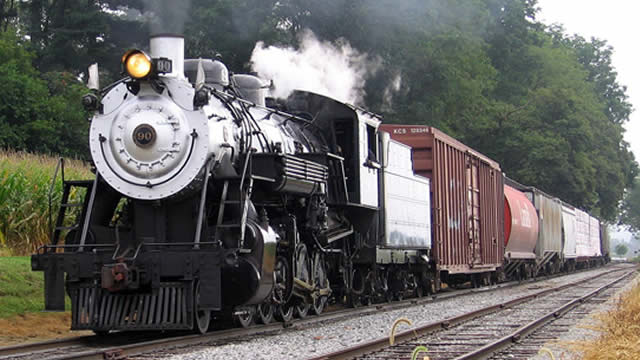
Rail merger: Lifetime job is great “until you are stuck in it”
Yahoo Finance· 2025-09-24 19:01
Core Points - Union Pacific is negotiating job protections in exchange for support from its largest union for the proposed acquisition of Norfolk Southern [1][2] - The merger would create a significant freight rail entity with over 50,000 employees and 52,000 miles of track across 43 states, with approximately 80% of the workforce being unionized [2] - Concerns have been raised regarding the effectiveness of the union employment agreement, drawing parallels to historical labor agreements that did not yield the expected benefits [4][5] Group 1 - Union Pacific has committed to providing career-long positions for SMART-TD union members employed at the time of the merger if federal approval is granted [2] - The merger is projected to generate $1 billion in annual cost savings and a total of $2.75 billion in savings through revenue growth and efficiency improvements [6] - Historical context suggests that previous merger-related labor agreements have led to complications and dissatisfaction among employees, raising questions about the current agreement's viability [4][5][7] Group 2 - The current operational networks of Norfolk Southern are extensive and unmerged, which may complicate job guarantees for employees due to the nature of railroad assignments [3] - Observers note that while the merger aims for labor peace, the actual consolidation process may be challenging for many employees as changes occur around the job guarantees [6][7] - The historical precedent of labor protections leading to negative outcomes for employees raises concerns about the long-term implications of the proposed job guarantees [7]
4 Stocks Offering Strong Shareholder Yield for a Resilient Portfolio
ZACKS· 2025-09-24 13:51
Core Viewpoint - Investors should focus on shareholders' yield, which encompasses dividend yield, net buyback yield, and debt reduction yield, to gain a comprehensive understanding of how companies return value to shareholders [2][3]. Shareholders' Yield Calculation - Shareholders' yield is calculated as: - Shareholder's Yield = Dividend Yield + Net Buyback Yield + Debt Reduction Yield [3][9]. - This metric provides a more holistic view of a company's capital allocation compared to just dividend payments [3]. Benefits of Shareholders' Yield - Focusing on shareholders' yield allows investors to identify companies that effectively reward their shareholders, leading to more informed investment decisions [3][5]. - A higher shareholders' yield often indicates steady income streams and potential capital appreciation, contributing to superior long-term performance [5]. Company Examples - **Canadian Natural Resources Limited (CNQ)**: - Offers a competitive dividend yield of approximately 5.28% and has increased its dividend payout 17 times in the past five years, reflecting an annualized growth rate of 23.3% [8][10]. - Reduced long-term debt from $16.02 billion in 2020 to $13.74 billion in December 2024 and repurchased $2.66 billion worth of common stock in 2024 [11]. - **Bain Capital Specialty Finance (BCSF)**: - Provides a high dividend yield of 11.59% and has increased its dividend payout four times in the past five years, with an annualized growth rate of 6.4% [13]. - Reduced its debt from $1.46 billion in 2020 to $1.39 billion in 2024, indicating a focus on long-term financial stability [14]. - **CSX**: - Has a dividend yield of approximately 1.57% and has increased its dividend payout five times over the past five years, resulting in an annualized growth rate of 8.9% [15]. - Repurchased shares worth $2.2 billion in 2024 and had $2.6 billion in total repurchase authority remaining as of December 31, 2024 [16]. - **Verizon Communications (VZ)**: - Offers a dividend yield of around 6.28% and has increased its dividend payout six times in the past five years, reflecting an annualized growth rate of almost 2% [17]. - Reduced long-term debt from $123.17 billion in 2020 to $121.38 billion in December 2024, maintaining a solid balance sheet [18].



Biggest rail union backs UP-NS merger after railroads guarantee job protections
Yahoo Finance· 2025-09-23 10:30
Core Viewpoint - The largest rail union, SMART-TD, supports Union Pacific's acquisition of Norfolk Southern after receiving job protection guarantees for its members, marking a significant step towards creating the first transcontinental railroad in the U.S. [1][2][3] Group 1: Union Support and Job Guarantees - SMART-TD has 125,000 active and retired members across all Class I railroads, ensuring job protection for its members in train and yardmaster service for their careers post-transaction [2] - The union's support comes after initial opposition due to job loss concerns, highlighting a shift in stance following the job security assurances [3] Group 2: Company Statements and Future Plans - Union Pacific's CEO, Jim Vena, emphasized the commitment to protect jobs of all unionized employees during the merger process, expressing confidence in unlocking new growth opportunities [4] - The merger application is expected to be filed with the Surface Transportation Board by late October or January 2026, indicating a timeline for the merger process [5] Group 3: Opposition and Concerns - The Transport Workers Union (TWU) continues to oppose the merger, citing concerns over potential job cuts and safety issues related to the creation of a coast-to-coast railroad [4]


美国关税影响追踪_涨跌趋势似乎将持续-US Tariff Impact Tracker_ Up and Down Trends Seemingly to Persist
2025-09-23 02:37
Summary of Key Points from the Conference Call Industry Overview - The report focuses on the impact of US tariffs on global supply chains, particularly freight flows from China to the USA, highlighting ongoing trends and potential future developments in the shipping industry [2][5][6]. Core Observations - **Freight Volume Trends**: Laden vessels from China to the USA decreased by 7% week-over-week (WoW) and 13% year-over-year (YoY) [1][9]. - **Port of Los Angeles Data**: Expected sequential imports into the Port of Los Angeles are set to increase by 24% TEUs (Twenty-foot Equivalent Units) for the week ending September 26, but a negative reversion of -24% is anticipated two weeks later [4][34]. - **Rail Intermodal Volumes**: Rail intermodal volumes on the West Coast were down 6% YoY, indicating a potential shift in import trends [4][43]. - **Ocean Container Rates**: Rates for ocean containers were down 7% sequentially and 69% YoY, reflecting significant pressure on shipping costs [4][31]. Potential Risks and Opportunities - **Peak Season Uncertainty**: There is uncertainty regarding whether shippers will place orders in time for the peak season, which could lead to underwhelming volume and revenue outcomes [6][7]. - **Re-stock Event Potential**: If inventories at retail are not overburdened, a significant re-stock event could occur in 2026, benefiting freight flows and margins if consumer spending remains resilient [6][7]. - **Transport Stocks Outlook**: The report suggests that transport stocks may face downward pressure in the second half of 2025 if consumer demand does not increase. However, truckers have been upgraded due to a lowered recession forecast [7][8]. Additional Insights - **High Frequency Data**: The report emphasizes the importance of analyzing high-frequency data over multiple weeks to understand tariff-related trends, as weekly data can be volatile [5][9]. - **Intermodal Traffic**: Intermodal traffic growth on the West Coast has shown a decline, with a 6% YoY decrease noted recently [43]. - **Logistics Manager Index**: The Logistics Manager Index indicates that upstream inventories expanded while downstream inventories reverted to expansion after a period of contraction [67][68]. Conclusion - The ongoing impact of tariffs and the volatility in freight flows from China to the USA are critical factors influencing the shipping industry. The potential for a re-stock event in 2026 and the current state of transport stocks present both risks and opportunities for investors [6][7][8].