
智能穿戴设备

Search documents
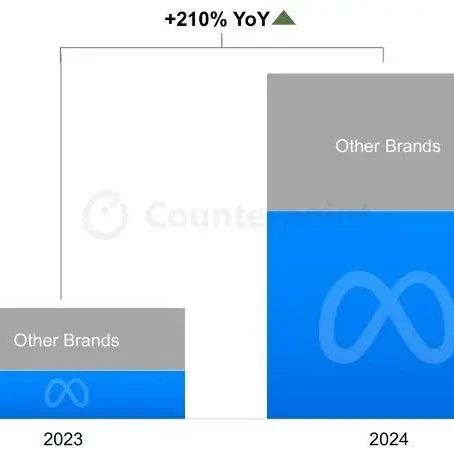
2024 年全球智能眼镜市场同比增长 210% ,主要受到 Ray-Ban Meta 智能眼镜的推动
Counterpoint Research· 2025-03-05 09:45
Core Insights - The global smart glasses market is projected to experience a significant growth of 210% year-on-year in 2024, driven primarily by strong demand for Ray-Ban Meta smart glasses, marking a historic milestone of over 2 million units shipped [1][3][8] - The success of Ray-Ban Meta smart glasses has prompted major tech companies like Xiaomi, Samsung, Baidu, and ByteDance to enter the smart glasses market, indicating a competitive landscape emerging by 2025 [3][9] - The smart glasses market is expected to continue its upward trajectory, with a forecasted growth of 60% in 2025 and maintaining an annual growth rate of over 60% from 2025 to 2029, supported by diverse applications and an expanding ecosystem of players [3][9] Market Overview - In 2023, the global smart glasses market saw a year-on-year growth of 156%, with Ray-Ban Meta smart glasses capturing over 60% of the market share in 2024 [3][8] - The definition of smart glasses excludes augmented reality (AR) devices, focusing instead on wearable computing devices that integrate electronic components into traditional eyewear [4][11] - AI smart glasses, a subcategory of smart glasses, incorporate AI technology to enhance functionality and user experience, requiring specific standards such as integrated AI processors and voice interaction capabilities [4][6][7] Product Evolution - Ray-Ban Meta smart glasses are recognized as the first AI smart glasses on the market, featuring advanced technology such as integrated NPU, sophisticated cameras, and audio components, enabling functionalities like photo/video capture and audio playback [6][8] - The evolution of smart glasses has shifted from basic improvements in hardware to redefining user experience through AI integration, leading to a surge in demand following the launch of Ray-Ban Meta smart glasses [8][9] Competitive Landscape - The competitive dynamics of the smart glasses market are evolving, with Meta expected to adopt a more aggressive expansion strategy in 2025, aiming to grow its smart glasses business through product diversification [9] - The entry of numerous new AI smart glasses models, particularly from Chinese companies, indicates a proactive approach to capitalize on emerging market opportunities [9]


AI智能眼镜近况解读
2025-03-02 16:46
Summary of Conference Call Industry Overview - The conference call primarily focused on the smart glasses industry, particularly developments from major Chinese companies like Xiaomi and ByteDance [2][4][5]. Key Points and Arguments Product Development and Launch Timelines - Xiaomi is expected to officially launch its smart glasses around mid-year, specifically in June or July, with preliminary information being released starting March [2][5]. - ByteDance is also actively developing its smart glasses, with several plans under consideration, including a Qualcomm-based solution [3][4]. Market Demand and Sales Projections - Xiaomi's pre-order volume for its smart glasses has reportedly exceeded 200,000 units, indicating strong market interest [5]. - The anticipated sales volume for Xiaomi's smart glasses is conservatively estimated at 300,000 units for the first generation, with potential to reach 500,000 if market conditions are favorable [31][34]. Competitive Landscape - The smart glasses market is seeing competition from various players, including Rocket glasses, which have been positively received in the market [4][5]. - Meta's smart glasses are primarily sold in North America and Europe, with 65% of sales occurring in the U.S. [11][12]. Market Trends and Consumer Preferences - The traditional eyewear market is projected to ship 1.43 billion units in 2023, with growth expected to 1.6 billion units by 2028, indicating a significant market opportunity for smart glasses [7][8]. - There is a noted consumer preference for stylish designs, particularly in sunglasses, which are often purchased in multiple pairs by fashion-conscious consumers [13][14]. Pricing Strategies - Xiaomi's pricing strategy for its smart glasses is under discussion, with initial estimates around 1,999 RMB, but potential adjustments could bring it down to 1,799 or 1,899 RMB [24][25][26]. - The cost of production (BOM) for smart glasses is a critical factor, with a general industry trend of pricing products at double the BOM cost [25]. Technology and Features - The smart glasses are expected to utilize advanced technology, including Qualcomm's AR1 SoC and an MCU for power management, which is essential for maintaining battery life during use [32][33]. - The integration of AI features and display capabilities is seen as a differentiator in the market, with a focus on enhancing user experience through improved interaction and functionality [19][21]. Future Outlook - The market for smart glasses is anticipated to evolve, with a focus on both general-purpose and specialized models, such as those targeting sports and outdoor activities [35][36]. - The development of new technologies, such as Micro LED displays, is expected to enhance the functionality and appeal of smart glasses in the coming years [40][41]. Additional Important Information - The conference highlighted the importance of user feedback in shaping future product iterations, particularly for first-generation products [34]. - The discussion also touched on the challenges of integrating new technologies into existing manufacturing processes, which may impact the timeline for product launches [28][29]. This summary encapsulates the key insights and discussions from the conference call, providing a comprehensive overview of the current state and future prospects of the smart glasses industry.