医养结合

Search documents
优化医养结合服务供给 国家卫健委印发工作方案
news flash· 2025-07-22 07:50
Core Viewpoint - The National Health Commission has issued a work plan to promote the integration of medical and elderly care services, aiming to expand and optimize service supply through the establishment of demonstration projects across the country [1] Group 1: Demonstration Projects - The work plan outlines the criteria for creating national demonstration institutions, which include being operational for over 5 years, having an occupancy rate of at least 65% over the past 2 years, and having over 65% of residents being elderly individuals with disabilities or dementia [1] - The first batch of demonstration units will be named in January 2024, with the National Health Commission continuing to conduct evaluations every two years, designating approximately 100 demonstration counties (cities, districts) and institutions each time [1] Group 2: Service Quality and Features - The plan emphasizes the importance of comprehensive health assessments for the elderly, the establishment of electronic health records, early intervention for elderly diseases, and the provision of home and community-based services [1] - Institutions are encouraged to provide psychological support, training, and assistance to family caregivers, while also leveraging traditional Chinese medicine and information technology to enhance service quality and efficiency [1] - The "Five Good" requirements for institutions include good environmental facilities, good personnel, good internal management, good service quality, and good service outcomes [1] Group 3: Future Goals - The National Health Commission aims to complete the creation of demonstration projects by 2030, with ongoing evaluations and updates to the program every two years [1]
国家卫健委印发医养结合示范项目工作方案
news flash· 2025-07-22 07:50
Core Viewpoint - The National Health Commission has issued a work plan for the demonstration project of integrated medical and nursing care, aiming to promote and optimize the supply of integrated services across the country [1] Summary by Relevant Sections Project Implementation - The work plan encourages the establishment of national demonstration counties (cities, districts) and institutions for integrated medical and nursing care [1] - The criteria for creating demonstration institutions include being operational for over 5 years, having an occupancy rate of at least 65% over the past 2 years, and having over 65% of residents being elderly individuals with disabilities or dementia [1] Service Quality and Features - The plan emphasizes comprehensive health assessments for the elderly, the establishment of electronic health records, early intervention for elderly diseases, and the provision of home and community-based integrated services [1] - It also highlights the importance of psychological support, training for family caregivers, and leveraging traditional Chinese medicine and information technology to enhance service quality and efficiency [1] Evaluation and Future Plans - The National Health Commission began the demonstration project in 2022, with the first batch of demonstration units to be named in January 2024 [1] - The project will continue in 2025, with evaluations every 2 years, aiming to designate around 100 demonstration counties (cities, districts) and institutions each time, with a goal to complete the project by 2030 [1]
泰安市医养结合机构入住率高达89.7%,构建“寿比泰山”健康服务新格局
Qi Lu Wan Bao Wang· 2025-07-21 11:44
Core Viewpoint - The high occupancy rate of 89.7% in Tai'an's integrated medical and elderly care institutions by June 2025 highlights the city's effective response to population aging and innovative exploration in the field of medical-elderly integration [1] Policy Leadership - Tai'an has elevated the integrated medical and elderly care work to a strategic level, incorporating it into the "Tai'an Home and Community Elderly Care Service Regulations" and the "Government Work Report" [2] - A total investment of 10.66 billion yuan has been made, with 22 key projects for the medical-elderly health industry being newly built, renovated, or expanded [2] - The city has seen a nearly threefold increase in the number of integrated medical and elderly care institutions from 2019 to the end of 2024, reaching 112 [2] Service Innovation - The city has developed a smart elderly care health management system for 940,100 elderly individuals, enabling dynamic health management [3] - 158 first-level and above medical institutions have established preferential windows and priority consultation channels for the elderly [3] - The introduction of 14 innovative service models, including "virtual beds," has allowed for seamless integration of medical and elderly care services [3] Talent Development - Tai'an has implemented various measures for talent cultivation, training 27,000 medical-elderly health professionals through vocational training and partnerships with educational institutions [4] - The Tai'an Central Hospital has trained 3,106 professionals in elderly medicine and integrated care since 2021 [4] Brand Building - The Tai'an Medical and Elderly Care Center has been recognized as a national demonstration institution, establishing a health service standard system with 476 standards [5] - The integration of traditional Chinese medicine services into elderly care is planned to achieve a 75% health management rate for elderly individuals over 65 by 2026 [5] Future Outlook - Tai'an aims to continue deepening reforms in integrated medical and elderly care, optimizing the "Longevity Compared to Mount Tai" health service model, and providing replicable experiences for national high-quality development in this sector [6][7]
【省卫生健康委】陕西10项措施推动医养结合服务高质量发展
Shan Xi Ri Bao· 2025-06-16 00:23
Group 1 - The core viewpoint of the articles is the introduction of 10 measures by various provincial health and welfare authorities to promote high-quality development of integrated medical and elderly care services [1][2] Group 2 - The measures include standardizing the management of integrated medical and elderly care institutions, enhancing internal management, and improving service quality [1] - Encouragement for integrated care institutions to assess elderly individuals and facilitate bed transfers between nursing and medical areas [1] - Enhancement of home and community-based integrated care services, including the implementation of health service actions for disabled elderly individuals and pilot family bed services [1] Group 3 - Promotion of integrated care service facility construction in township health centers, supporting the use of existing resources for such services [1] - Improvement of collaboration mechanisms between medical and elderly care services, with a goal for each county to designate at least one secondary hospital as a support institution for elderly care services by the end of 2025 [1] Group 4 - Expansion of medical service resources, encouraging medical institutions to increase the number of beds for elderly care services and promoting the establishment of geriatric departments in secondary and above hospitals, aiming for 80% compliance by the end of 2027 [1] Group 5 - Strengthening the use of information technology in integrated care, including remote diagnosis and chronic disease management, and increasing the number of medical institutions offering "Internet + nursing services" [2] - Implementation of infectious disease prevention and control measures within integrated care institutions, including the establishment of management systems and monitoring protocols [2] Group 6 - Promotion of the "Five Bed Linkage" care service model in selected counties to enhance home-based elderly care services [2] - Strengthening the talent pool for integrated care services by prioritizing recruitment and training for medical institutions providing these services [2] Group 7 - Reinforcement of joint safety production supervision for integrated care institutions, incorporating them into industry oversight and establishing a two-way notification mechanism between health and civil affairs departments [2]
【汉中】康养融合守护“夕阳红”
Shan Xi Ri Bao· 2025-05-27 22:42
Core Viewpoint - The articles highlight the development and benefits of long-term care insurance (LTCI) in Han Zhong City, emphasizing its role in providing comprehensive health care and support for the elderly, particularly those with disabilities [1][2]. Group 1: Long-term Care Insurance - Han Zhong City has established a "medical care + insurance" linkage mechanism to address the social issue of family imbalance caused by a single member's disability [1]. - The long-term care insurance provides financial support for basic living care and medical services for long-term disabled individuals, significantly alleviating the economic burden on families [2]. Group 2: Facilities and Services - The Jianxiong Sunshine Elderly Apartment currently houses over 190 elderly residents, with a significant proportion being disabled or semi-disabled, and offers a variety of activities to enhance their quality of life [1]. - The Han Zhong Vocational and Technical College Affiliated Hospital's care center is one of the first designated institutions for LTCI, with 95% of its 110 residents being disabled, showcasing the practical benefits of the policy [2]. Group 3: Financial Support and Impact - Families can receive reimbursements ranging from 1,320 to 1,620 yuan per month based on the assessment level of the elderly, which greatly reduces their financial burden [2]. - The LTCI has been instrumental in ensuring that elderly residents receive proper care without the risk of developing conditions like bedsores, as evidenced by a family member's positive experience [2]. Group 4: Workforce Development - The Han Zhong Vocational and Technical College is actively training professionals with both medical and caregiving skills to support the growing demand in the elderly care sector [2]. - The commitment to providing dignified living conditions for the elderly is reflected in the aspirations of nursing students, who are motivated to excel in the field of elder care [2]. Group 5: Infrastructure and Capacity - By the end of 2024, Han Zhong City plans to have 6,048 beds across 25 integrated medical and care institutions, with a bed-to-elderly ratio of 10.6 beds per 1,000 individuals aged 65 and above [2].
潍坊临朐中医药与医养结合,创新养老服务新模式
Qi Lu Wan Bao Wang· 2025-05-21 07:01
Core Viewpoint - The integration of traditional Chinese medicine (TCM) and elderly care services in Linqu County is enhancing healthcare accessibility and improving the quality of life for the elderly population [3][4][6]. Group 1: Healthcare Services - A recent health event at the Jingfu Elderly Care Center in Linqu County featured a team of TCM experts providing free medical consultations, which was well-received by the elderly attendees [1][3]. - The combination of TCM and elderly care services has significantly increased the recognition and acceptance of TCM among the local population, encouraging them to trust and utilize TCM [3][4]. Group 2: Development of TCM Industry - Linqu County has focused on developing a modern TCM industry system, establishing a comprehensive approach that includes renowned hospitals, specialties, and experts, resulting in the creation of the province's first TCM integrated care institution [3][4][6]. - The county has established 18 key and specialty TCM departments at the municipal level and has cultivated 56 nationally recognized TCM experts [3][4]. Group 3: Community Health Initiatives - The county has extended its healthcare services to home-based elderly care, providing services such as medication delivery and health consultations to over 2,000 individuals [3][4]. - A mobile health service initiative allows for regular health updates and the provision of TCM products directly to the elderly in rural areas, enhancing their access to healthcare [4][6]. Group 4: Future Prospects - The upcoming 8th Traditional Chinese Medicine Culture Conference in Linqu County highlights the area's strong TCM industry foundation and the government's commitment to expanding the TCM service capabilities [6]. - The local government aims to innovate and explore new business models that integrate TCM with tourism, health care, and educational activities, promoting high-quality development in the TCM sector [6].

从“五床联动”看东营医养结合的养老服务创新
Qi Lu Wan Bao Wang· 2025-05-09 12:03
Group 1 - The core concept of the news is the innovative "Five Bed Linkage" model in Dongying, which integrates medical care, rehabilitation, and elderly care, aiming to enhance the quality of elderly services from mere survival to a more quality-oriented supply [1][3] - Dongying has initiated a long-term care insurance system where insured individuals only pay 15% of their care costs, while 85% is covered by medical insurance and government subsidies, significantly reducing the financial burden on families [1][2] - The "Five Bed Linkage" model has led to the establishment of a "medical and nursing joint body" by involving social capital, such as the collaboration between the local hospital and Blue City Group to repurpose idle hospital beds into affordable care apartments, reducing operational costs by 35% [1][2] Group 2 - The transformation of township health centers into integrated medical and elderly care services addresses the issue of patient flow to urban hospitals and meets the increasing demand for elderly care in rural areas [2] - The "county-managed, township-utilized" mechanism allows county hospital experts to train local staff in suitable techniques, increasing the participation of grassroots healthcare workers in elderly care services to 42% by 2024 [2] - The implementation of a "family bed" system with smart health monitoring devices has improved emergency response efficiency by 50%, covering 23,000 rural households by April 2025 [2] Group 3 - Dongying's approach to elderly care represents a value reconstruction of "aging with dignity," emphasizing the integration of resources and grassroots solutions to make quality elderly services a tangible right [3] - The narrative of elderly individuals feeling respected and cared for, as expressed by a resident, highlights the success of the Dongying model in enhancing the quality of life for the elderly [3]
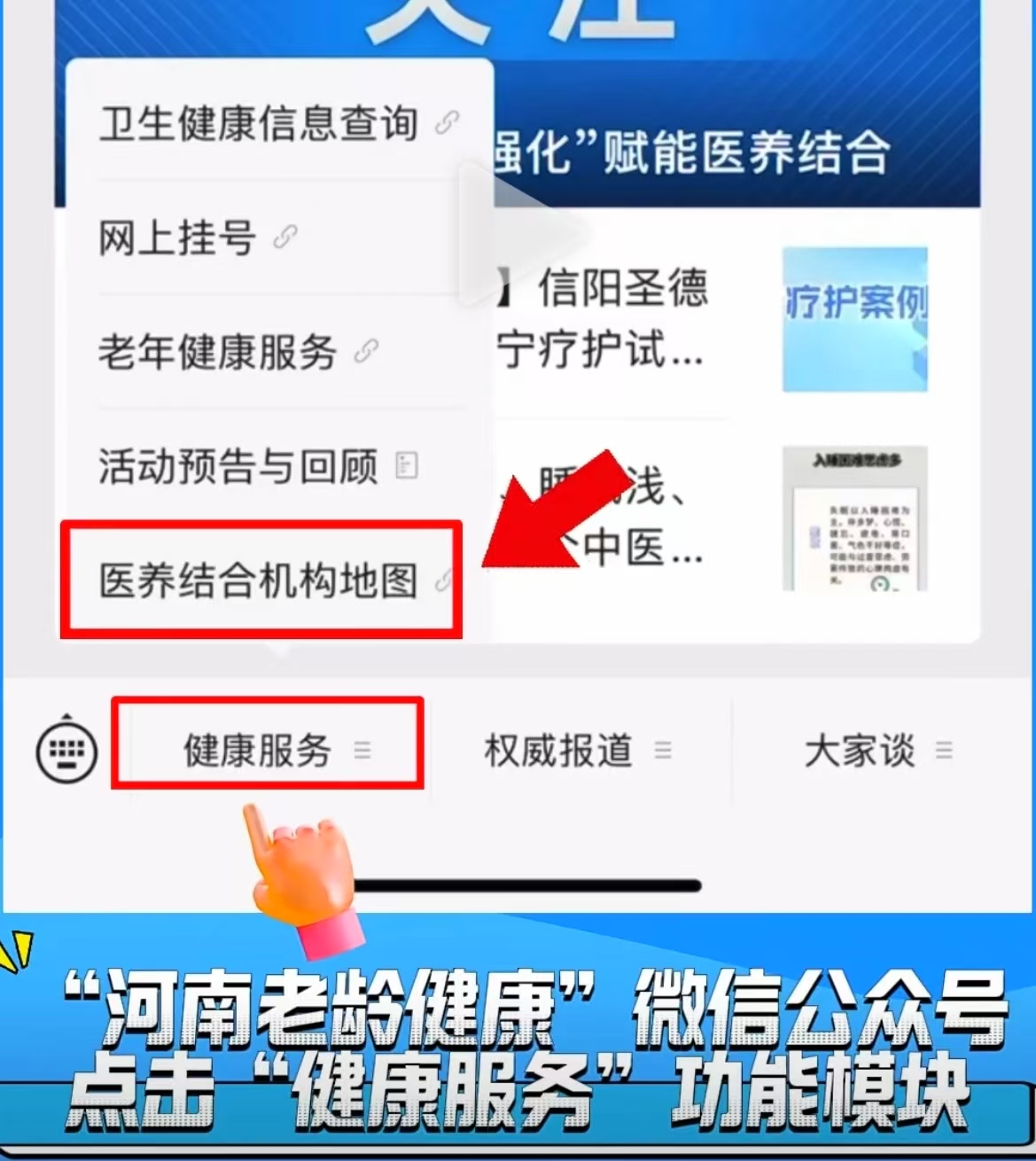
河南省医养结合机构电子地图上线 首批121家机构“掌上可查”
He Nan Ri Bao· 2025-04-26 23:29
Core Insights - The launch of the electronic map for integrated medical and elderly care institutions in Henan Province aims to address the challenges of information dispersion and inefficient supply-demand matching in the healthcare sector for the elderly population [2][3] - The electronic map features 121 initial institutions, providing detailed information such as institution levels, location distribution, special services, and real-time photos, facilitating easier access for users [2][3] - The initiative is part of a broader strategy to respond to the aging population in China, with projections indicating that by the end of 2024, the elderly population in Henan will exceed 20 million [2] Group 1 - The electronic map reduces information search costs for the public, allowing users to quickly identify suitable institutions [3] - Institutions benefit from increased visibility and resource optimization, as evidenced by a noticeable rise in inquiries following the map's launch [3] - Future enhancements to the electronic map will focus on improving user experience by adding features such as bed availability, personnel information, and an elderly-friendly interface [3] Group 2 - The electronic map will gradually cover all integrated medical and elderly care institutions in the province and will be integrated with the "Yushi Ban" government service platform to enhance service coverage [2] - The map's navigation function has made it easier for the public to locate healthcare facilities, thereby improving access to necessary services [3]