贵金属回收

Search documents
上海铂铑丝的回收价格是多少?2023年最新行情解析与避坑指南
Sou Hu Cai Jing· 2025-05-06 09:46
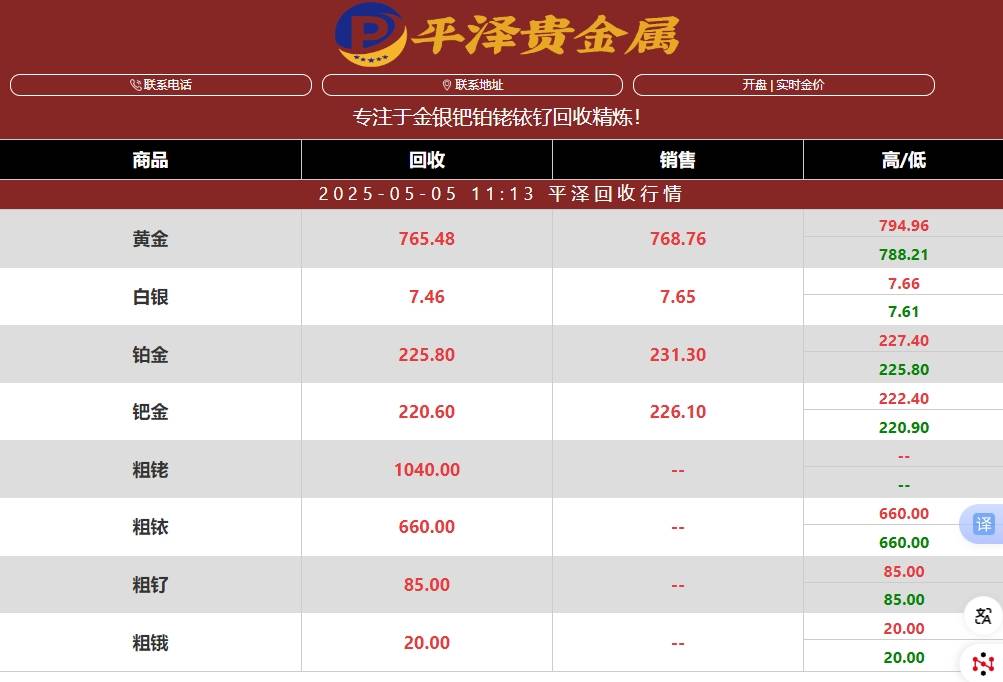
Core Viewpoint - The article discusses the dynamics of the platinum-rhodium wire recycling market, emphasizing the importance of understanding pricing mechanisms and strategies to avoid pitfalls in the recovery process. Group 1: Market Dynamics - The recycling price of platinum-rhodium wire is not fixed and is linked to the international precious metal futures market. As of October 2023, platinum (Pt) is priced at approximately 220 RMB per gram, and rhodium (Rh) is at about 950 RMB per gram, influenced by demand from the automotive sector [2] - The theoretical recovery price for a platinum-rhodium wire containing 90% platinum and 10% rhodium is calculated to be around 293 RMB per gram, excluding processing fees [3] Group 2: Pricing Logic - Users are advised to monitor real-time prices from the Shanghai Gold Exchange and the London Metal Exchange (LME) and to request proof of the day's purchase price from recyclers to avoid being underpriced using outdated market rates [4] - Users may encounter two main traps even if they know the benchmark price: 1. Content detection issues where unscrupulous dealers may claim that "naked eye cannot accurately detect content" and force a minimum pricing ratio [5] 2. High "detection fees" leading to false low content reports [5] Group 3: Avoiding Pitfalls - To counteract potential issues, users should request certificates from third-party authoritative testing institutions or conduct preliminary tests at recognized facilities [6] - There are significant price discrepancies among different channels: - Street vendors may offer inflated prices but apply "loss deductions" (e.g., claiming a 30% oxidation loss) to lower the final price [8] - Regular recycling companies provide transparent pricing but often require bulk transactions (typically starting at 1 kilogram) [8] - Industry intermediaries profit from information asymmetry, suitable for small-scale users but may involve multiple layers of fees [8] Group 4: High-Value Realization - To achieve optimal recovery prices, users should follow these steps: 1. Precise classification of platinum-rhodium wire types (S-type, R-type, B-type) based on their platinum-rhodium ratios, which can be identified using a spectrometer [9] 2. Bulk processing increases bargaining power; it is recommended to consolidate resources from nearby businesses or laboratories to reach a minimum of 1 kilogram for transactions [10] 3. Contractual agreements should be established to clarify testing methods and error margins, as well as payment terms, preferably with on-site settlement to avoid post-testing price negotiations [11] Group 5: Conclusion - The essence of platinum-rhodium wire recycling is the reallocation of precious metal resources, with price transparency being a growing trend in the industry. Users should move from a passive inquiry approach to an active price control strategy, establishing a complete operational chain of real-time monitoring, precise testing, and channel comparison [12]

浩通科技2024年报解读:投资与筹资现金流大幅变动,多维度洞察发展态势
Xin Lang Cai Jing· 2025-04-27 07:48
Core Insights - The company, Xuzhou Haotong New Materials Technology Co., Ltd., reported significant changes in its financial data for the year 2024, indicating major adjustments in investment and financing strategies [1] Financial Performance Summary - Revenue showed steady growth, reaching ¥2,658,923,309.03, a 5.21% increase from ¥2,527,255,577.15 in 2023, with trade business being the main driver, growing by 28.26% to ¥1,532,116,557.04, accounting for 57.62% of total revenue [2] - The precious metal recovery business saw a revenue decline of 8.71% to ¥1,099,305,131.35, while the new materials business experienced a significant drop of 87.24% to ¥15,005,999.18, indicating challenges in this segment [2] Profitability Analysis - Net profit attributable to shareholders increased by 11.42% to ¥116,613,490.13 from ¥104,661,673.38 in 2023, reflecting improved core business profitability [3] - Basic earnings per share rose by 11.96% to ¥1.03, while the diluted earnings per share increased to ¥0.86, indicating enhanced shareholder value [4] Expense Overview - Sales expenses decreased by 13.70% to ¥7,330,956.44, suggesting cost-saving measures in sales strategies [5] - Management expenses increased by 22.91% to ¥32,179,253.45, likely due to business expansion [6] - Financial expenses rose by 25.75% to ¥13,014,040.16, attributed to increased borrowing costs [7] - R&D expenses fell by 25.90% to ¥6,033,088.24, which may impact future innovation [8] R&D Insights - R&D investment amounted to ¥81,519,745.95, representing 3.07% of revenue, an increase from 1.65% in 2023, despite a decrease in absolute terms [10] - The number of R&D personnel remained stable at 17, with a slight increase in the proportion of master's degree holders [11] Cash Flow Analysis - Operating cash flow turned positive at ¥15,440,001.79, a significant improvement from a negative cash flow of -¥123,336,178.09 in 2023, indicating better operational management [12] - Investment cash flow showed a net outflow of -¥257,085,123.40, a 330.55% decline, driven by increased investment activities [13] - Financing cash flow netted ¥246,206,061.62, a 467.01% increase, reflecting higher borrowing to support business expansion [14]
铱金属是如何被提取出来的?回收铱钛网、铱废料
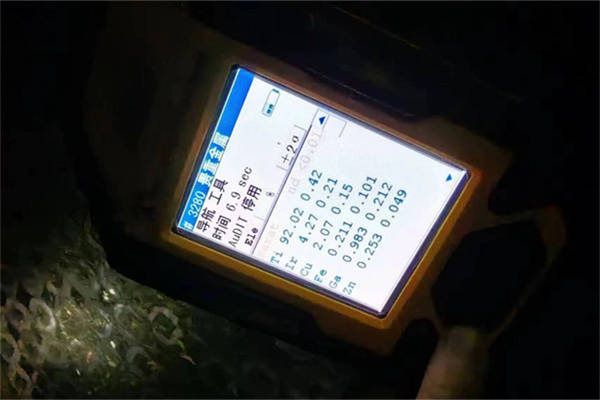
Sou Hu Cai Jing· 2025-04-21 17:16
Core Viewpoint - The efficient recycling of iridium in the precious metal recovery sector is a key technological focus, driven by its high density and resistance to high temperatures and corrosion, making it valuable in aerospace, electronics, and chemical catalysis [1][3]. Group 1: Physical Separation - Ensuring iridium materials are free from contaminating impurities is the starting point of the recycling process [1]. - The physical separation process employs a combination of "multi-stage screening + high-temperature pyrolysis" to remove mechanical impurities and organic contaminants, enhancing the initial purity of iridium from 60-75% to over 85% [1]. Group 2: Chemical Extraction - After physical separation, iridium still contains impurities such as platinum and rhodium, requiring chemical methods for atomic-level purification [3]. - The chemical extraction process involves "concentrated nitric acid dissolution - complex separation - electrochemical reduction," achieving a current efficiency of over 92% and producing sponge iridium with a purity exceeding 99.5% [3]. Group 3: Refining and Purification - Even after the first two processes, trace impurities may remain, necessitating electrochemical refining to achieve "self-purification" [5]. - The refining process can elevate iridium purity to over 99.99% while simultaneously recovering platinum group metals, with a recovery rate exceeding 98% [5]. Group 4: Technological Value and Industry Outlook - The "physical - chemical - electrochemical" three-tier recycling system creates a complete technical chain from impurity separation to atomic purification, overcoming energy consumption issues of traditional methods and waste liquid treatment challenges [7]. - With the surge in demand for iridium driven by emerging industries such as 5G communication and hydrogen energy catalysis, this technology is poised to support the closed-loop utilization of precious metal resources [7][8]. - Future advancements, including microwave-assisted dissolution and ionic liquid extraction, are expected to further enhance the efficiency and purity of iridium recovery, promoting the development of a higher-level circular economy [8].