Home Furnishings

Search documents
Arhaus Opens Its First Montana Showroom in Bozeman
Globenewswire· 2025-11-07 21:05
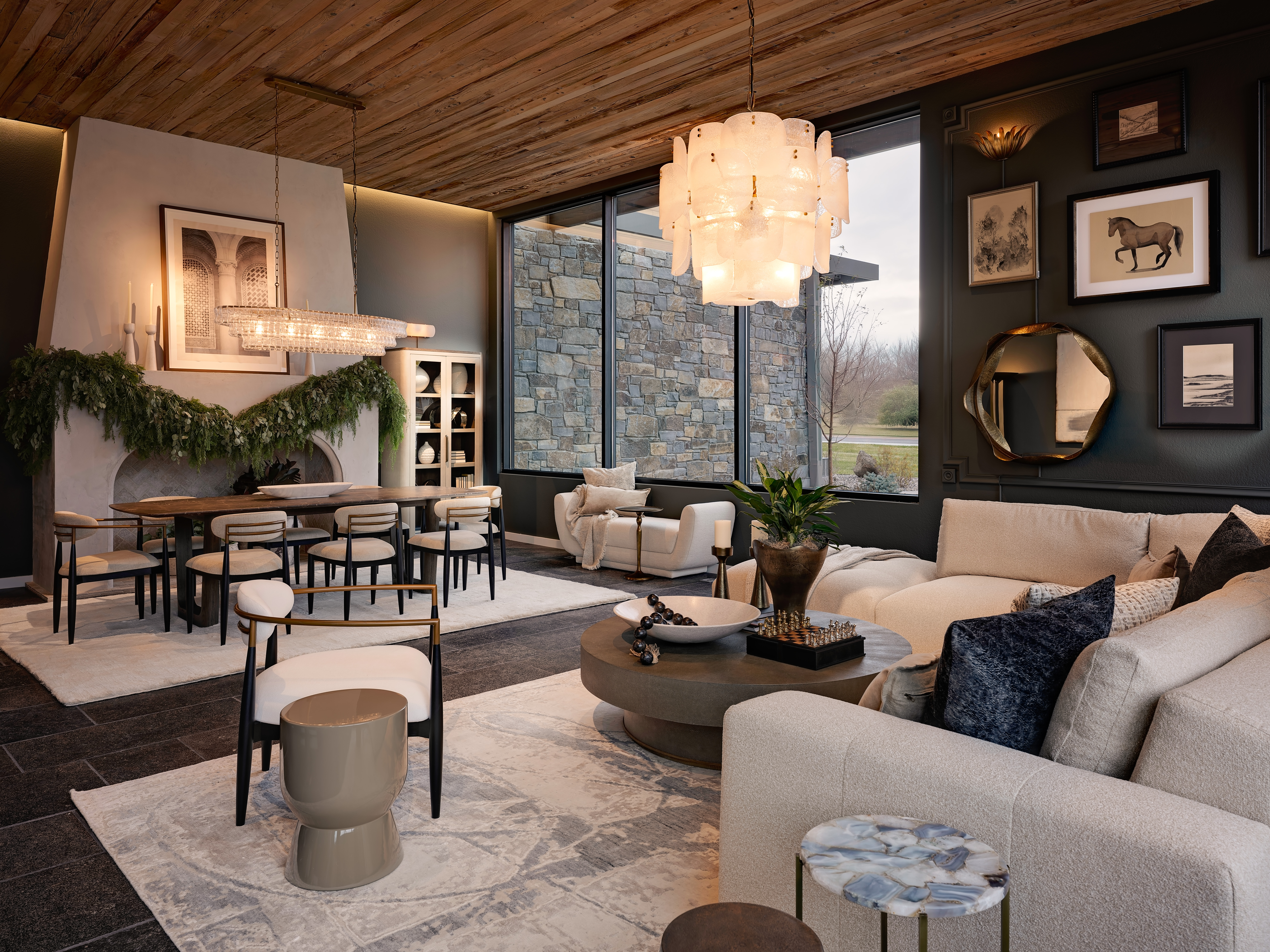
Core Insights - Arhaus has opened its first showroom in Montana, located in Bozeman's Gallatin Crossing, covering an area of 12,006 square feet [3][6] - The showroom features a curated selection of artisan-crafted furniture and décor, emphasizing natural materials and the rugged yet refined aesthetic of Montana [4][5] - To celebrate the opening, Arhaus is donating $10,000 to Habitat for Humanity of Gallatin Valley to support local housing initiatives [6] Company Overview - Founded in 1986, Arhaus is an omni-channel retailer specializing in premium home furnishings, with over 100 showrooms and design studios across the United States [7] - The company focuses on sustainable sourcing and craftsmanship, offering heirloom-quality products designed in collaboration with leading manufacturers and artisans [7] - Arhaus provides complimentary design services to assist clients with home projects, whether for individual spaces or entire homes [5][7]


A-Mark Precious Metals (AMRK) Misses Q1 Earnings Estimates
ZACKS· 2025-11-07 02:01
分组1 - A-Mark Precious Metals (AMRK) reported quarterly earnings of $0.20 per share, missing the Zacks Consensus Estimate of $0.86 per share, and down from $0.61 per share a year ago, representing an earnings surprise of -76.74% [1] - The company posted revenues of $3.68 billion for the quarter ended September 2025, exceeding the Zacks Consensus Estimate by 40.23%, compared to $2.72 billion in the same quarter last year [2] - A-Mark has surpassed consensus revenue estimates three times over the last four quarters, while it has only exceeded EPS estimates once in the same period [2] 分组2 - A-Mark shares have declined approximately 9.3% since the beginning of the year, contrasting with the S&P 500's gain of 15.6% [3] - The company's earnings outlook is crucial for investors, as it includes current consensus earnings expectations for upcoming quarters and any recent changes to these expectations [4] - The current consensus EPS estimate for the upcoming quarter is $0.86 on revenues of $2.64 billion, and for the current fiscal year, it is $3.43 on revenues of $10.64 billion [7] 分组3 - The Precious Metals and Jewels industry, to which A-Mark belongs, is currently ranked in the top 1% of over 250 Zacks industries, indicating a favorable outlook for the sector [8] - Empirical research shows a strong correlation between near-term stock movements and trends in earnings estimate revisions, suggesting that tracking these revisions can be beneficial for investors [5] - A-Mark currently holds a Zacks Rank 1 (Strong Buy), indicating expectations for the stock to outperform the market in the near future [6]


Lifetime Brands, Inc. Reports Third Quarter 2025 Financial Results
Globenewswire· 2025-11-06 12:00
Core Insights - The company is well-positioned to capitalize on industry dislocation despite current tariff volatility, leveraging a fully implemented tariff-mitigation strategy and disciplined cost management [3][4][14] - The financial results for the third quarter of 2025 show a decrease in consolidated net sales and gross margin compared to the same period in 2024, indicating challenges in the current market environment [4][5][6] - The company continues to explore M&A opportunities to strengthen market share and competitive positioning as the broader market stabilizes [3][14] Financial Performance - Consolidated net sales for Q3 2025 were $171.9 million, a decrease of $11.9 million or 6.5% from $183.8 million in Q3 2024 [4] - Gross margin for Q3 2025 was $60.4 million, or 35.1%, down from $67.4 million, or 36.7%, in Q3 2024 [5] - The net loss for Q3 2025 was $(1.2) million, or $(0.05) per diluted share, compared to net income of $0.3 million, or $0.02 per diluted share, in Q3 2024 [6] Year-to-Date Results - For the nine months ended September 30, 2025, consolidated net sales were $443.9 million, a decrease of $23.8 million or 5.1% from $467.7 million in the same period of 2024 [7] - Gross margin for the nine months ended September 30, 2025, was $161.9 million, or 36.5%, compared to $179.5 million, or 38.4%, in the same period of 2024 [8] - The net loss for the nine months ended September 30, 2025, was $(45.1) million, or $(2.08) per diluted share, compared to a net loss of $(24.1) million, or $(1.12) per diluted share, in the same period of 2024 [11] Cost Management and Strategic Initiatives - Selling, general and administrative expenses for Q3 2025 were $35.5 million, a decrease of $3.3 million or 8.5% from $38.8 million in Q3 2024 [5] - The company reported an adjusted income from operations of $11.5 million for Q3 2025, down from $13.2 million in Q3 2024 [6][10] - Project Concord is expected to enhance efficiency and improve long-term performance in the International segment [14] Liquidity and Financial Position - As of September 30, 2025, the company had liquidity of $50.9 million, consisting of $12.1 million in cash and cash equivalents, $25.2 million available under the ABL Agreement, and $13.6 million under the Receivables Purchase Agreement [13] - The company declared a quarterly dividend of $0.0425 per share, payable on February 13, 2026 [15]


Arhaus Reports Third Quarter 2025 Financial Results
Globenewswire· 2025-11-06 11:00
Core Insights - Arhaus, Inc. reported a record net revenue of $345 million for Q3 2025, reflecting an 8.0% year-over-year increase, driven by strong brand performance and successful showroom expansions [3][6][10] - Demand comparable growth reached 7.4% in Q3 2025, supported by the success of the Fall 2025 Collection and high client engagement [4][8] - The company remains debt-free with significant liquidity, positioning itself strongly in the current market environment [6][17] Financial Performance - Net revenue increased to $345 million, up 8.0% from Q3 2024 [10] - Gross margin rose by 8.4% to $133 million compared to the same quarter last year [10] - Net income increased by 23.1% to $12 million, while adjusted EBITDA grew by 35.2% to $31 million [10][36] Showroom Expansion - Arhaus operated 103 showrooms across 30 states by the end of Q3 2025, completing 8 total showroom projects, including 1 new opening and 6 relocations [9][12] - The company opened its largest Traditional Showroom in Pasadena, California, and plans to open its first Montana showroom in Bozeman [11][12] Balance Sheet and Liquidity - As of September 30, 2025, cash and cash equivalents totaled $262 million, with no long-term debt [17][28] - Net merchandise inventory increased by 10.7% to $329 million compared to December 31, 2024 [17] Outlook - The company updated its full-year 2025 outlook, raising the lower end of its revenue guidance to $1.35 billion to $1.38 billion, while maintaining the high end [13][15] - Fourth-quarter guidance includes expected net revenue of $336 million to $366 million, with a projected net income of $6 million to $16 million [15]

MasterBrand(MBC) - 2025 Q3 - Earnings Call Transcript
2025-11-04 22:30
Financial Data and Key Metrics Changes - The company reported net sales of $699 million for Q3 2025, a 3% decrease compared to the same period last year, reflecting mid to high single-digit end-market contraction [5][20] - Adjusted EBITDA was $91 million, down from $105 million in Q3 2024, resulting in an adjusted EBITDA margin of 13%, a decline of 160 basis points year-over-year [6][24] - Free cash flow for the quarter was $40 million, down from $65 million in the same period last year, attributed to lower net cash from operating activities and higher capital expenditures [7][26] Business Line Data and Key Metrics Changes - Demand in retail and dealer channels remained soft, particularly in stock cabinetry, while semi-custom offerings performed better as consumers sought value [6][10] - The repair and remodel business was down mid to high single digits year-over-year, consistent with broader market trends, particularly in entry-price stock cabinetry [9][10] - Mid-tier semi-custom products showed stronger performance, benefiting from consumers trading down from premium offerings [10] Market Data and Key Metrics Changes - In new construction, single-family housing starts were down mid to high single digits, but the company's new construction sales outperformed the broader market [8][9] - Canadian market performance was down mid-single digits, consistent with expectations, due to housing affordability challenges [10] - Overall, the company expects the addressable market in 2025 to be down mid to high single digits year-over-year [33] Company Strategy and Development Direction - The company is focused on integration initiatives and proactive management of trade dynamics to strengthen its foundation for growth [5][14] - The merger with American Woodmark is progressing as expected, with integration planning underway and anticipated cost synergies of approximately $90 million by the end of year three post-close [15][16] - Continuous improvement programs are driving measurable savings and are essential for managing through near-term softness while positioning for long-term margin expansion [17] Management Comments on Operating Environment and Future Outlook - Management noted that demand across both new construction and repair and remodel markets is expected to remain subdued through next year, with gradual improvement anticipated in late fiscal 2026 or early fiscal 2027 [11] - The evolving tariff landscape remains a major focus, with contingency plans in place to mitigate impacts [12][13] - The company remains confident in its ability to navigate challenges and is focused on maintaining operational discipline and customer service [36] Other Important Information - The company ended the quarter with $114.8 million in cash and $461.9 million in liquidity available under its revolving credit facility [24] - Net debt at the end of the quarter was $839.3 million, with a net debt-to-adjusted EBITDA leverage ratio of 2.5 times [25] - The company is committed to generating free cash flow in excess of net income for the full year [27] Q&A Session Summary Question: Reason for sales guidance revision for the full year - Management indicated that the revision to flat sales is due to better-than-expected performance in Q3 and the impact of prior pricing actions [39] Question: Challenges in realizing pricing and demand destruction - Management acknowledged challenges in pricing due to tariffs, particularly on products sourced from Mexico and Canada, but emphasized a comprehensive mitigation strategy [41][42] Question: Phasing of unmitigated exposure moving into next year - Management noted that the cost implications of tariffs will begin to materialize in Q4 and will spread throughout the year as mitigation efforts take time [45]

Shares of These Companies Soared Following Robust Results
ZACKS· 2025-10-29 16:16
Core Insights - The Q3 earnings cycle for 2025 has shown resilience, with many S&P 500 companies exceeding expectations and demonstrating strong overall growth [1][8] - American Express and Wayfair reported positive post-earnings reactions, with their shares climbing following strong results [1] American Express (AXP) - American Express achieved record sales of $18.4 billion, with adjusted EPS increasing by 19% and sales rising by 10% [2][3] - The company raised its sales and EPS outlook for the current year due to strong performance, contributing to the positive share price movement [2] - Net Interest Income reached $4.5 billion, surpassing consensus estimates by nearly 4% [3] - The stock is currently trading at a forward 12-month earnings multiple of 21.1X, near five-year highs, with earnings expected to grow by 15% on 9.3% higher sales in the current fiscal year [7] Wayfair (W) - Wayfair reported adjusted EPS of $0.70, a 220% increase year-over-year, with sales of $3.1 billion growing by 8.1% [10] - The adjusted EBITDA margin reached 6.7%, marking the highest level outside of the pandemic [10] - Orders delivered grew by over 5% year-over-year, with new orders increasing in mid-single digits for two consecutive periods [11] - Wayfair holds a favorable Zacks Rank 2 (Buy), with EPS expectations rising across nearly all timeframes [12] Overall Earnings Season - The Q3 earnings season has been strong, with an above-average number of companies exceeding quarterly expectations, indicating solid growth [14] - The performance of major banks has also provided a positive outlook on consumer health [14]



Wayfair, Up 95% This Year, Breaks Out On Major Earnings Beat
Investors· 2025-10-28 13:40
Group 1 - Wayfair reported a 218% increase in earnings to 70 cents per share adjusted, significantly surpassing forecasts of 44 cents per share adjusted [1] - Revenue for Wayfair increased by 8.1% to $3.12 billion [1] - The company did not indicate any major impacts from tariffs on its results [1] Group 2 - President Donald Trump announced new tariffs affecting three major industries, with duties ranging from 25% to 100% [2]
Maisons du Monde S.A. (MDOUF) Q3 2025 Sales Call Transcript
Seeking Alpha· 2025-10-24 12:27
Core Insights - The company reported third quarter 2025 sales of EUR 224.7 million, reflecting a 4.9% increase and a 5.9% increase on a like-for-like basis, contrasting with a 5.3% decline over the previous nine months [1] Geographic Performance - Growth was notably stronger outside of France, particularly in Southern Europe, where double-digit increases were recorded, attributed to enhanced local adaptation with dedicated teams in Italy and Spain [2] - In France, growth was positive but modest, influenced by a fragile macroeconomic environment and political uncertainty affecting consumer behavior [3] Strategic Initiatives - The company is undergoing a comprehensive transformation, focusing on various strategic projects to enhance overall performance [3] - The Autumn-Winter 2025 Collection had a strong start, indicating that product offerings resonate well with customers and that operational execution is improving, with the collection launched earlier in July [4]

MAISONS DU MONDE: Third-Quarter and Nine-Month 2025 Activity
Globenewswire· 2025-10-23 15:45
Core Insights - The company has reported a positive sales performance for Q3 2025, with net sales increasing by 5.9% on a like-for-like basis, indicating the initial effects of its internal transformation strategy in a challenging macroeconomic environment [1][2][3]. Sales Performance - Group GMV for Q3 2025 reached €257.5 million, a 4.6% increase compared to Q3 2024, while group sales were €224.7 million, up 4.9% year-on-year [3]. - Like-for-like sales for the year-to-date (YTD) 2025 were €647.8 million, reflecting a decrease of 4.4% compared to YTD 2024 [3]. Regional Performance - Retail sales in Southern Europe showed strong growth of 8% on a like-for-like basis, while France experienced a slight growth of 2% despite a challenging environment [4][9]. - International sales rose by 8%, with notable performance in Spain and Italy, confirming the resilience of the international market [9]. Channel Performance - Store sales increased by 6.4%, with a like-for-like growth of 8.9%, supported by a 7% rebound in traffic and improved conversion rates [6]. - Online sales reached €61.0 million, a slight increase of 1.1%, with contrasting performances across channels; marketplace sales grew significantly, particularly in Spain and Italy [8]. Product Category Performance - Decoration products outperformed furniture, with sales growth of 7% compared to 2% for furniture, attributed to better product availability and promotional intensity [9]. Strategic Initiatives - The company is focused on customer satisfaction, cost-reduction initiatives, and improving cash position by reducing excess inventory [2]. - The transformation strategy includes transferring stores to an affiliation model and deploying a new concept in La Défense, Paris [7]. Inventory and Financial Position - Q3 2025 marked the first positive quarter since 2021, with a planned reduction in inventory [10].

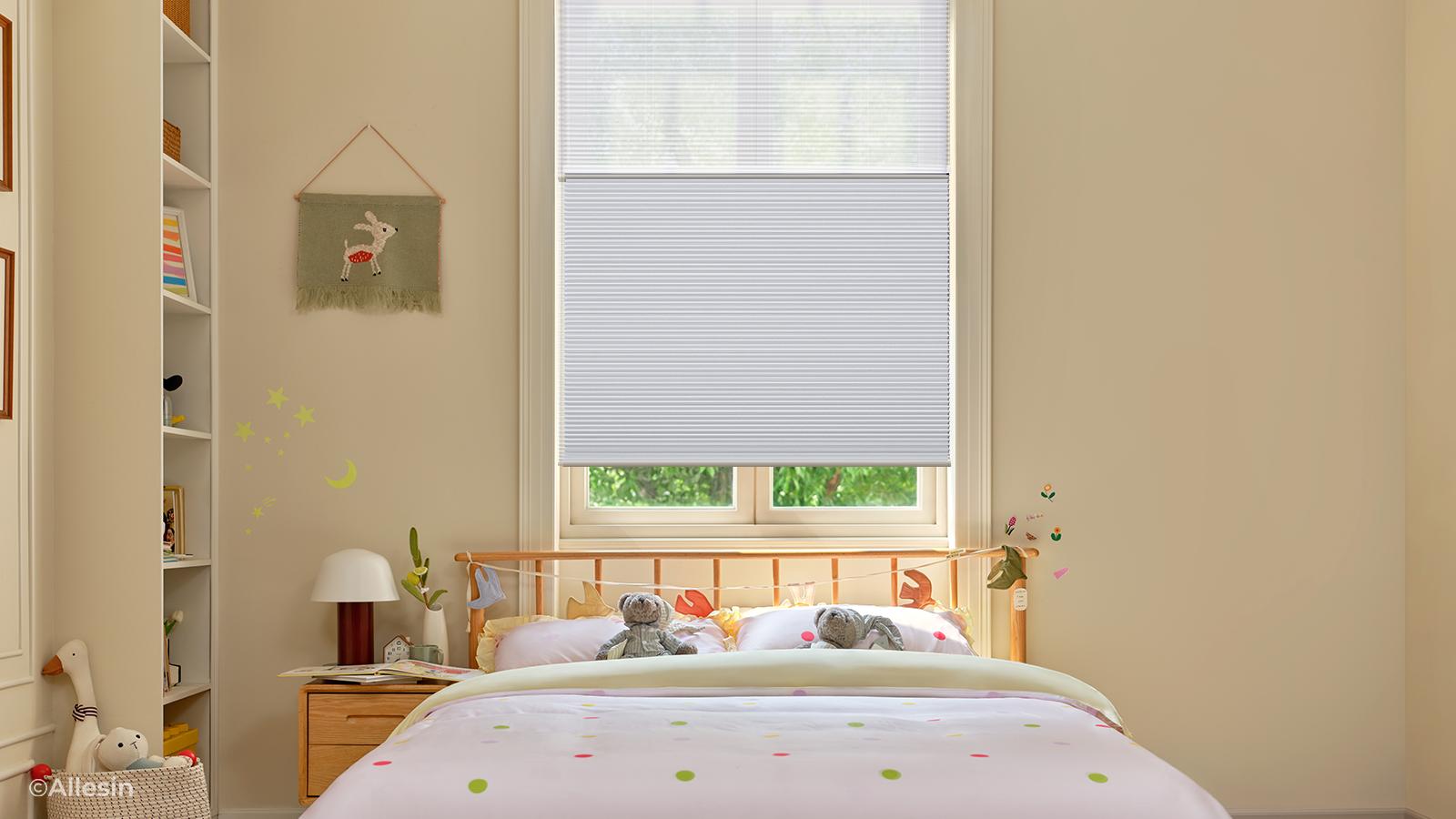
Smart Shading Made Simple: Allesin Introduces Prestige Motorized Day/Night Honeycomb Shades
Globenewswire· 2025-10-22 15:26
Core Insights - Allesin has launched the Prestige Motorized Day/Night Honeycomb Shades, which can reduce overall energy use by up to 15% compared to bare windows, according to the U.S. Department of Energy [1] - The shades are designed to enhance comfort and energy efficiency in homes, providing control over light and privacy [3][13] Product Features - The shades feature a dual-layer system with light-filtering on top and blackout on the bottom, allowing homeowners to switch between Day Mode, Night Mode, and 2-in-1 Day & Night Mode [3][4] - The honeycomb design creates insulating air pockets that help maintain comfortable indoor temperatures year-round, reducing reliance on heating and cooling systems [7][9] - The shades also provide noise reduction benefits, creating a quieter indoor environment [8] Eco-Friendly and Cost-Effective - The Prestige Motorized Day/Night Honeycomb Shades lower energy consumption and costs, offering environmental benefits and potential savings for households [9] - The shades are designed to be eco-friendly, with options for solar power to reduce charging frequency [10] Installation and Safety - The shades feature a no-drill installation process, making them easy to set up or remove without wall damage, ideal for renters [10] - A cordless design enhances safety for homes with children and pets [10] Versatility and Control - The shades can be controlled via remote, voice commands with Alexa or Google Assistant, or through the Tuya/Smart Life app, providing multiple control options [10] - They are customizable to fit various window sizes and can be scheduled for automated light management [10] Market Positioning - Allesin aims to make smart shading solutions accessible to every home, emphasizing comfort, energy efficiency, and ease of management [3][15] - The company’s slogan, "Your Light, Your Way," reflects its commitment to empowering individuals to control their living environments [15]