Housing

Search documents
Two Fed officials say key to fixing US housing more about supply than financing
Yahoo Finance· 2026-01-09 21:15
Core Viewpoint - Federal Reserve officials express skepticism regarding the effectiveness of the Trump administration's plan to lower housing costs through the purchase of mortgage-backed bonds, emphasizing that housing affordability is more significantly impacted by the supply of homes available for purchase rather than just financing costs [1][5]. Group 1: Federal Reserve Officials' Perspectives - Atlanta Fed President Raphael Bostic highlights that housing affordability challenges extend beyond financing, pointing to persistent supply and demand issues in major markets [2][3]. - Bostic, with a background as a housing economist, stresses the importance of addressing multiple factors to ensure families can purchase homes [3]. - Richmond Fed President Thomas Barkin supports the notion that improving housing affordability requires addressing supply-side issues, suggesting that while bond purchases could impact mortgage rates, they may not significantly enhance affordability [3][4]. Group 2: Trump Administration's Housing Plan - President Donald Trump's announcement includes a plan to utilize funds from government-sponsored housing lenders to buy $200 billion in mortgage bonds, aimed at reducing elevated borrowing costs for homes [5]. - The Federal Housing Finance Agency Director Bill Pulte confirms that the buying initiative has commenced with $3 billion in purchases, although the timeline for the full scope of purchases remains unspecified [6].
'SWAMIH fund helps deliver 61,000 flats across 110 housing projects'
The Economic Times· 2026-01-08 18:22
Core Insights - The Special Window for Affordable and Mid-Income Housing Investment (SWAMIH) Fund has unlocked over ₹37,400 crore across 127 projects, aimed at addressing housing shortages for lower and middle-income groups [1][5] - The fund has facilitated the delivery of approximately 61,000 flats across 110 projects, with 44% of the area under development dedicated to affordable housing [1][5] - The initiative has generated over 36,000 jobs, including 3,500 permanent positions, contributing to economic growth [2][5] Financial Contributions - The SWAMIH Fund has contributed an estimated ₹6,900 crore in revenue to central and state governments through taxes and duties [5] - It has returned nearly half of the capital drawn from investors, with approximately ₹3,500 crore returned from a total government investment of about ₹7,000 crore [5] - The total capital raised by the fund amounts to ₹15,531 crore, with participation from government entities and state-run banks [5]


沈阳公积金新政:提高“商转公”贷款比例限额至总价的80%
Zhong Guo Xin Wen Wang· 2026-01-08 09:43
Core Viewpoint - The government of Shenyang is optimizing five housing provident fund loan policies starting from January 2026 to better support rigid and improvement housing demands, in line with the central economic work conference spirit [1] Group 1: Policy Extensions - The minimum down payment ratio policy for housing provident fund loans, set at 15%, will be extended until December 31, 2026 [1] - The policy for recognizing the number of housing units for housing provident fund loans, applicable to those who have used the fund twice or more, will also be extended until December 31, 2026 [1] Group 2: Loan Flexibility - The repayment period limit for original commercial loans will be removed for flexible employment individuals, out-of-town contributors, and active military personnel applying for "commercial to public" loans [1] - The loan-to-value ratio for "commercial to public" loans will increase from 60% to 80% of the property price [1] Group 3: Support for New Citizens and Youth - The housing loan limit for new citizens and youth will be increased to 1.3 times the previous limit, expanding the policy's applicability from newly built commercial housing to include both newly built commercial housing and second-hand self-occupied housing [1]
Trump's Next Reform: Who Gets to Own America’s Homes
Investopedia· 2026-01-08 01:00
Core Insights - President Donald Trump announced plans for aggressive reforms in the housing market, specifically targeting large institutional investors from purchasing single-family homes [1][9] - The proposed ban aims to address the rising home prices driven by investor demand, which complicates homeownership for ordinary buyers [2][5] Investor Activity and Market Impact - In the second quarter of 2025, investors accounted for 10.8% of home purchases, with a significant portion (82.5%) made by smaller firms rather than large institutional investors [4][9] - Investor activity can exacerbate price pressures in competitive markets, particularly where inventory is tight and affordability is stretched [6][5] - Investors are often willing to pay premium prices for properties in high-growth markets, with median investor purchase prices significantly higher than overall median prices in states like Montana [7][6] Future Developments - More details regarding the proposed ban on large investor purchases are expected during Trump's upcoming speech at the World Economic Forum in Davos, scheduled for January 19-23 [3]

The 3 factors it would take to make housing affordable are 'very unlikely'
Fortune· 2026-01-07 20:04
Core Insights - The American dream of homeownership is increasingly out of reach due to rising mortgage rates and home prices, with the average age of first-time home buyers reaching an all-time high of 40 years [1] - The share of first-time buyers has decreased by 50% since 2007, highlighting the lack of affordable housing inventory [2] - Experts believe that significant improvements in housing affordability are unlikely in the near future, despite temporary drops in mortgage rates [2] Mortgage Rates and Affordability - Current mortgage rates are approximately 6.15%, which would need to drop to 2.65% for affordability to improve [4] - To achieve affordability, median household income would need to rise by 56% to $132,171, while current income stands at $84,763 [4] - Home prices would need to decline by 35% to $273,000 from the current $418,000, a significant drop given that home prices have increased over 50% in the past six years [4] Market Realities - Proposed solutions for improving housing affordability are deemed unrealistic given current market conditions [5] - The mortgage market is now more regulated, with many homeowners having substantial equity, and a significant portion of homes (over 30 million) are owned outright without mortgages [7][8] - The share of homeowners without a mortgage has increased to 40% in 2023, up from 33% in 2010, indicating a trend towards conservative borrowing [8] Future Projections - The housing market is expected to remain stagnant regarding affordability unless there is rapid income growth, significant declines in mortgage rates, or substantial drops in home prices, all of which are considered unlikely [9] - Realtor.com forecasts only a minor 0.3% drop in mortgage rates and a 2.2% year-over-year increase in home prices, with wage growth projected at just 3.4% [9] - Even if any of these factors improve, increased demand could lead to rising prices, complicating the affordability issue further [10][11]
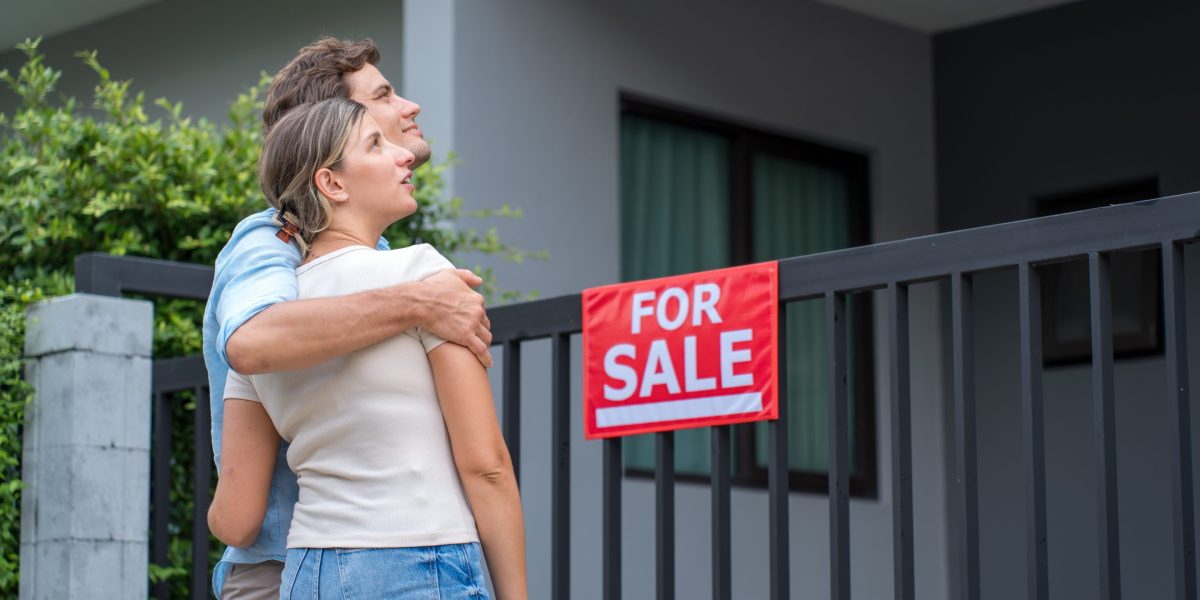
Americans missed out on a ‘once-in-a-lifetime’ chance to buy a house—the 3 shifts it would take to make housing affordable are ‘very unlikely’
Yahoo Finance· 2026-01-07 20:04
Core Insights - The American dream of homeownership is increasingly out of reach due to rising mortgage rates and home prices, with the average age of first-time home buyers reaching an all-time high of 40 years [1] - The share of first-time buyers has decreased by 50% since 2007, highlighting the lack of affordable housing inventory [2] - Experts believe that significant improvements in housing affordability are unlikely in the near future, despite temporary drops in mortgage rates [2] Mortgage Rate and Income Analysis - Current mortgage rates are approximately 6.15%, which would need to fall to 2.65% for affordability to improve [4] - The median household income required for affordability is $132,171, while the current median is only $84,763 [4] - Home prices would need to decrease by 35% to $273,000 from the current $418,000 to achieve affordability [4] Market Realities - The options for making housing affordable, such as drastic reductions in mortgage rates or home prices, do not align with current market conditions [5] - Historical wage increases of over 50% have not been seen since post-World War II, indicating that significant wage growth is unlikely to occur in the near term [6]
Should You Buy a House in 2026? Here's What's Ahead
Investopedia· 2026-01-05 13:01
Core Insights - Home sales are expected to remain low in 2025 due to high housing costs and elevated mortgage rates, but slight improvements in affordability are anticipated for 2026, potentially creating opportunities for buyers [2][4] Mortgage Rates - Mortgage rates peaked at over 7% in early 2025 but eased to around 6.2% in the latter half of the year, providing some relief to buyers [3] - Experts predict mortgage rates will stabilize between 6% and 6.5% in 2026, with a modest decline expected to improve affordability [5][6] - The Federal Reserve has reduced interest rates by 1.75 percentage points since September 2024, but mortgage rates have not decreased correspondingly, indicating a disconnect between short-term and long-term rates [6][7] Housing Market Trends - Housing prices vary significantly across the U.S., with coastal and Northeast cities remaining high-cost areas, while some Southern and Midwestern cities offer more affordable options [8][9] - Cities like Cleveland, Cincinnati, and Detroit are highlighted as having more reasonable housing prices despite experiencing faster growth rates [9][10] Financing Options - The popularity of adjustable-rate mortgages (ARMs) is increasing, with about 10% of borrowers opting for them in September, compared to a historical average of 6% [11] - ARMs can provide lower initial rates, making them an attractive option for buyers facing affordability challenges [12][13] New Home Sales - Sales of newly constructed homes are outpacing existing homes, with new homes sold at an average price of $413,500, compared to $422,600 for existing homes [14][15] - Builder incentives, such as mortgage rate buy-downs and reduced closing costs, are making new homes more competitive in pricing [16]
The 2025 Housing Affordability Crisis in Charts: What Changed and What Didn't
Yahoo Finance· 2026-01-03 12:00
Core Insights - Housing affordability remained a significant issue in 2025, with high mortgage rates and peak prices continuing to challenge potential buyers [2][5] - Experts anticipate gradual improvements in affordability by 2026, driven by stable home prices, rising incomes, and decreasing mortgage rates [4][5] Housing Market Conditions - The housing market in 2025 faced affordability challenges, although there were signs of improvement as mortgage rates slightly declined and more listings became available [5] - Home sales remained low in 2025, but inventory levels increased by approximately 25% early in the year compared to the previous year, before slowing to a 10.9% year-over-year growth by October [6] Future Projections - Active listings are expected to rise in 2026, with projections indicating a yearly inventory growth of 10% to 15%, as lower mortgage rates attract more buyers and sellers [7] - The housing supply entering 2026 remains elevated due to previous inventory buildup, but the growth rate is expected to moderate, supporting a gradual normalization of market conditions [8]
Here's How Much Mortgage Rates Must Fall To Make Housing Affordable for Buyers
Investopedia· 2026-01-02 13:00
Core Insights - Some housing markets remain unaffordable even if mortgage rates drop significantly, while in other areas, a slight decrease in rates could enable homeownership for many buyers [2][4]. Mortgage Rate Affordability - A Zillow report indicates that mortgage rates would need to decrease by more than 4% for a typical home to be affordable for a median-income family, with current average rates around 6.18% [3]. - Major cities like New York, Los Angeles, and Miami have average home values exceeding $800,000 and $1 million, making them unaffordable even at a 0% mortgage rate [4]. Regional Variations - In cities such as Boston and Seattle, mortgage rates would need to fall below 1% to achieve affordability, while Dallas, New Orleans, and Nashville would require rates to drop by over two percentage points [4][6]. - Conversely, areas with lower home prices, like Pittsburgh, Pennsylvania, have an average home value of $231,518, allowing affordability even if rates rise to 9% [5]. Specific City Insights - Birmingham, Alabama, has an average home value of $132,725, making homes affordable even if rates reach 7.62%, while Detroit's average home value of $76,340 allows for affordability at rates of 7.02% [6]. - Cities like Buffalo, Indianapolis, and St. Louis also maintain affordability with home values low enough to withstand higher mortgage rates [6].

Trump Promises 'Aggressive' Housing Reforms in 2026. Here's What We Know So Far
Investopedia· 2026-01-01 13:00
Core Insights - The housing market is facing challenges due to high costs and limited supply, with potential reforms being discussed by President Trump [1][2] - Trump has promised aggressive housing reform plans aimed at reducing mortgage payments and addressing housing affordability [2][4] Housing Market Challenges - Elevated mortgage rates have remained above 6% for over three years, complicating borrowing for homebuyers [3] - A shortage of homes for sale has contributed to sustained high prices in the housing market [3] Government Actions and Proposals - Trump issued an executive order on his first day in office to lower housing costs and expand supply, with discussions around declaring a national housing emergency [5][6] - The administration is exploring ways to reduce closing costs and standardize building codes, as well as potentially lowering tariffs on construction materials [6] Mortgage Innovations - The introduction of a 50-year mortgage loan is being considered, which could lower monthly payments but may increase total borrowing costs [7][8] - A new Federal Reserve chair is expected to be appointed, which could influence interest rates and borrowing costs, although the direct impact on mortgage rates is uncertain [9] Legislative Developments - Bipartisan legislation is being considered in Congress, including the Housing for the 21st Century Act, aimed at encouraging construction and improving housing affordability [10][12] - The legislation seeks to establish federal best practices for local governments to streamline project approvals and raise loan limits for multifamily projects [11][12]