Offshore Wind

Search documents
X @Bloomberg
Bloomberg· 2025-08-27 02:11
Project Review - Mitsubishi is reviewing all options for three Japanese offshore wind projects [1] - The review was initiated due to changes in the economic outlook [1] Potential Outcome - Mitsubishi is considering an exit from the three Japanese offshore wind projects [1]
Cadeler A/S(CDLR) - 2025 Q2 - Earnings Call Transcript
2025-08-26 13:02
Financial Data and Key Metrics Changes - For Q2 2025, revenue reached EUR 233.1 million, showing substantial growth despite being impacted by termination fees from the Horn C4 project [17] - EBITDA increased significantly from EUR 32 million to EUR 189 million year-over-year, indicating strong operational performance [21] - The company maintains a solid balance sheet with a market cap of EUR 1.7 billion and an adjusted utilization rate of 94.1% for Q2 [18][19] Business Line Data and Key Metrics Changes - The backlog remains stable at EUR 2.5 billion, with 97% of projects having final investment decisions [12][13] - The Windkeeper vessel is highlighted as a key asset, with a long-term contract secured with Vestas for operations and maintenance services [6][10] - The company is actively working on multiple projects, including Revolution Sunrise and Revolution Wind, although the latter is currently halted [11][66] Market Data and Key Metrics Changes - The U.S. market constitutes less than 10% of the total backlog, indicating a focus on international projects [11] - The company is experiencing strong demand for operations and maintenance services, particularly for larger turbines [5][50] Company Strategy and Development Direction - The company is focused on expanding its fleet and enhancing operational capabilities, particularly through the NexTra service concept [5][52] - There is a strategic emphasis on sustainability, including biofuel testing and decarbonization efforts [36][56] - The company aims to maintain a resilient business model while adapting to market recalibrations and emerging opportunities [41][58] Management's Comments on Operating Environment and Future Outlook - Management acknowledges a period of market recalibration but remains optimistic about long-term growth in offshore wind and operations and maintenance sectors [37][41] - The company expects improved conditions and policy support in key markets, which could enhance project execution timelines [39][40] - Despite challenges, management believes in the strength of their fleet and the ability to meet client demands effectively [42][58] Other Important Information - The company is actively engaged in discussions with banks for financing future projects, indicating strong interest from financial institutions [26][28] - The full-year outlook for 2025 has been adjusted to a revenue range of EUR 588 million to EUR 628 million, with EBITDA projected between EUR 381 million and EUR 421 million [30] Q&A Session Summary Question: Impact of halted Revolution Wind project - Management stated that they are contractually well protected and are in dialogue with clients regarding the halted project, referencing a similar situation with Empire that was resolved [64][66] Question: CapEx related to Windkeeper - It was confirmed that the majority of Q2 CapEx was related to Windkeeper, with no unplanned expenditures [70] Question: Upgrades on Windkeeper - Upgrades include adding a new auxiliary crane, a bow thruster for improved operations, and general accommodation enhancements to meet client expectations [72][73] Question: Availability of similar vessels in the market - Management indicated that Windkeeper is unique and that upgrading other Chinese vessels for European operations would be challenging [75][76] Question: Alternative work scopes amid stop order - Management clarified that clients do not wish for vessels to be repurposed for other projects while awaiting clarity on the stop order [81][82] Question: Stability of termination fees in contracts - Management expressed that termination fees in contracts remain stable, despite recent trends in the industry [83]

Cadeler A/S(CDLR) - 2025 H1 - Earnings Call Presentation
2025-08-26 12:00
Financial Performance & Backlog - Cadeler's financial performance exceeded expectations, leading to increased full-year guidance in July 2025[9] - The company's contract backlog remains strong at EUR 25 billion[13, 29] - 97% of the contract backlog, totaling EUR 2412 million, relates to projects with a positive final investment decision (FID)[36] - Revenue increased by EUR 170 million in Q2 2025 compared to Q2 2024, with utilization at 76% and adjusted utilization at 94%[46] - Revenue increased by EUR 216 million in H1 2025 compared to H1 2024, with utilization at 67% and adjusted utilization at 89%[50] Fleet & Operations - Cadeler took delivery of the Wind Keeper, securing a long-term contract with Vestas for three years, with options for an additional two and a half years, potentially worth over EUR 380 million[10, 35] - Seven vessels are currently on hire globally, including two in Taiwan and two in North America[11] - Cadeler has secured EUR 2058 million in funding for its CAPEX program, including Wind Keeper, with EUR 1225 million drawn as of June 30, 2025, leaving EUR 833 million undrawn[57] Market Outlook & Strategy - The company anticipates an undersupply of capable vessels from 2029 onwards, driven by increasing market demand, including strong growth in demand for O&M[101] - Cadeler is building up Nexra, a new service concept for the offshore wind industry, to address the strong and increasing demand for O&M services, especially for larger turbines[12, 95]
X @Bloomberg
Bloomberg· 2025-08-15 11:30
Financial Warning Sign - Orsted's $9 billion cash call signals potential issues with the offshore wind's business model [1] Industry Implication - The situation serves as a warning for the offshore wind industry's flagship business model [1]
X @The Wall Street Journal
The Wall Street Journal· 2025-08-11 06:12
Financial Strategy - Orsted 计划发行 94 亿美元($9.4 billion)的股票[1] Project Funding - 该融资用于海上风电项目[1]
EQNR's US Wind Projects Incur $955M Impairment Over Regulatory Changes
ZACKS· 2025-07-25 14:42
Core Insights - Equinor ASA has reported impairment costs of $955 million related to its U.S. offshore wind projects, primarily due to regulatory changes and increased tariff exposure [1][4][5] - The regulatory environment under the Trump administration has negatively impacted the offshore wind industry, leading to a loss of synergies for future projects [2][3] - The Biden administration has provided federal support for renewable energy, contrasting with the previous administration's suspension of offshore wind leases [3] Financial Impact - The impairment charges significantly affected Equinor's net operating income in the second quarter, with $763 million attributed to the Empire Wind 1 project and the South Brooklyn Marine Terminal [4][8] - The remaining impairment amount is linked to the lease of the Empire Wind 2 project, which is now uncertain due to the withdrawal of tax credits [4][5] Regulatory Challenges - The withdrawal of investment tax credits has made new offshore wind projects less attractive, contributing to the impairment charges [5][6] - U.S. tariffs on steel have increased the cost of the Empire Wind project by $300 million, further complicating its financial viability [7] Project Viability - The South Brooklyn Marine Terminal was expected to support multiple wind farms, but current regulatory conditions have diminished its potential value [6] - Without tax credits, the development of Empire Wind Phase 2 is unlikely to proceed, raising concerns about the project's future [7][8]


X @Bloomberg
Bloomberg· 2025-07-11 14:50
Financial Implications - GE Vernova 将支付 1050 万美元给 Nantucket 岛屿社区 [1] Legal and Regulatory - 赔偿原因是由于其海上风力涡轮机叶片断裂并冲上岸 [1]
Oceanic Wind Energy Inc. and Coast Tsimshian Enterprises Ltd. Secure IUP for Offshore Wind Development in Hecate Strait
Globenewswire· 2025-07-07 10:00
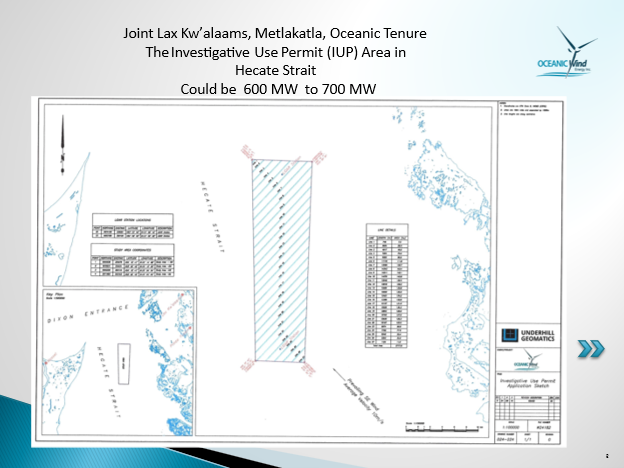
Core Points - Oceanic Wind Energy Inc. has achieved a significant milestone by obtaining an Investigative Use Permit (IUP) for the first phase of its offshore wind project in Hecate Strait, targeting a capacity of 600 to 700 megawatts (MW) [1][3] - The partnership with Coast Tsimshian Enterprises Ltd. (CTE), which is a collaboration between the Metlakatla and Lax Kw'alaams First Nations, emphasizes the project's community involvement and support [1][8] - Hecate Strait is recognized for its strong and consistent wind resources, with average annual wind speeds exceeding 10 m/s and a winter capacity factor of over 65%, making it an ideal location for renewable energy generation [4][6] Company Overview - Oceanic Wind Energy Inc. is a Vancouver-based renewable energy company focused on developing large-scale offshore wind projects to facilitate Canada's transition to a clean energy future [7] - Coast Tsimshian Enterprises Ltd. is a 100% Indigenous-owned entity that aims to promote and develop commercial opportunities for the benefit of its shareholders, showcasing a commitment to community and economic development [8] Project Significance - The Oceanic Wind Project is strategically positioned to meet the growing energy demands of the region, particularly supporting the Port of Prince Rupert and the expanding industrial sectors in Northwest British Columbia [5][6] - The project is expected to contribute significantly to Canada's greenhouse gas reduction goals and enhance British Columbia's reputation as a leader in cost-effective green energy generation [6]
Offshore wind’s future uncertain as Congress targets federal subsidies
CNBC Television· 2025-06-26 11:32
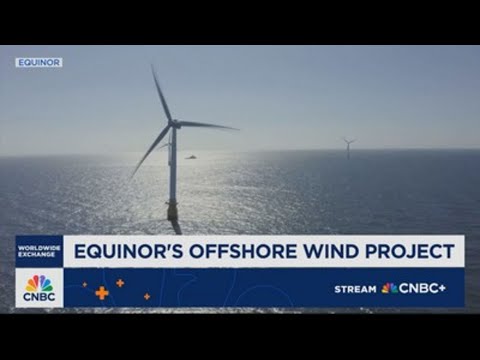
Project Overview - Ecuador is redeveloping the South Brooklyn Marine Terminal for the Empire Wind One offshore wind project [1] - The Empire Wind One project will consist of 54 turbines, each 951 feet tall, generating 810 megawatts of power, enough to power 500,000 homes [1] - Ecuador is investing approximately $5 billion in the project, including $1 billion for the marine terminal redevelopment [1] - The project is expected to be fully operational by 2027 [4] Economic Impact - The project is creating over 1,000 union jobs [1] Challenges and Incentives - The offshore wind industry in the US has faced challenges due to high costs and complex supply chains [3] - Federal incentives are helping to offset costs, with Ecuador expecting to recoup 40% of the project's cost through investment tax credits [3] - Proposed changes to tax credits in Congress could significantly reduce incentives for future projects, potentially stifling the industry [3] Regulatory Hurdles - The project faced a temporary setback when President Trump issued a stop work order in April, but the order was reversed on May 19th [2] Strategic Positioning - Ecuador is relying on other offshore wind projects utilizing its specialized marine terminal, which is equipped to handle custom vessels and large cranes [3]
Equinor Secures UK Floating Wind Leases in Celtic Sea Push
ZACKS· 2025-06-20 14:51
Core Insights - Equinor ASA (EQNR) and joint venture Gwynt Glas have secured rights to develop floating wind farms in the Celtic Sea, marking a significant advancement in the UK's clean energy initiatives [1][2][4] Group 1: Project Details - EQNR and Gwynt Glas will develop 1.5 GW of floating wind capacity each, with a total of 3 GW, under leases from The Crown Estate [2][9] - The annual lease fee is set at $470 per megawatt, approximately £350 per MW, contributing to a broader initiative for up to 4.5 GW of floating wind generation in the Celtic Sea [2][9] - The projects are expected to power over four million homes, showcasing their potential impact on energy supply [2][9] Group 2: Economic Impact - The floating wind farms are anticipated to attract over £1 billion in investment and create thousands of jobs, particularly benefiting local supply chains and port infrastructure [5][9] - The Crown Estate plans to announce a third project to utilize the remaining 1.5 GW of capacity by September 2025, indicating ongoing development in the sector [3][6] Group 3: Strategic Importance - Equinor views this project as a long-term strategic investment, emphasizing the scalability and flexibility of the seabed lease in deeper waters, which is crucial for meeting the UK's net-zero targets [4][6] - The announcement signifies the start of a long-term industrial buildout, with potential for an additional 4-10 GW of floating wind capacity in the Celtic Sea by the end of the decade [6]