
水利工程建设

Search documents
福建一水库大坝建设被指偷工减料!中国电建:全面调查核实
Zhong Guo Zheng Quan Bao - Zhong Zheng Wang· 2025-11-30 10:39
Group 1 - The core issue involves serious quality concerns regarding the construction of the Fujian Yong'an pumped storage power station, which is a key project under China's 14th Five-Year Plan for pumped storage [2][3] - China Power Construction Group (referred to as "the company") has established an investigation team to thoroughly investigate and verify the reported issues, and will handle the situation in accordance with laws and regulations [1][2] - The company appreciates the supervision from the public and will promptly disclose the results of the investigation [1] Group 2 - The construction of the lower reservoir of the Yong'an pumped storage power station, undertaken by the company's subsidiary, China Water Resources and Hydropower Third Engineering Bureau Co., Ltd. (referred to as "Water Resources Third Bureau"), has been accused of significant cost-cutting measures [2][3] - Reports indicate that hundreds of anchor piles used to reinforce the dam shoulder have serious quality defects, with actual construction lengths significantly shorter than required, and some piles being less than one-third of the design standard [3] - Additionally, most anchor piles were not constructed according to the required standards for cement and sand grouting, with the construction team only performing simple sealing at the pile openings to pass inspections [3]


新华每日电讯:水库大坝涉嫌偷工减料,质量红线不容触碰
Bei Jing Ri Bao Ke Hu Duan· 2025-11-30 08:48
Core Points - The construction of the Yong'an pumped storage power station's lower reservoir dam, undertaken by China Power Construction Corporation's subsidiary, has been reported to involve serious safety hazards due to alleged cost-cutting, violations of regulations, and arbitrary design changes [1][2] - A special investigation team has been established to address the significant safety concerns surrounding the dam, which is critical for withstanding extreme flooding [1][2] - The report highlights a broader issue of non-compliance in construction practices within the industry, as evidenced by a recent landslide incident at another project managed by a different subsidiary of China Power Construction [1] Industry Context - The Ministry of Water Resources has been tightening regulations to prevent substandard engineering practices, emphasizing a lifelong responsibility for quality in water conservancy projects [1] - The public is demanding timely and credible investigation results regarding the safety of major civil engineering projects, reflecting a growing concern for infrastructure integrity [2] - There is a call for strict penalties against those responsible for compromising safety standards, aiming to deter future violations in the industry [2]
水库大坝涉嫌偷工减料 质量红线不容触碰
Xin Lang Cai Jing· 2025-11-30 08:33
Core Viewpoint - The article highlights serious allegations against China Power Construction Corporation's subsidiary, Hydro Power Third Bureau, regarding the construction of the Yongan Pumped Storage Power Station's reservoir dam in Fujian Province, which is suspected of quality violations and safety risks [1] Group 1: Allegations and Investigations - The construction of the Yongan Pumped Storage Power Station's reservoir dam is under scrutiny for potential cost-cutting measures, non-compliance with regulations, and arbitrary design changes, posing significant safety hazards [1] - A special investigation team has been established to look into the allegations surrounding the dam's construction [1] - The article references a previous incident involving another subsidiary, Hydro Power Sixteenth Bureau, which experienced a significant landslide in August during a similar project, indicating a pattern of unsafe practices [1] Group 2: Regulatory Context and Public Concerns - The Ministry of Water Resources has implemented strict regulations, including a lifelong responsibility system for water conservancy project quality, to prevent substandard engineering practices [1] - The article emphasizes the importance of addressing potential risks and ensuring safety in major public works, urging authorities to provide credible investigation results to the public [1] - There is a call for severe penalties against those responsible for compromising dam safety, to deter future violations and protect public interests [1]
福建一水库大坝施工被指“严重偷工减料”,中国电建深夜通报
Bei Jing Qing Nian Bao· 2025-11-30 03:59
Group 1 - The core issue involves serious quality problems reported during the construction of the Yongan pumped storage power station in Fujian, specifically regarding the dam construction [4] - China Power Construction Group has established an investigation team to thoroughly investigate and verify the reported issues, and will handle the situation according to laws and regulations [2] - The construction is being carried out by subsidiaries of China Power Construction, specifically the Hydropower Third Bureau and the Hydropower Sixteenth Bureau [4] Group 2 - Reports indicate that hundreds of anchor piles used to reinforce the dam shoulder have significant quality defects, with actual construction lengths significantly shorter than required, with some piles being less than one-third of the design standard [4] - Many anchor piles were not filled with cement mortar as per the required standards, with the construction team only performing simple sealing at the pile openings to pass inspections [4]

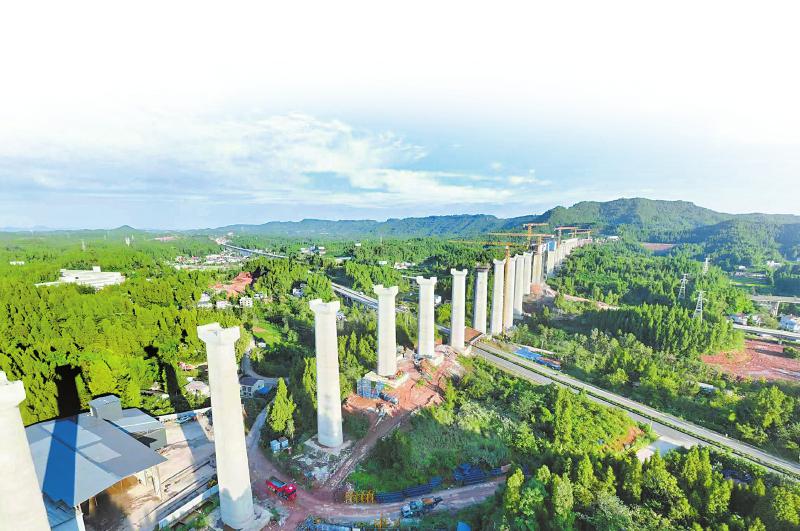
为让灌区早日用上水,亭子口灌区一期工程建设不停歇 1400吨巨型造槽机空中造“长河”
Si Chuan Ri Bao· 2025-11-27 00:27
Core Viewpoint - The Tizikou Irrigation District Phase I project, including the Sujiamiao Aqueduct, is a significant water management initiative aimed at addressing water scarcity in Northeast Sichuan, with completion expected by 2027 [3][7]. Group 1: Project Overview - The Sujiamiao Aqueduct is a key control project within the Tizikou Irrigation District Phase I, measuring 2,270 meters in length and reaching a maximum height of 87 meters, making it the longest and most technically challenging aqueduct in the region [3][5]. - As of now, the Tizikou Irrigation District Phase I has completed 292.85 kilometers of tunnel excavation, 189.8 kilometers of lining, 11.02 kilometers of aqueduct pouring, and 36.2 kilometers of open and closed channels [8]. Group 2: Construction Progress - The project is currently at its peak construction phase, with 361 working faces opened across four sections and 5,207 workers and 1,623 sets of machinery involved [3][5]. - The construction of the Sujiamiao Aqueduct's foundation and pier columns has been completed, and the focus is now on the pouring of the aqueduct body [5][6]. Group 3: Economic and Social Impact - The Tizikou Irrigation District Phase I is part of a major national water conservancy initiative, aimed at solving irrigation and drinking water issues for over 3.7 million acres of farmland and more than 4 million people in Northeast Sichuan [3][7]. - The project is expected to significantly improve the water resource situation in areas like Guang'an, addressing the growing water supply-demand imbalance and supporting local economic development [7][8].
全力推进冬修水利 夯实粮食生产基础
Yang Shi Wang· 2025-11-26 12:09
Core Insights - The current period is identified as the "golden window" for winter water conservancy construction, with significant efforts being made across various regions to enhance water infrastructure [1] Group 1: Major Projects and Progress - The Jiangjiang to Hanjiang water diversion project has achieved over 14.5 kilometers of main tunnel excavation and over 32.5 kilometers of branch tunnel excavation [1] - The Dashixia water conservancy hub project has completed 95% of its total planned progress, with water storage achieved in September [1] Group 2: Impact of Weather Conditions - The winter repair period for water conservancy has been reduced by 10 to 40 days in certain areas due to the impact of autumn floods in the Yellow River, Haihe River, and upper Yangtze River regions [1] - Areas severely affected by flooding are accelerating the repair of damaged water conservancy facilities and reinforcing projects [1] Group 3: Local Initiatives - In Hunan's Yuanjiang City, workers are constructing a new 105-meter sluice gate to facilitate irrigation and drainage during floods [1] - Various regions are also advancing irrigation area renovations to ensure stable grain production and increased income for the coming year [1] Group 4: New Projects and Modernization - Six new large-scale irrigation districts have been initiated this year, along with modernization efforts for 150 medium and large irrigation districts [2] - Upon completion of annual tasks, over 20 million acres of irrigation area will be newly restored and improved [2]
湖南“十四五”共落实投资2654.7亿元提升水安全保障能力
Zhong Guo Xin Wen Wang· 2025-11-24 11:03
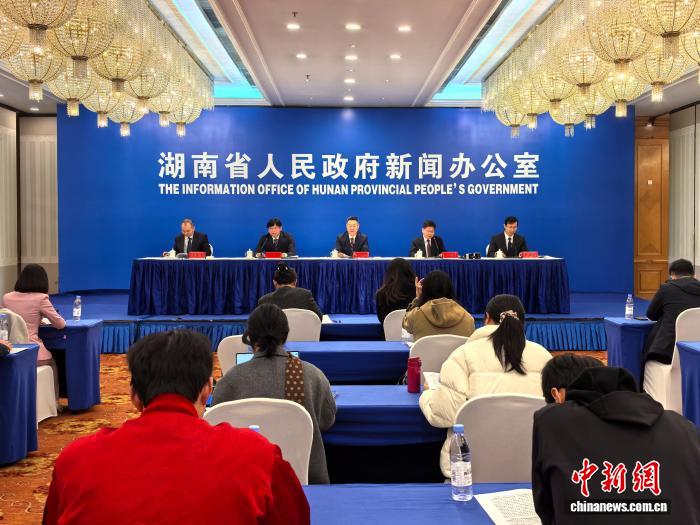
Core Insights - Hunan Province has invested a total of 265.47 billion yuan in water security enhancement during the "14th Five-Year Plan" period, significantly contributing to flood control, water supply, food security, and ecological safety [1][4]. Investment and Infrastructure Development - The investment in water conservancy construction during the "14th Five-Year Plan" is 1.9 times that of the "13th Five-Year Plan," with a total of 265.47 billion yuan allocated [4]. - In 2022, water conservancy construction investment exceeded 50 billion yuan for the first time and has continued to break historical records for three consecutive years, reaching 65.47 billion yuan in 2024 [4]. Water Resource Management - Hunan has added 27.4 million cubic meters of flood control reservoir capacity and completed the reinforcement of 5,476 dangerous reservoirs [3][4]. - The province has systematically managed over 4,600 kilometers of various rivers and effectively stored over 40 billion cubic meters of floodwater, demonstrating resilience against severe droughts and floods [3]. Ecological and Environmental Standards - Key river and lake ecological flow rates have reached 100% compliance, with the water quality of national monitoring sections maintaining a good rate of 98.6% for three consecutive years, ranking first in Central China [6]. - Water and soil conservation rates have improved to 86.72%, reflecting effective environmental management practices [6]. Rural Water Supply and Irrigation - Hunan has restored and improved over 10 million acres of irrigation area, addressing significant water issues faced by rural communities [6]. - The province has implemented a standardized construction and management model for rural water supply, achieving a rural tap water coverage rate of 94.21% and benefiting over 20 million rural residents [6].
浙江省围海建设集团股份有限公司关于签订重大合同的公告
Shang Hai Zheng Quan Bao· 2025-11-20 19:20
Core Viewpoint - Zhejiang Province Weihai Construction Group Co., Ltd. has signed a significant contract for the "Huaihe River to Sea Waterway Phase II Project (within Huai'an City)" with a total contract value of approximately 312.96 million yuan, which is expected to positively impact the company's future operating performance [1][2]. Group 1: Contract Details - The project is a total construction contract with a duration of 1187 days [1][2]. - The contract price is 312,956,420.04 yuan, which accounts for approximately 12.60% of the company's audited operating revenue for 2024 [2][3]. - The project includes various construction tasks such as river embankments, culverts, pump stations, and environmental protection measures [1]. Group 2: Payment and Settlement Terms - Payment terms include 97% of the total contract price to be paid upon completion and acceptance of the construction works, with the remaining 3% held as a quality guarantee [2]. - For plant protection works, 65% will be paid upon completion and acceptance, with the final payment made after two years of maintenance and acceptance [2]. Group 3: Impact on Company Operations - The execution of this contract will not affect the company's business independence, as the company will not become dependent on this client for its main operations [3].

*ST围海:签署3.13亿元淮河入海水道二期工程合同
Xin Lang Cai Jing· 2025-11-20 12:28
Core Viewpoint - The company has signed a contract for the construction of the Huaihe River to the Sea Waterway Phase II project, which is expected to significantly contribute to its revenue in 2024 [1] Group 1 - The contract amount is 312,956,420.04 yuan, which represents approximately 12.60% of the company's audited total revenue for 2024 [1]
淮河干流浮山以下段行洪区调整和建设工程开工
Xin Hua She· 2025-11-17 12:45
Core Viewpoint - The construction of a strategic flood control project in the Huai River Basin, specifically the adjustment and construction of the flood discharge area below the Fushan section of the Huai River, has commenced on November 17, with a total estimated investment of 6.939 billion yuan and a construction period of 36 months [1] Group 1: Project Overview - The project spans across Jiangsu and Anhui provinces, covering three cities and three counties, and is a key component of the comprehensive planning and flood control planning for the Huai River Basin [1] - It is part of the 38 projects for further flood control in the Huai River and one of the 150 major water conservancy projects in the country [1] Group 2: Construction Details - The construction includes dredging of the Huai River main channel, excavation of the Lihua shallow channel, new construction of the Fengtieying diversion channel, raising and reinforcing the dikes in the Pankun flood discharge area, and building new dikes, protective slopes, and flood control roads [1] - The project aims to effectively address issues such as the poor drainage in the middle reaches of the Huai River and will work in conjunction with the second phase of the Huai River estuary waterway project to accelerate flood discharge [1] Group 3: Expected Impact - Upon completion, the project is expected to significantly alleviate the flood control and drainage pressure in the middle reaches of the Huai River, enhancing the flood prevention and disaster reduction capabilities of the Huai River Basin and ensuring long-term safety for the river [1]