Retail Real Estate

Search documents
InvenTrust Properties (IVT) - 2025 Q3 - Earnings Call Transcript
2025-10-29 15:00
Financial Data and Key Metrics Changes - The company reported same property NOI for the quarter at $44.3 million, reflecting a 6.4% increase year-over-year, driven by embedded rent escalations, occupancy gains, and positive rent spreads [10] - NAREIT FFO for the third quarter was $38.4 million, or $0.49 per diluted share, representing an 8.9% increase compared to the same quarter last year [10] - Year-to-date NAREIT FFO totaled $111.1 million, or $1.42 per diluted share, reflecting a 6% year-over-year increase [11] - The company declared an annualized dividend of $0.95 per share [12] Business Line Data and Key Metrics Changes - Same property NOI growth was attributed to various factors: embedded rent escalations contributed 160 basis points, occupancy gains and positive rent spreads each added 100 basis points, and redevelopment activity contributed 60 basis points [10] - New leases achieved a 25.6% spread, while renewals averaged 10.4%, resulting in a blended leasing spread of 11.5% [17] Market Data and Key Metrics Changes - The company noted that retail sales in the Sunbelt region are up year-over-year, with foot traffic and occupancy levels remaining above national averages [5] - The company highlighted that nine of the top 10 U.S. retail metros are located in the Sunbelt, where it is heavily concentrated [5] Company Strategy and Development Direction - The company continues to focus on maintaining high occupancy, embedding contractual rent escalators, and pursuing selective, accretive acquisitions [4] - The capital allocation strategy remains disciplined, targeting opportunities that align with strict return thresholds and enhance asset quality [8] - The company aims to expand its portfolio in high-growth Sunbelt markets while managing a balanced approach between neighborhood/community centers and power/lifestyle properties [8] Management's Comments on Operating Environment and Future Outlook - Management expressed confidence in the Sunbelt consumer base, despite some caution signals such as rising household debt and weakened consumer confidence [5] - The company anticipates some deceleration in the fourth quarter due to backloaded property operating expenses and remaining bad debt reserves [13] - Management raised full-year same property NOI growth guidance to a range of 4.75% to 5.25% and increased the midpoint of NAREIT FFO guidance to $1.87 per share [13] Other Important Information - The company completed four acquisitions totaling $250 million during the quarter, funded primarily with cash on hand [12] - Total liquidity stood at $571 million, including $71 million in cash and a full $500 million available under a revolving credit facility [12] Q&A Session Summary Question: Thoughts on tenants in discretionary categories, including restaurants - Management noted strong demand from quick service and sit-down dining tenants, with more restaurants performing well than struggling [22][23] Question: Percentage of core grocery versus power and lifestyle in acquisition pipeline - The pipeline remains robust, with over $1 billion in assets being considered, predominantly featuring grocery components [25][26] Question: Trajectory of occupancy over the next couple of quarters - Management expects a slight decline in small shop occupancy but anticipates a reacceleration in 2026 [28][29] Question: Confidence in growing creatively from acquisitions moving into 2026 - Management emphasized the importance of responsible and creative growth strategies, focusing on high-quality assets in strong markets [37] Question: Remaining budgeted bad debt expense for the year - Management indicated that the forecast includes both visible and assumption-based elements, with a range of 55 to 75 basis points for bad debt [40] Question: Lease-to-economic occupancy spread and its future trajectory - Management suggested that the spread is influenced by timing and expects it to stabilize between 150 to 200 basis points [46] Question: Balance between grocery sector strength and dining out trends - Management observed that grocery and dining sectors have been complementary rather than substitutive within their portfolio [48]

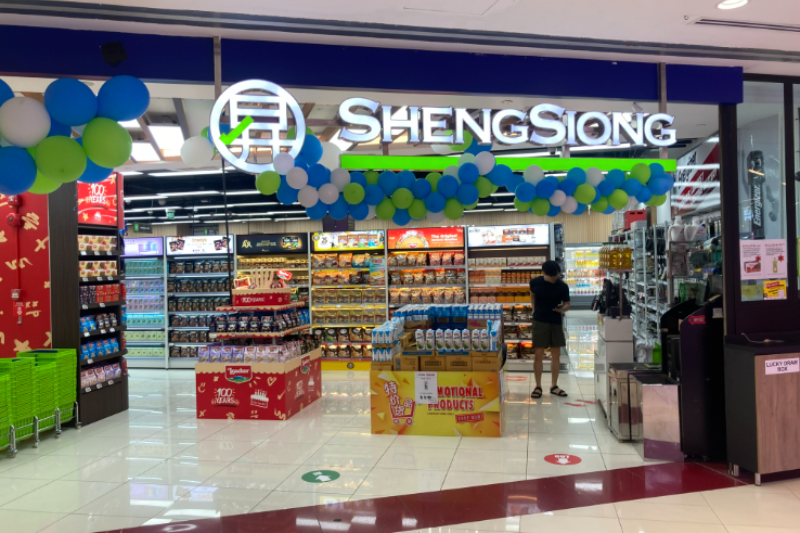
InvenTrust Properties (IVT) - 2025 Q3 - Earnings Call Presentation
2025-10-29 14:00
INVESTOR PRESENTATION Q3 2025 INTRODUCTORY NOTES Forward-Looking Statements Disclaimer Forward-Looking Statements in this presentation, which are not historical facts, are forward-looking statements within the meaning of the Private Securities Litigation Reform Act of 1995. These statements are based on the current beliefs and expectations of InvenTrust's management and are subject to significant risks and uncertainties. Actual results may differ materially from those described in the forward-looking statem ...
Urban Edge Properties(UE) - 2025 Q3 - Earnings Call Transcript
2025-10-29 13:32
Financial Data and Key Metrics Changes - FFO as adjusted increased by 4% year-over-year for Q3 2025, with year-to-date growth at 7% compared to the first nine months of the previous year [4] - Same property net operating income (NOI) rose by 4.7% for the quarter and 5.4% year-to-date [4] - The company raised its 2025 FFO as adjusted guidance to a new range of $1.42-$1.44 per share, representing 6% growth over 2024 at the midpoint [8][17] Business Line Data and Key Metrics Changes - Leasing activity totaled 31 deals aggregating 347,000 sq ft, including 20 renewals at a 9% spread and 11 new leases at a 61% spread [9] - Same property lease rate stands at 96.6%, a decline of 20 basis points from the previous quarter [10] - Shop occupancy rate remained flat at 92.5% [11] Market Data and Key Metrics Changes - The acquisition market remains competitive, driven by institutional capital and tighter spreads from traditional banks [7] - The company’s Boston portfolio now includes seven properties valued at nearly $500 million, representing about 10% of the company's total value [7] Company Strategy and Development Direction - The company is focused on capital recycling, having acquired nearly $600 million in high-quality shopping centers while disposing of approximately $500 million in non-core assets [7] - The active redevelopment pipeline totals $149 million with a projected yield of 15% [12] - The company aims to generate sustainable 3%+ growth in same property NOI [72] Management's Comments on Operating Environment and Future Outlook - Management expects shopping center fundamentals to remain strong due to favorable supply-demand dynamics and record low vacancy rates [8] - The company is optimistic about the leasing market, with national retailers in expansion mode and willing to pay necessary rents [14][56] - Management believes the supply-demand imbalance in retail will continue to favor their properties for the foreseeable future [68] Other Important Information - The company completed a $39 million acquisition of Brighton Mills, a grocery-anchored shopping center, funded by proceeds from the sale of other properties [4][5] - The company has a strong liquidity position of over $900 million, including $145 million in cash [16] Q&A Session Summary Question: Timeline for lease expirations at Brighton Mills - Management indicated that most leases at Brighton Mills expire in 22 years, with expected NOI growth exceeding 3% [22] Question: Breakdown of one-time items recognized in 2025 - Management highlighted about $2 million in one-time collections and $1.5 million related to CAM recovery billings as non-recurring items [24][25] Question: Opportunities at Shoppers World - Management discussed flexibility with the Kohl's parcel and potential mixed-use opportunities for redevelopment [32] Question: Rent spreads in the quarter - Management noted that the 60% rent spread was driven by unique anchor leases, with expectations for double-digit spreads going forward [34] Question: Creating more shop space in the portfolio - Management is actively studying opportunities to split anchor spaces into shop spaces, with high demand for shop tenants [40][41] Question: Acquisition environment and competition - Management acknowledged a competitive market with increased interest from institutional capital, but emphasized a disciplined approach to acquisitions [46][48] Question: Tenant demand and balance between restaurants and grocers - Management reported strong demand from both grocers and restaurants, with no significant push-pull tension between the two [56] Question: Institutional capital demand in the D.C. metro area - Management noted that while Boston and New York are more in demand, their D.C. centers are performing well [61] Question: Sustainability of high occupancy levels - Management attributed sustained high occupancy levels to a favorable supply-demand dynamic in the retail market [67]

Urban Edge Properties(UE) - 2025 Q3 - Earnings Call Transcript
2025-10-29 13:32
Financial Data and Key Metrics Changes - FFO as adjusted increased by 4% year-over-year for Q3 2025, with year-to-date growth at 7% compared to the first nine months of the previous year [4] - Same property net operating income (NOI) rose by 4.7% for the quarter and 5.4% year-to-date [4] - The company raised its 2025 FFO as adjusted guidance to a new range of $1.42 to $1.44 per share, representing 6% growth over 2024 at the midpoint [8][17] Business Line Data and Key Metrics Changes - Leasing activity totaled 31 deals aggregating 347,000 square feet, including 20 renewals at a 9% spread and 11 new leases at a 61% spread [9] - Same property lease rate stands at 96.6%, with a 20 basis point decline from the previous quarter [10] - Shop occupancy rate remained flat at 92.5%, while the overall same property NOI growth, including redevelopment guidance, was increased to a new midpoint of 5.25% [11][17] Market Data and Key Metrics Changes - The acquisition market remains competitive, driven by institutional capital and tighter spreads from traditional banks [7] - The company’s Boston portfolio now includes seven properties valued at approximately $5,500 million, representing about 10% of the company's total value [7] - The overall leasing market shows strong demand, with year-to-date leasing spreads averaging 40% on new leases and nearly 10% on renewals [8] Company Strategy and Development Direction - The company is focused on capital recycling, having acquired nearly $600 million of high-quality shopping centers at an average 7% cap rate while disposing of approximately $500 million of non-core assets at a 5% cap rate [7] - The active redevelopment pipeline totals $149 million with a projected yield of 15% [12] - The company aims to generate sustainable 3% plus growth through strategic acquisitions and dispositions [72] Management's Comments on Operating Environment and Future Outlook - Management expressed confidence in the strength of shopping center fundamentals, driven by favorable supply-demand dynamics and record low vacancy rates [8] - The company anticipates continued strong demand for retail space, particularly in the Northeast Corridor market [14] - Management highlighted the importance of maintaining a balance between restaurant and grocery tenants to ensure overall tenant success [56] Other Important Information - The company completed the acquisition of Brighton Mills, a grocery-anchored shopping center, for $39 million, expecting annual NOI growth to exceed 3% [4][5] - The company has a strong liquidity position of over $900 million, including $145 million in cash [16] Q&A Session Summary Question: Timeline for monetizing opportunities at Brighton Mills - Management indicated that most leases at Brighton Mills have terms extending over the next 10 to 22 years, with confidence in achieving over 3% NOI growth [22] Question: Breakdown of one-time items recognized in 2025 - Management highlighted approximately $2 million in one-time collections related to old receivables and about $1.5 million from CAM recovery billings as non-recurring items [24][25] Question: Opportunities at Shoppers World - Management discussed the flexibility to work with the Kohl's parcel separately and the potential for redevelopment or retenanting to enhance value [32] Question: Rent spreads in the quarter - Management noted that the 60% rent spread was driven by unique anchor leases with HomeGoods and Ross, and while double-digit spreads are expected, 60% is not sustainable every quarter [34][35] Question: Creating more shop space in the portfolio - Management is actively studying opportunities to split anchor spaces into shop spaces, with demand for shop space remaining strong [40][41] Question: Acquisition environment and funding - Management acknowledged a competitive acquisition market with increased interest from institutional capital, while maintaining a disciplined approach to bidding [46][48] Question: Institutional competition for nontraditional assets - Management noted that while there is interest in nontraditional shopping center assets, their platform allows them to differentiate and find value-add opportunities [52][53] Question: Balancing demand between restaurants and grocers - Management indicated that both sectors are in expansion mode, with no significant push-pull tension observed [56] Question: Shift in demand in the D.C. metro area - Management reported strong performance and demand in their D.C. centers, with no significant shifts in institutional capital interest noted [61] Question: Sustaining high occupancy levels - Management emphasized that supply-demand metrics favor sustained high occupancy levels due to limited new retail construction [67]
BPG(BRX) - 2025 Q3 - Earnings Call Transcript
2025-10-28 15:02
Financial Data and Key Metrics Changes - NAREIT FFO was reported at $0.56 per share for the third quarter, driven by same-property NOI growth of 4% [12] - Base rent growth decreased to a 270 basis point contribution due to a 150 basis point drop in billed occupancy compared to the same quarter last year [12][15] - The company expects base rent growth to accelerate into 2026 as billed occupancy rebounds [12] Business Line Data and Key Metrics Changes - The company executed 1.5 million square feet of new and renewal leases at a blended cash spread of 18% [6] - New leases were signed at a record rate of $2,585 per square foot, with small shop occupancy hitting a record of 91.4% [6][7] - The signed but not yet commenced rent pipeline remains above $60 million, with $22 million of ABR commenced during the quarter [7][13] Market Data and Key Metrics Changes - The percentage of ABR from grocery anchor tenants is now at 82%, with a 35% increase in year-over-year traffic when a grocer is added [9] - The company closed on the $223 million acquisition of LaCenterra at Cinco Ranch, with seven new leases signed or in process [10] Company Strategy and Development Direction - The company continues to focus on executing its business plan, with a strong emphasis on leasing and redevelopment [5][11] - The redevelopment platform is delivering low-risk, compelling returns with several years of runway for future growth [11] - The company is positioned to recycle capital from low-growth assets into those with higher growth potential [11][33] Management's Comments on Operating Environment and Future Outlook - Management expressed optimism about the leasing environment, noting that the pipeline is higher than a year ago despite signing 10% more in GLA this year [38] - The company anticipates significant tailwinds from 2025 rent commencements and a strong signed but not yet commenced rent pipeline [16] - Management expects lease settlement income to be a headwind to 2026 FFO growth but remains confident in the overall outlook [15][44] Other Important Information - The company announced a 7% increase in its annual dividend to a rate of $1.23, allowing for maximum flexibility in capital markets [15] - The SEC shelf registration statement is due to expire next month, and a replacement will be filed [14] Q&A Session Summary Question: Factors contributing to same-store NOI growth acceleration in Q4 - Management highlighted the commencement of $22 million of rent in the quarter and an additional $19 million expected to commence between Q3 and Q4 [19][20] Question: Future occupancy levels and reinvestment pipeline - Management noted that there is room for improvement in shop occupancy, with several hundred basis points more to run [26] Question: Acquisition pipeline and cap rates - Management indicated that the market remains competitive, focusing on value-add opportunities and strong growth potential in acquisitions [32][33] Question: Leasing pipeline and retailer expansion - Management remains optimistic about retailer expansion, with a strong pipeline and positive conversations with tenants [38] Question: Tenant health and bad debt expense - Management expressed confidence in tenant credit quality and noted a significant reduction in exposure to at-risk tenancy [48] Question: Yield expectations for redevelopment projects - Management stated that the average yield for redevelopment projects remains in the high single-digit to low double-digit range, with no changes to their thresholds [72][73] Question: Capital recycling and disposition pipeline - Management emphasized the importance of recycling capital from low-growth assets into higher-growth opportunities [84][86]

BPG(BRX) - 2025 Q3 - Earnings Call Transcript
2025-10-28 15:00
Financial Data and Key Metrics Changes - NAREIT FFO was reported at $0.56 per share for Q3 2025, driven by same-property NOI growth of 4% [11] - Base rent growth decreased to a 270 basis point contribution due to a 150 basis point drop in billed occupancy compared to the previous year [11] - The company expects base rent growth to accelerate into 2026 as billed occupancy rebounds [11] Business Line Data and Key Metrics Changes - The company executed 1.5 million square feet of new and renewal leases at a blended cash spread of 18% [4] - New leases were signed at a record rate of $2,585 per square foot, with small shop occupancy hitting a record of 91.4% [5][6] - The signed but not yet commenced rent pipeline remains above $60 million, with $53 million of net new rent included [12] Market Data and Key Metrics Changes - The percentage of ABR from grocery anchor tenants is now at 82%, with a 35% increase in year-over-year traffic when a grocer is added [8] - The company closed on the $223 million acquisition of LaCenterra at Cinco Ranch, with seven new leases signed or in process [9] Company Strategy and Development Direction - The company is focused on executing its business plan, which includes attracting high-quality tenants and enhancing its redevelopment platform [4][10] - The company plans to continue recycling capital from low-growth assets into those with higher growth potential [10][74] - The partnership with Publix is expanding, with several new projects announced and more in the pipeline [8][59] Management's Comments on Operating Environment and Future Outlook - Management expressed optimism about the leasing environment, noting that retailers are looking to expand despite macro uncertainties [38] - The company updated its FFO guidance to $2.23 to $2.25 and affirmed its same-property NOI range of 3.9% to 4.3% [14][15] - Management highlighted a strong demand from tenants to locate in their centers, with significant tailwinds expected from 2025 rent commencements [16] Other Important Information - The company announced a 7% increase in its annual dividend to a rate of $1.23, allowing for the retention of free cash flow while meeting REIT dividend requirements [14] - The company has $1.6 billion of available liquidity as of September 30, including $400 million from a recent issuance [13] Q&A Session Summary Question: Factors contributing to same-store NOI growth acceleration in Q4 - Management noted that $22 million of rent commenced in the quarter and an additional $19 million is expected to commence between Q3 and Q4, contributing to growth [18][19] Question: Future occupancy levels and reinvestment pipeline - Management indicated that there is room for improvement in shop occupancy, with several hundred basis points of potential growth remaining [26][27] Question: Acquisition opportunities and cap rate trends - Management highlighted a competitive market for acquisitions, focusing on value-add opportunities that align with their growth strategy [30][32] Question: Leasing pipeline and retailer expansion - Management remains optimistic about the leasing pipeline, noting that retailers are still looking to expand despite macroeconomic uncertainties [36][38] Question: Tenant health and bad debt expense - Management expressed confidence in tenant credit quality and noted a reduction in exposure to at-risk tenants compared to previous years [45][46] Question: Capital recycling and disposition pipeline - Management discussed the strategy of selling low-growth assets to reinvest in higher-growth opportunities, maintaining a focus on long-term IRR [70][74]
Ct real estate investment trust (tsx:crt.un) – profile & key information – CanadianValueStocks.com
Canadianvaluestocks· 2025-10-26 06:34
Meta Description: CT Real Estate Investment Trust (TSX:CRT.UN) manages a nationwide portfolio of income-producing retail properties anchored by Canadian Tire Corporation. CT Real Estate Investment Trust (TSX:CRT.UN) stands as a focused Canadian net-lease real estate vehicle, owning a broad portfolio of retail and commercial real estate assets primarily leased to a single, high-quality tenant. The trust’s strategy centers on long-term value creation through the acquisition, redevelopment and development of i ...


Phillips Edison raises 2025 FFO guidance and plans $100M–$200M dispositions while expanding unanchored retail strategy (NASDAQ:PECO)
Seeking Alpha· 2025-10-24 23:48
Group 1 - The article does not provide any specific content or key points related to a company or industry [1]


Getty Realty (GTY) - 2025 Q3 - Earnings Call Presentation
2025-10-23 12:30
Financial Performance - Q3 2025 Adjusted Funds From Operations (AFFO) increased by 8.7% to $36.1 million[10] - Q3 2025 AFFO per share increased by 5.1% to $0.62[10] - Year-to-date (YTD) AFFO increased by 7.3% to $103.9 million[14] - YTD AFFO per share increased by 3.4% to $1.80[14] Portfolio Metrics - The company invested $237 million at a 7.9% initial cash yield YTD[14] - The portfolio has a weighted average lease term (WALT) of 9.9 years[14] - The portfolio is 99.8% occupied[14] - Rent collections YTD stand at 99.9%[14] - Tenant rent coverage is 2.6x[14] Capital Structure and Liquidity - Net debt to EBITDA is 5.1x (4.6x pro forma for unsettled forward equity)[14] - The company has more than $375 million in total liquidity, including $5 million in cash, $113 million in unsettled forward equity, and $260 million in revolver capacity[14] - 84% of Annual Base Rent (ABR) is derived from unitary leases[20]

Are Dividend Stocks Only for Retirees? Why Younger Investors Shouldn’t Ignore Them
The Smart Investor· 2025-10-16 09:30
Core Insights - Dividend stocks are not just for retirees; they provide long-term wealth creation opportunities for younger investors through steady income and growth [1][19] - The power of compounding in dividend stocks can lead to significant long-term gains, making them attractive for younger investors [2][4] Group 1: Importance of Dividend Stocks for Younger Investors - Dividend stocks offer an additional income stream that can be reinvested, aiding in wealth accumulation [3] - They protect equity portfolios from losses and provide steady gains during sideways markets, acting as a cushion in bear markets [3] - Early reinvestment of dividends leads to exponential growth, turning modest payouts into significant gains over time [4] Group 2: Company Analysis - Sheng Siong Group Ltd - Sheng Siong Group operates one of Singapore's largest supermarket chains, focusing on affordable essentials and aims to distribute up to 70% of net profit after tax to shareholders [5] - The company maintained dividend payouts during the COVID-19 pandemic, with dividends of S$0.065 per share in 2020, S$0.062 in 2021, and S$0.0622 in 2022 [6] - Revenue increased by S$50.5 million in 1H2025, or 7.1% year-over-year, with net profit rising to S$72.3 million, a S$2.4 million increase [6] - As of 1H2025, cash and cash equivalents stood at S$367.2 million, with a total dividend of S$0.064 per share for 2024, translating to a dividend yield of 3.0% at a share price of S$2.15 [7] Group 3: Company Analysis - Frasers Centrepoint Trust - Frasers Centrepoint Trust primarily owns income-generating retail properties in suburban areas, with occupancy rates consistently above 99% [9][10] - The trust delivered a distribution per unit (DPU) of S$0.06054 for 1HFY2025, a 0.5% increase from the previous year, and paid out S$0.12042 per share in FY2024 [11] - With a dividend yield of approximately 5.1%, FCT offers steady income from consistent distributions backed by solid operational metrics [11][12] Group 4: Company Analysis - Old Chang Kee Ltd - Old Chang Kee is a well-known F&B brand in Singapore, operating 80 outlets and maintaining a consistent dividend policy with a payout of S$0.02 for FY2025 [13] - The group paid total dividends of S$2.4 million for FY2025, representing a payout ratio of approximately 21.4% of net profit, with revenue of S$101.95 million and a gross profit margin of 69.2% [14] - Despite challenges from inflation and rising costs, Old Chang Kee is expanding its retail footprint in strategic locations and diversifying revenue streams [15][16] Group 5: Conclusion on Dividend Stocks - Dividend stocks provide a diversified, stable, and resilient income-producing portfolio across multiple sectors, including retail, F&B, and REITs [18] - For younger investors, the combination of regular income stability and the power of compounding returns can lay the foundation for financial freedom over time [19]